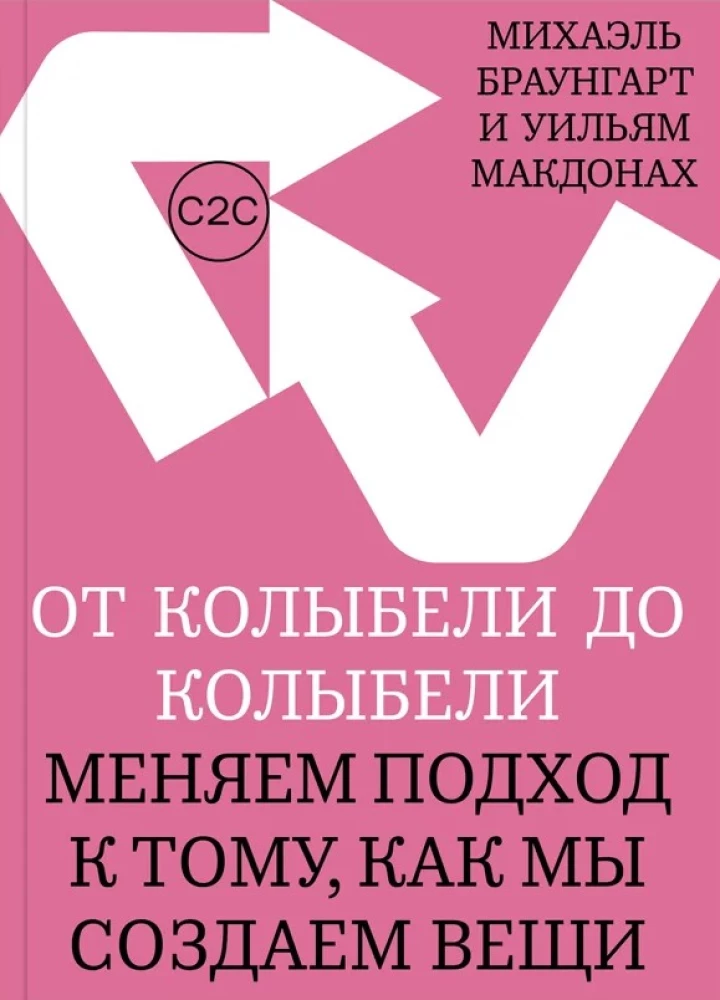
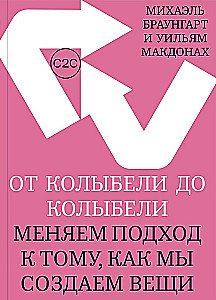
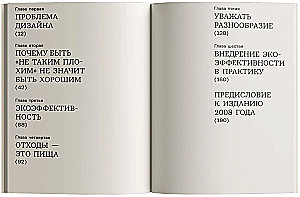
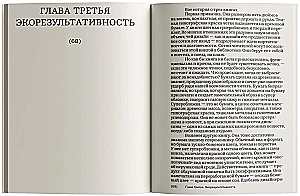
From cradle to cradle. Changing the way we create things
Reduce, reuse, recycle. Reduce consumption, reuse, recycle. "Do more with less to minimize harm," ecologists urge. But, as this book argues, such an approach perpetuates the one-way production model - "from cradle to grave." This model dates back to the...
industrial revolution and instantly turns a whole ninety percent of materials created for the production of durable goods into waste.
Why not challenge the notion that human industry must inevitably harm nature? Why not take inspiration from nature itself? A tree produces thousands of blossoms to create another tree. We do not consider such abundance wasteful; on the contrary, we see this phenomenon as safe, beautiful, and highly efficient. "Waste is food," is the first principle outlined in the book. Products can be designed so that at the end of their life cycle they provide nourishment for something new - as "biological nutrients" that safely return to the environment, or as "technical nutrients" that stay within the closed-loop technological cycles.
By developing their principles of (re)design for everything from carpets to corporate campuses, William McDonough and Michael Braungart present compelling arguments for change.
Why not challenge the notion that human industry must inevitably harm nature? Why not take inspiration from nature itself? A tree produces thousands of blossoms to create another tree. We do not consider such abundance wasteful; on the contrary, we see this phenomenon as safe, beautiful, and highly efficient. "Waste is food," is the first principle outlined in the book. Products can be designed so that at the end of their life cycle they provide nourishment for something new - as "biological nutrients" that safely return to the environment, or as "technical nutrients" that stay within the closed-loop technological cycles.
By developing their principles of (re)design for everything from carpets to corporate campuses, William McDonough and Michael Braungart present compelling arguments for change.
Author: Михаэль Браунгарт, Уильям МакДонах
Printhouse: Ad Marginem
Age restrictions: 16+
Year of publication: 2021
ISBN: 9785911035594
Number of pages: 208
Size: 185x130x11 mm
Cover type: soft
Weight: 160 g
ID: 909175
Sold out
€ 6.89
Sold out
€ 6.89
Bestsellers

€ 13.29
In stock
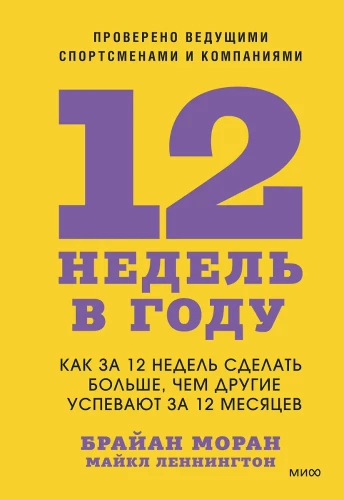
12 Weeks in a Year. How to Achieve More in 12 Weeks Than Others Do in 12 Months
Майкл Леннингтон, Брайан Моран

€ 7.89
In stock
Choice. On the Freedom and Inner Strength of a Person
Эдит Ева Эгер, Эсме Швалль-Вейганд



€ 6.99
In stock