









Gallery. A gaming platform for individual and group psychological work using metaphorical cards
Attention! Metaphorical cards are not included in the set!
The essence of the game is to reflect on oneself, on other people, on human values. During the game, participants 'set up an exhibition' of their 'paintings' and 'sculptures,' creating a 'showcase.'... In galleries and exhibitions, the author not only demonstrates their creations to people and the world, but also has the opportunity to position their works in space. Viewers can consider the presented works, formulate their own opinions about what they see, and this is a separate challenge for the author. By receiving feedback from viewers, the author can clarify and deepen their understanding of themselves and their creativity: it can change, become more detailed, and sharpen. Demonstrating oneself and the results of one’s creative search to the world is an important part of personal and professional growth.
The game can be conducted in both individual and group formats.
The methodological guide presents a description of the gaming platform 'Gallery,' clarifies the psychological meaning of the game, presents the algorithm of the gaming process, and provides examples of work.
The psychological meaning of the game
In galleries and exhibitions, the author not only demonstrates their creations to people and the world but also has the opportunity to arrange them in space, determining which work will occupy the central place and how the other works will be positioned. Viewers visiting the gallery can consider everything presented, formulate their own opinions about what they see, and this is a separate challenge for the author. By observing the reactions of viewers to their works, the artist (sculptor, collector, etc.) can refine and deepen their understanding of themselves and their creativity: it can change, become more detailed, and sharpen. Presenting oneself and one’s works to the world is not an easy task. Exteriorizing one’s creative search is an important part of personal and professional growth.
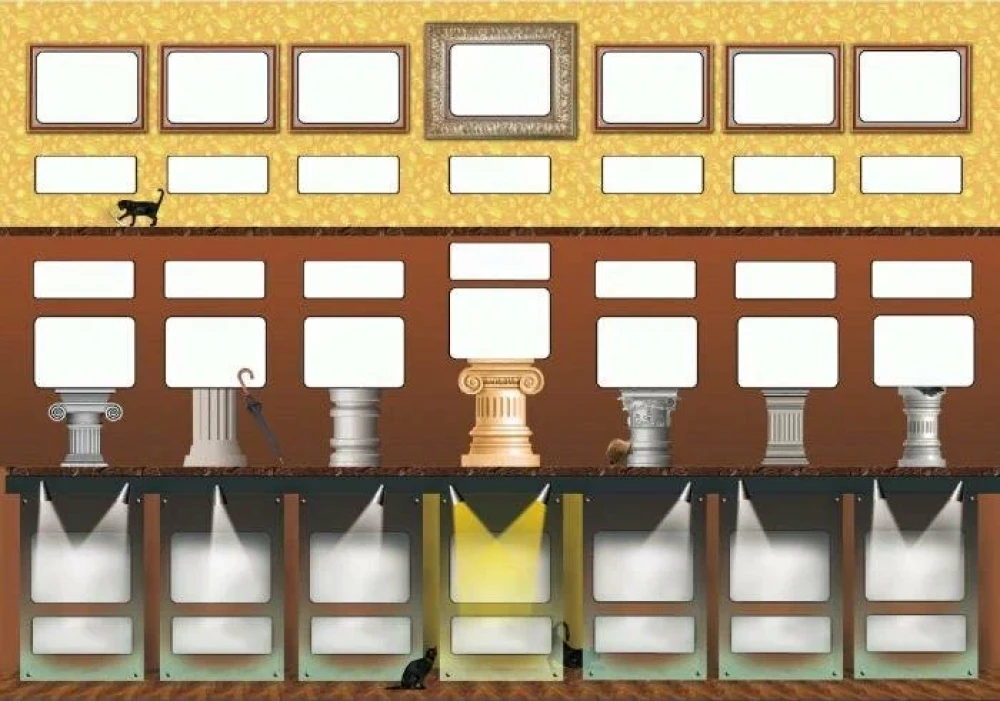
During the game, participants set up an exhibition of paintings (placing them in the upper row, on the third floor of the gallery), sculptures (placing them in the middle row, on the second floor of the gallery), and collection items in showcase (on the lower floor). Each part of the exhibition is given its own significance. For example, paintings may represent a certain situation, sculptures may represent people or a person within the situation, and objects in the showcase may represent hidden meanings or emotional states.
Since the essence of the game is not competition but reflection on oneself, on other people, and on human values, an important part of the gaming process is determining and emphasizing that part of oneself that becomes the subject of reflection. In fact, this is the formulation of the request that the client brings to the psychologist, as the game, in our case, is just one form of psychological work.
What requests might the client have that suggest the possibility of using this gaming platform?
Firstly: 'What am I like? Who am I? Who was I, and who can I be?'. That is, these are requests related to self-knowledge, exploring one’s personality.
Secondly: 'What is happening to me? I have many events happening to me, and it's difficult to understand them.' That is, requests related to exploring various life situations relevant to the client.
Thirdly: 'Why is this happening? Why can't it be different?'. That is, requests related to studying the reasons for what happens in the client’s life.
The essence of the game is to reflect on oneself, on other people, on human values. During the game, participants 'set up an exhibition' of their 'paintings' and 'sculptures,' creating a 'showcase.'... In galleries and exhibitions, the author not only demonstrates their creations to people and the world, but also has the opportunity to position their works in space. Viewers can consider the presented works, formulate their own opinions about what they see, and this is a separate challenge for the author. By receiving feedback from viewers, the author can clarify and deepen their understanding of themselves and their creativity: it can change, become more detailed, and sharpen. Demonstrating oneself and the results of one’s creative search to the world is an important part of personal and professional growth.
The game can be conducted in both individual and group formats.
The methodological guide presents a description of the gaming platform 'Gallery,' clarifies the psychological meaning of the game, presents the algorithm of the gaming process, and provides examples of work.
The psychological meaning of the game
In galleries and exhibitions, the author not only demonstrates their creations to people and the world but also has the opportunity to arrange them in space, determining which work will occupy the central place and how the other works will be positioned. Viewers visiting the gallery can consider everything presented, formulate their own opinions about what they see, and this is a separate challenge for the author. By observing the reactions of viewers to their works, the artist (sculptor, collector, etc.) can refine and deepen their understanding of themselves and their creativity: it can change, become more detailed, and sharpen. Presenting oneself and one’s works to the world is not an easy task. Exteriorizing one’s creative search is an important part of personal and professional growth.
During the game, participants set up an exhibition of paintings (placing them in the upper row, on the third floor of the gallery), sculptures (placing them in the middle row, on the second floor of the gallery), and collection items in showcase (on the lower floor). Each part of the exhibition is given its own significance. For example, paintings may represent a certain situation, sculptures may represent people or a person within the situation, and objects in the showcase may represent hidden meanings or emotional states.
Since the essence of the game is not competition but reflection on oneself, on other people, and on human values, an important part of the gaming process is determining and emphasizing that part of oneself that becomes the subject of reflection. In fact, this is the formulation of the request that the client brings to the psychologist, as the game, in our case, is just one form of psychological work.
What requests might the client have that suggest the possibility of using this gaming platform?
Firstly: 'What am I like? Who am I? Who was I, and who can I be?'. That is, these are requests related to self-knowledge, exploring one’s personality.
Secondly: 'What is happening to me? I have many events happening to me, and it's difficult to understand them.' That is, requests related to exploring various life situations relevant to the client.
Thirdly: 'Why is this happening? Why can't it be different?'. That is, requests related to studying the reasons for what happens in the client’s life.
Author: Татьяна Ушакова
Brand: Genezis
Age restrictions: 16+
Year of publication: 2025
EAN: 9785985635300
Size: 345х250х20 mm
Weight: 330 g
ID: 1735450
Sold out
€ 13.19
Sold out
€ 13.19
Bestsellers




€ 13.29
In stock
12 Weeks in a Year. How to Achieve More in 12 Weeks Than Others Do in 12 Months
Майкл Леннингтон, Брайан Моран


€ 7.89
In stock
Choice. On the Freedom and Inner Strength of a Person
Эдит Ева Эгер, Эсме Швалль-Вейганд


€ 6.99
In stock


€ 6.99
In stock
How to Talk So Kids Will Listen, and How to Listen So Kids Will Talk
Элейн Мазлиш, Адель Фабер



€ 7.99
In stock