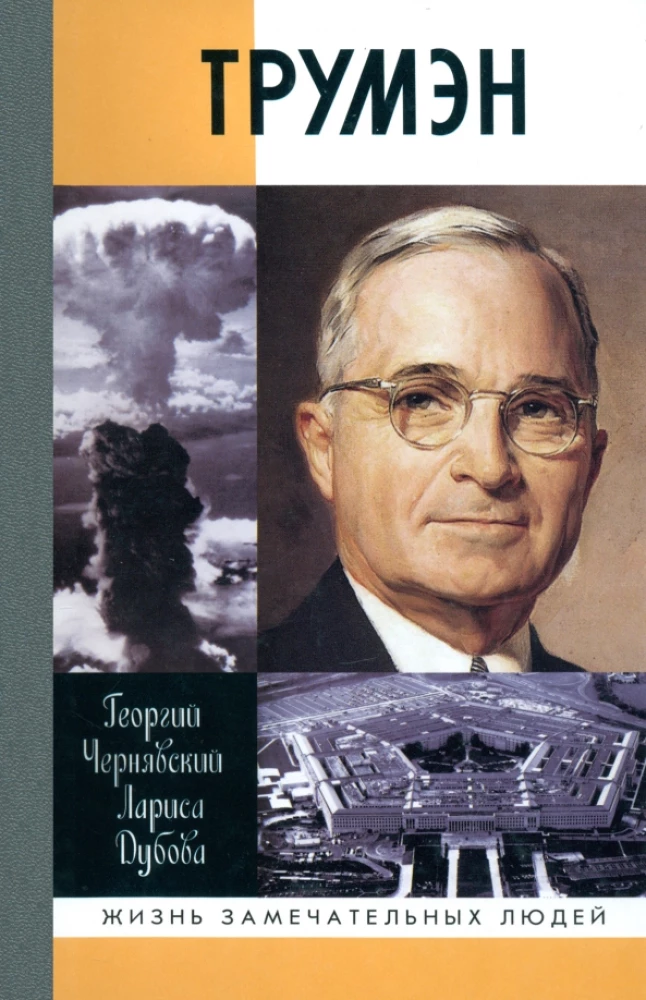
Truman
Harry Truman (1884—1972) entered the main political arena of the USA almost by chance: he assumed the highest state office in April 1945, when President Franklin Roosevelt died unexpectedly. This was a turning point in world history, and the President...
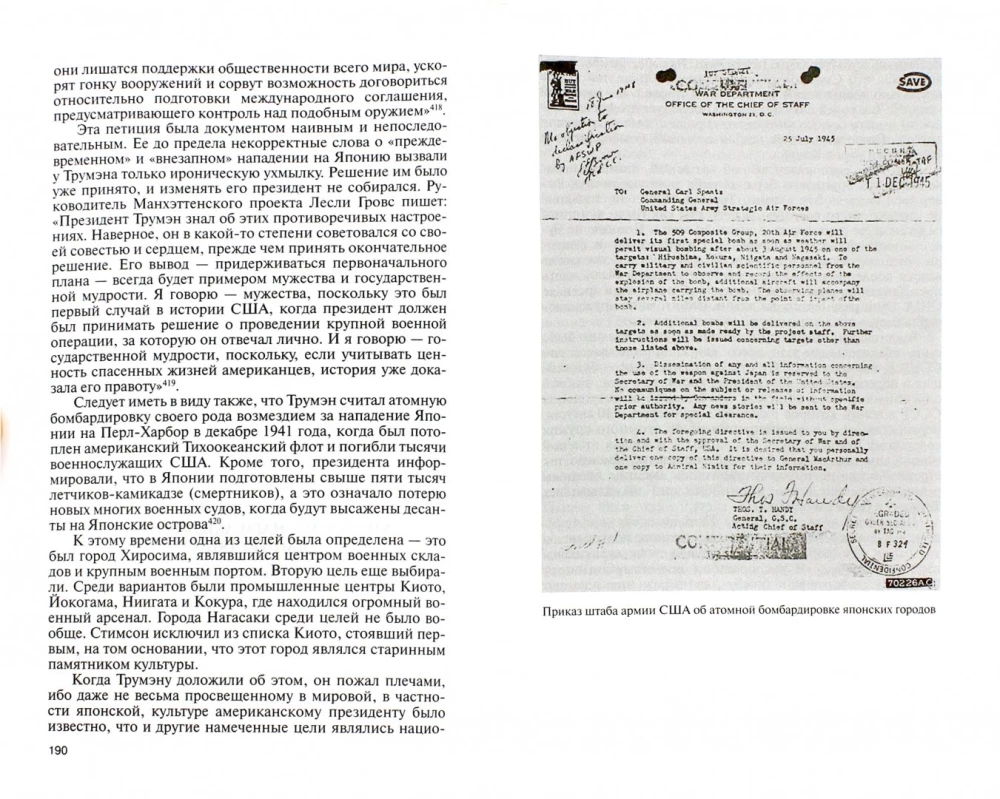
of the USA — the most powerful nation economically as a result of World War II — had to make a historic choice that would determine the fate of humanity for decades to come. Harry Truman represented the USA with dignity at the Potsdam Conference of the heads of three great powers; he had to bear the responsibility for the decision to use atomic bombing on the Japanese cities of Hiroshima and Nagasaki, which dramatically accelerated the end of the war. He was actively involved in the creation of the UN and the NATO bloc, contributed to the establishment of the state of Israel, and under him began the Cold War with the USSR and the Korean War. Domestically, Truman initiated a number of liberal democratic reforms that fit into the program of a 'fair deal,' which continued Roosevelt's 'New Deal'.
Authors — Georgy Chernyavsky and Larisa Dubova, analyzing numerous archival documents, memoirs, biographies, and other historical works, traced how a provincial politician, who did not receive a full higher education and was criticized in society as a puppet of a leader of one of the mafia clans and a member of a Masonic lodge, found himself today among the most outstanding American political figures.
Authors — Georgy Chernyavsky and Larisa Dubova, analyzing numerous archival documents, memoirs, biographies, and other historical works, traced how a provincial politician, who did not receive a full higher education and was criticized in society as a puppet of a leader of one of the mafia clans and a member of a Masonic lodge, found himself today among the most outstanding American political figures.
Author: Георгий Чернявский, Лариса Дубова
Printhouse: Molodaia gvardiia
Series: Lives of Remarkable People
Age restrictions: 16+
Year of publication: 2016
ISBN: 9785235038912
Number of pages: 480
Size: 209x138x28 mm
Cover type: hard
Weight: 482 g
ID: 82335
Sold out
€ 10.29
Sold out
€ 10.29
Bestsellers






€ 13.29
In stock
12 Weeks in a Year. How to Achieve More in 12 Weeks Than Others Do in 12 Months
Майкл Леннингтон, Брайан Моран


€ 7.89
In stock
Choice. On the Freedom and Inner Strength of a Person
Эдит Ева Эгер, Эсме Швалль-Вейганд



€ 6.99
In stock