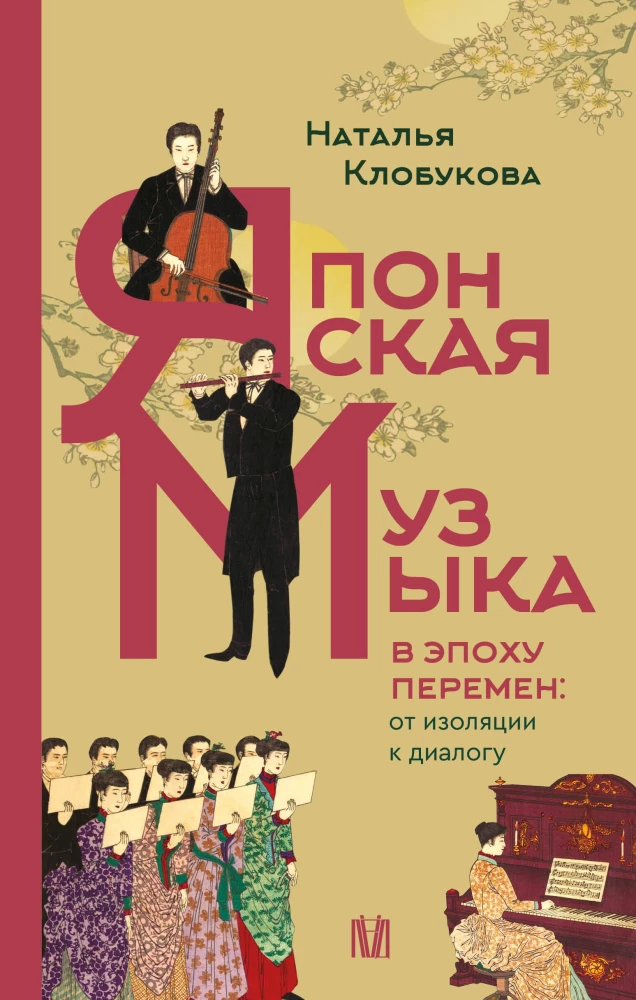
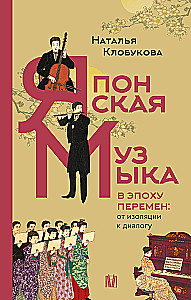
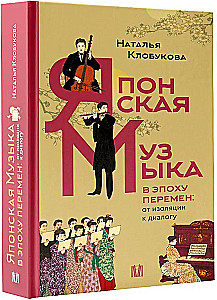
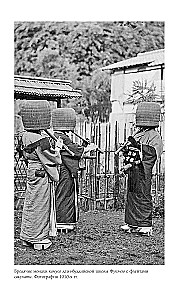
Japanese Music in an Era of Change: From Isolation to Dialogue
Author: Наталья Клобукова
Printhouse: AST
Series: Russian Academy (Ice)
Age restrictions: 16+
Year of publication: 2026
ISBN: 9785171788421
Number of pages: 416
Size: 210х138х26 mm
Cover type: hard
Weight: 502 g
ID: 1738407
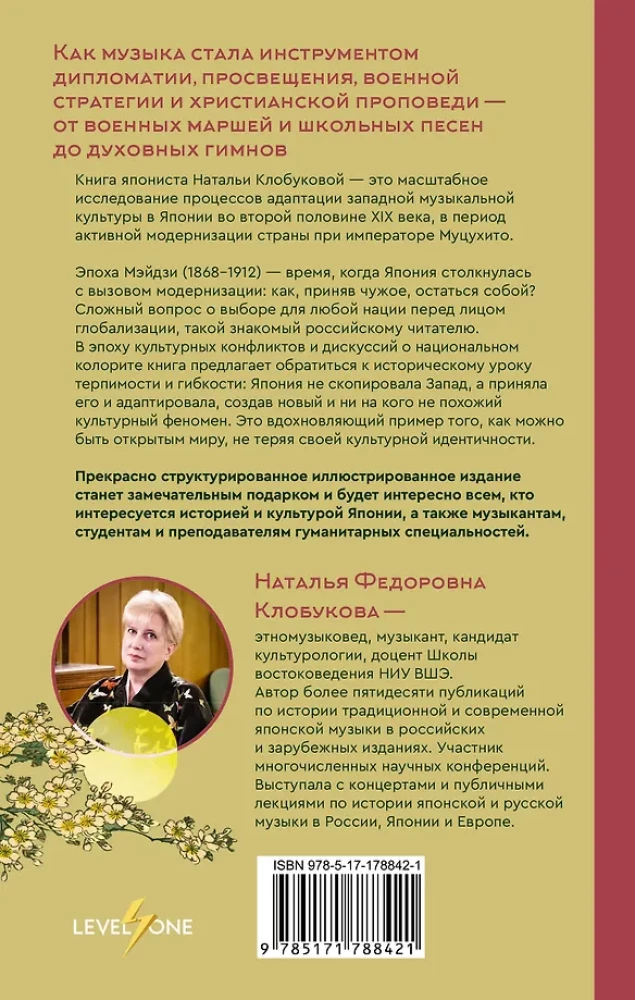
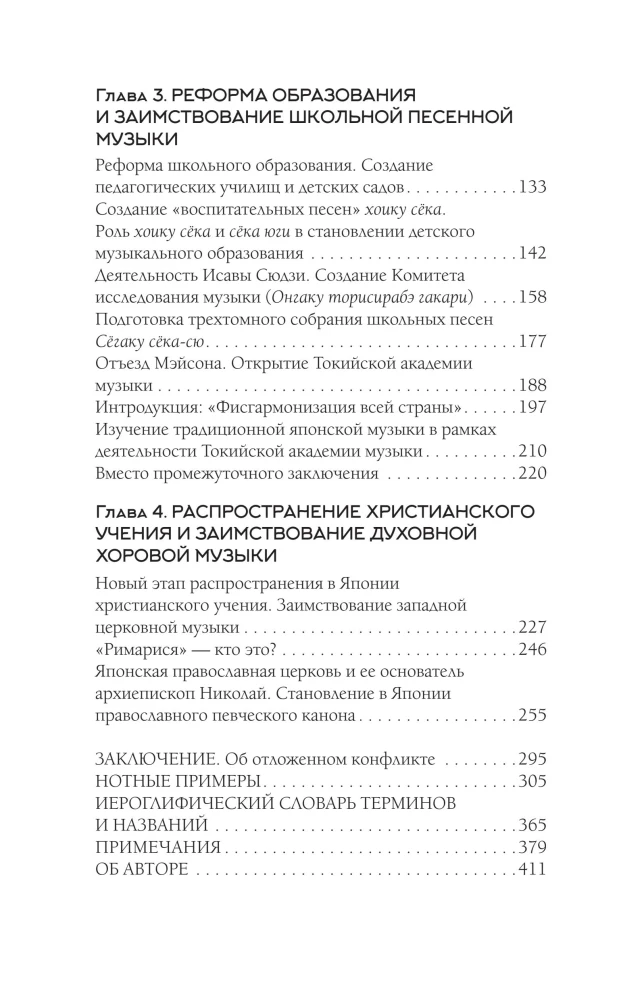
How music became a tool of diplomacy, enlightenment, military strategy, and Christian preaching—from military marches and school songs to spiritual hymns.
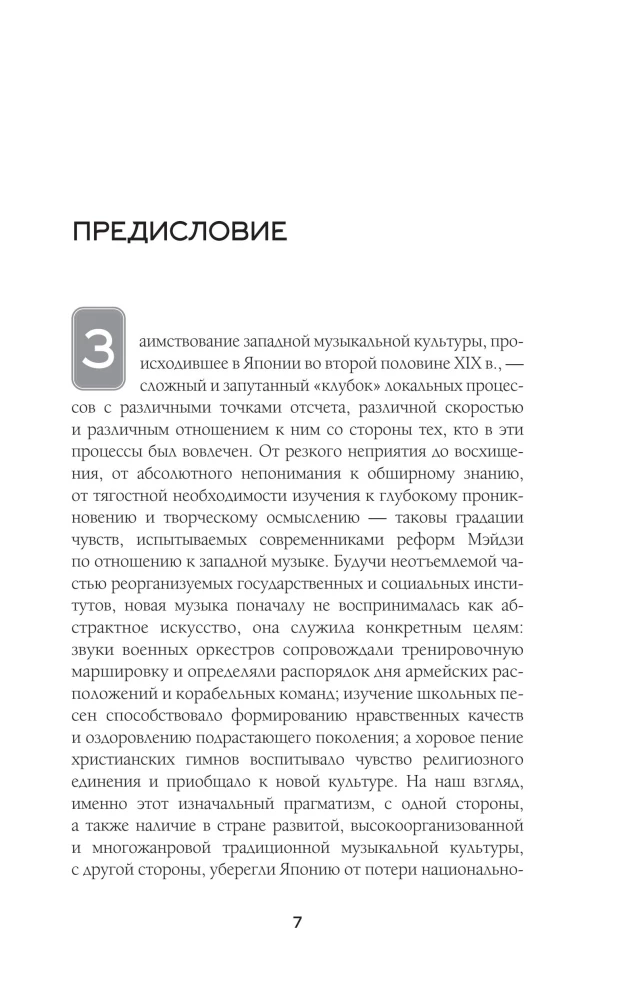
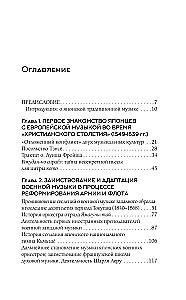
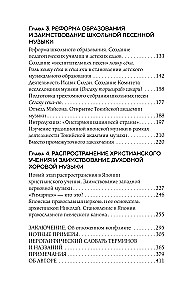
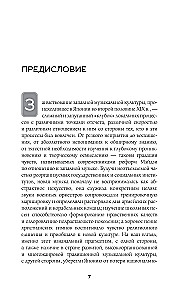
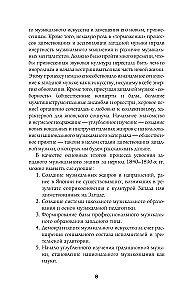
The book by Japanologist Natalia Klobukova is a comprehensive study of the processes of adaptation of Western musical culture in Japan in the second half of the 19th century, during the active modernization of the country under Emperor Meiji.
The Meiji era (1868–1912) was a time when Japan faced the challenge of modernization: how to remain itself while accepting the foreign? A complex question of choice for any nation in the face of globalization, so familiar to the Russian reader.
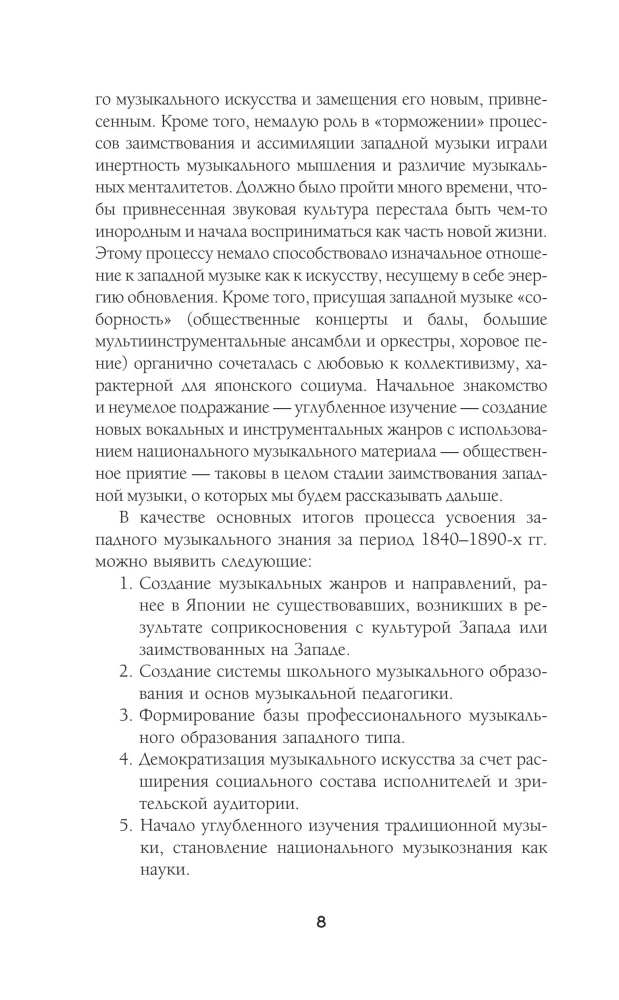
The author shows how music became a tool of diplomacy, enlightenment, and even military strategy—from military marches and school songs to spiritual hymns.
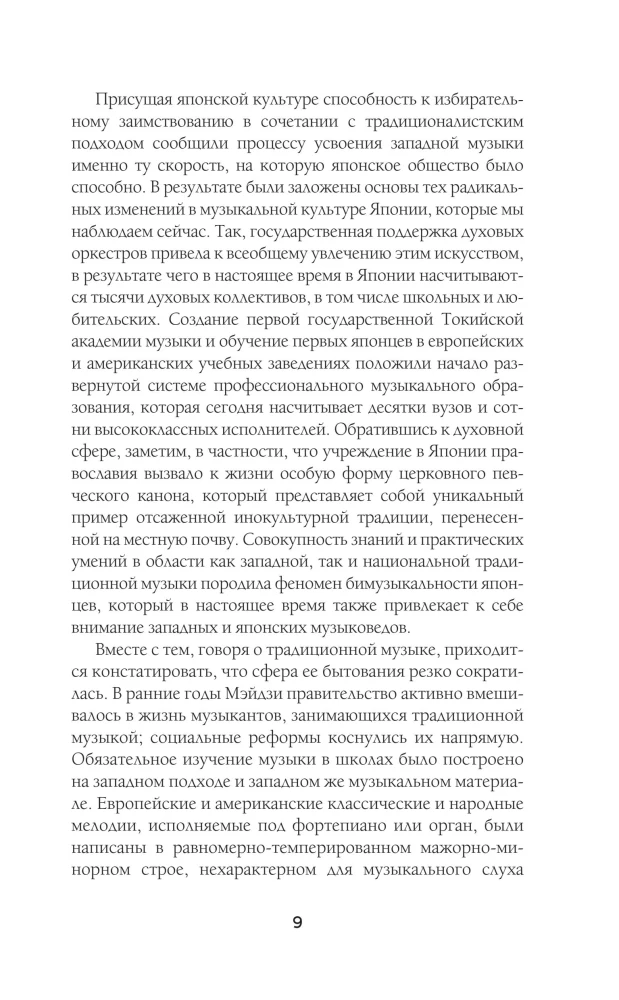
In an era of cultural conflicts and discussions about national color, the book offers a historical lesson of tolerance and flexibility: Japan did not copy the West, but accepted it and adapted it, creating a new and unique cultural phenomenon. This is an inspiring example of how to be open to the world without losing one's cultural identity.
A well-structured illustrated edition will be a wonderful gift and will be of interest to anyone who is curious about the history and culture of Japan, as well as to musicians, students, and teachers in the humanities.
Bestsellers






Publishers "AST" recommends