
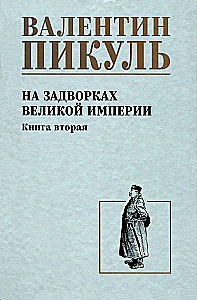

On the Outskirts of the Great Empire. Book Two
Author: Валентин Пикуль
Printhouse: Veche
Series: The Collected Works of V. Pikul
Age restrictions: 12+
Year of publication: 2026
ISBN: 9785448456060
Number of pages: 576
Size: 220х140х27 mm
Cover type: hard
Weight: 653 g
ID: 1735248
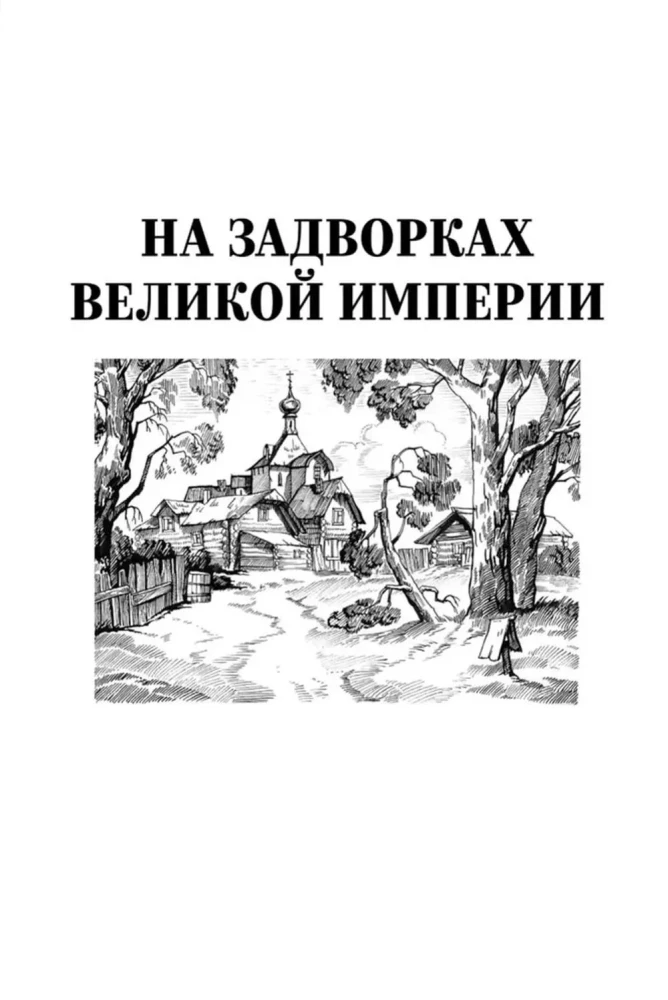
The second book of the novel continues the extensive narrative about the life of the Russian Empire on its outskirts in the late 19th century. The central plot revolves around the fates of people who found themselves far from the capitals, where the contradictions of the state are especially pronounced: bureaucracy, corruption, the arbitrariness of local authorities, and social inequality.
The main characters face the increasing pressure of the system, where honesty and principle become dangerous qualities. Against the backdrop of administrative chaos, national and social conflicts, personal dramas unfold: the struggle for justice, attempts to preserve honor and dignity, disillusionment with ideals.
Pikul shows how the weaknesses of the empire are revealed on its periphery—from ineffective governance to the moral decay of the bureaucracy. At the same time, through the fates of the characters, the theme of internal choice is unveiled: to submit to circumstances or to resist, even understanding the risk.
The second part emphasizes the escalation of the crisis and the anticipation of change. It is not only a historical canvas but also a reflection on the fate of a state where accumulated contradictions inevitably lead to turning points.