
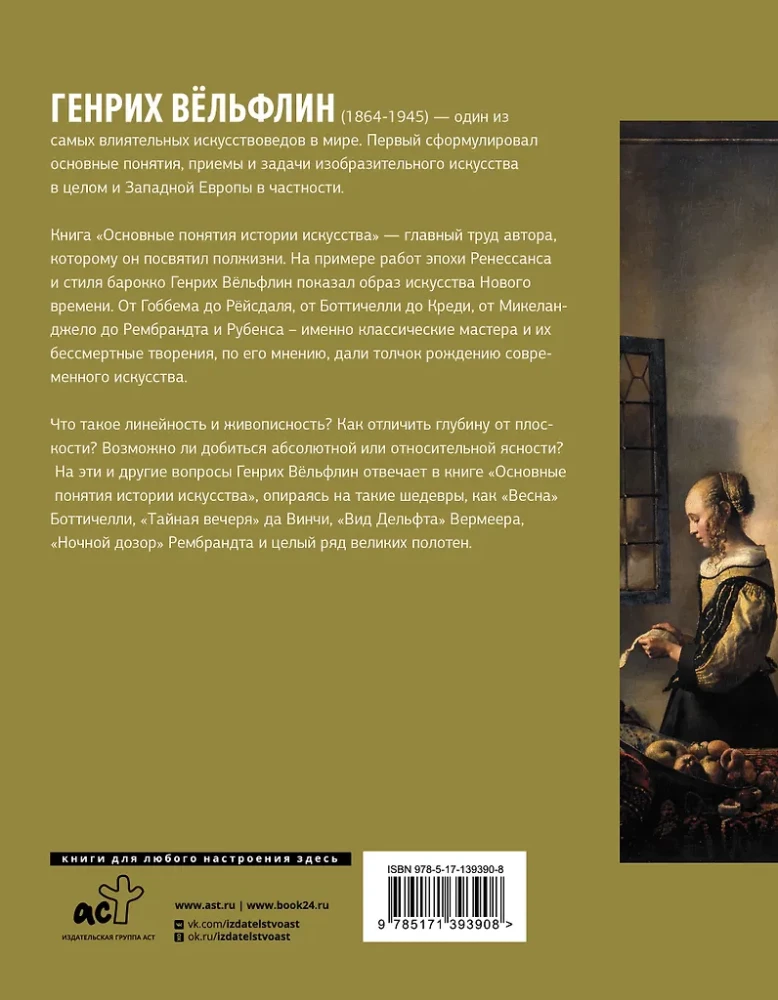

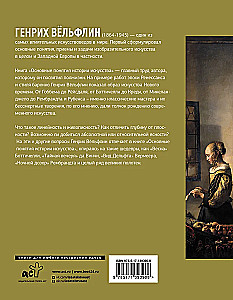
Basic Concepts of Art History with Comments
Heinrich Wölfflin 1864 - 1945 – one of the most influential art historians in the world. He was the first to formulate the basic concepts, techniques, and tasks of visual arts in general and Western Europe in particular. The book...
Basic Concepts of Art History is the author's main work, to which he dedicated half of his life. Using examples from the Renaissance and Baroque styles, Heinrich Wölfflin demonstrated the form of art in the modern era. From Hobbema to Ruisdael, from Botticelli to Credi, from Michelangelo to Rembrandt and Rubens – it is the classical masters and their immortal creations that, according to him, spurred the birth of contemporary art. His work has been translated into foreign languages multiple times. The analytical method he developed is still widely used for training art historians from around the world. What is linearity and painting quality? How to distinguish depth from flatness? Is it possible to achieve absolute or relative clarity? To these and other questions, Heinrich Wölfflin answers in the book Basic Concepts of Art History, relying on masterpieces such as Botticelli's Spring, Da Vinci's Last Supper, Vermeer’s View of Delft, Rembrandt's Night Watch, and a series of great paintings.
Author: Генрих Вёльфлин
Printhouse: AST
Series: Heritage of Eras
Age restrictions: 12+
Year of publication: 2022
ISBN: 9785171393908
Number of pages: 320
Size: 217x169x22 mm
Cover type: hard
Weight: 508 g
ID: 971386
Sold out
€ 12.09
Sold out
€ 12.09
Bestsellers



€ 13.29
In stock
12 Weeks in a Year. How to Achieve More in 12 Weeks Than Others Do in 12 Months
Майкл Леннингтон, Брайан Моран

€ 7.89
In stock
Choice. On the Freedom and Inner Strength of a Person
Эдит Ева Эгер, Эсме Швалль-Вейганд


€ 14.99
In stock
The Body Remembers Everything: The Role of Psychological Trauma in a Person's Life and Techniques to Overcome It
Бессел ван дер Колк

€ 6.99
In stock
Publishers "AST" recommends


Bestseller
€ 9.69
In stock
Korean Language. Complete Grammar in Diagrams and Tables
Чун Ин Сун, Анастасия Погадаева