
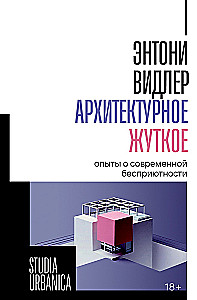
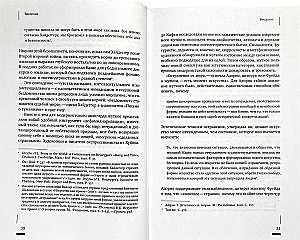
Architectural Creepy: Experiments on Modern Homelessness
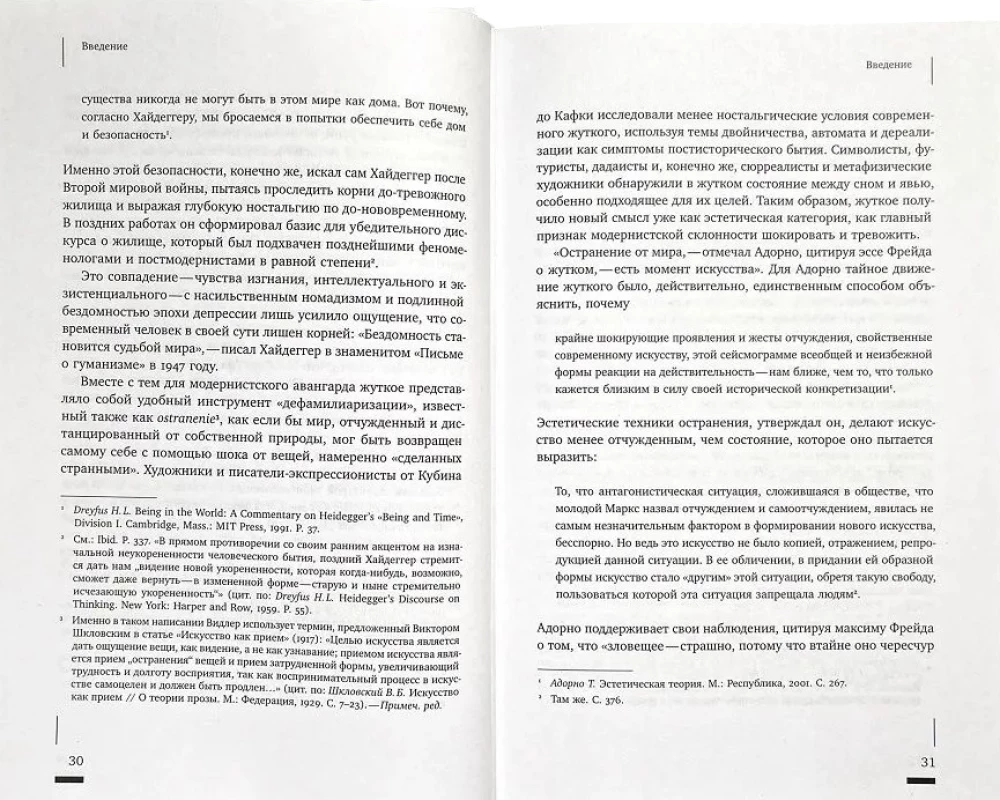
Why do we often perceive the modern city as a disturbing rather than a cozy space? Why did architects in the late 20th century fall in love with angular and sharp forms, and why design buildings that seem to fall...
apart? Anthony Vidler shows how an unconscious fear of the future manifests in architecture, a "discontent with culture," and frustration from a sense of political helplessness. The subjects of research in the book are leaders of the architectural avant-garde of the late 1980s and 1990s, now recognized as classics: Peter Eisenman, Rem Koolhaas, Liz Diller and Ricardo Scofidio, Bernard Tschumi, John Hejduk, the Coop Himmelb(l)au office. At the center of the author's attention is the concept of the uncanny, introduced by Freud and rooted in the tradition of the gothic novel and horror literature of the 19th century. Vidler traces how motifs of anxiety, division, loss of homeliness, and the disintegration of a person's identity gradually transition from literature and psychoanalysis to architectural form. Each chapter of the book is a separate essay exploring different aspects of the sensitivity of the modern urban dweller. Anthony Vidler (1941–2023) was a theorist and historian of architecture.
Author: Энтони Видлер
Printhouse: Novoe literaturnoe obozrenie
Series: Studia urbanica
Age restrictions: 18+
Year of publication: 2025
ISBN: 9785444827420
Number of pages: 320
Size: 220x145x20 mm
Cover type: hard
Weight: 485 g
ID: 1734352
Sold out
€ 17.69
Sold out
€ 17.69
Bestsellers





€ 13.29
In stock
12 Weeks in a Year. How to Achieve More in 12 Weeks Than Others Do in 12 Months
Майкл Леннингтон, Брайан Моран


€ 7.89
In stock
Choice. On the Freedom and Inner Strength of a Person
Эдит Ева Эгер, Эсме Швалль-Вейганд



€ 6.99
In stock




€ 6.99
In stock
How to Talk So Kids Will Listen, and How to Listen So Kids Will Talk
Элейн Мазлиш, Адель Фабер