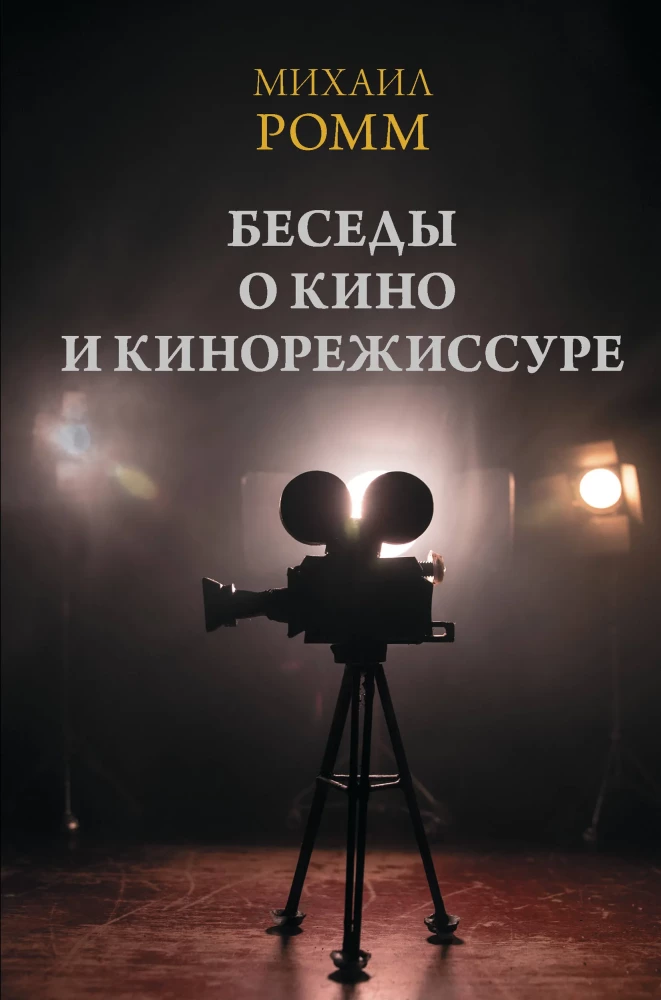
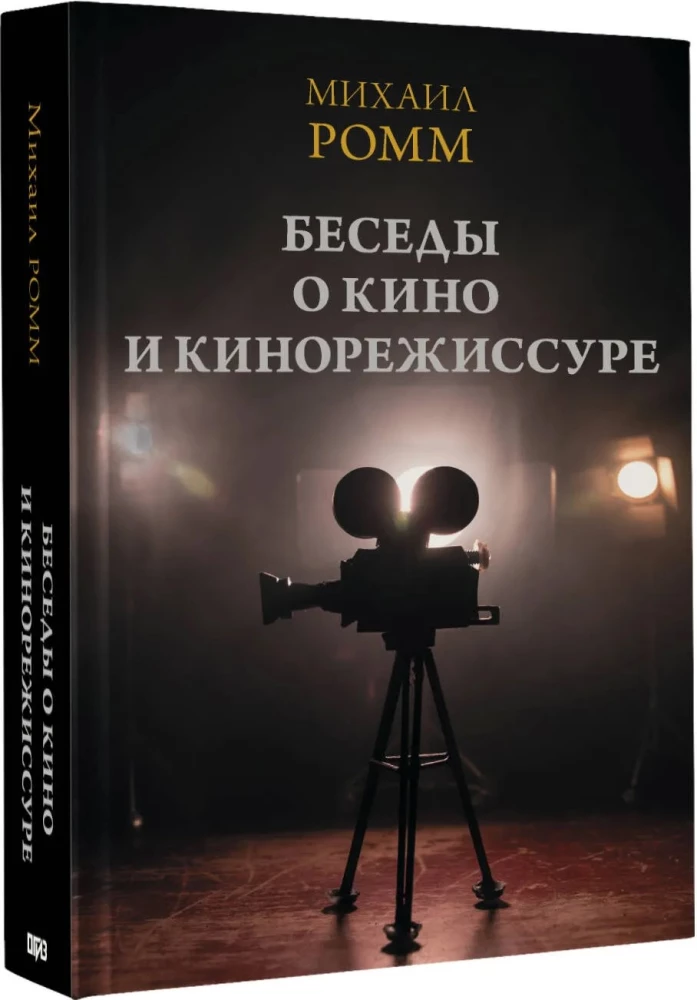
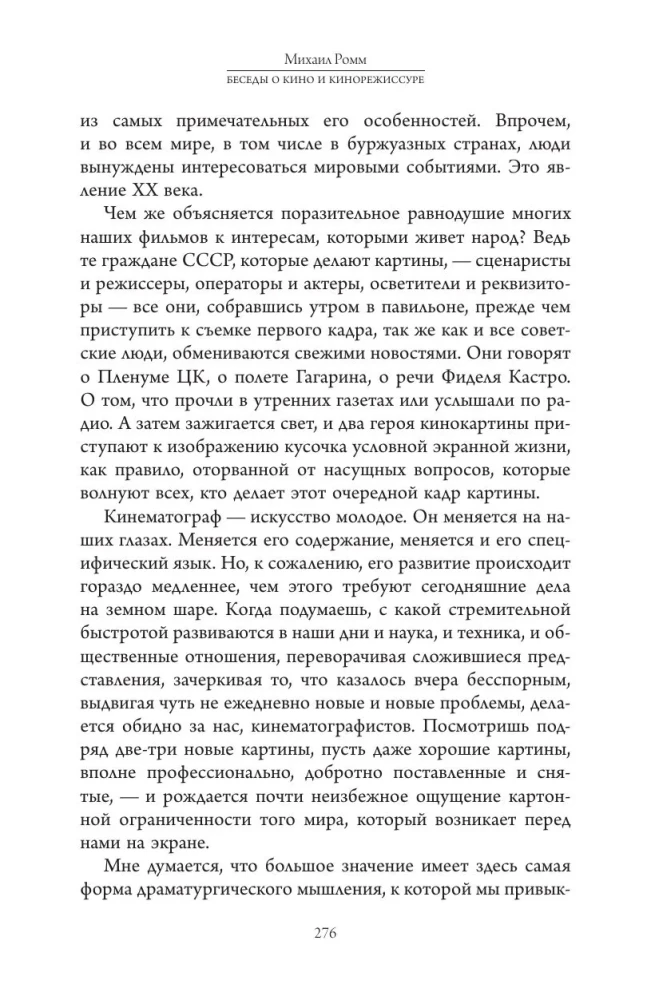
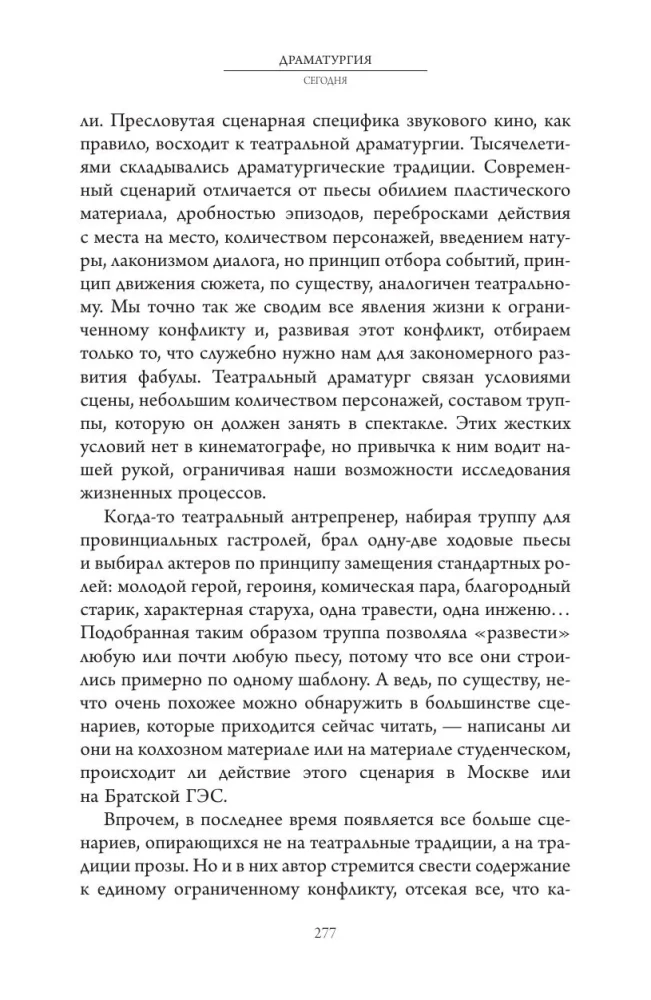
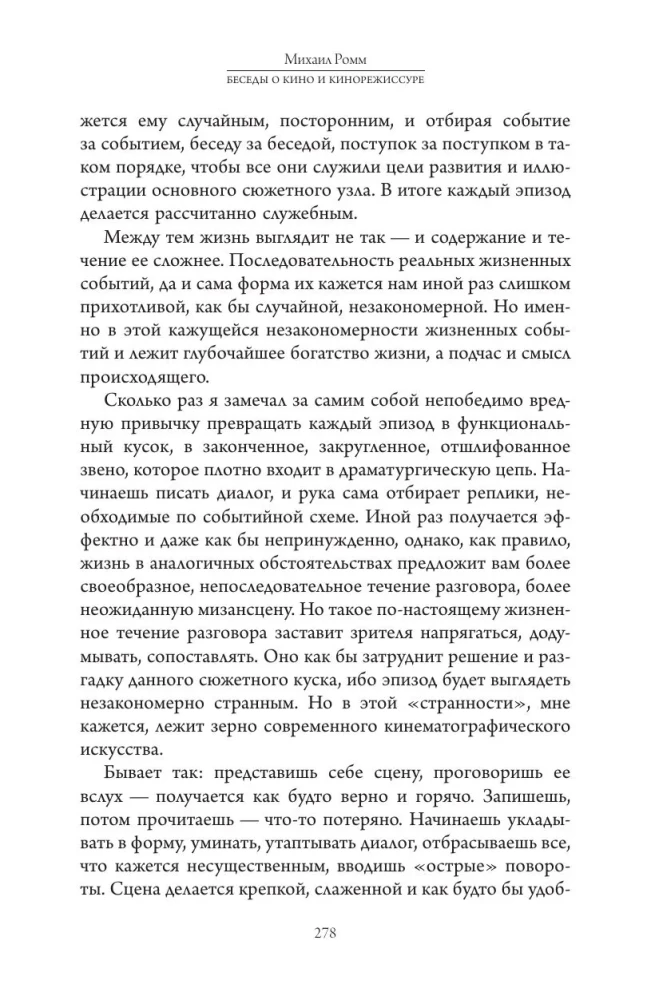
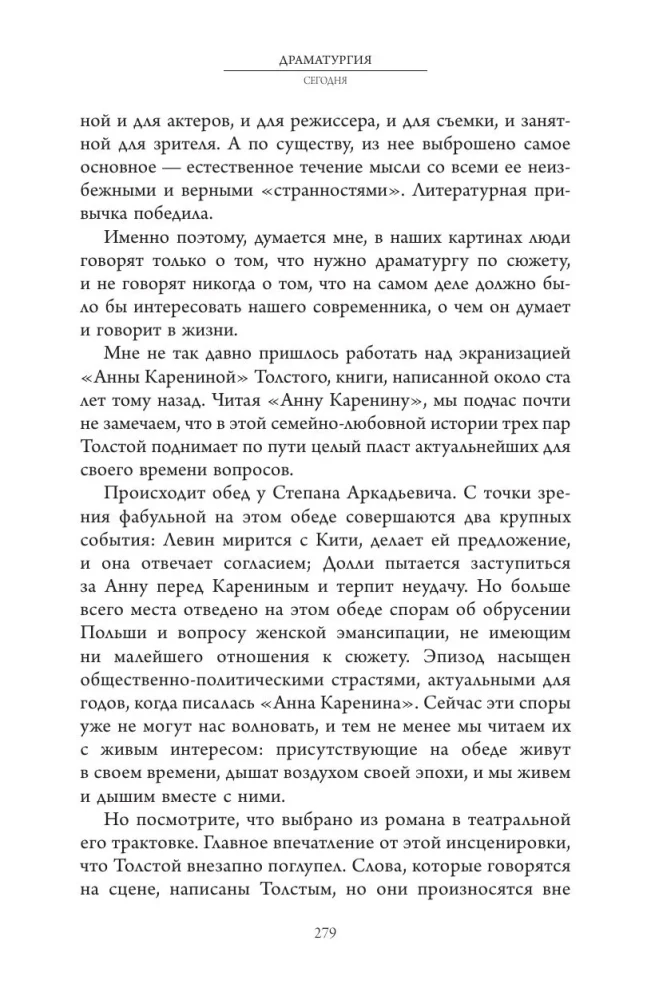
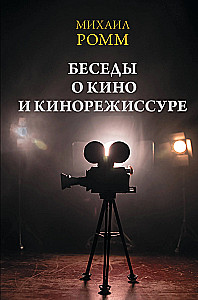
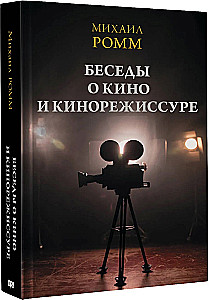
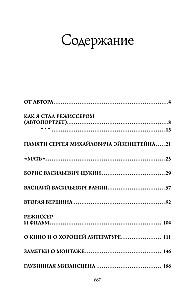
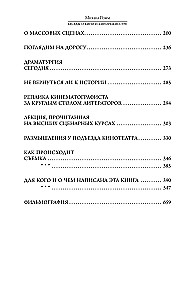
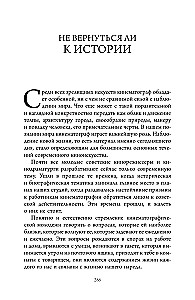
Conversations about Cinema and Film Directing
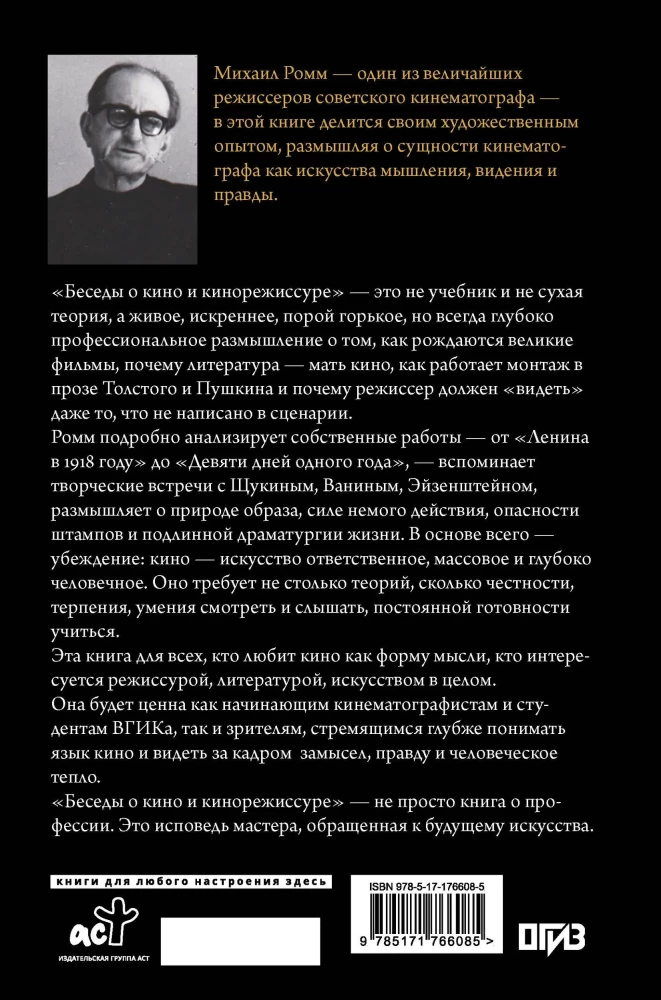
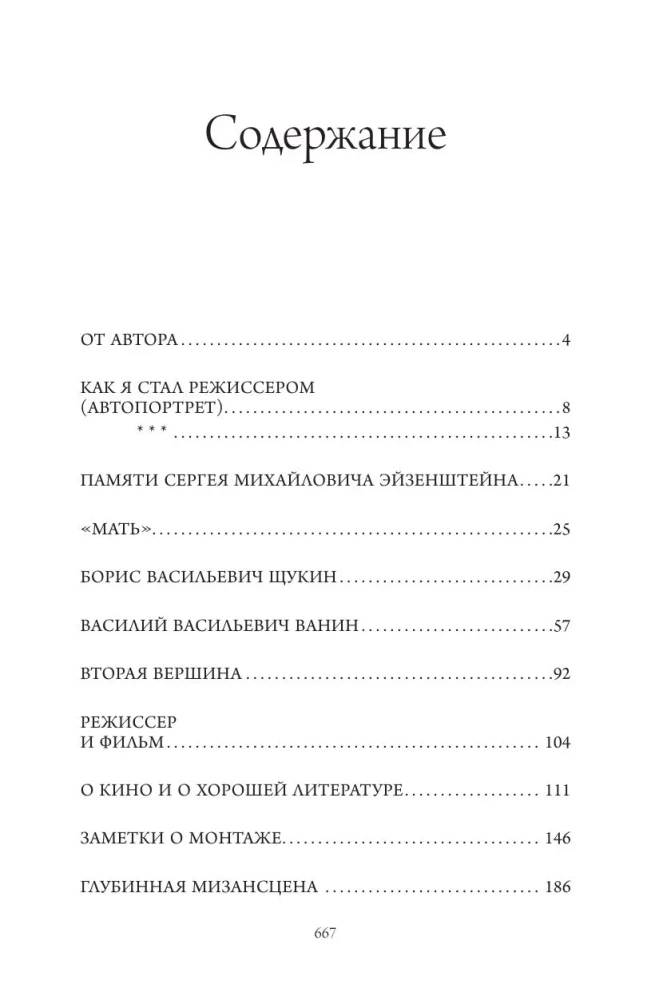
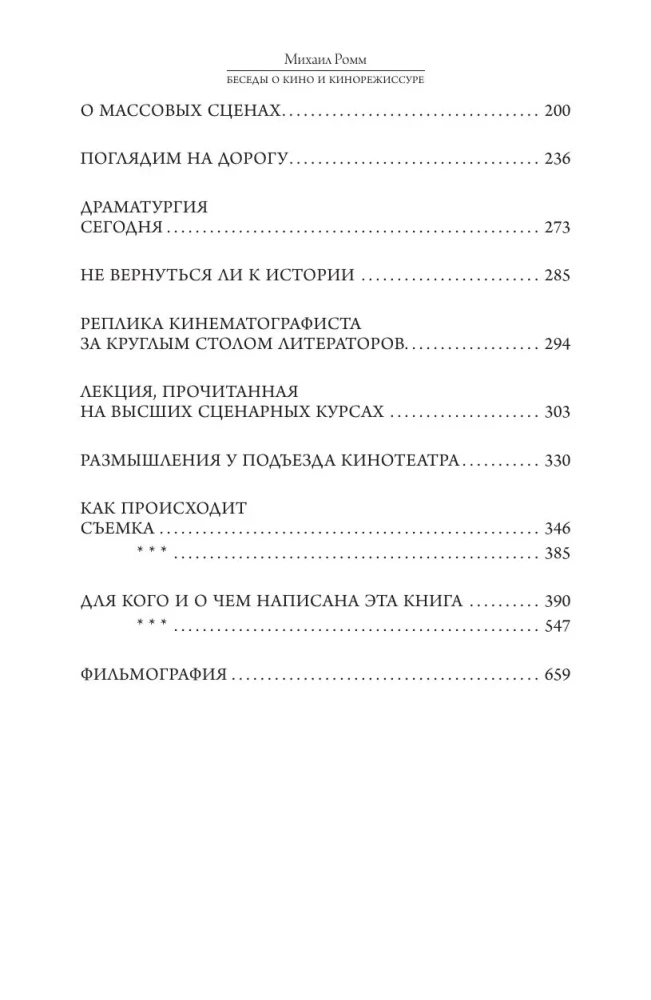
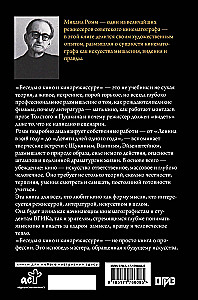
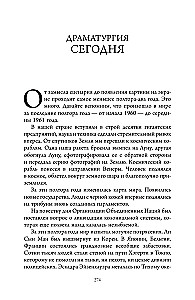
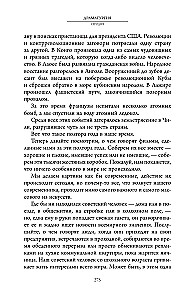
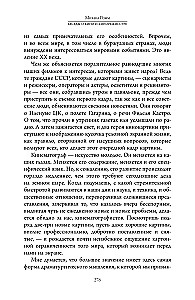
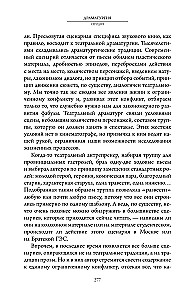
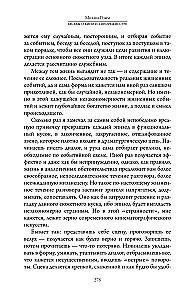
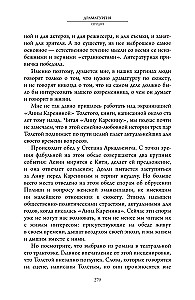
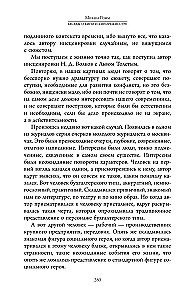
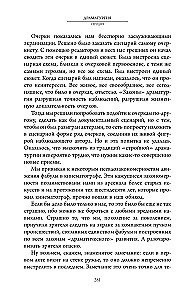
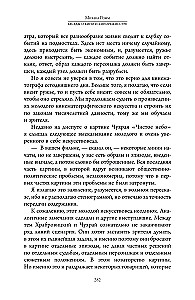
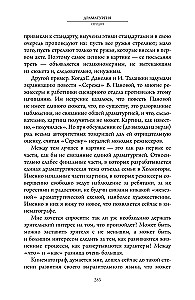
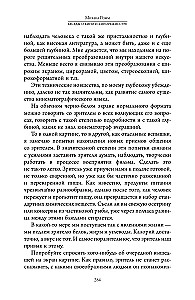
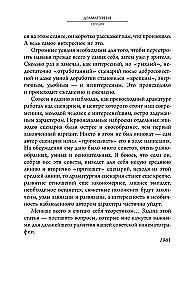
"Conversations about Cinema and Film Directing" is neither a textbook nor a dry theory, but a lively, sincere, sometimes bitter, yet always deeply professional reflection on how great films are born, why literature is the mother of cinema, how editing...
works in the prose of Tolstoy and Pushkin, and why a director must "see" even what is not written in the script.
Romm analyzes his own works in detail—from "Lenin in 1918" to "Nine Days of One Year," recalls creative meetings with Shchukin, Vanin, Eisenstein, reflects on the nature of the image, the power of silent action, the danger of clichés, and the true dramaturgy of life. At the core of everything is the conviction that cinema is an art that is responsible, mass, and profoundly human. It requires not so much theories as honesty, patience, the ability to look and hear, and a constant readiness to learn.
This book is for everyone who loves cinema as a form of thought, who is interested in directing, literature, and art in general.
It will be valuable for both budding filmmakers and VGIK students, as well as viewers who strive to understand the language of cinema more deeply and to see behind the scenes the concept, truth, and human warmth.
"Conversations about Cinema and Film Directing" is not just a book about a profession. It is a confession of a master addressed to the future of art.
Romm analyzes his own works in detail—from "Lenin in 1918" to "Nine Days of One Year," recalls creative meetings with Shchukin, Vanin, Eisenstein, reflects on the nature of the image, the power of silent action, the danger of clichés, and the true dramaturgy of life. At the core of everything is the conviction that cinema is an art that is responsible, mass, and profoundly human. It requires not so much theories as honesty, patience, the ability to look and hear, and a constant readiness to learn.
This book is for everyone who loves cinema as a form of thought, who is interested in directing, literature, and art in general.
It will be valuable for both budding filmmakers and VGIK students, as well as viewers who strive to understand the language of cinema more deeply and to see behind the scenes the concept, truth, and human warmth.
"Conversations about Cinema and Film Directing" is not just a book about a profession. It is a confession of a master addressed to the future of art.
Author: Михаил Ромм
Printhouse: AST
Series: Theatrical Experiences
Age restrictions: 16+
Year of publication: 2026
ISBN: 9785171766085
Number of pages: 672
Size: 222х150х38 mm
Cover type: hard
Weight: 688 g
ID: 1732586
In stock
€ 19.99
Will be delivered to United States on :
Unfortunately, we are currently unable to deliver orders to your region.
In stock
€ 19.99
Will be delivered to United States on :
Unfortunately, we are currently unable to deliver orders to your region.
Bestsellers
€ 13.29
In stock
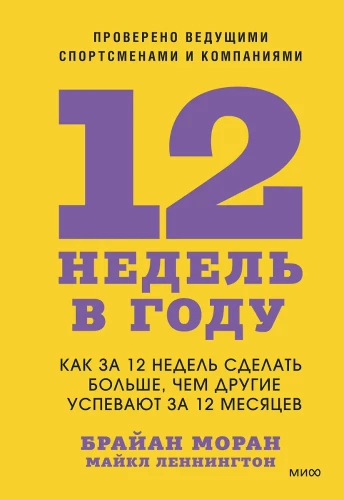
12 Weeks in a Year. How to Achieve More in 12 Weeks Than Others Do in 12 Months
Майкл Леннингтон, Брайан Моран
€ 7.89
In stock
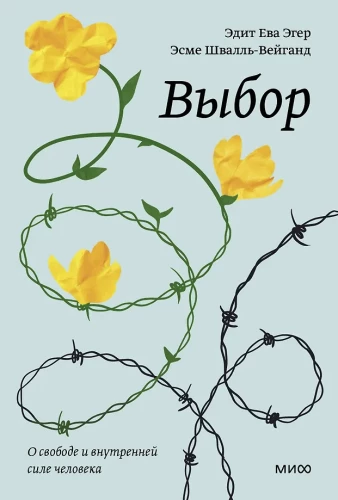
Choice. On the Freedom and Inner Strength of a Person
Эдит Ева Эгер, Эсме Швалль-Вейганд
€ 6.99
In stock