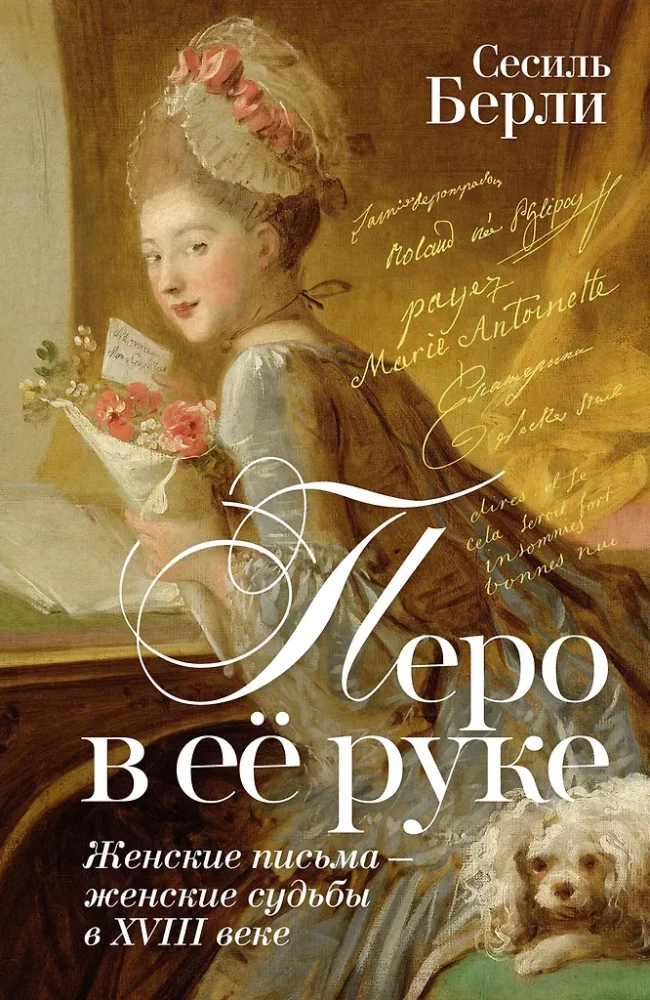


A Pen in Her Hand: Women's Letters - Women's Destinies in the 18th Century
Author: Сесиль Берли
Printhouse: Azbuka
Series: Women in History
Age restrictions: 16+
Year of publication: 2025
ISBN: 9785389258884
Number of pages: 320
Size: 188х122х20 mm
Cover type: hard
Weight: 318 g
ID: 1712904
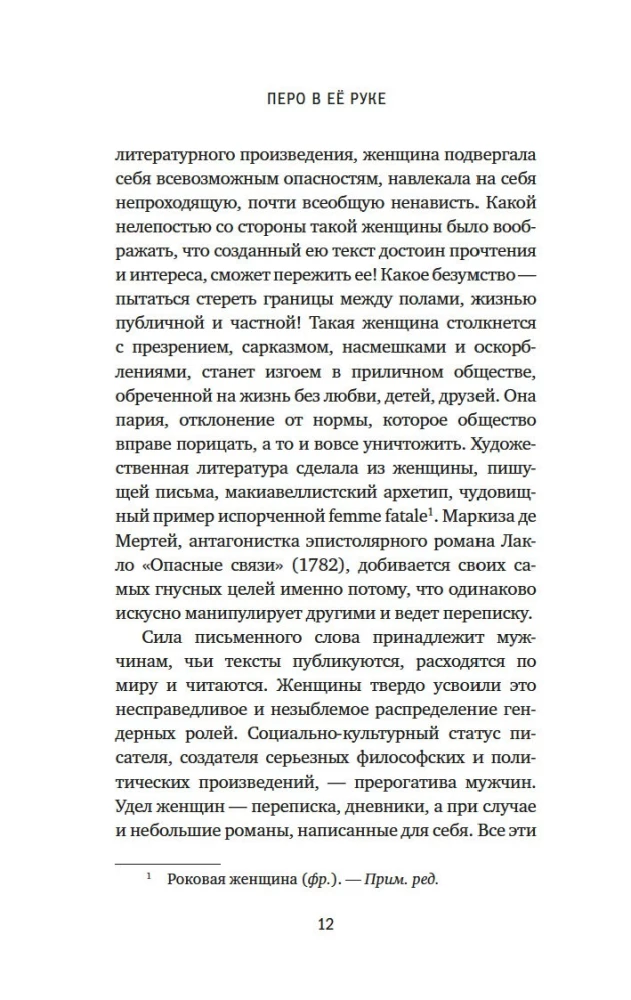
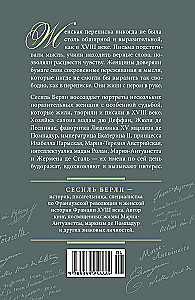
The 18th century is the century of letters. Correspondence conveys news, ideas, feelings, subjugating the lives of even those who cannot write – private messengers, couriers, servants. The heroines of this book vividly reflect their era. They take up the pen and write letter after letter. They sprinkle fresh ink with sand, fold the message in half, and seal it with a personal stamp. There is no place for them in public space, among men – only behind the secretary in the silence of their bedroom. Correspondences grant them freedom. Here feelings blossom, experiences are poured out, and philosophical questions arise. Thus women in the 18th century find their voice.
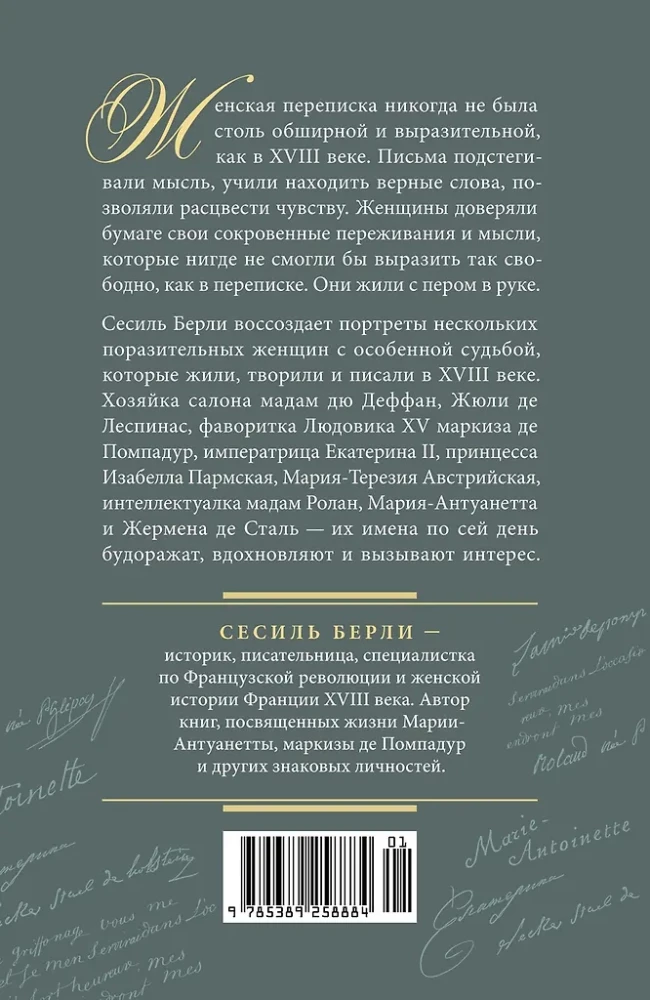
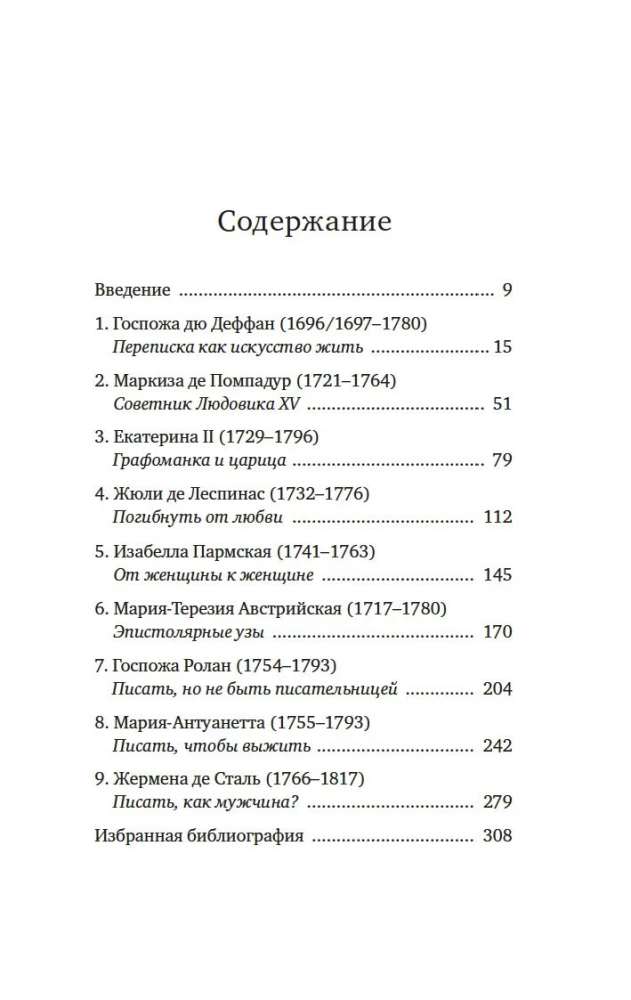
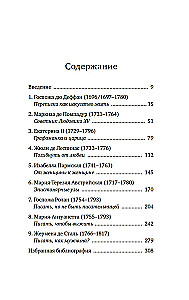
"Madame du Deffand, the salon hostess, who enjoyed only intellectual pleasures and turned correspondence into a true art of life. The Marquise de Pompadour, the all-powerful favorite, the trusted confidante of Louis XV. Catherine II, the autocratic empress and friend of Enlightenment philosophers. Julie de Lespinasse, an illegitimate child, a muse for the encyclopedists and a woman in love, who perished from her own feelings. Isabella of Parma, a princess hostage, a philosophical archduchess, a skilled manipulator. Maria Theresa of Austria, the empress and despotic mother.
Madame Roland, an intellectual who wrote so brilliantly, yet did not wish to be a writer. Marie Antoinette, a queen at the epicenter of a political hurricane, who had no other means to save the monarchy and her own life. Germaine de Staël, an ahead-of-her-time intellectual, who wrote and behaved like a man. The correspondences of these women allow us to glance into the very heart of their lives, to understand their inner world, to feel their anxieties and experiences" (Cécile Berly).
Bestsellers