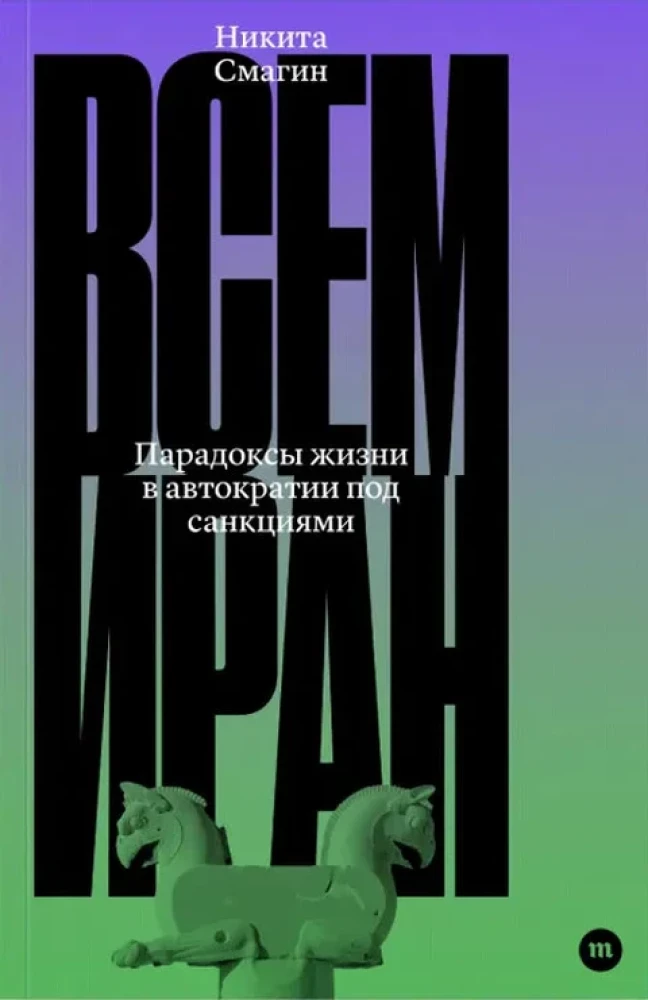
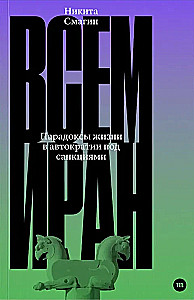
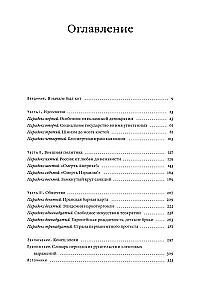
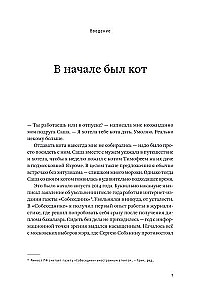
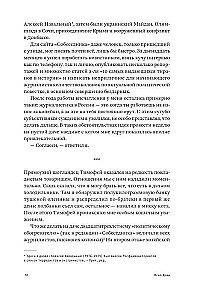
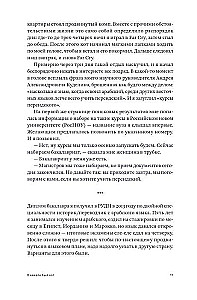
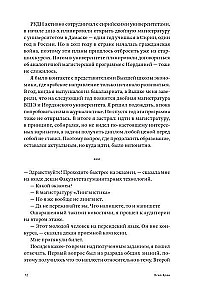
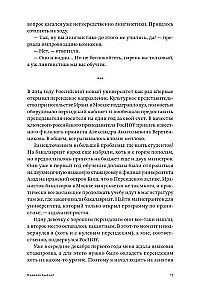
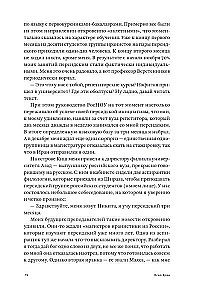
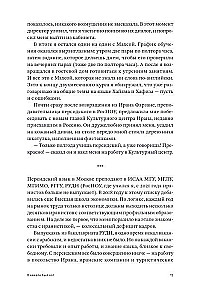
All Iran. Paradoxes of Life in an Autocracy Under Sanctions
A large-scale (extended and revised) study of Iranian life, from politics and economics to everyday life and entertainment.
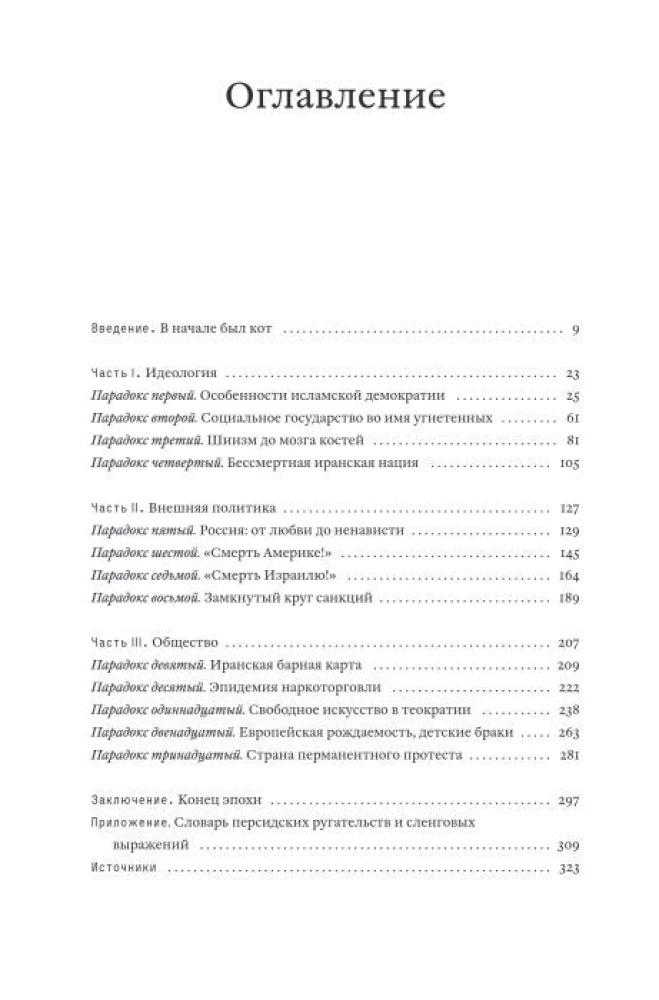
What is the Islamic Republic of Iran, a peculiar blend of traditional Shia Islam, a nationalism rooted in a legendary past, and leftist... ideas of the modern era? How has the regime after the 1979 revolution managed for decades to assert the unquestionable authority of the spiritual leader while also conducting competitive elections to secular authorities? And why has this mechanism broken down in recent years, leading to regular, fierce protests in the country accompanied by many casualties? This is what the book "All Iran" addresses, written by journalist and Orientalist Nikita Smagin, who has visited Iran multiple times, lived in the country for a long time, studied its history and culture, and reported on events there for Russian media.
The first edition of the book "All Iran" was published in 2024, but it soon needed an update due to a avalanche of tectonic changes in the Middle East: the defeat of Lebanese Hizbollah in its confrontation with Israel, the fall of another Iranian ally - the Syrian regime of Bashar al-Assad, exchanges of direct missile strikes between Iran and Israel, and finally, a 12-day Iran-Israel war that ended with a bombing of Iranian nuclear facilities by the United States. This is not to mention the current large-scale protest in Iran, after which the Ayatollah regime may not hold on.
The second, revised and supplemented edition of Nikita Smagin's book "All Iran" is capable of explaining what is happening in this country right now and what future Iranian society may expect.
And also - can you find alcohol and drugs in Iran, do they love modern cinema and music, and how to swear correctly in Persian.
From the author:
"When in spring 2022 I was offered to write a book about Iran, they had a clear idea: after the start of the war, people in Russia do not understand what tomorrow will bring and are seeking answers in examples from countries like Iran and North Korea. I agreed, of course, but thought about the idea - it’s good for marketing, but in reality, everything will be quite different. That is, I will write a book about Iran, and people will read it and realize that it is a very distant example from Russia.
I wrote it for two years. And as I was writing the book, and later distributing it, I suddenly began to realize: it seems the publishing house was much more right than I thought. One of the last calls was the internet about "white lists" - when I learned about this, I was jolted: this is exactly what the Islamic Republic had been building and applying since the late 2010s.
Six months after the release of "All Iran," I was recognized as a "foreign agent," the book was removed from sale, and it was time to republish it. The drama of this book unfolded against the backdrop of drama in Iran itself and around it, as this country began to increasingly appear in the world news, from which it has not been leaving in recent months. Therefore, the reissue differs significantly from the original text - here there is both a new preface (I would even say, a chapter), and many new details and conclusions.
Despite the fact that Iran today is all emotions for many, I wanted the book to convey the complexity and multilayered nature of this country. The Islamic Republic is a product of a peculiar combination of Islamism and Marxism based on an even more complex and deeper local specificity. But most importantly, what I want is for you to see the stories of Iranians looking at you from the pages of this book in this collection of excerpts from academic articles and analytical notes. Most of them are currently in very difficult conditions, and to be frank, I do not know for sure if all the heroes of the book are alive and well."
What is the Islamic Republic of Iran, a peculiar blend of traditional Shia Islam, a nationalism rooted in a legendary past, and leftist... ideas of the modern era? How has the regime after the 1979 revolution managed for decades to assert the unquestionable authority of the spiritual leader while also conducting competitive elections to secular authorities? And why has this mechanism broken down in recent years, leading to regular, fierce protests in the country accompanied by many casualties? This is what the book "All Iran" addresses, written by journalist and Orientalist Nikita Smagin, who has visited Iran multiple times, lived in the country for a long time, studied its history and culture, and reported on events there for Russian media.
The first edition of the book "All Iran" was published in 2024, but it soon needed an update due to a avalanche of tectonic changes in the Middle East: the defeat of Lebanese Hizbollah in its confrontation with Israel, the fall of another Iranian ally - the Syrian regime of Bashar al-Assad, exchanges of direct missile strikes between Iran and Israel, and finally, a 12-day Iran-Israel war that ended with a bombing of Iranian nuclear facilities by the United States. This is not to mention the current large-scale protest in Iran, after which the Ayatollah regime may not hold on.
The second, revised and supplemented edition of Nikita Smagin's book "All Iran" is capable of explaining what is happening in this country right now and what future Iranian society may expect.
And also - can you find alcohol and drugs in Iran, do they love modern cinema and music, and how to swear correctly in Persian.
From the author:
"When in spring 2022 I was offered to write a book about Iran, they had a clear idea: after the start of the war, people in Russia do not understand what tomorrow will bring and are seeking answers in examples from countries like Iran and North Korea. I agreed, of course, but thought about the idea - it’s good for marketing, but in reality, everything will be quite different. That is, I will write a book about Iran, and people will read it and realize that it is a very distant example from Russia.
I wrote it for two years. And as I was writing the book, and later distributing it, I suddenly began to realize: it seems the publishing house was much more right than I thought. One of the last calls was the internet about "white lists" - when I learned about this, I was jolted: this is exactly what the Islamic Republic had been building and applying since the late 2010s.
Six months after the release of "All Iran," I was recognized as a "foreign agent," the book was removed from sale, and it was time to republish it. The drama of this book unfolded against the backdrop of drama in Iran itself and around it, as this country began to increasingly appear in the world news, from which it has not been leaving in recent months. Therefore, the reissue differs significantly from the original text - here there is both a new preface (I would even say, a chapter), and many new details and conclusions.
Despite the fact that Iran today is all emotions for many, I wanted the book to convey the complexity and multilayered nature of this country. The Islamic Republic is a product of a peculiar combination of Islamism and Marxism based on an even more complex and deeper local specificity. But most importantly, what I want is for you to see the stories of Iranians looking at you from the pages of this book in this collection of excerpts from academic articles and analytical notes. Most of them are currently in very difficult conditions, and to be frank, I do not know for sure if all the heroes of the book are alive and well."
Author: Никита Смагин
Printhouse: Meduza
Age restrictions: 18+
Year of publication: 2026
ISBN: 9789934936081
Number of pages: 290
Size: 210х137х25 mm
Cover type: integral
Weight: 360 g
ID: 1734689
In stock
€ 35.95
Will be delivered to United States on 21 July (Tu):
By courier
from € 38.94
Bestsellers
€ 5.19
In stock
€ 7.59
In stock
Choice. On the Freedom and Inner Strength of a Person
Эдит Ева Эгер, Эсме Швалль-Вейганд
€ 14.09
In stock
12 Weeks in a Year. How to Achieve More in 12 Weeks Than Others Do in 12 Months
Майкл Леннингтон, Брайан Моран