

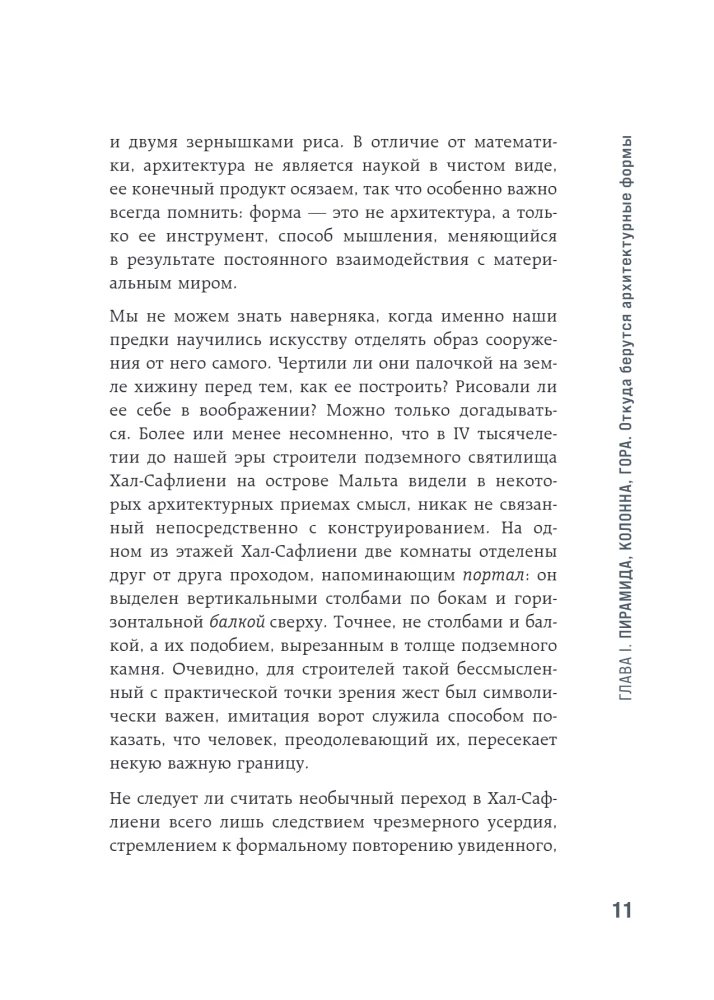
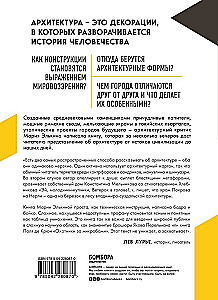
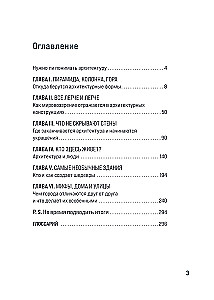


Architecture. How to Understand It: The Evolution of Buildings from the Neolithic to the Present Day
Author: Мария Элькина
Printhouse: Eksmo
Series: Gift Editions. Architecture
Age restrictions: 12+
Year of publication: 2025
ISBN: 9785042280870
Number of pages: 320
Size: 200x145x25 mm
Cover type: мягкая
Weight: 500 g
ID: 1720995
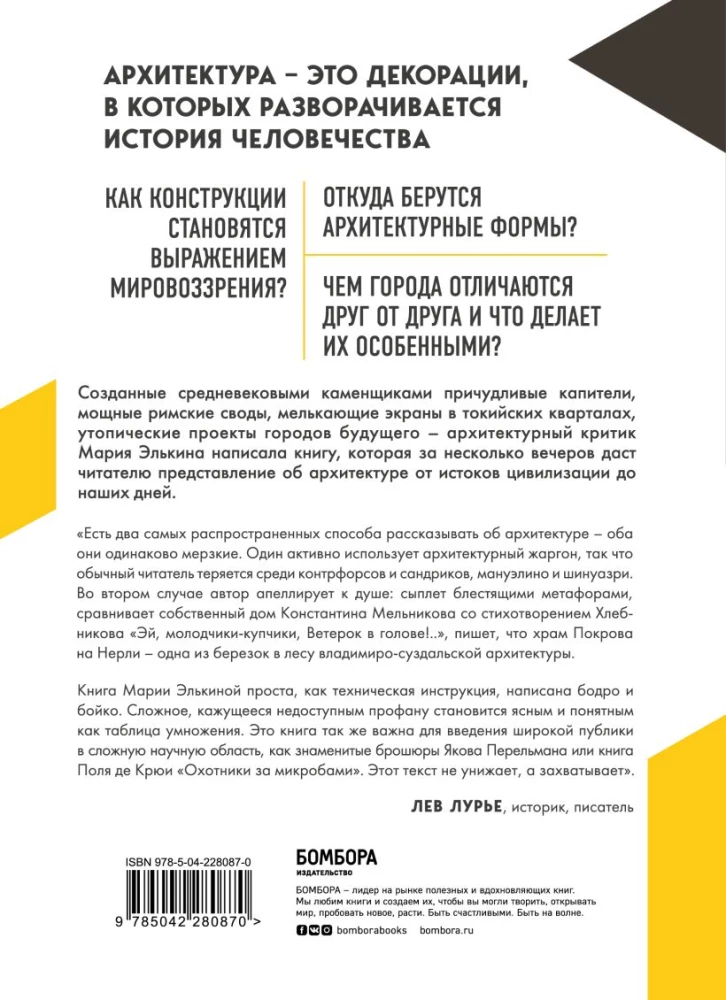
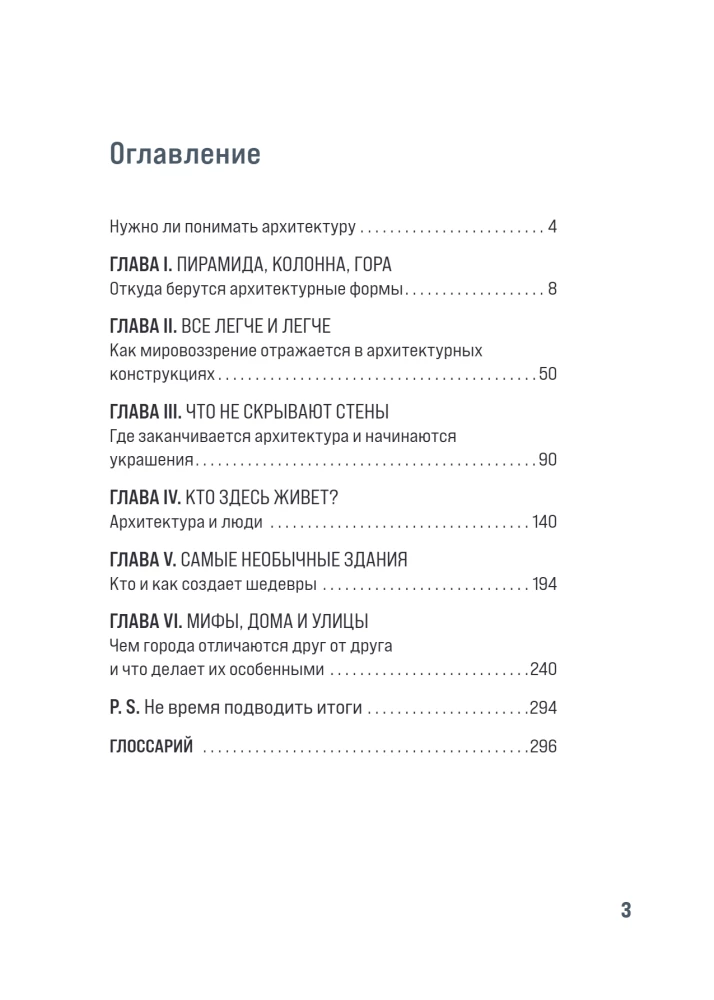
Roman urban planning was characterized by monumentality and gifted the world various urban benefits, medieval cities were formed around markets, and the discovery of linear perspective in the 17th century and the development of transportation in the 19th century completely changed the appearance of cities.
— What do we understand by architecture and how closely is it connected to civilization?
— Do we understand its contradictions, significance, and aspirations?
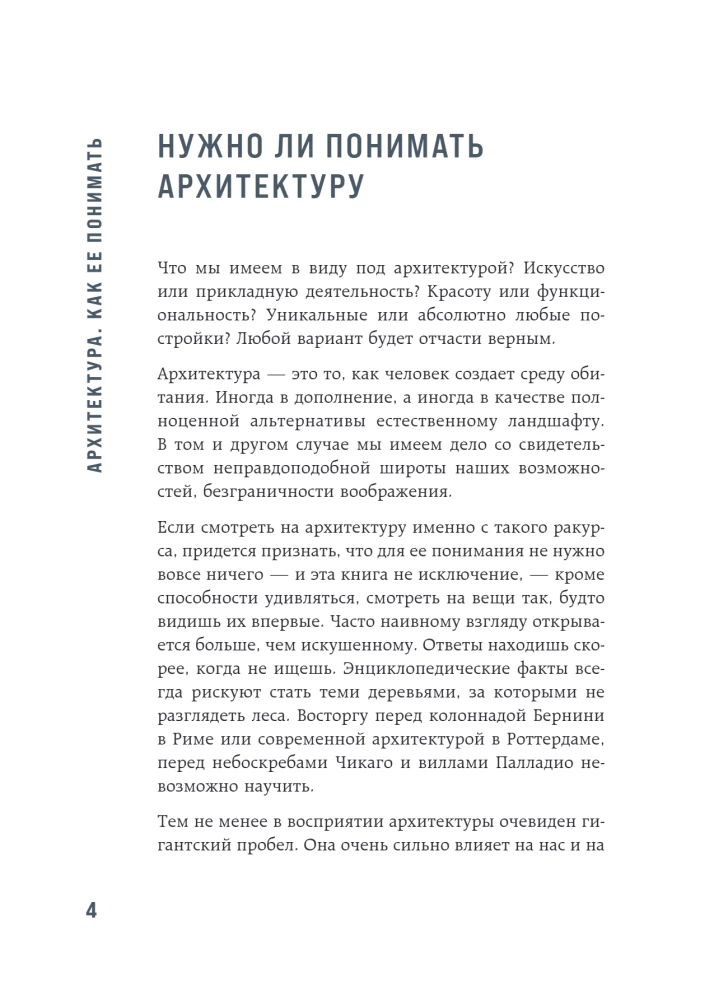
— To feel awe at the sight of Rouen Cathedral or Bernini's colonnade in Rome, one does not need to be a professional architect or art historian.
However, architecture, which shapes our environment, still receives little attention. In her book, architectural critic Maria Elkina examines this field of human activity in all its splendor and multifaceted nature. You will learn how architectural forms emerged and why they took on certain appearances: whether it is the ornate entrances of Gothic cathedrals, eternal columns, or the unusual geometry of modernism. You will see how worldview is reflected in architectural constructions and will try to understand what makes a building a work of art.
Bestsellers















Publishers "Eksmo" recommends