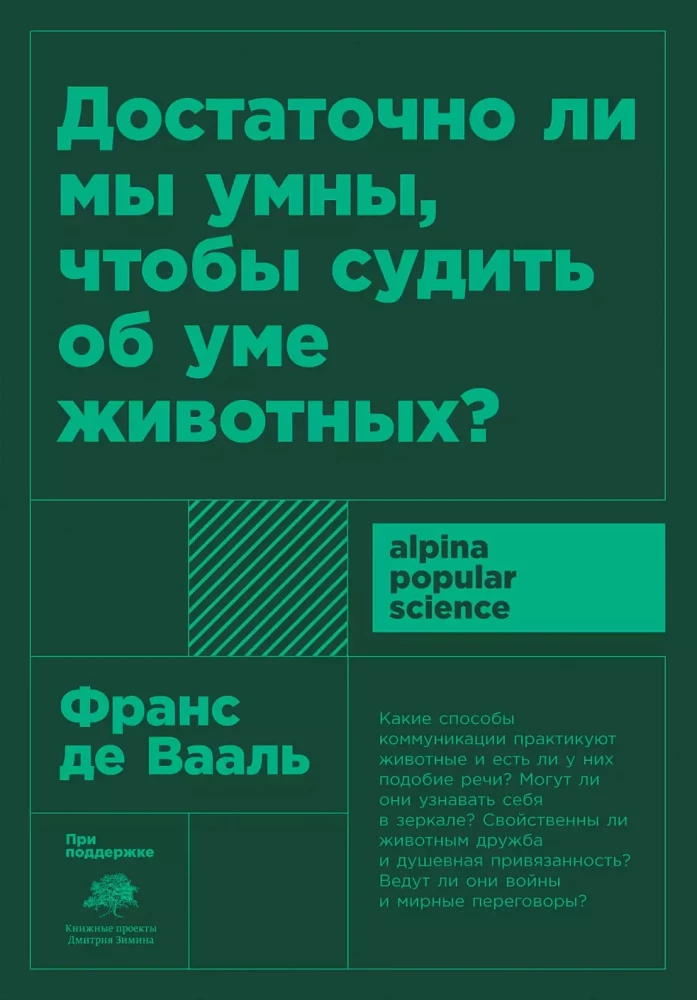
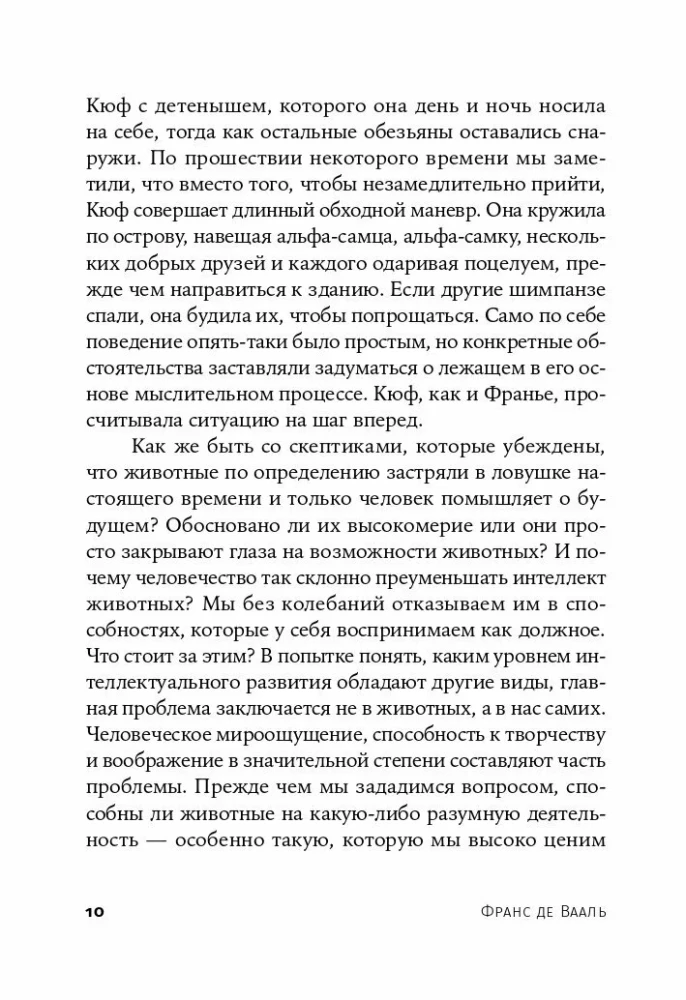
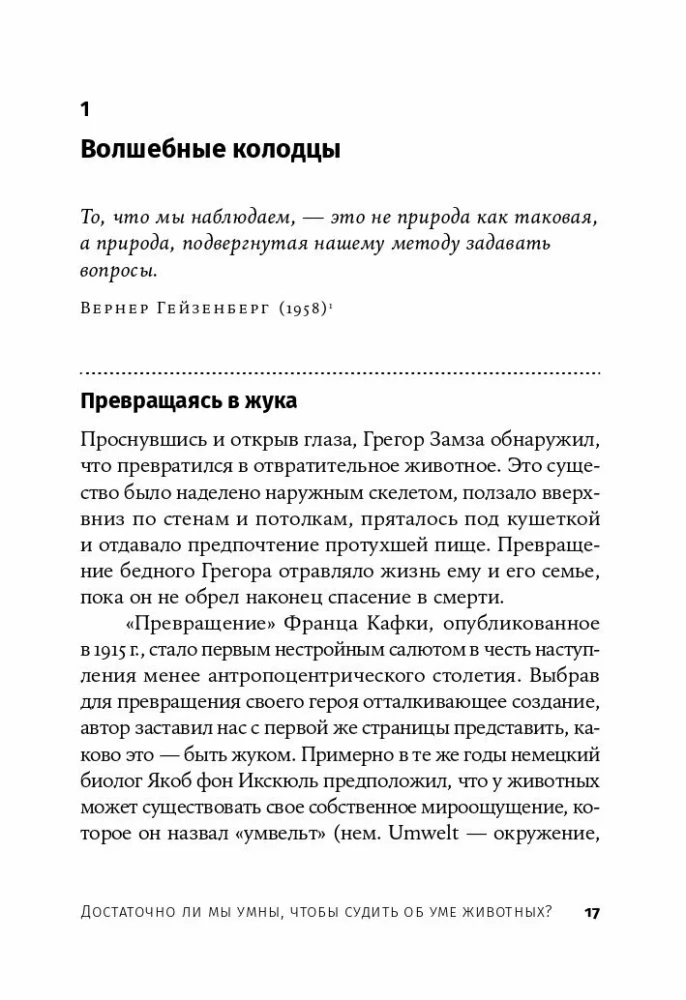
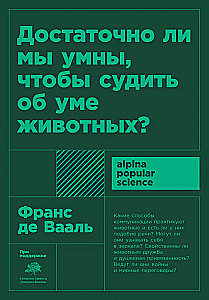
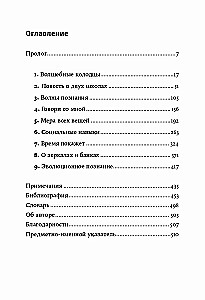
Are We Smart Enough to Judge Animal Intelligence?
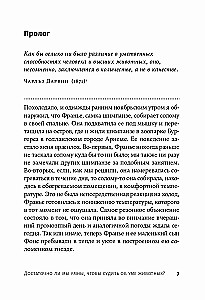
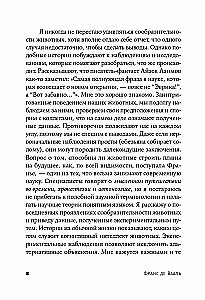
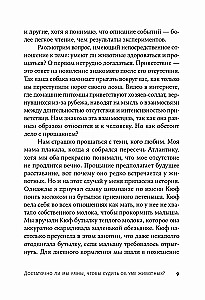
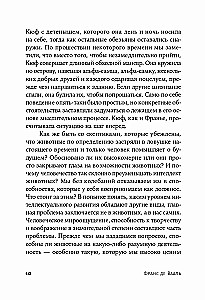
For most of the past century, science has been overly cautious and skeptical regarding animal intelligence. Animal behavior researchers either did not consider their intelligence or rejected the very concept. Most avoided the topic altogether. But times are changing. It...
hardly goes a week without new reports of the complexities of cognitive processes in animals, often accompanied by video material on the Internet as confirmation.
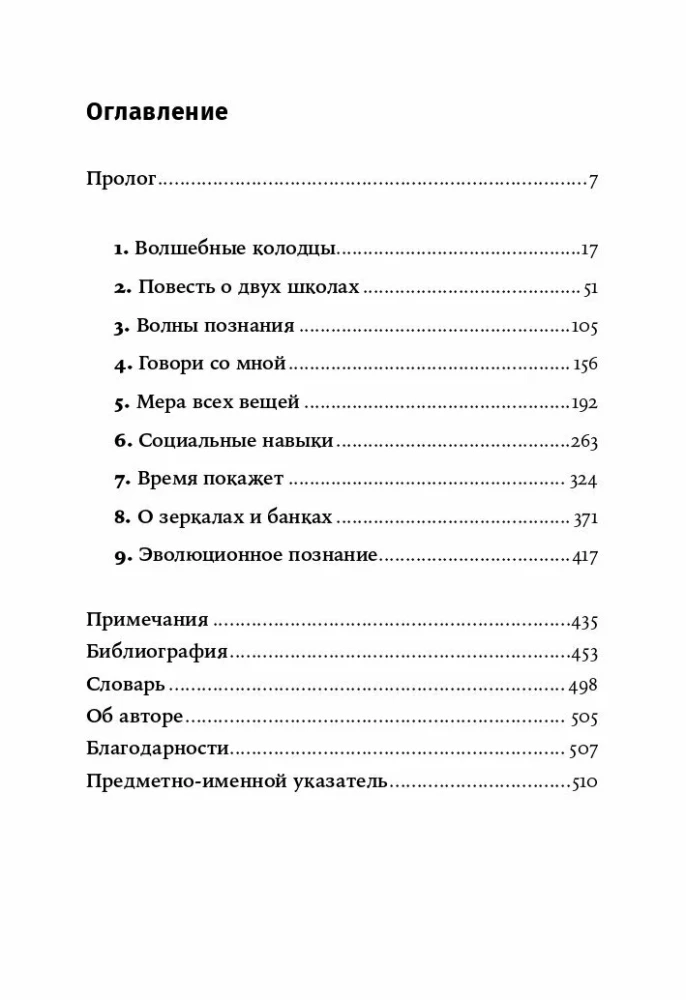
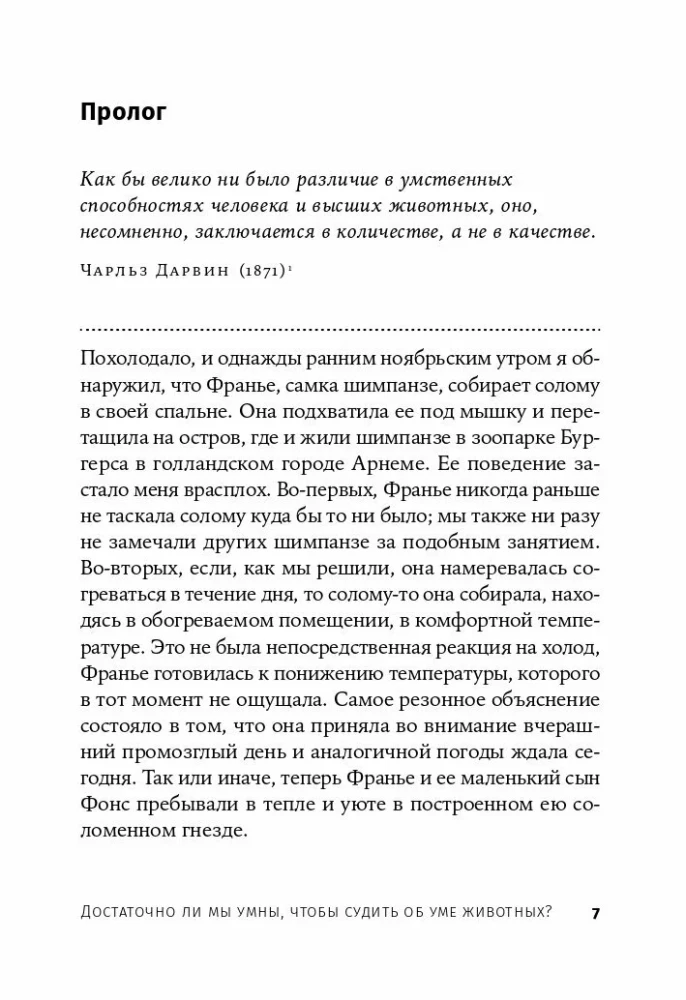
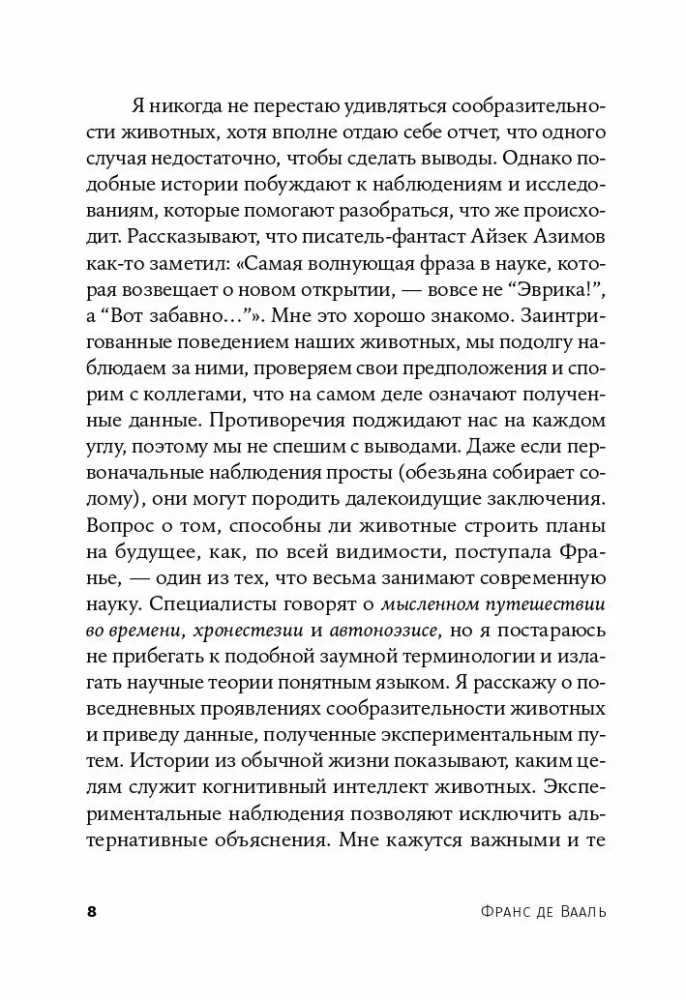
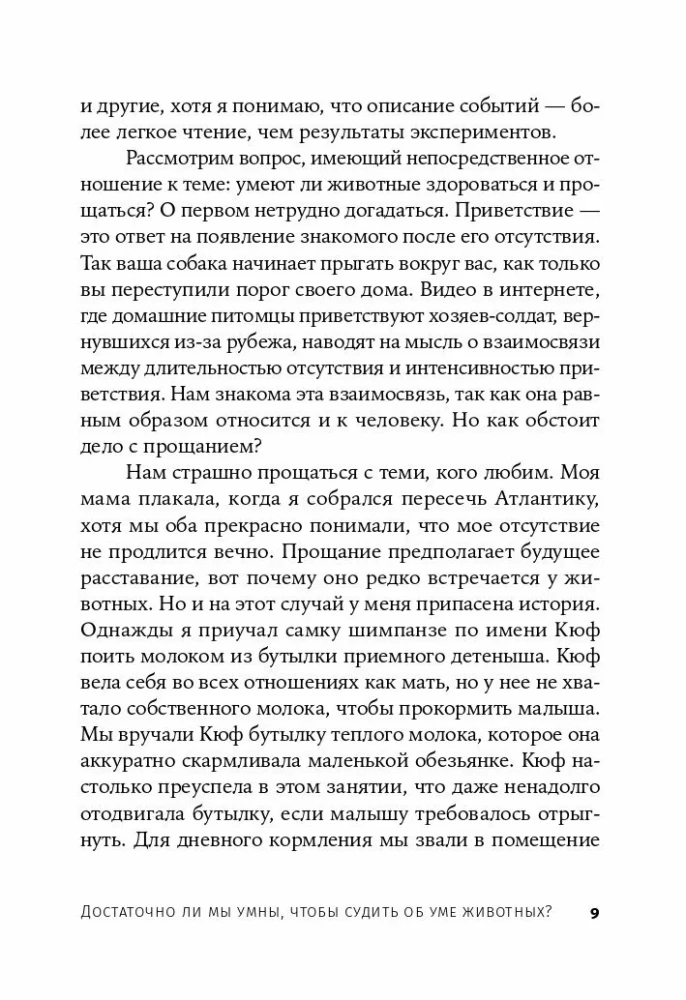
What communication methods do animals practice and do they have something resembling speech? Can animals recognize themselves in mirrors? Are friendship and emotional attachment inherent to animals? Do they engage in wars and peace negotiations? In the book, readers will find answers to these questions, as well as, for example, that rats can regret their decisions, crows make tools, octopuses recognize human faces, and special neurons allow monkeys to learn from each other's mistakes. Scientists openly talk about animal culture, their ability for empathy and friendship. There are no longer taboo topics, including in the area of intelligence, which was once considered the exclusive domain of humans.
The author discusses the history of ethology, the fierce debates with behaviorists, and, most importantly, the enormous experimental work and observations of natural animal behavior. Analyzing the development of thought processes throughout the evolutionary history of various species, Frans de Waal convincingly shows that humans are just one of many thinking beings in this continuum.
What communication methods do animals practice and do they have something resembling speech? Can animals recognize themselves in mirrors? Are friendship and emotional attachment inherent to animals? Do they engage in wars and peace negotiations? In the book, readers will find answers to these questions, as well as, for example, that rats can regret their decisions, crows make tools, octopuses recognize human faces, and special neurons allow monkeys to learn from each other's mistakes. Scientists openly talk about animal culture, their ability for empathy and friendship. There are no longer taboo topics, including in the area of intelligence, which was once considered the exclusive domain of humans.
The author discusses the history of ethology, the fierce debates with behaviorists, and, most importantly, the enormous experimental work and observations of natural animal behavior. Analyzing the development of thought processes throughout the evolutionary history of various species, Frans de Waal convincingly shows that humans are just one of many thinking beings in this continuum.
Author: Франс Де Вааль
Printhouse: Al'pina Pablisher
Series: Alpina Popular Science
Age restrictions: 16+
Year of publication: 2022
ISBN: 9785001390831
Number of pages: 524
Size: 165х115х25 mm
Cover type: soft
Weight: 340 g
ID: 567770
Sold out
€ 5.09
Sold out
€ 5.09
Bestsellers



€ 13.29
In stock
12 Weeks in a Year. How to Achieve More in 12 Weeks Than Others Do in 12 Months
Майкл Леннингтон, Брайан Моран

€ 7.89
In stock
Choice. On the Freedom and Inner Strength of a Person
Эдит Ева Эгер, Эсме Швалль-Вейганд



€ 6.99
In stock