





Matisse in Morocco. The Path of Light and Color: Two Winters that Changed Art
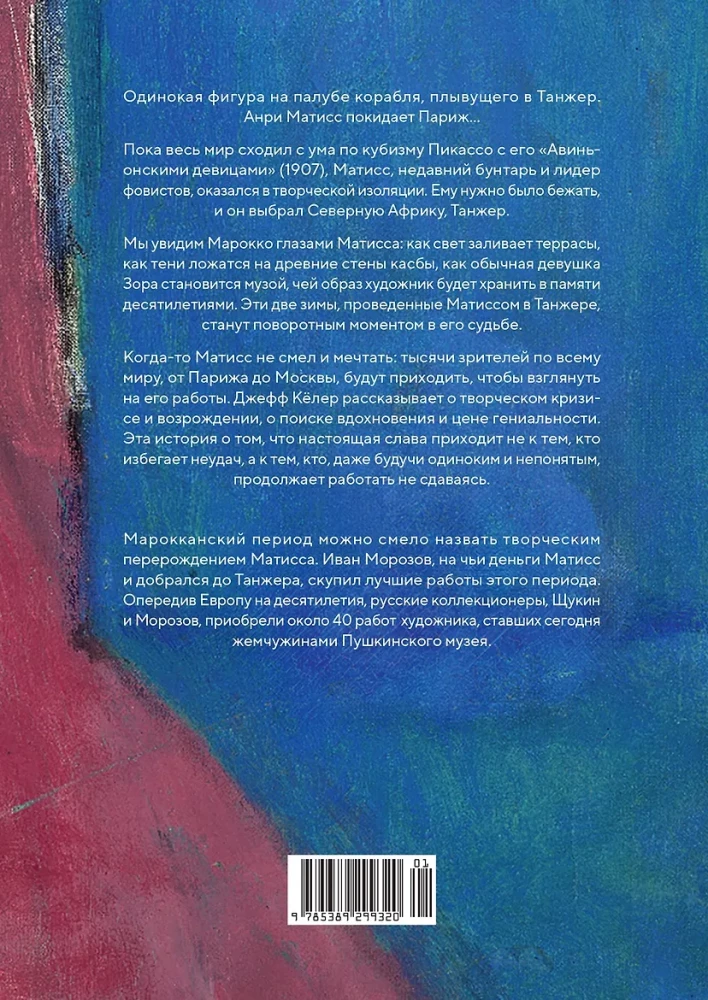
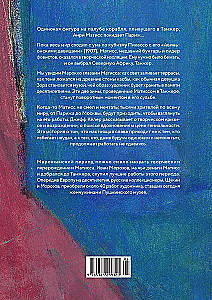
A solitary figure on the deck of a ship sailing to Tangier. Henri Matisse leaves Paris.
While the whole world was going crazy over Picasso's cubism with his "Les Demoiselles d'Avignon" (1907), Matisse, a recent rebel and leader of the fauvists,... found himself in creative isolation. He needed to escape, and he chose North Africa, Tangier.
We will see Morocco through Matisse's eyes: how light floods the terraces, how shadows fall on the ancient walls of the kasbah, how an ordinary girl named Zora becomes a muse, whose image the artist will keep in his memory for decades. These two winters spent by Matisse in Tangier will become a turning point in his fate.
Once, Matisse didn't even dare to dream: thousands of viewers around the world, from Paris to Moscow, would come to see his works. Jeff Koerner speaks of the creative crisis and rebirth, the search for inspiration, and the price of genius. This is a story about how true fame comes not to those who avoid failures, but to those who, even feeling lonely and misunderstood, continue to work without giving up.
The Moroccan period can confidently be called Matisse's creative rebirth. Ivan Morozov, whose money allowed Matisse to reach Tangier, purchased the best works from this period. Outpacing Europe by decades, the Russian collectors Shchukin and Morozov acquired about 40 works by the artist, which have become treasures of the Pushkin Museum.
While the whole world was going crazy over Picasso's cubism with his "Les Demoiselles d'Avignon" (1907), Matisse, a recent rebel and leader of the fauvists,... found himself in creative isolation. He needed to escape, and he chose North Africa, Tangier.
We will see Morocco through Matisse's eyes: how light floods the terraces, how shadows fall on the ancient walls of the kasbah, how an ordinary girl named Zora becomes a muse, whose image the artist will keep in his memory for decades. These two winters spent by Matisse in Tangier will become a turning point in his fate.
Once, Matisse didn't even dare to dream: thousands of viewers around the world, from Paris to Moscow, would come to see his works. Jeff Koerner speaks of the creative crisis and rebirth, the search for inspiration, and the price of genius. This is a story about how true fame comes not to those who avoid failures, but to those who, even feeling lonely and misunderstood, continue to work without giving up.
The Moroccan period can confidently be called Matisse's creative rebirth. Ivan Morozov, whose money allowed Matisse to reach Tangier, purchased the best works from this period. Outpacing Europe by decades, the Russian collectors Shchukin and Morozov acquired about 40 works by the artist, which have become treasures of the Pushkin Museum.
Author: Джефф Кёлер
Printhouse: KoLibri
Series: Historical Interest
Age restrictions: 18+
Year of publication: 2026
ISBN: 9785389299320
Number of pages: 288
Size: 240х170х26 mm
Cover type: hard
Weight: 695 g
ID: 1743619
Available from suppliers
Expected delivery time – up to 3 weeks
€ 22.89
Available from suppliers
Expected delivery time – up to 3 weeks
€ 22.89
Bestsellers






€ 13.29
In stock
12 Weeks in a Year. How to Achieve More in 12 Weeks Than Others Do in 12 Months
Майкл Леннингтон, Брайан Моран



€ 7.89
In stock
Choice. On the Freedom and Inner Strength of a Person
Эдит Ева Эгер, Эсме Швалль-Вейганд



€ 6.99
In stock