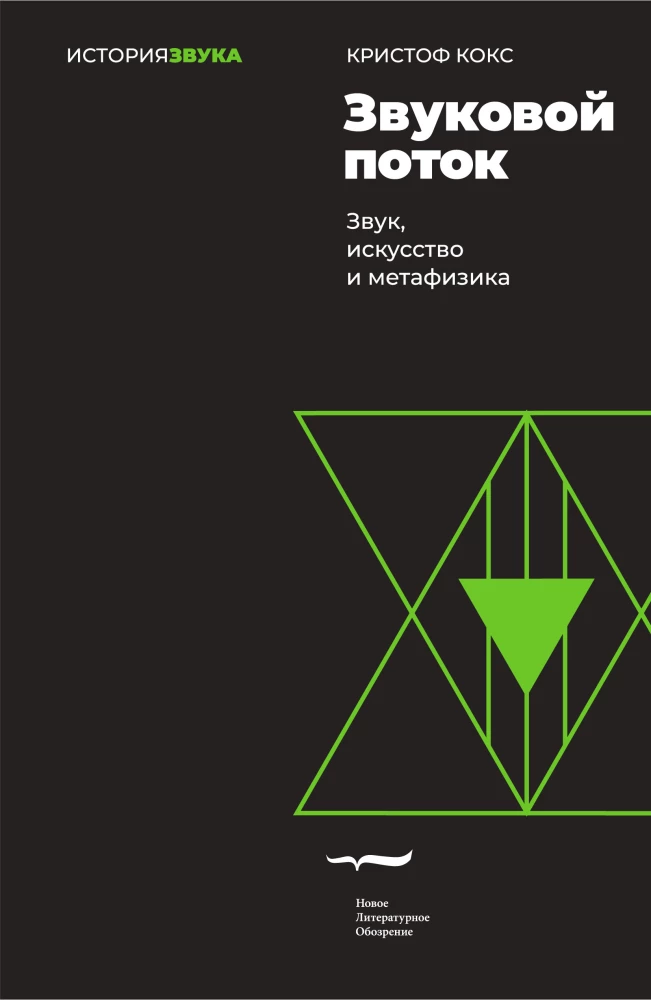
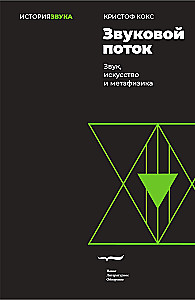
Sound Flow. Sound, Art and Metaphysics
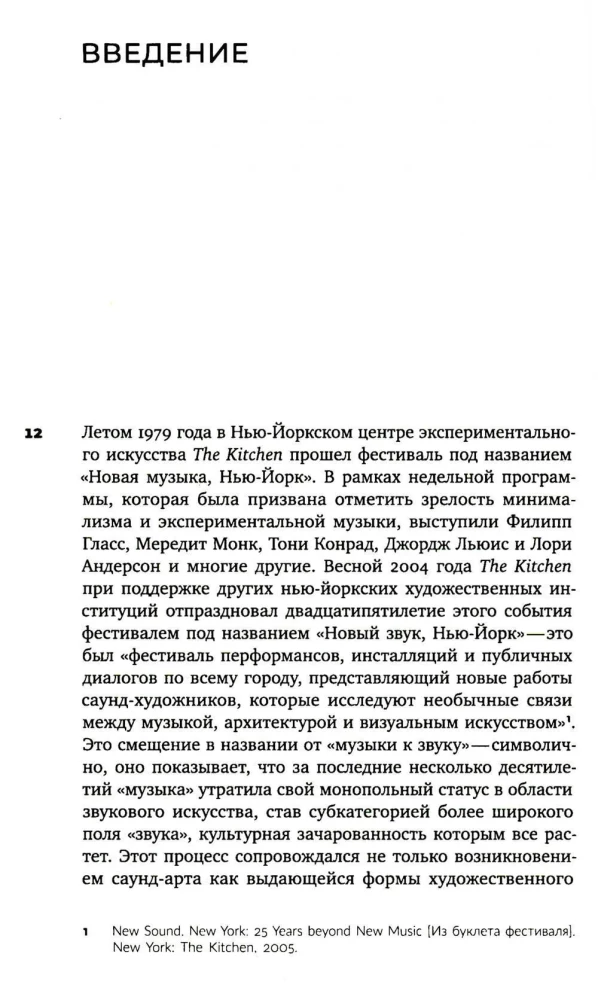
In recent decades, we have observed a shift in modern culture "from music to sound," as the term "music" no longer corresponds to the rapid development of new artistic genres and cultural settings. As a result of this shift, on...
the one hand, there has been a tumultuous development of sound art, and on the other hand, the flourishing of Sound Studies in the humanities.
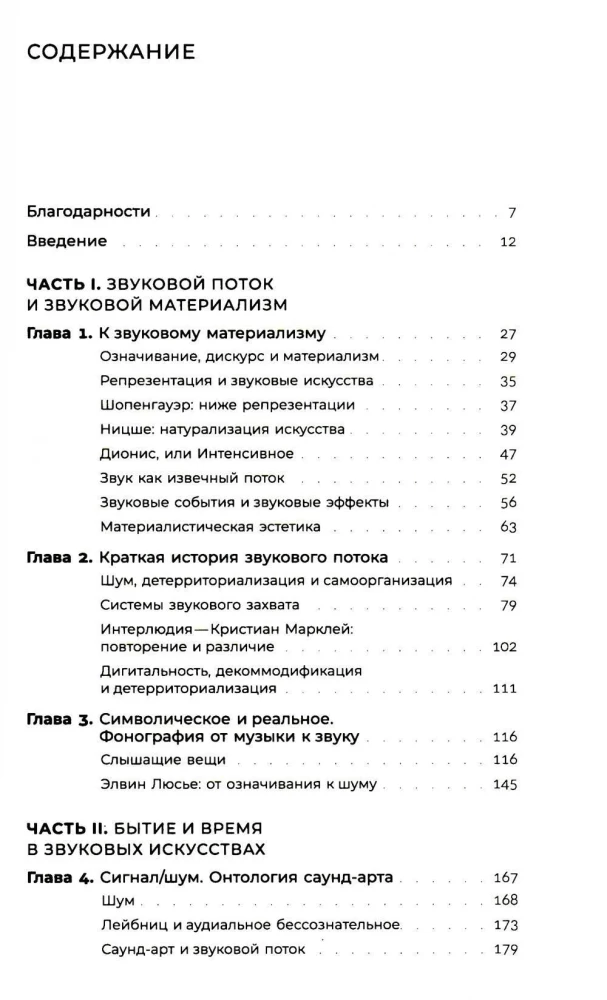
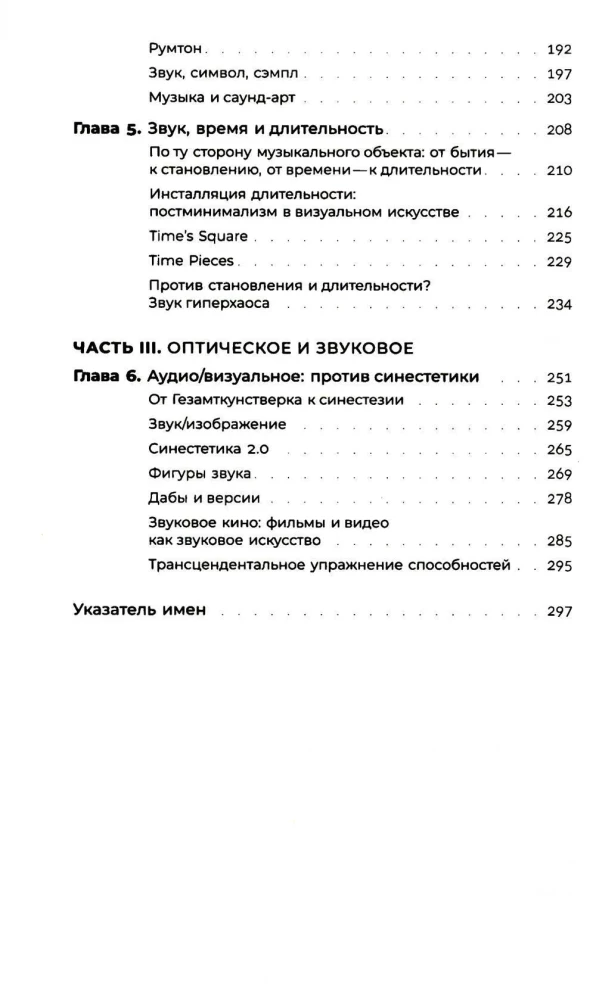
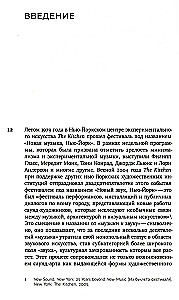
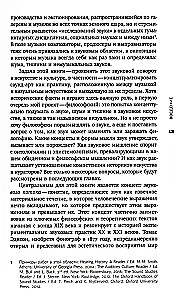
The task of Christoph Cox's book is to explain the "sound turn" in art and culture, as well as to show how sound invades the territory of philosophy and rejuvenates it. In addressing this task, the author challenges the mainstream concepts of contemporary cultural theory, based on discourse and language analysis, and asserts the necessity of a new materialist aesthetics not only of sound but also of art in general.
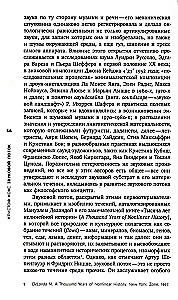
The central concept of the book becomes the sound flow - an anonymous materialist force that precedes humanity and surpasses its subjective experience. In an attempt to construct a realistic and naturalistic model for describing sound, Cox turns to the ideas of Arthur Schopenhauer, Friedrich Nietzsche, Gilles Deleuze, and Manuel DeLanda, illustrating their work with that of La Monte Young, Alvin Lucier, Christian Marclay, Marianne Amacher, Annie Lewcock, and many others. Ultimately, we are presented not only with one of the most fundamental and profound studies of the ontology of sound but also an engaging history of the underexplored sound art of the last fifty years.
The task of Christoph Cox's book is to explain the "sound turn" in art and culture, as well as to show how sound invades the territory of philosophy and rejuvenates it. In addressing this task, the author challenges the mainstream concepts of contemporary cultural theory, based on discourse and language analysis, and asserts the necessity of a new materialist aesthetics not only of sound but also of art in general.
The central concept of the book becomes the sound flow - an anonymous materialist force that precedes humanity and surpasses its subjective experience. In an attempt to construct a realistic and naturalistic model for describing sound, Cox turns to the ideas of Arthur Schopenhauer, Friedrich Nietzsche, Gilles Deleuze, and Manuel DeLanda, illustrating their work with that of La Monte Young, Alvin Lucier, Christian Marclay, Marianne Amacher, Annie Lewcock, and many others. Ultimately, we are presented not only with one of the most fundamental and profound studies of the ontology of sound but also an engaging history of the underexplored sound art of the last fifty years.
Author: Кристоф Кокс
Printhouse: Novoe literaturnoe obozrenie
Series: The History of Sound
Age restrictions: 16+
Year of publication: 2024
ISBN: 9785444821671
Number of pages: 304
Size: 215x145x18 mm
Cover type: soft
Weight: 340 g
ID: 1734363
Sold out
€ 15.89
Sold out
€ 15.89
Bestsellers



€ 13.29
In stock
12 Weeks in a Year. How to Achieve More in 12 Weeks Than Others Do in 12 Months
Майкл Леннингтон, Брайан Моран
€ 7.89
In stock
Choice. On the Freedom and Inner Strength of a Person
Эдит Ева Эгер, Эсме Швалль-Вейганд


€ 6.99
In stock


€ 6.99
In stock
How to Talk So Kids Will Listen, and How to Listen So Kids Will Talk
Элейн Мазлиш, Адель Фабер