



Demons
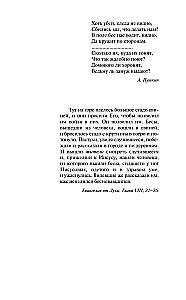
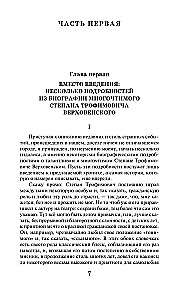
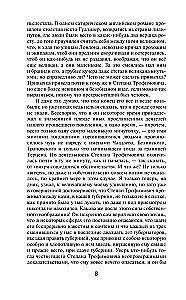
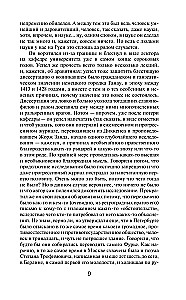
The action of the novel «Demons» unfolds in a provincial town engulfed by an atmosphere of intrigue and emerging radicalism. At the center of the narrative is a group of revolutionary populists led by the charismatic yet ruthless Pyotr Verkhovensky,...
and their spiritual «ideologist» – the mysterious Nikolai Stavrogin, a figure embodying demonic power, spiritual emptiness, and moral decay.
F. Dostoevsky explores the causes and consequences of the spread of destructive ideologies with astonishing depth. He shows how abstract yet appealing ideas of radical transformations, detached from moral foundations, transform into «demonism» – a destructive force capable of leading to chaos, violence, and destruction.
«Demons» is a deeply philosophical work that compels reflection on eternal questions of existence, the nature of good and evil, and the consequences of rejecting moral guidelines. The novel warns of the dangers of radicalism, obsession with ideas, and the loss of spiritual foundations, which can lead to catastrophe both on an individual and societal level. It is one of the most significant works of world literature, maintaining its relevance to this day.
F. Dostoevsky explores the causes and consequences of the spread of destructive ideologies with astonishing depth. He shows how abstract yet appealing ideas of radical transformations, detached from moral foundations, transform into «demonism» – a destructive force capable of leading to chaos, violence, and destruction.
«Demons» is a deeply philosophical work that compels reflection on eternal questions of existence, the nature of good and evil, and the consequences of rejecting moral guidelines. The novel warns of the dangers of radicalism, obsession with ideas, and the loss of spiritual foundations, which can lead to catastrophe both on an individual and societal level. It is one of the most significant works of world literature, maintaining its relevance to this day.
Author: Фёдор Достоевский
Printhouse: AST
Series: Classics for Schoolchildren
Age restrictions: 16+
Year of publication: 2026
ISBN: 9785171819897
Number of pages: 640
Size: 208x133x35 mm
Cover type: твердая
Weight: 536 g
ID: 1733100
Available from suppliers
Expected delivery time – up to 2 weeks
€ 8.89
Available from suppliers
Expected delivery time – up to 2 weeks
€ 8.89
Bestsellers







Bestseller
€ 12.19
In stock
Kanashibari. Until the Last Lantern Goes Out. Volume 1
Ангелина Шэн, Вероника Шэн









Publishers "AST" recommends












Bestseller
€ 18.79
In stock
The Big Book of the Divine Woman. Purpose, Love, Marriage, Children, Money, Work. 2nd Edition
САТЬЯ ДАС