



The Psychology of Crowds
Author: Гюстав Лебон
Printhouse: Popurri
Age restrictions: 16+
Year of publication: 2025
ISBN: 9789851559981
Number of pages: 224
Size: 215х140х10 mm
Cover type: soft
Weight: 231 g
ID: 1710889
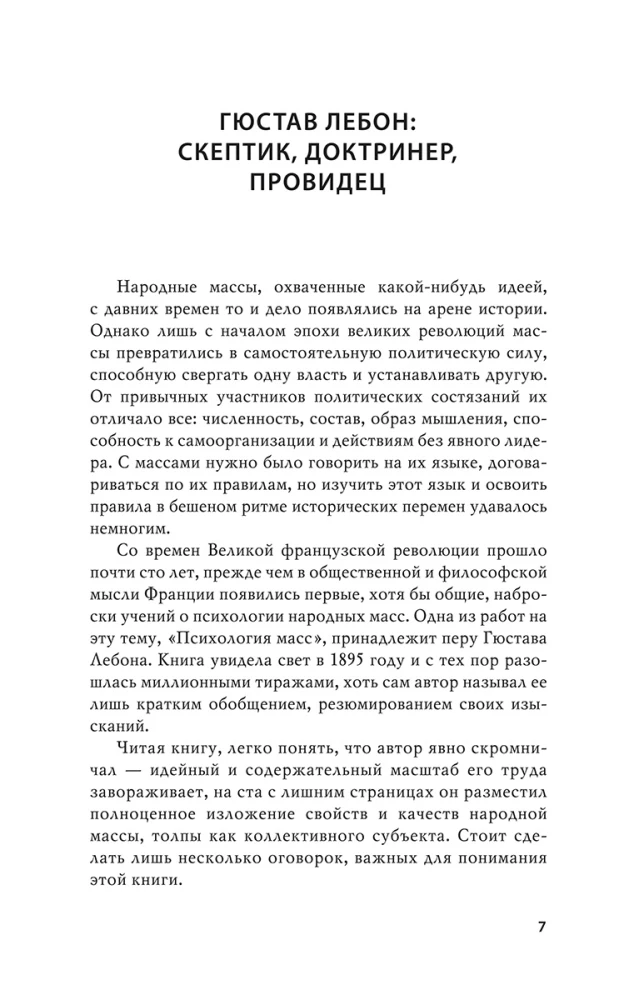
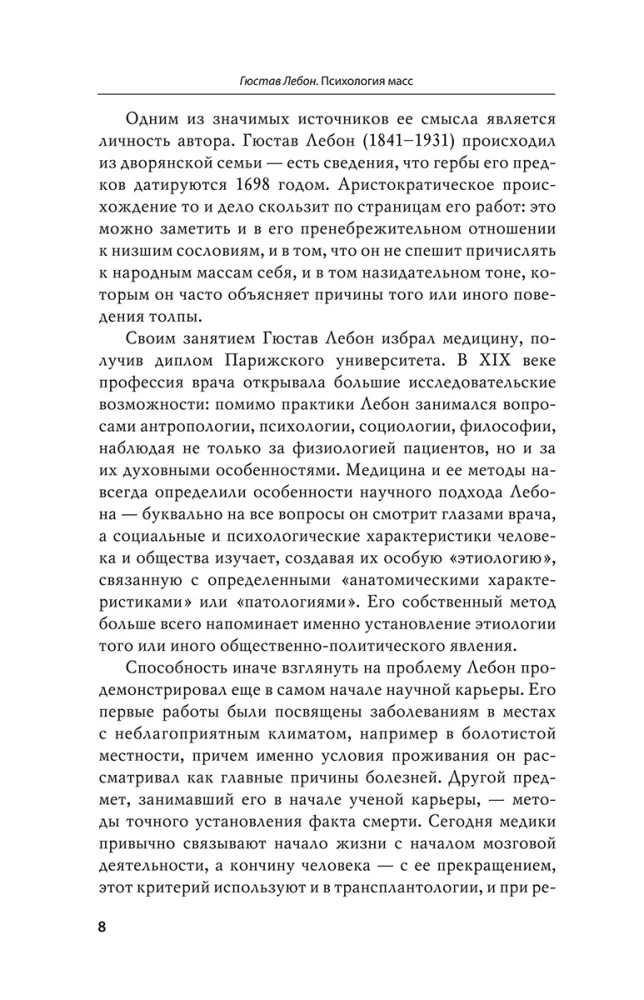
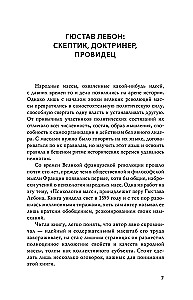
The masses, seized by some idea, have periodically appeared on the historical stage since ancient times. However, it was only with the beginning of the era of great revolutions that the masses transformed into an independent political force capable of overthrowing one power and establishing another. They differed from the usual participants in political competitions in all respects: numbers, composition, mindset, ability for self-organization, and actions without a clear leader. One had to speak to the masses in their language, negotiate by their rules, but few managed to learn this language and master the rules in the frantic pace of historical changes.
Nearly a hundred years passed since the Great French Revolution before the first, even rough, outlines of teachings on the psychology of crowds appeared in French social and philosophical thought. One of the works on this topic, "The Psychology of Crowds," is attributed to Gustave Le Bon. The book was published in 1895 and has since circulated in millions of copies, although the author himself referred to it only as a brief summary of his research.
Bestsellers