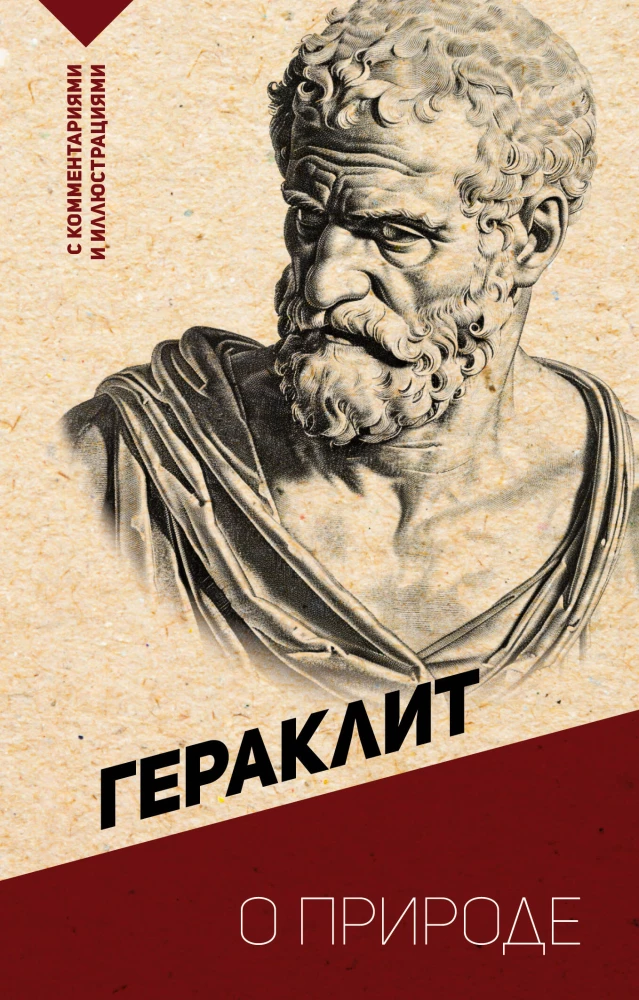

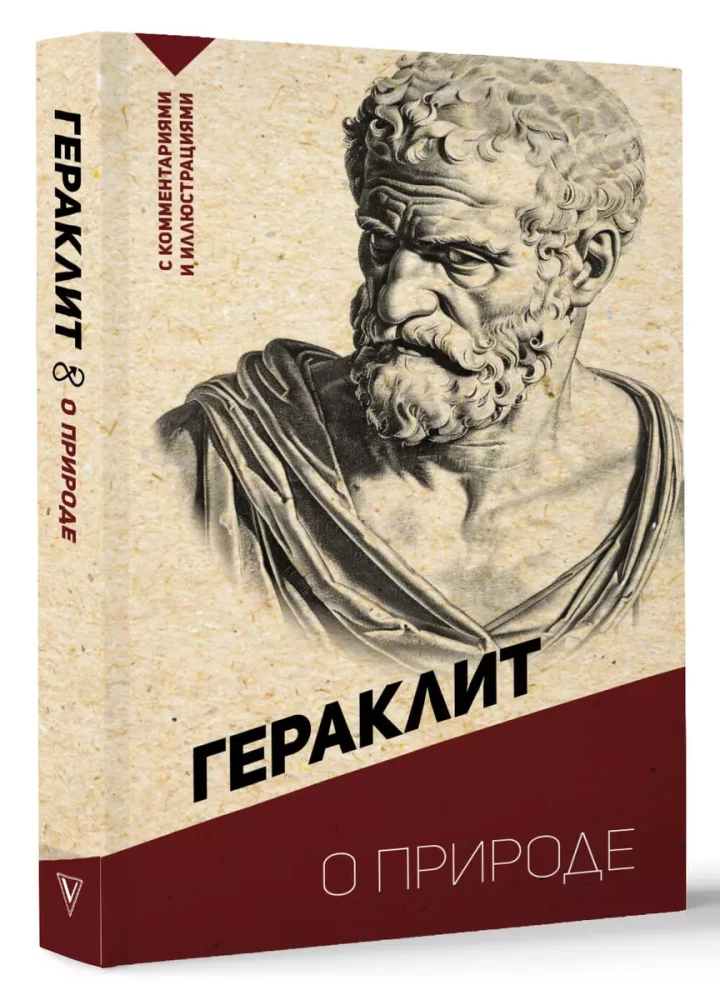
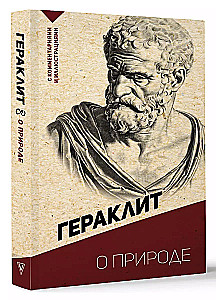
On Nature
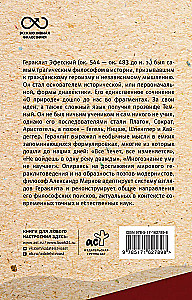
Heraclitus of Ephesus (c. 544 – c. 483 BC) was the most tragic philosopher in history, calling for civic heroism and independent thinking. He became the founder of the historical, or original, form of dialectics. His only work "On Nature"...
has survived to us in fragments. For his ideas, as well as his complex language, he received the nickname the Obscure. He was not a student of anyone and did not teach anyone himself, yet his followers included Plato, Socrates, Aristotle, and later – Hegel, Nietzsche, Spengler, and Heidegger. Heraclitus expressed unusual thoughts in concise memorable formulations, many of which have survived to this day: "Everything flows, everything changes," "You cannot step into the same river twice," "Much knowledge does not teach the mind." Relying on the achievements of world Heraclitean studies and on the imagery of modernist poets, philosopher Alexander Markov adapts Heraclitus' system of views and reconstructs the general directions of his philosophical searches, relevant in the context of contemporary exact and natural sciences.
Author: Гераклит
Printhouse: AST
Series: Exclusive Philosophy
Age restrictions: 16+
Year of publication: 2024
ISBN: 9785171627898
Number of pages: 224
Size: 180x116x19 mm
Cover type: soft
Weight: 159 g
ID: 1680409
In stock
€ 5.09
Will be delivered to United States on 14 July (Tu):
By courier
from € 38.94
Bestsellers
















Publishers "AST" recommends

Bestseller
€ 12.39
In stock
Intensive Korean Language Course for Beginners
Анастасия Погадаева, Чун Ин Сун