
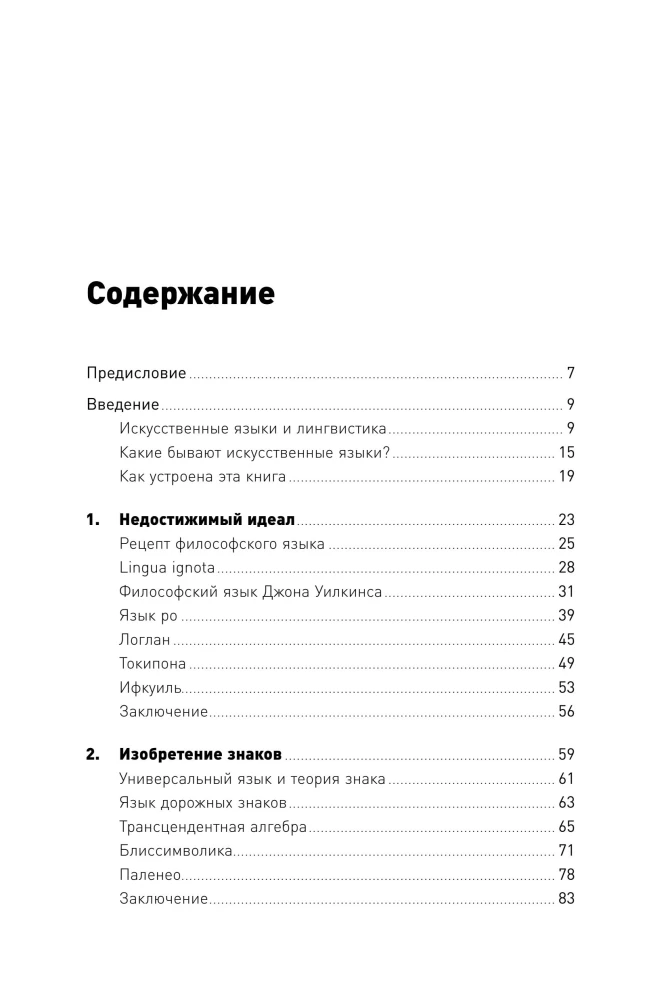
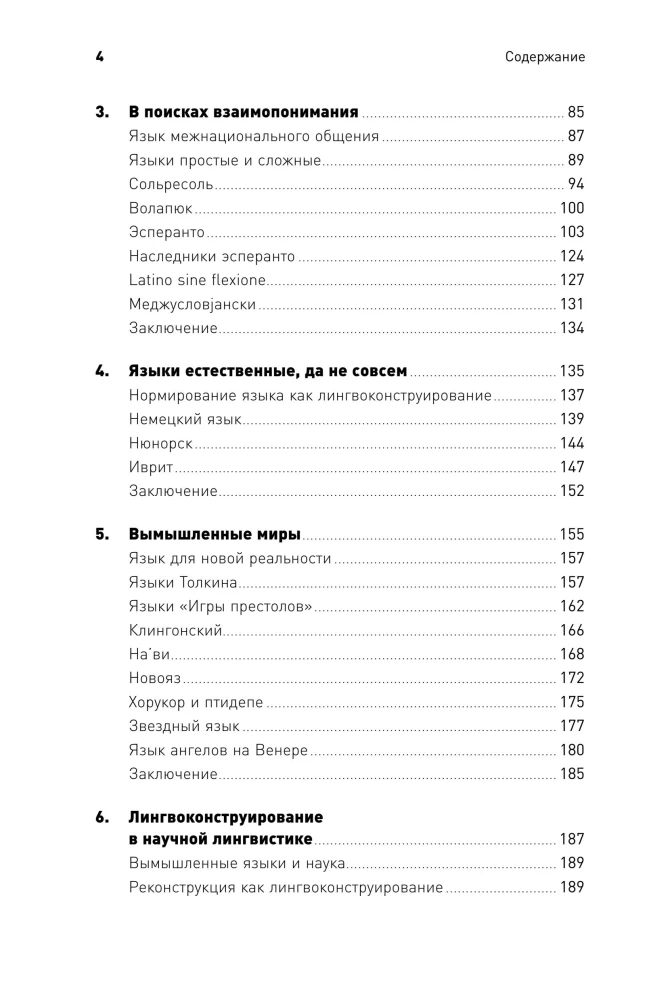

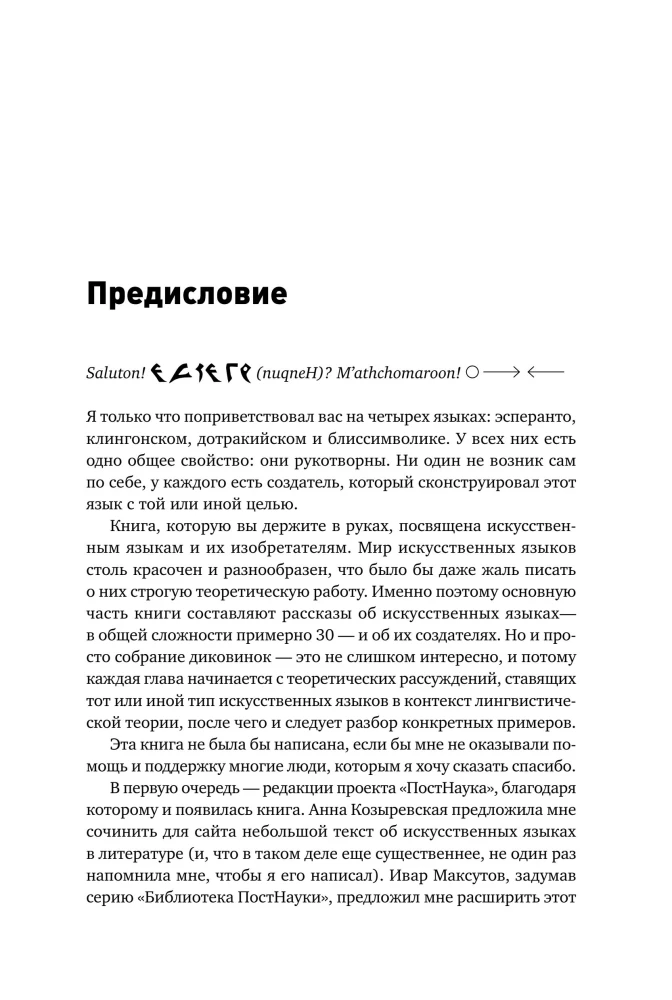
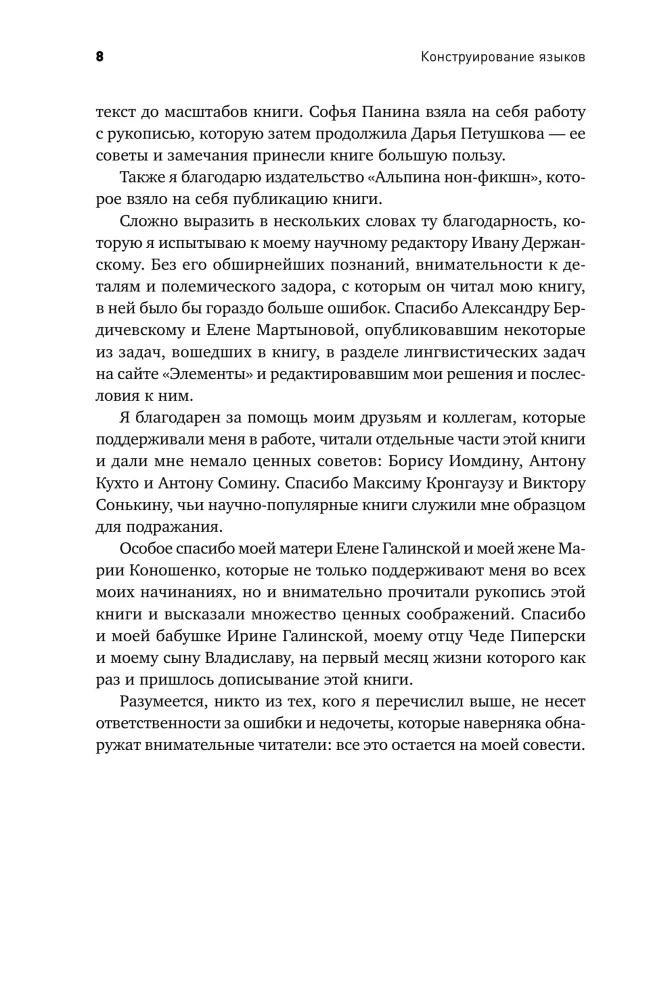




Constructing Languages: From Esperanto to Dothraki
Why do people create their own new languages — conlangs, when there are 7000 natural languages in the world? What types of artificial languages exist? How are they similar to natural languages, and how do they differ from them? What...
are their prospects in the modern world?
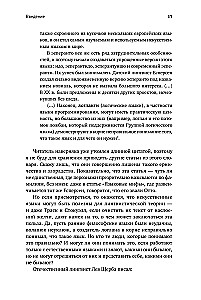
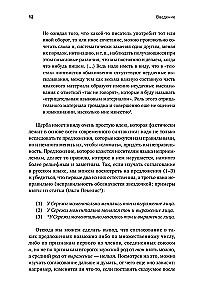
Alexander Pipersky, the author of the book “Constructing Languages: From Esperanto to Dothraki,” explains that people invent languages for various purposes: to achieve a logical ideal, to better understand each other, or simply to provide themselves and others with aesthetic pleasure. Behind each artificial language are interesting personalities and dramatic stories of successes or failures.
Esperanto, solresol, ro, transcendental algebra, Quenya, blissymbolics, paleneo, Na'vi, Dothraki — this is far from a complete list of languages discussed in this book from both a linguistic and a historical perspective.
Alexander Pipersky, the author of the book “Constructing Languages: From Esperanto to Dothraki,” explains that people invent languages for various purposes: to achieve a logical ideal, to better understand each other, or simply to provide themselves and others with aesthetic pleasure. Behind each artificial language are interesting personalities and dramatic stories of successes or failures.
Esperanto, solresol, ro, transcendental algebra, Quenya, blissymbolics, paleneo, Na'vi, Dothraki — this is far from a complete list of languages discussed in this book from both a linguistic and a historical perspective.
Author: Александр Пиперски
Printhouse: Al'pina Pablisher
Series: Alpina Popular Science
Age restrictions: 12+
Year of publication: 2024
ISBN: 9785002231454
Number of pages: 272
Size: 120x170x20 mm
Cover type: soft
Weight: 191 g
ID: 1675358
Available from suppliers
Estimated delivery time – up to 3 weeks
€ 5.79
Available from suppliers
Estimated delivery time – up to 3 weeks
€ 5.79
Bestsellers









€ 5.19
In stock


€ 7.59
In stock
Choice. On the Freedom and Inner Strength of a Person
Эдит Ева Эгер, Эсме Швалль-Вейганд

€ 14.09
In stock
12 Weeks in a Year. How to Achieve More in 12 Weeks Than Others Do in 12 Months
Майкл Леннингтон, Брайан Моран