

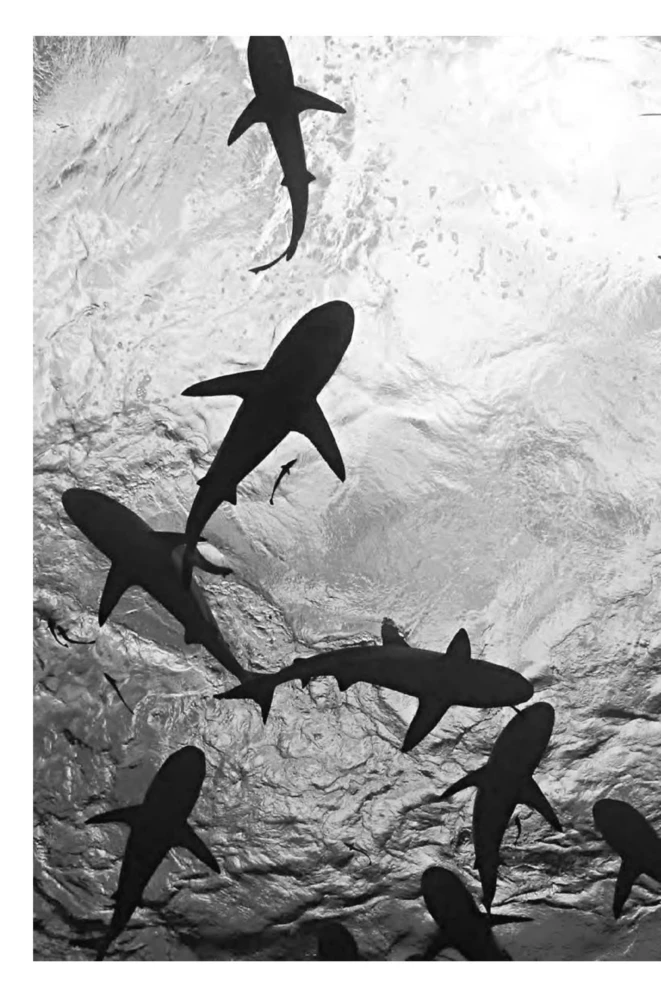












Emperors of the Deep. Sharks. The Most Mysterious, Underrated, and Indispensable Guardians of the Ocean
From an evolutionary perspective, sharks are older than trees; these powerful creatures have survived five mass extinction events, outlasting the dinosaurs in resilience. Sharks are a necessary link in maintaining the balance of marine and oceanic ecosystems: they consume the...
remains of dead whales, remove sick fish from populations, protect seaweed from turtles, and absorb debris thrown by humans into the ocean. But what do we know about their lives? The first book of its kind is based on the latest scientific research and detailed studies of four species of sharks — the great white shark, mako shark, hammerhead shark, and tiger shark. Ocean conservation enthusiast William McKeever travels to shark habitats — from coral reefs in the central Pacific Ocean, where groups of great white sharks gather every autumn, to tropical mangrove forests where young lemon sharks live in schools, and to the cold waters of the North Atlantic, home to 400-year-old Greenland polar sharks, record-holding long-livers among vertebrates. He traces the evolution of the shark-attack myth and describes the fatal consequences of their excessive killing: an average of four people die from shark attacks each year, while in the same period, humans kill 100 million sharks. McKeever's work is a deep dive into the mysteries of sharks and a compelling call to protect them.
“This book is the culmination of my two-year journey, a tribute to sharks as amazing super predators, ultra-sensitive mariners, the best allies of humanity in the natural world. Thanks to new technologies that allow scientists and marine biologists from around the world to observe sharks in entirely new ways, we have made significant strides in understanding these creatures: their mysterious behaviors, incredible migration paths, exceptional social skills, and even secrets of their sexual lives. It is quite possible that sharks will become the key to unlocking the mysteries of the oceans.” (William McKeever)
“This book is the culmination of my two-year journey, a tribute to sharks as amazing super predators, ultra-sensitive mariners, the best allies of humanity in the natural world. Thanks to new technologies that allow scientists and marine biologists from around the world to observe sharks in entirely new ways, we have made significant strides in understanding these creatures: their mysterious behaviors, incredible migration paths, exceptional social skills, and even secrets of their sexual lives. It is quite possible that sharks will become the key to unlocking the mysteries of the oceans.” (William McKeever)
Author: Уильям Маккивер
Printhouse: KoLibri
Series: New Naturalist
Age restrictions: 16+
Year of publication: 2021
ISBN: 9785389177017
Number of pages: 336
Size: 210х140х19 mm
Cover type: hard
Weight: 460 g
ID: 813048
Sold out
€ 8.89
Sold out
€ 8.89
Bestsellers







€ 13.29
In stock
12 Weeks in a Year. How to Achieve More in 12 Weeks Than Others Do in 12 Months
Майкл Леннингтон, Брайан Моран


€ 7.89
In stock
Choice. On the Freedom and Inner Strength of a Person
Эдит Ева Эгер, Эсме Швалль-Вейганд




€ 14.99
In stock
The Body Remembers Everything: The Role of Psychological Trauma in a Person's Life and Techniques to Overcome It
Бессел ван дер Колк