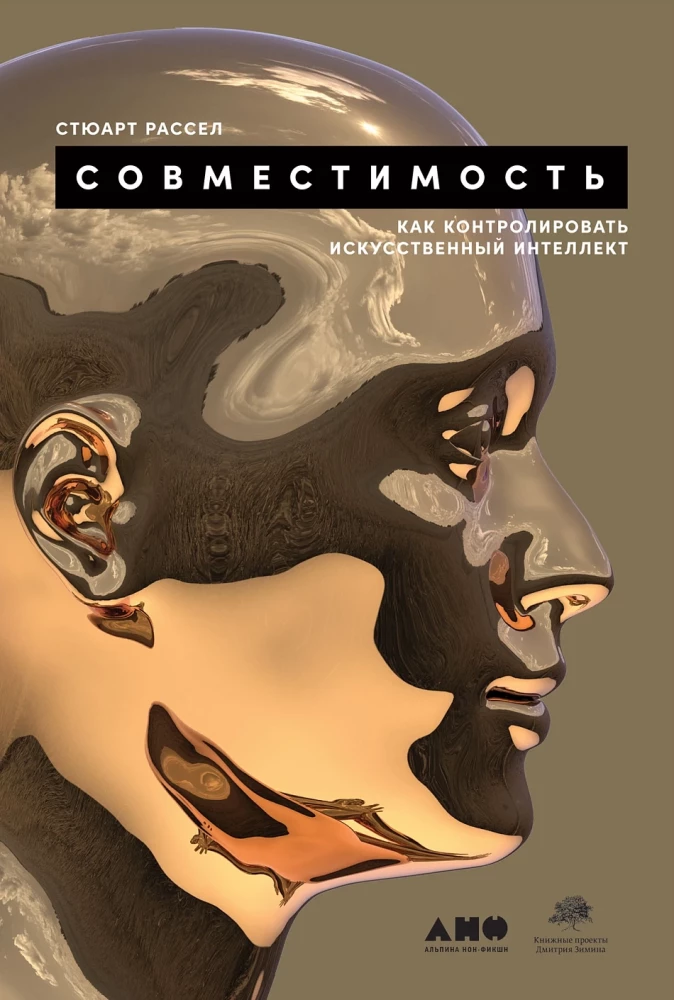
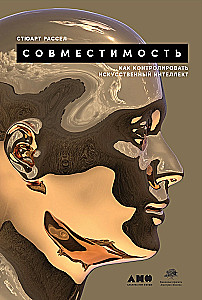
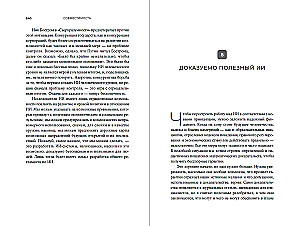
Compatibility: How to Control Artificial Intelligence
In the mass consciousness, superhuman artificial intelligence is a technological tsunami that threatens not only the economy and human relationships but also civilization itself. The conflict between humans and machines is seen as unavoidable, and its outcome predetermined. Prominent AI...
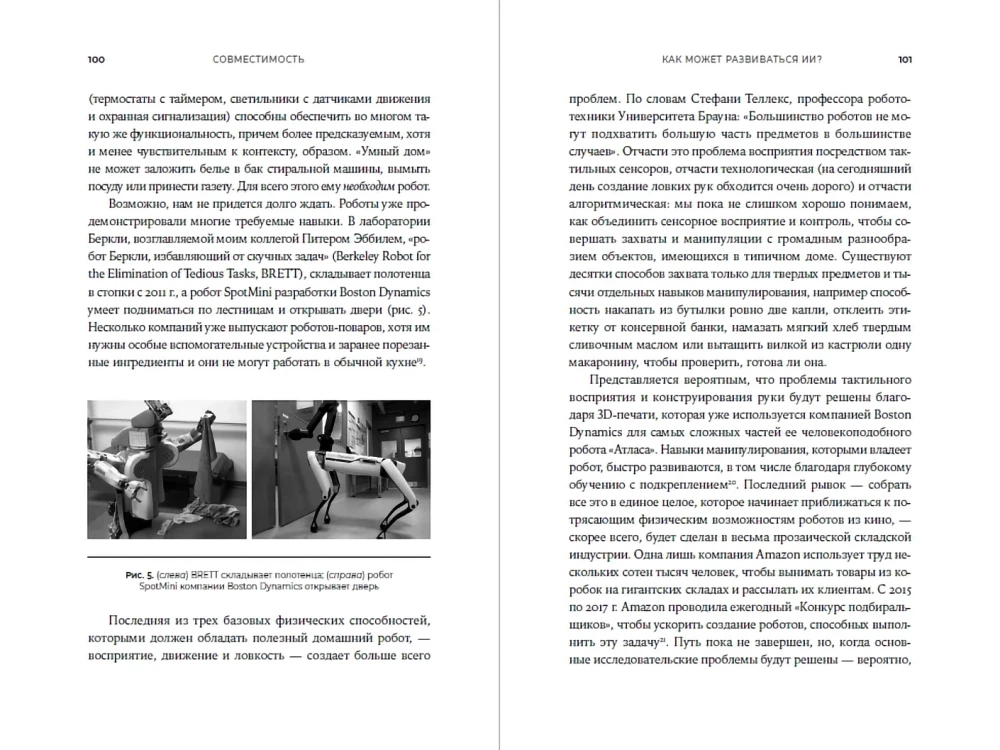
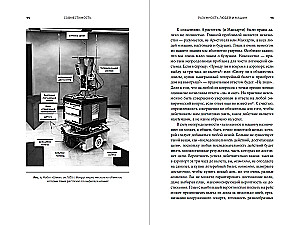
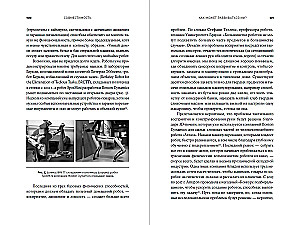
researcher Stuart Russell asserts that this scenario can be avoided. In his groundbreaking book, the author explains how humans have already learned to utilize AI, ranging from lethal autonomous weapons to manipulations of our preferences, and what else they can teach it. If this happens and superhuman AI emerges, we will confront an entity far more powerful than ourselves. How can we ensure that humans do not end up subordinate to superintelligence? To achieve this, Russell believes that artificial intelligence must be built on new principles. Machines should be humble and altruistic, solving our tasks rather than their own. The principles and how to implement them will be revealed to the reader in this book, which has been called the main book on artificial intelligence by the most authoritative publications in the world. Everything civilization can offer is a product of our intelligence; gaining access to vastly superior intellectual capabilities would be the greatest event in history. The goal of this book is to explain why it could become the last event of civilization and how to exclude such an outcome. The introduction of the concept of utility—an invisible property—for explaining human behavior through mathematical theory was astonishing for its time. Moreover, unlike monetary amounts, the value of different bets and prizes in terms of utility is not directly observable. The first to really benefit from the advent of robots in the home will be the elderly and infirm, for whom a helpful robot can provide a level of independence that cannot be achieved by other means. Even if a robot performs a limited range of tasks and has only a rudimentary understanding of what is happening, it can be very useful. Obviously, the actions of loyal machines will need to be limited by rules and prohibitions, just as human actions are restricted by laws and social norms. Some experts propose unconditional accountability as a solution. The book discusses the issues related to the development of artificial intelligence in an accessible manner.
Author: Стюарт Рассел
Printhouse: Al'pina Pablisher
Age restrictions: 12+
Year of publication: 2020
ISBN: 9785001392880
Number of pages: 438
Size: 217х148х27 mm
Cover type: hard
Weight: 630 g
ID: 567346
Available from suppliers
Estimated delivery time – up to 3 weeks
€ 10.99
Available from suppliers
Estimated delivery time – up to 3 weeks
€ 10.99
Bestsellers




€ 13.29
In stock
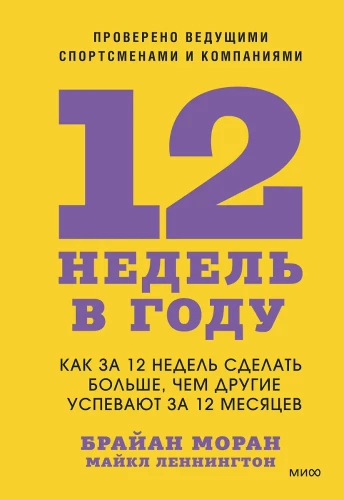
12 Weeks in a Year. How to Achieve More in 12 Weeks Than Others Do in 12 Months
Майкл Леннингтон, Брайан Моран

€ 7.89
In stock
Choice. On the Freedom and Inner Strength of a Person
Эдит Ева Эгер, Эсме Швалль-Вейганд


€ 14.99
In stock
The Body Remembers Everything: The Role of Psychological Trauma in a Person's Life and Techniques to Overcome It
Бессел ван дер Колк