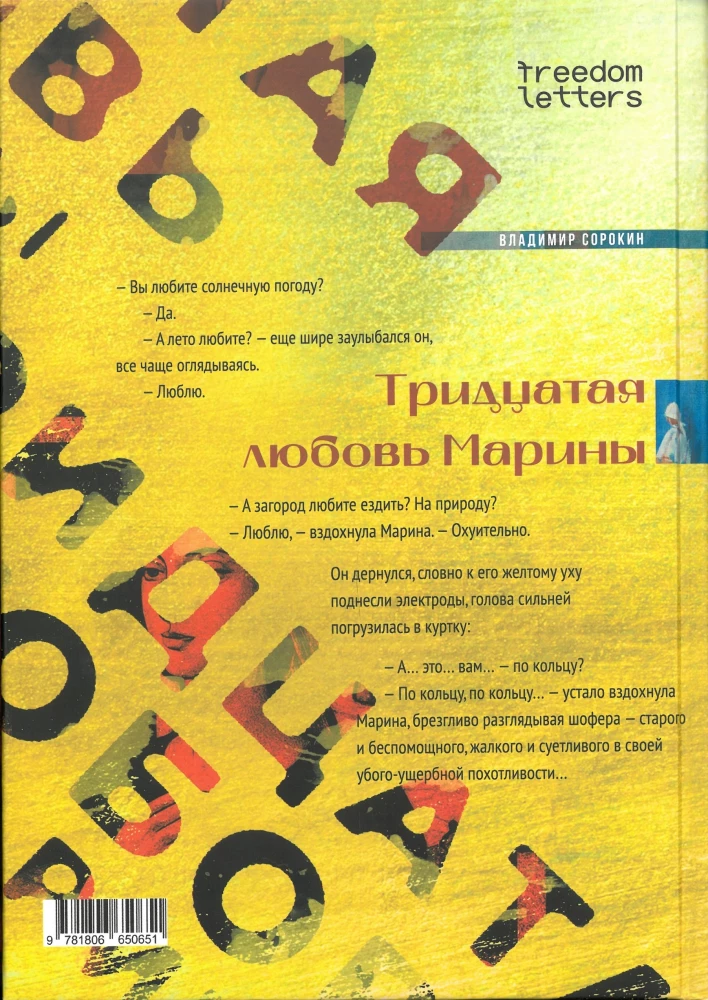
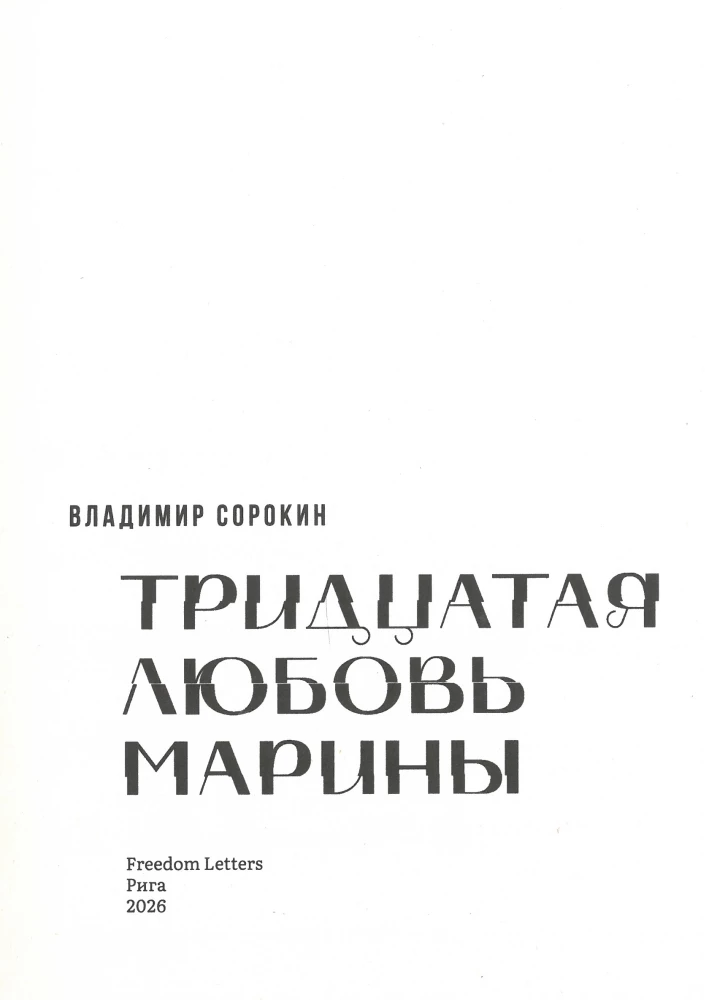

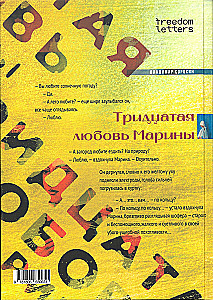
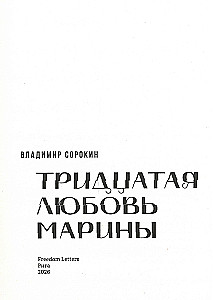
The Thirtieth Love of Marina
Author: Владимир Сорокин
Printhouse: Freedom letters
Age restrictions: 18+
Year of publication: 2026
ISBN: 9781806650606, 9781806650651
Number of pages: 336
Size: 217х153х32 mm
Cover type: hard
Weight: 542 g
ID: 1743496
Marina Alexeeva is a thirty-year-old music teacher living in Moscow in the early 80s. Her life is a mix of traumas, dissident circles, sexual searches, and painful loneliness. Marina's past is a series of love affairs that bring her neither peace nor meaning. She seeks love in women, men, ideas, and protests — but each time finds herself at an impasse.
Marina hates the Soviet wretchedness around her, but at the same time lives within it, trying to find some space for freedom. Her surroundings include dissidents, artists, people who resist the system or dream of escaping from it. But Marina herself increasingly loses touch with her own self: her sexuality, traumas, and disappointments turn life into a chaotic stream of episodes, where she tries to "give love" to everyone who opposes the officialdom.
A turning point occurs when Marina meets Sergey Rumyantsev — the party committee secretary, who outwardly resembles her favorite dissident writer. Their connection becomes a shock for her: for the first time she experiences a genuine, powerful feeling — and it comes not from freedom, but from a symbol of the system. This moment triggers a metamorphosis in Marina: she burns the traces of her former life, renounces dissident ideals, and immerses herself in the world of Soviet clichés, dissolving into the language and rituals of the regime.
The transformation of a living woman into a flow of official propaganda. Marina stops speaking in her own voice: her speech becomes a faceless text of newspaper headlines, and she herself becomes a symbol of how the system consumes personality.