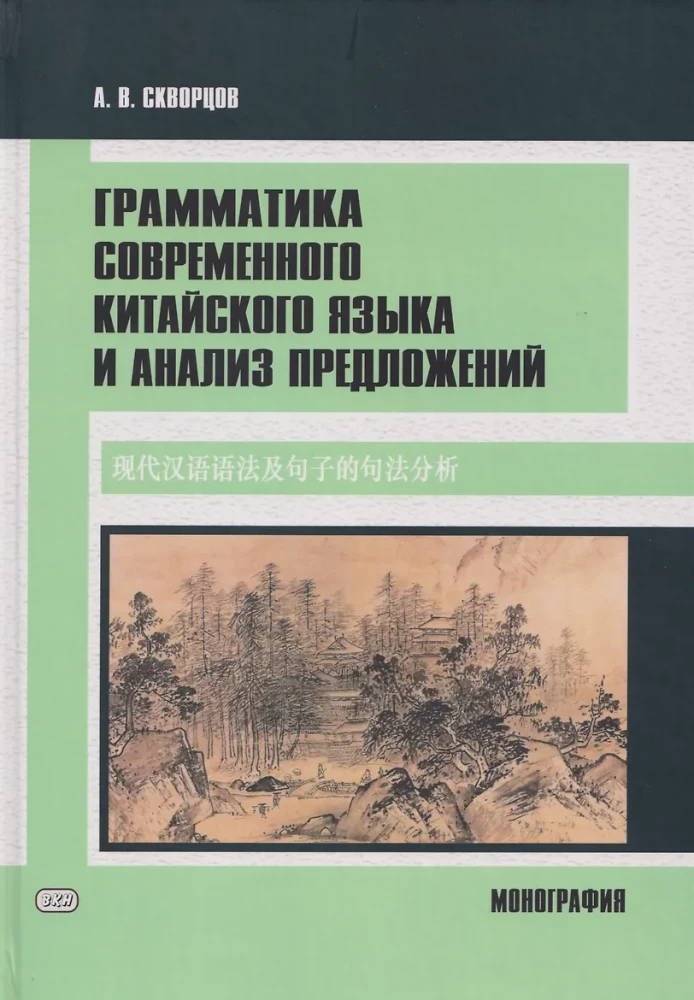
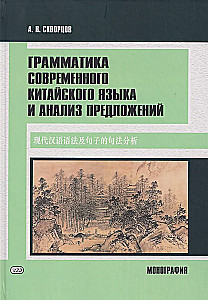
Grammar of Modern Chinese Language and Sentence Analysis: Monograph
Author: Арсений Скворцов
Printhouse: Vostochnaia kniga
Age restrictions: 12+
Year of publication: 2025
ISBN: 9785907938885
Number of pages: 252
Size: 240х170х18 mm
Cover type: soft
Weight: 510 g
ID: 1742650
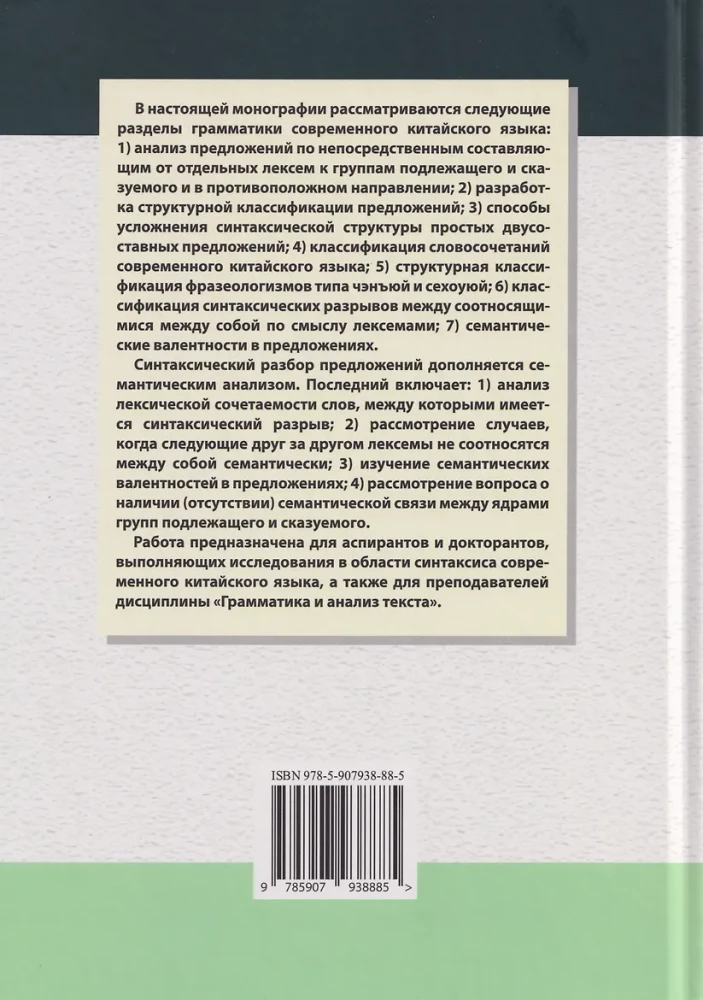
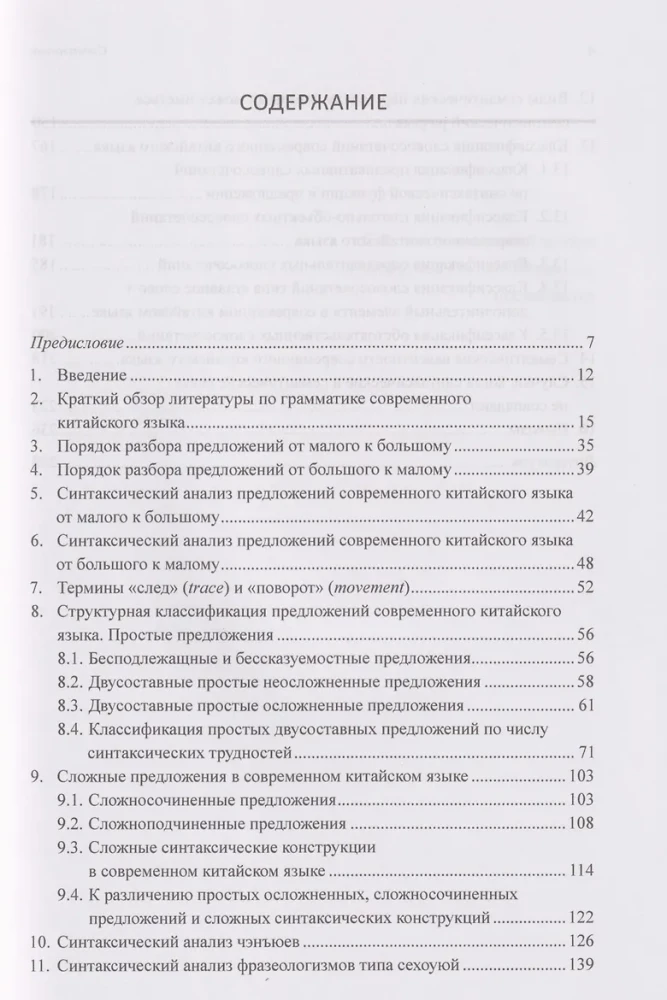
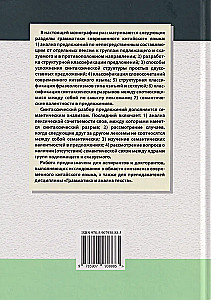
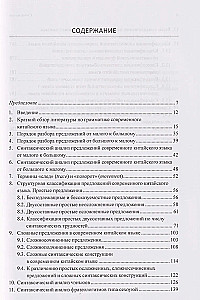
This monograph examines the following sections of the grammar of modern Chinese language:
1) analysis of sentences by immediate constituents from individual lexemes to groups of subjects and predicates and in the opposite direction;
2) development of a structural classification of sentences;
3) ways to complicate the syntactic structure of simple two-part sentences;
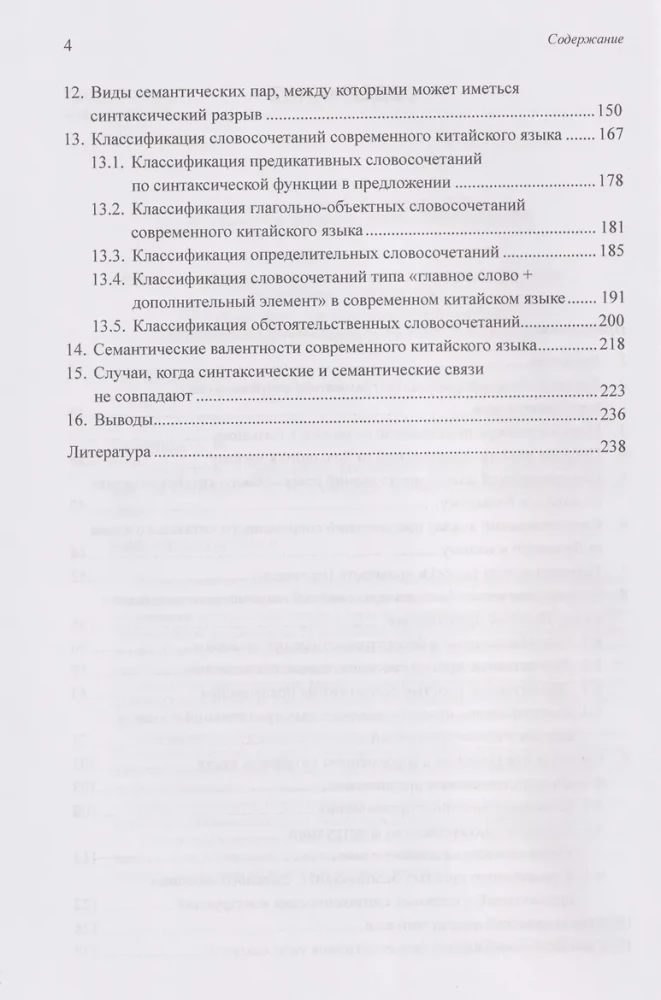
4) classification of phrases in modern Chinese language;
5) structural classification of phraseological units of the type chéngyǔ and xehōuyǔ;
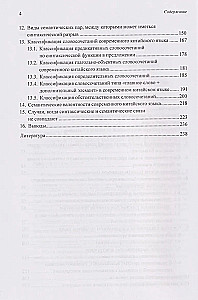
6) classification of syntactic gaps between lexemes that are meaningfully related to each other;
7) semantic valencies in sentences.
The syntactic analysis of sentences is supplemented by semantic analysis. The latter includes:
1) analysis of lexical compatibility of words that have a syntactic gap;
2) considering cases where consecutive lexemes do not correlate semantically;
3) studying semantic valencies in sentences;
4) examining the presence (absence) of semantic connection between the cores of the subject and predicate groups.
This work is intended for graduate and doctoral students engaged in research in the field of syntax of modern Chinese language, as well as for instructors of the discipline "Grammar and Text Analysis."