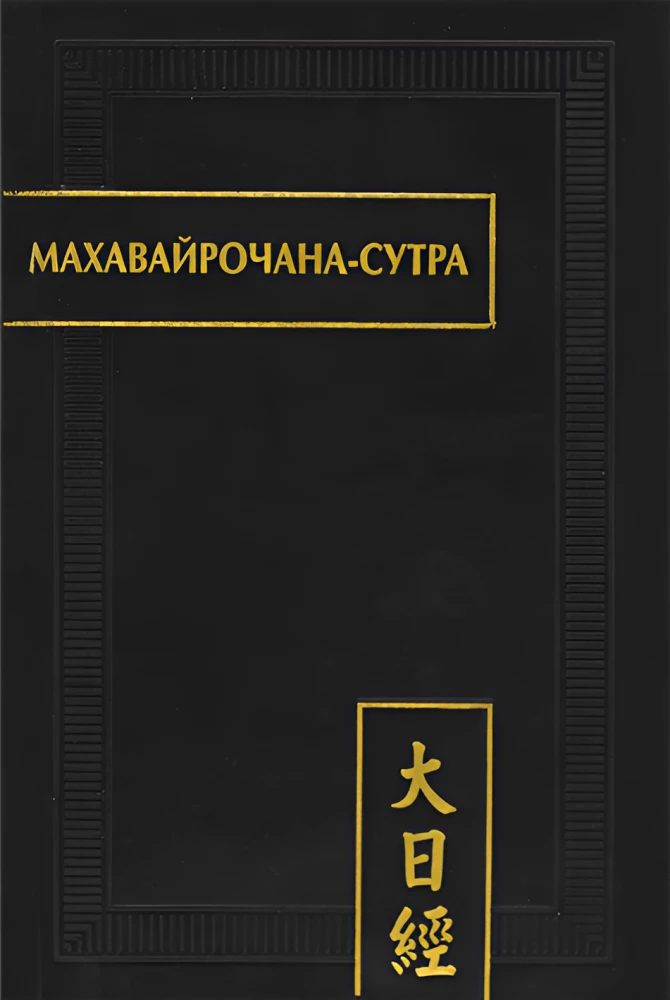
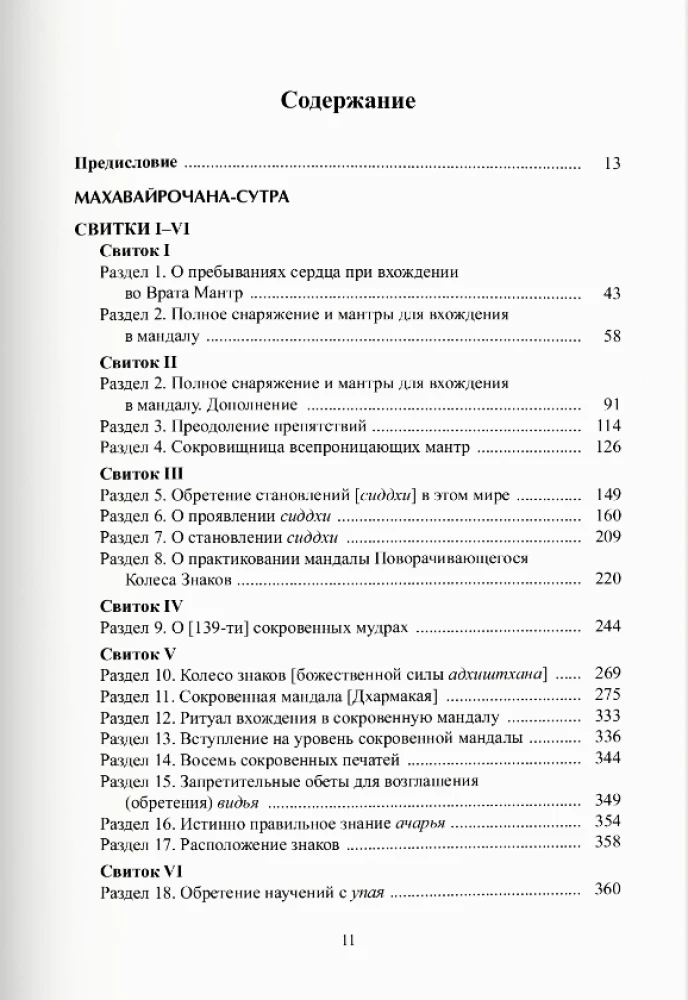
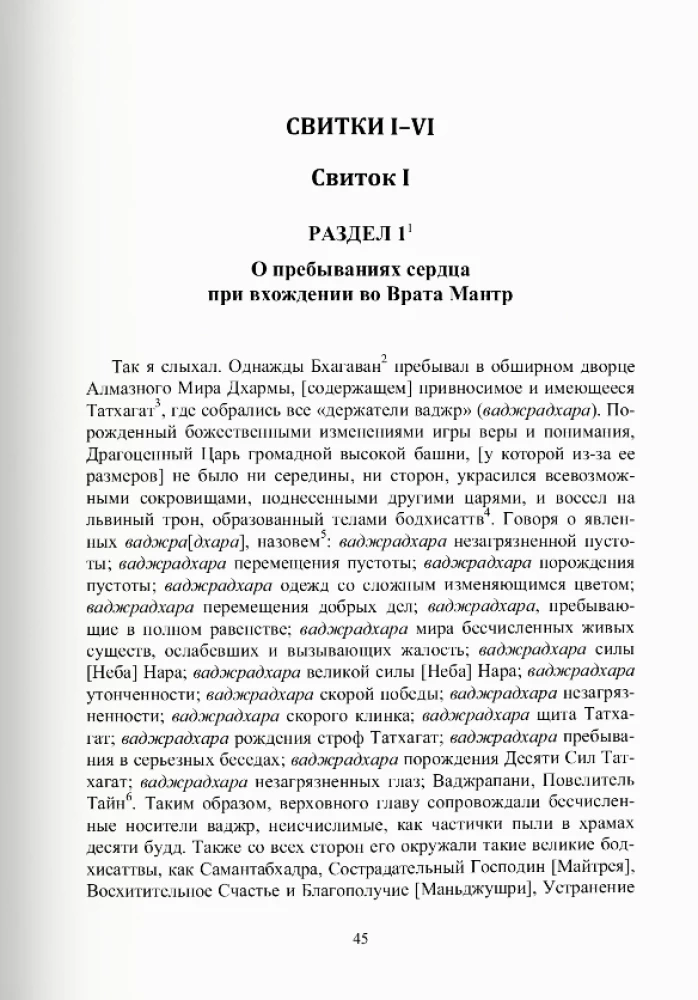
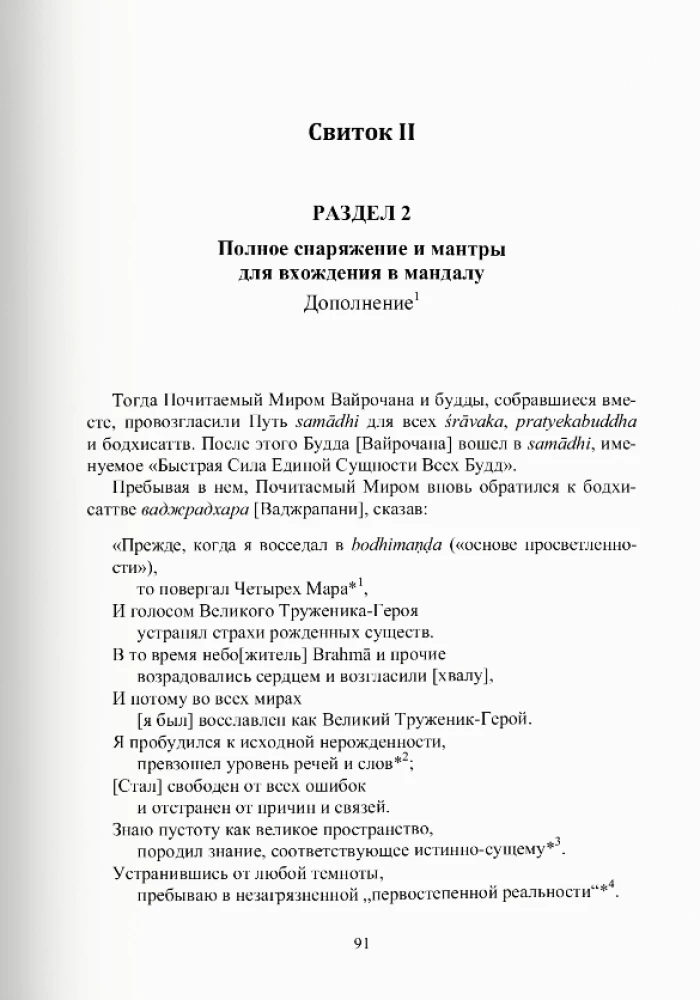
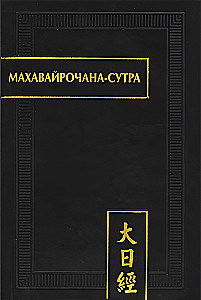
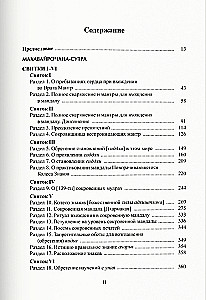
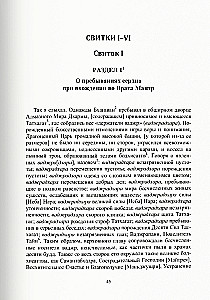
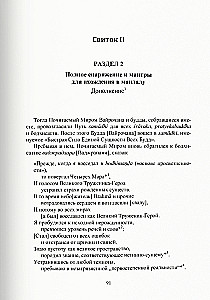
«Mahavairocana Sutra» is one of the two theoretical texts of esoteric (tantric) Buddhism. Its Sanskrit original was presumably composed in India in the second half of the 7th century, and it was translated into Chinese by Shubhakarasimha in 724. Simultaneously...
with the translation, Shubhakarasimha interpreted the text orally; these «lectures», recorded by his disciple Yi-xin, a mathematician and astronomer, formed the basis of the main Chinese commentary on the sutra. Buddhaguhya, whose commentary is also used in the translation, was likely born around 700 and primarily lived in the area of Varanasi. The central theme of the sutra is: what is «perfect enlightenment» and how to achieve it? Such enlightenment is personified in the figure of the cosmic Buddha Mahavairocana; accordingly, the goal of all practitioners is proclaimed to be the becoming of Mahavairocana. The sutra is translated from Chinese, the translation of the commentary by Buddhaguhya is selective, and in the translation of the commentary by Shubhakarasimha, explanations of Sanskrit words and detailed descriptions of rituals are omitted.
«Mahavairocana Sutra» is one of the two theoretical texts of esoteric (tantric) Buddhism. Its Sanskrit original was presumably composed in India in the second half of the 7th century, and it was translated into Chinese by Shubhakarasimha in 724. Simultaneously with the translation, Shubhakarasimha interpreted the text orally; these «lectures», recorded by his disciple Yi-xin, a mathematician and astronomer, formed the basis of the main Chinese commentary on the sutra. Buddhaguhya, whose commentary is also used in the translation, was likely born around 700 and primarily lived in the area of Varanasi. The central theme of the sutra is: what is «perfect enlightenment» and how to achieve it? Such enlightenment is personified in the figure of the cosmic Buddha Mahavairocana; accordingly, the goal of all practitioners is proclaimed to be the becoming of Mahavairocana. The sutra is translated from Chinese, the translation of the commentary by Buddhaguhya is selective, and in the translation of the commentary by Shubhakarasimha, explanations of Sanskrit words and detailed descriptions of rituals are omitted.
Be the first to know about our current discounts, offers and new products!
Check icon
You have added to your basket
Check icon
You have added to favourites
Sold out
The item is currently out of stock.
In stock
Available in warehouse. You will receive the exact delivery date from the operator after the order confirmation.
To order
The product is delivered directly from the publisher. The order processing time is up to 14 days, you will receive the exact delivery date from the operator after the order confirmation.
No circulation
Unfortunately, the print run of the book has ended, it is currently unavailable for order.