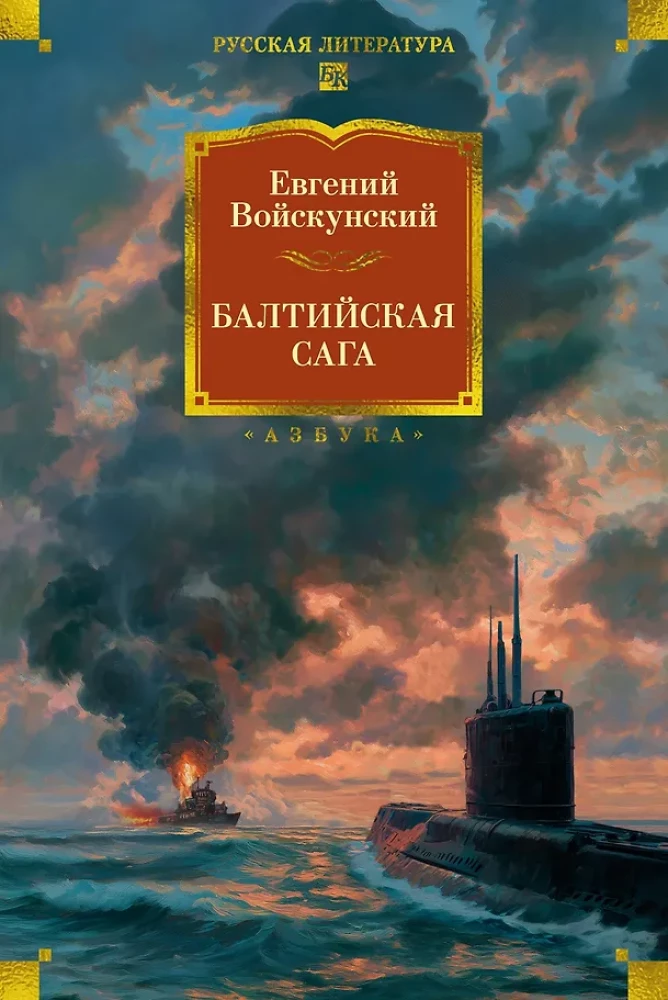
Baltic Saga
Author: Евгений Войскунский
Printhouse: Azbuka
Series: Russian Literature. Big Books
Age restrictions: 16+
Year of publication: 2026
ISBN: 9785389321526
Number of pages: 800
Size: 210х140х38 mm
Cover type: hard
Weight: 900 g
ID: 1738470
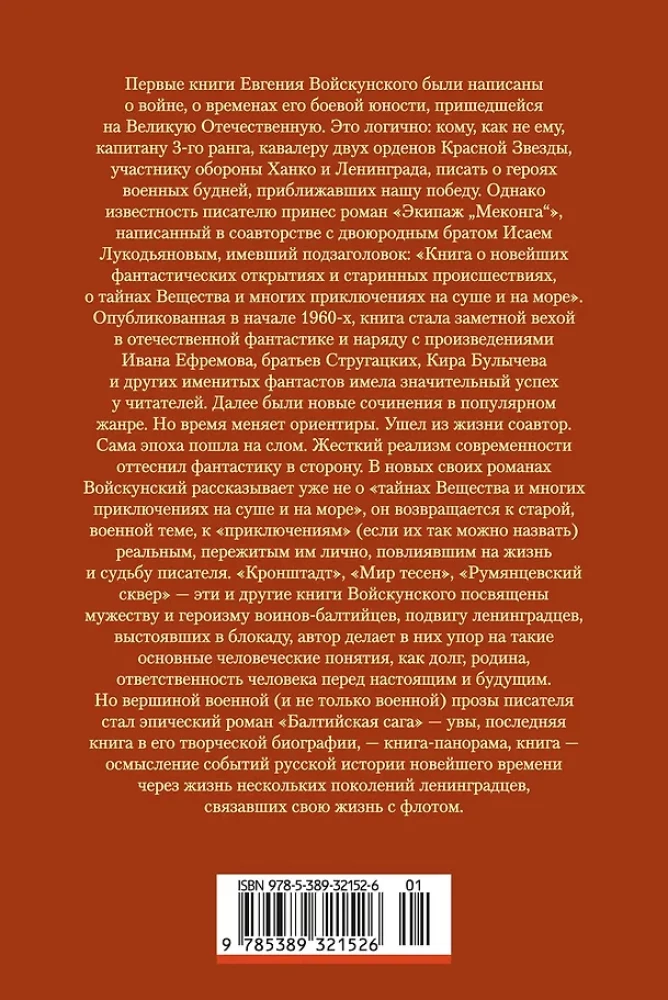
The first books by Evgeny Voiskunsky were written about war, about the times of his combat youth, which coincided with the Great Patriotic War. This is logical: who better than him, a captain of the 3rd rank, a holder of two orders of the Red Banner, a participant in the defense of Hanko and Leningrad, to write about the heroes of military everyday life, who brought our victory closer. However, the novel "Crew of the Mekong," co-authored with his cousin Isaak Lukodyanov, brought the writer fame, which had the subtitle: "A book about the latest fantastic discoveries and ancient incidents, about the secrets of Substance and many adventures on land and at sea." Published in the early 1960s, the book became a significant milestone in domestic science fiction and, alongside the works of Ivan Efremov, the Strugatsky brothers, Kir Bulychev, and other renowned science fiction writers, enjoyed considerable success with readers. There followed new compositions in the popular genre. But time changes priorities. The co-author passed away. The era itself went into decline. The harsh realism of modernity pushed fantasy aside. In his new novels, Voiskunsky no longer talks about "the secrets of Substance and many adventures on land and at sea," he returns to the old military theme, to "adventures" (if they can be called that) that were real, personally experienced by him, affecting the life and fate of the writer. "Kronshtadt," "The World is Small," "Rumyantsev Square" - these and other books by Voiskunsky are dedicated to the courage and heroism of the Baltic warriors, the feat of Leningraders who withstood the blockade; the author emphasizes such fundamental human concepts as duty, homeland, and a person's responsibility to the present and future. But the pinnacle of the writer's military (and not only military) prose became the epic novel "Baltic Saga" - unfortunately, the last book in his creative biography, a panorama book, a book that reflects on the events of Russian history of modern times through the lives of several generations of Leningraders who connected their lives with the fleet.