
Sad Book
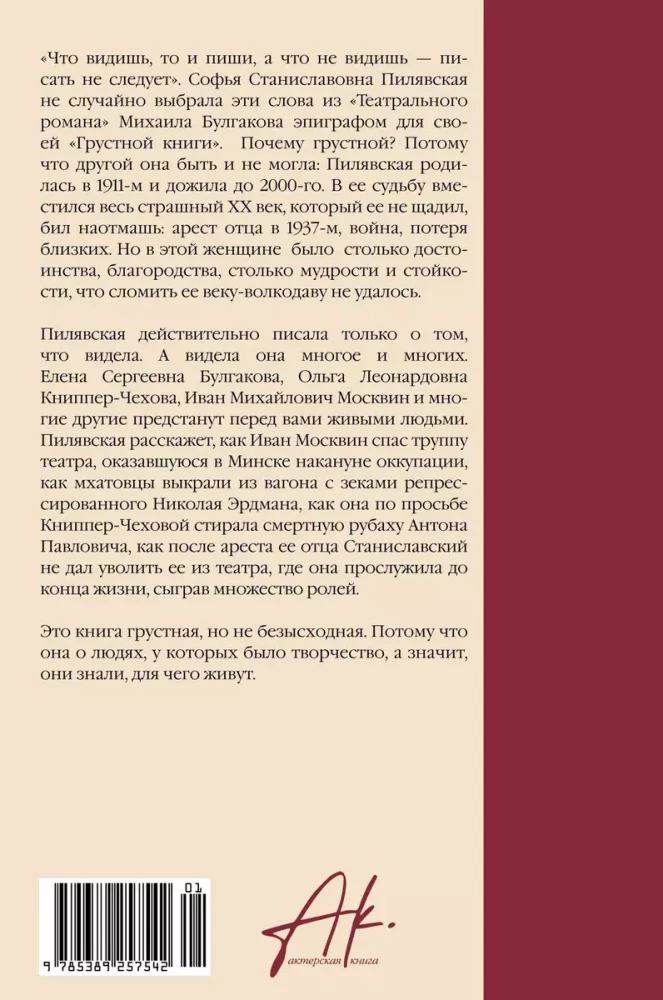
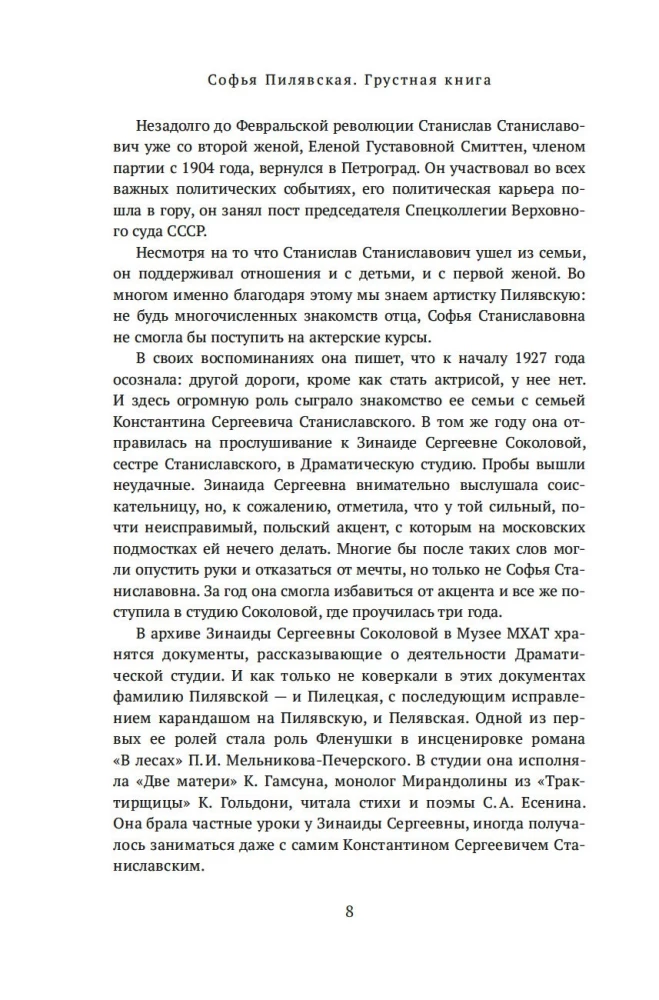
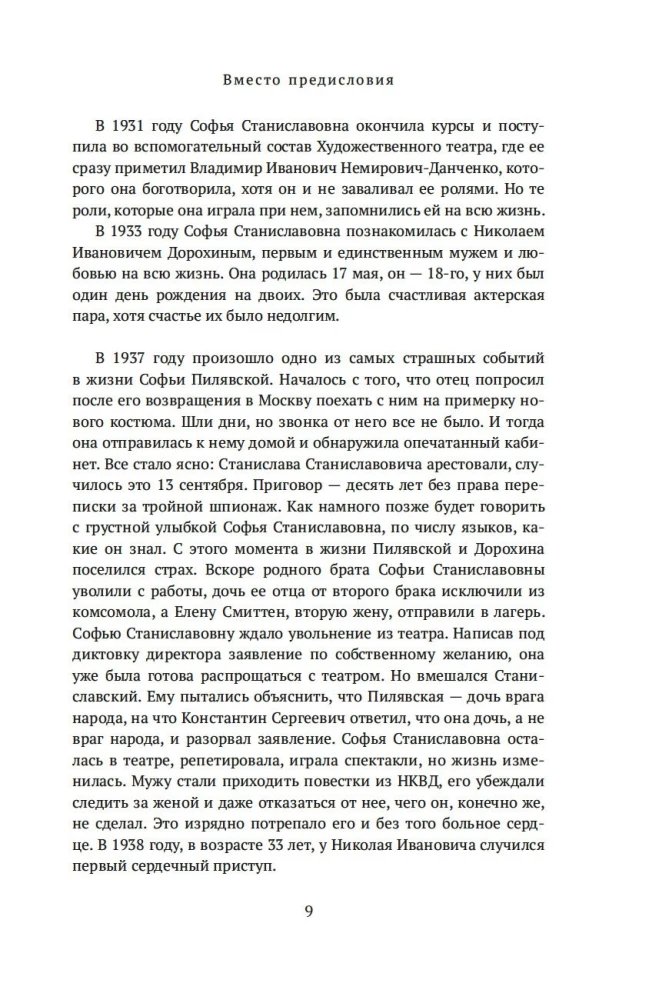
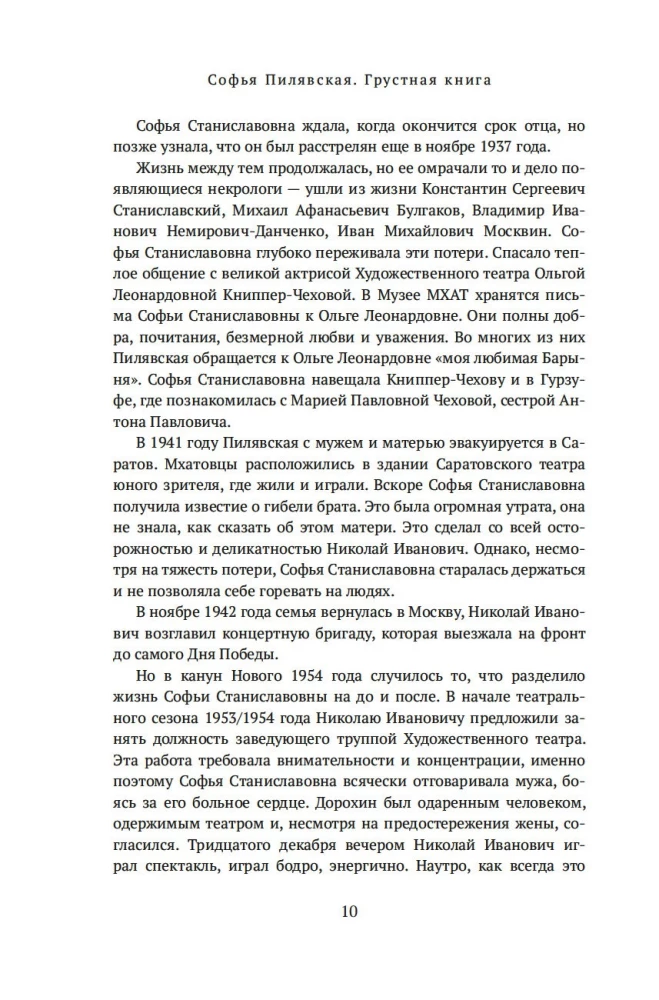
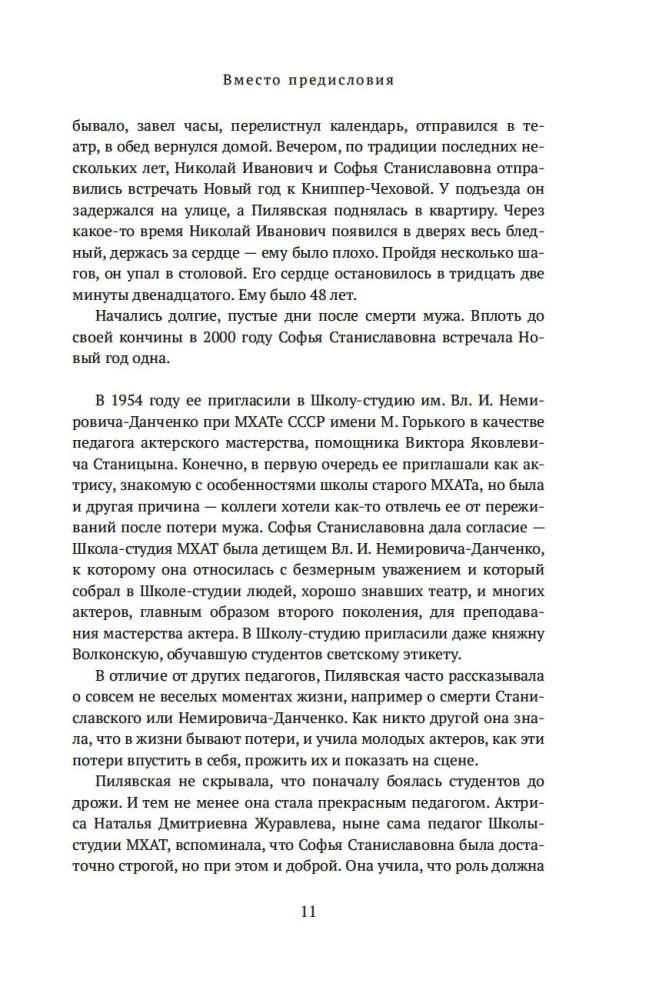
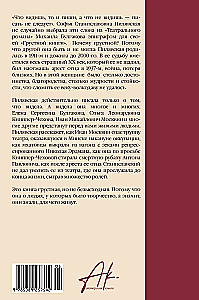
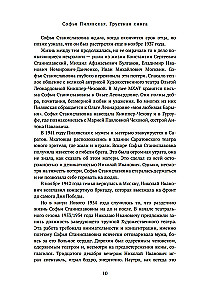
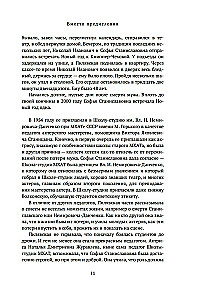
“Write what you see, and what you do not see — you should not write.” Sophia Stanislavovna Piljavskaya did not choose these words from Mikhail Bulgakov's “Theatrical Novel” by chance as the epigraph for her “Sad Book.” Why sad? Because...
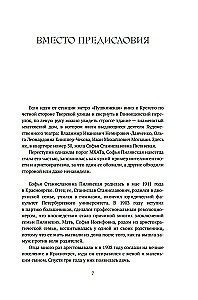
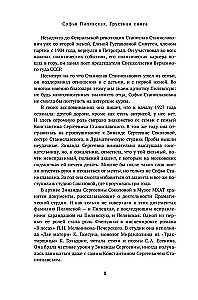
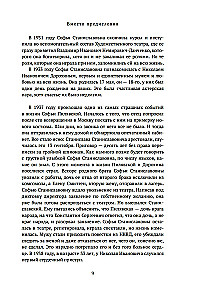
it could not be anything else: Piljavskaya was born in 1911 and lived until 2000. Her fate encompassed the entire terrifying 20th century, which did not spare her, striking brutally: her father’s arrest in 1937, war, loss of loved ones. But in this woman, there was so much dignity, nobility, wisdom, and resilience that the century-wolfhound could not break her. Piljavskaya truly wrote only about what she saw. And she saw much and many. Elena Sergeevna Bulgakova, Olga Leonidovna Knipper-Chekhova, Ivan Mikhailovich Moskvin, and many others will appear before you as living people. Piljavskaya will tell how Ivan Moskvin saved the theater troupe that found itself in Minsk on the eve of the occupation, how the MKhAT actors kidnapped the repressed Nikolai Erdman from a wagon with convicts, how at Knipper-Chekhova's request she washed Anton Pavlovich’s death shirt, how after her father's arrest Stanislavsky did not allow her to be dismissed from the theater, where she served until the end of her life, playing numerous roles. This is a sad book, but not without hope. Because it is about people who had creativity, and thus they knew why they lived.
Author: Софья Пилявская
Printhouse: Azbuka
Series: Persona. Actor's Book
Age restrictions: 16+
Year of publication: 2025
ISBN: 9785389257542
Number of pages: 448
Size: 215х144х23 mm
Cover type: hard
Weight: 590 g
ID: 1688116
Available from suppliers
Expected delivery time – up to 3 weeks
€ 12.19
Available from suppliers
Expected delivery time – up to 3 weeks
€ 12.19
Bestsellers



€ 13.29
In stock
12 Weeks in a Year. How to Achieve More in 12 Weeks Than Others Do in 12 Months
Майкл Леннингтон, Брайан Моран

€ 7.89
In stock
Choice. On the Freedom and Inner Strength of a Person
Эдит Ева Эгер, Эсме Швалль-Вейганд


€ 6.99
In stock