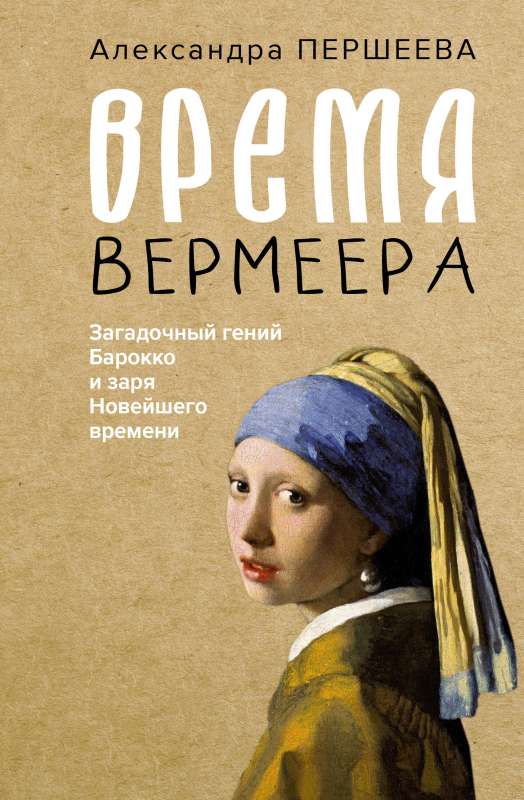
The Time of Vermeer. The Mysterious Genius of Baroque and the Dawn of Modern Times
Jan Vermeer died three and a half centuries ago, living only 43 years. He left behind about 30 small paintings. These are not epic battle scenes, they do not depict famous people or significant events. There is no Rembrandt-like drama...
or Rubens-like tumultuous festivity. These are subtle, intimate, tranquil works. This is the soft light streaming in through the window. These are ordinary people immersed in their world, occupied with everyday affairs. Here is a woman reading a letter. Here is another playing the lute. A lace maker is bent over her work. The artist is painting. Why is it that these few seemingly unremarkable works continue to captivate our attention and hold so many mysteries? Why do debates about their provenance, about numerous forgeries and imitations, not subside? Why does each painting by Vermeer attract crowds of viewers, no matter where it is exhibited, and why does every museum fortunate enough to own even one of the master's paintings take pride in it as a true treasure? Alexandra Persheeva, a candidate of art history, a specialist in semiotics and general theory of art, a lecturer at the School of Design of the Higher School of Economics, co-author of popular online courses on art and design with a total number of course participants exceeding 100 thousand, in her book not only talks about Vermeer’s paintings but also becomes a guide for the reader into the world of Dutch art, painting a vivid picture of the era that formed what is indispensable for conceiving modernity: science, rational thinking, international trade, the free art market. It becomes clear in what context Vermeer's creativity developed and why it became exactly what we know it to be. Alexandra will unveil to the reader the depth and charm of Jan Vermeer’s painting, show how he influenced and continues to influence world art, and why today, centuries after the master's death, his works remain appealing to us.
Author: ПЕРШЕЕВА А.Д.
Printhouse: AST
Series: Art Without Cuts
Age restrictions: 16+
Year of publication: 2023
ISBN: 9785171585181
Number of pages: 256
Size: 220x146x19 mm
Cover type: hard
Weight: 390 g
ID: 1533177
In stock
€ 12.49
Will be delivered to United States on :
Unfortunately, we are currently unable to deliver orders to your region.
In stock
€ 12.49
Will be delivered to United States on :
Unfortunately, we are currently unable to deliver orders to your region.
Bestsellers



€ 13.29
In stock
12 Weeks in a Year. How to Achieve More in 12 Weeks Than Others Do in 12 Months
Майкл Леннингтон, Брайан Моран

€ 7.89
In stock
Choice. On the Freedom and Inner Strength of a Person
Эдит Ева Эгер, Эсме Швалль-Вейганд



€ 6.99
In stock


Publishers "AST" recommends

Bestseller
€ 12.39
In stock
Intensive Korean Language Course for Beginners
Анастасия Погадаева, Чун Ин Сун






![[НЕ]ВЕРНОСТЬ. Что делать, когда не знаешь, что делать](https://static.mnogoknig.com/media/372416/a9a59434-4a89-40ec-835d-0286347946cb.gif)

Bestseller
€ 9.99
In stock
Психология окружающего мира: Дуня и кот Кисель на конюшне
СУРКОВА Л.М., ТОЛКАЧЕВА О.А.



Bestseller
€ 9.69
In stock
Korean Language. Complete Grammar in Diagrams and Tables
Чун Ин Сун, Анастасия Погадаева