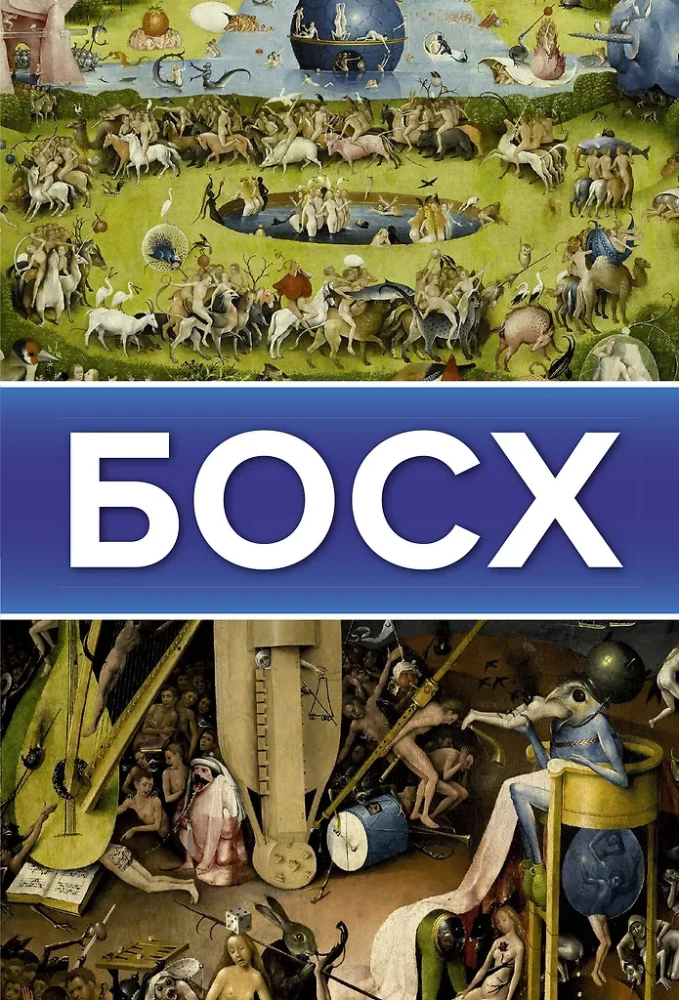
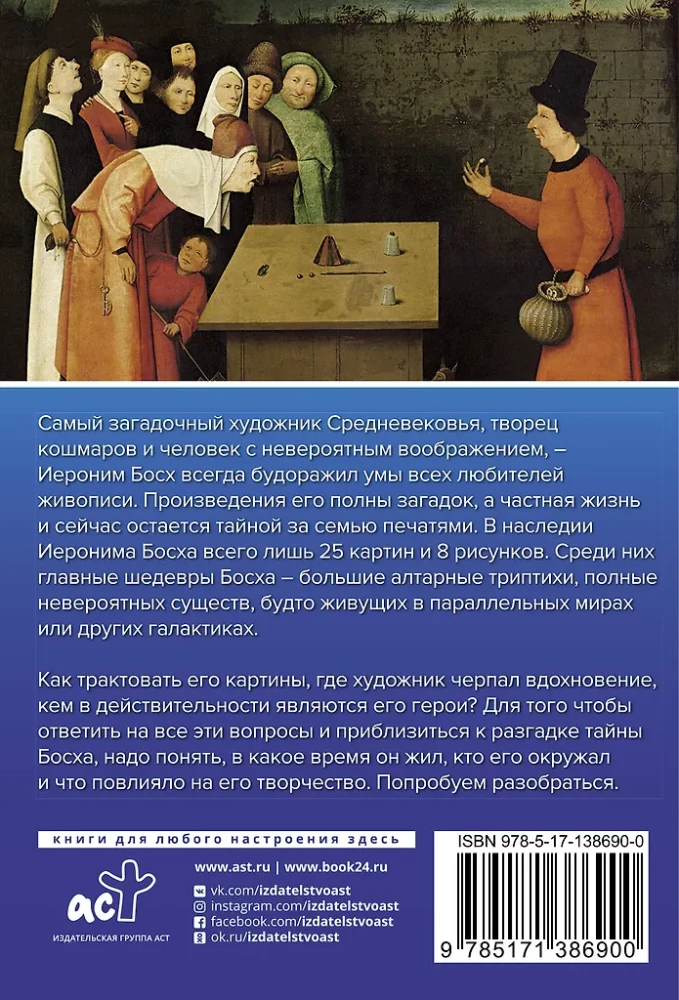
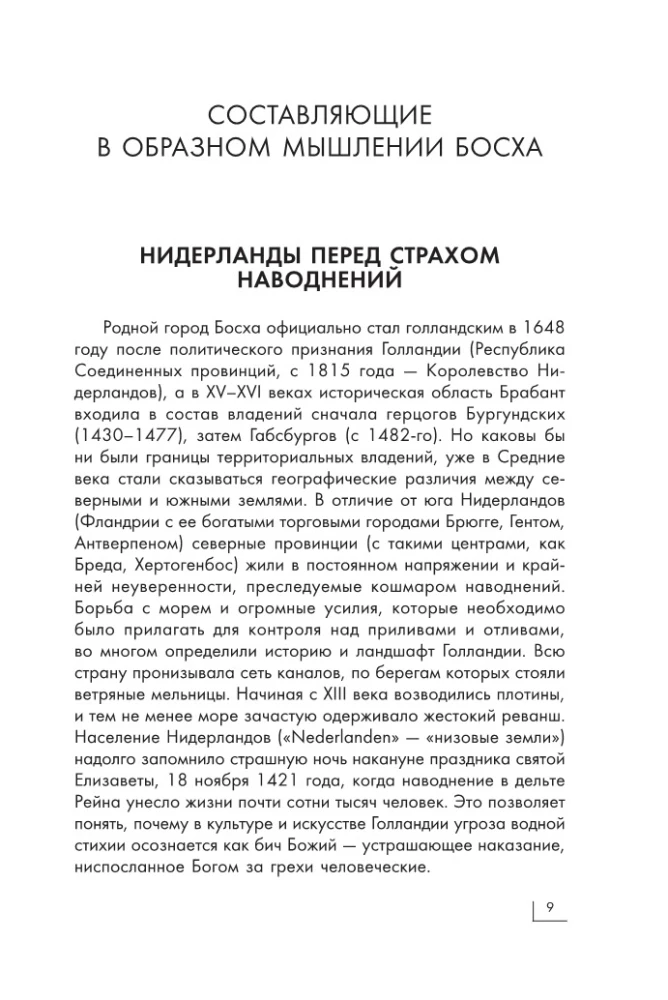
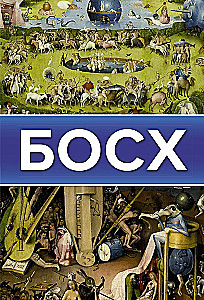
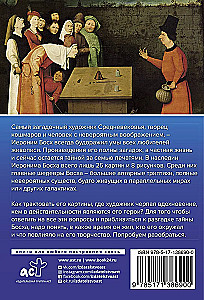
The most enigmatic artist of the Middle Ages, creator of nightmares and a person with incredible imagination – Hieronymus Bosch has always excited the minds of all painting enthusiasts. His works are full of mysteries, and his private life still...
remains a secret behind seven seals. In the legacy of Hieronymus Bosch, there are only 25 paintings and 8 drawings. Among them are Bosch's main masterpieces – large altar triptychs, filled with incredible beings that seem to live in parallel worlds or other galaxies. The mysterious life of the great painter and the very few biographical details about Bosch have led to a considerable amount of literary and historical speculation in our time. He was associated with sorcerers and magicians, heretics and alchemists, engaged in the search for the philosopher's stone, and even accused of a secret pact with Satan, who, in exchange for an immortal soul, granted him the unique talent to penetrate other worlds and depict them on canvas. Bosch is an atypical artist in the panorama of Dutch painting and unique in his own right in European painting of the 15th century. How to interpret his paintings, where did he draw his sources of inspiration from, and who, in reality, are his characters? It should be noted that there existed a rich tradition in medieval literature describing strange beings and mythical environments. Fables, sermons, fairy tales, and biblical allegories fed the medieval imagination. The uniqueness of Bosch lay in the fact that he developed this visual language through illustrations of mysterious beings. Previously, it was believed that the surrealism in Bosch's paintings was merely aimed at amusing viewers and tickling their nerves. However, modern art historians have concluded that there is a much deeper meaning in Bosch's work and have made numerous attempts to explain its significance, find its roots, and offer interpretations. Some researchers even called Bosch a surrealist of the 15th century, extracting his bizarre images from the depths of the subconscious similar to Salvador Dalí. Others believe that Bosch's art reflects medieval esotericism.
The most enigmatic artist of the Middle Ages, creator of nightmares and a person with incredible imagination – Hieronymus Bosch has always excited the minds of all painting enthusiasts. His works are full of mysteries, and his private life still remains a secret behind seven seals. In the legacy of Hieronymus Bosch, there are only 25 paintings and 8 drawings. Among them are Bosch's main masterpieces – large altar triptychs, filled with incredible beings that seem to live in parallel worlds or other galaxies. The mysterious life of the great painter and the very few biographical details about Bosch have led to a considerable amount of literary and historical speculation in our time. He was associated with sorcerers and magicians, heretics and alchemists, engaged in the search for the philosopher's stone, and even accused of a secret pact with Satan, who, in exchange for an immortal soul, granted him the unique talent to penetrate other worlds and depict them on canvas. Bosch is an atypical artist in the panorama of Dutch painting and unique in his own right in European painting of the 15th century. How to interpret his paintings, where did he draw his sources of inspiration from, and who, in reality, are his characters? It should be noted that there existed a rich tradition in medieval literature describing strange beings and mythical environments. Fables, sermons, fairy tales, and biblical allegories fed the medieval imagination. The uniqueness of Bosch lay in the fact that he developed this visual language through illustrations of mysterious beings. Previously, it was believed that the surrealism in Bosch's paintings was merely aimed at amusing viewers and tickling their nerves. However, modern art historians have concluded that there is a much deeper meaning in Bosch's work and have made numerous attempts to explain its significance, find its roots, and offer interpretations. Some researchers even called Bosch a surrealist of the 15th century, extracting his bizarre images from the depths of the subconscious similar to Salvador Dalí. Others believe that Bosch's art reflects medieval esotericism.
Be the first to know about our current discounts, offers and new products!
Check icon
You have added to your basket
Check icon
You have added to favourites
Sold out
The item is currently out of stock.
In stock
Available in warehouse. You will receive the exact delivery date from the operator after the order confirmation.
To order
The product is delivered directly from the publisher. The order processing time is up to 14 days, you will receive the exact delivery date from the operator after the order confirmation.