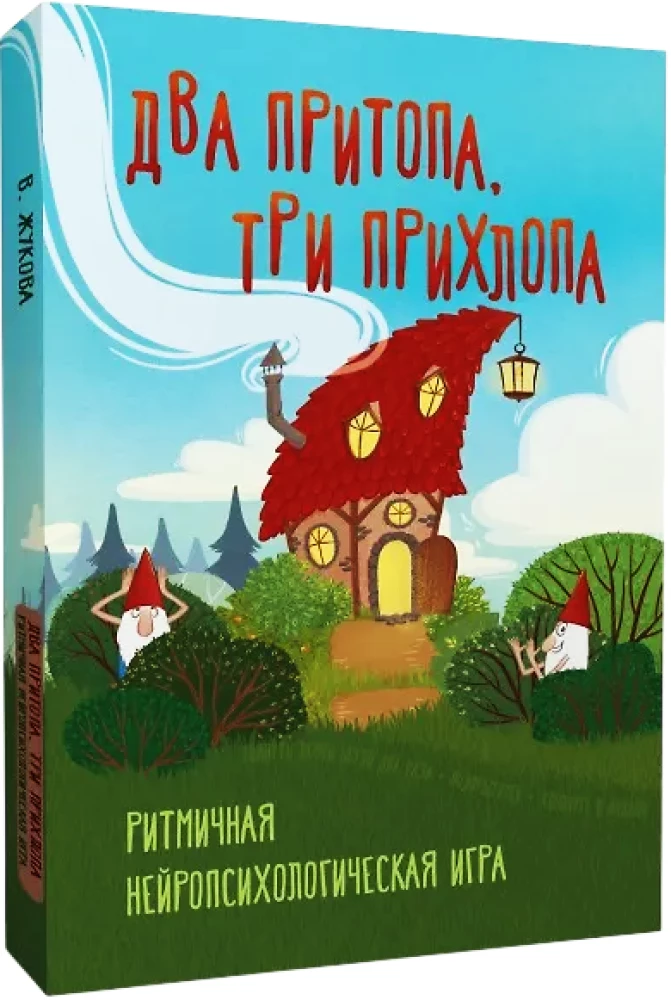
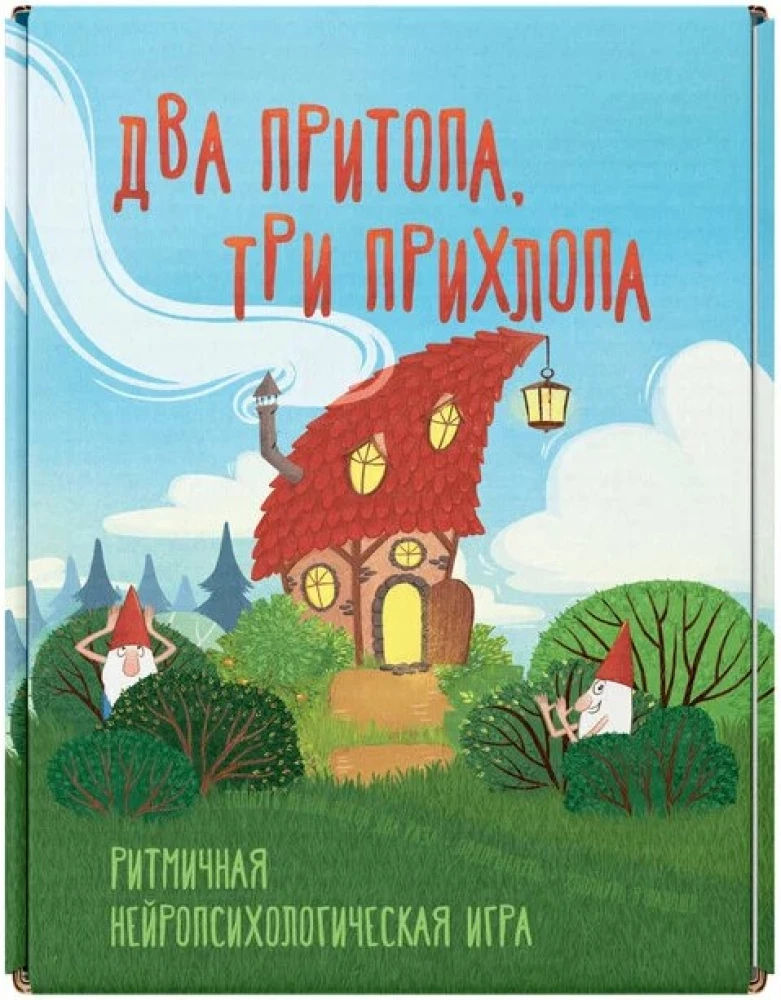
Rhythmic Neuropsychological Game - Two Stomps, Three Claps
Printhouse: Genezis
Age restrictions: 5+
Year of publication: 2024
ISBN: 9785985637854
Size: 221x153x32 mm
Weight: 340 g
ID: 1735451
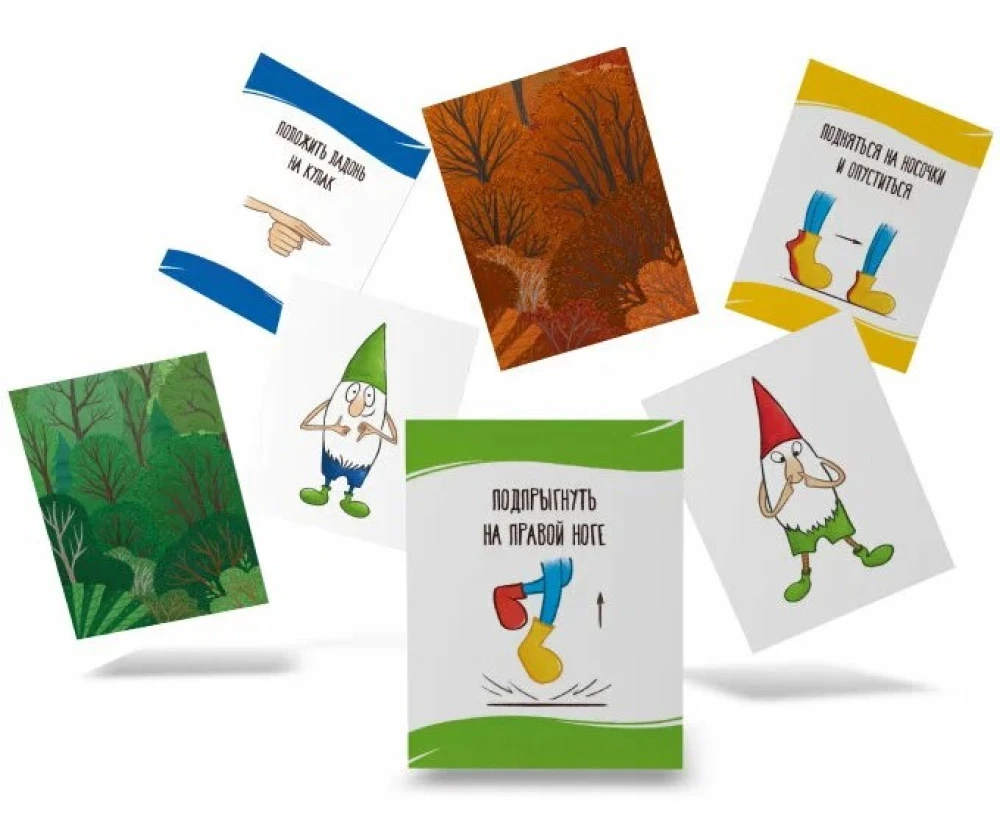
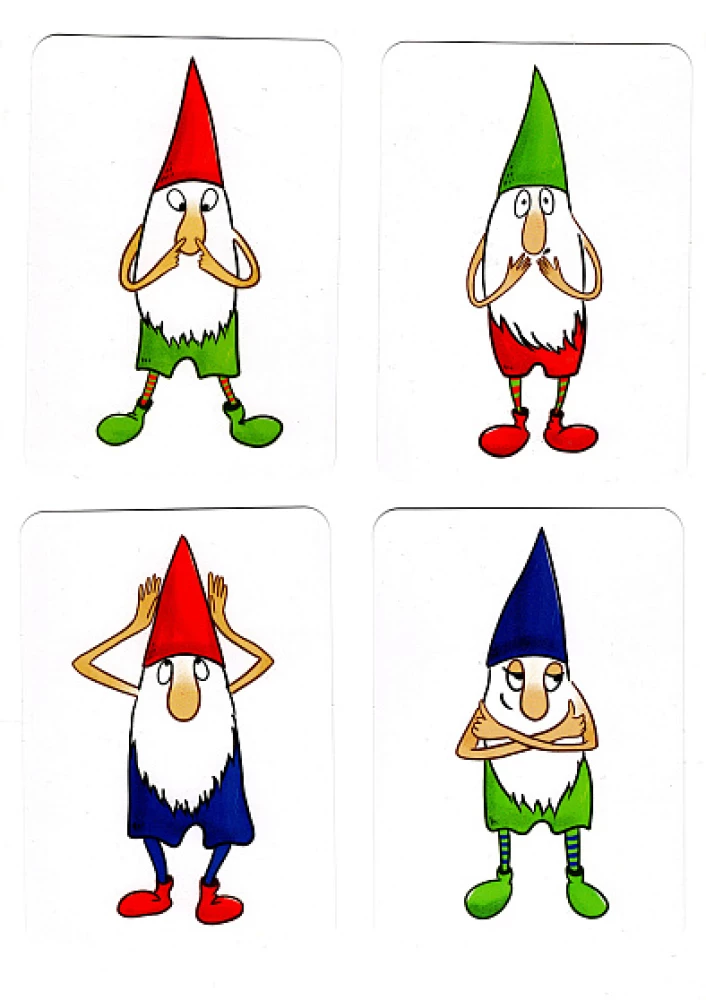
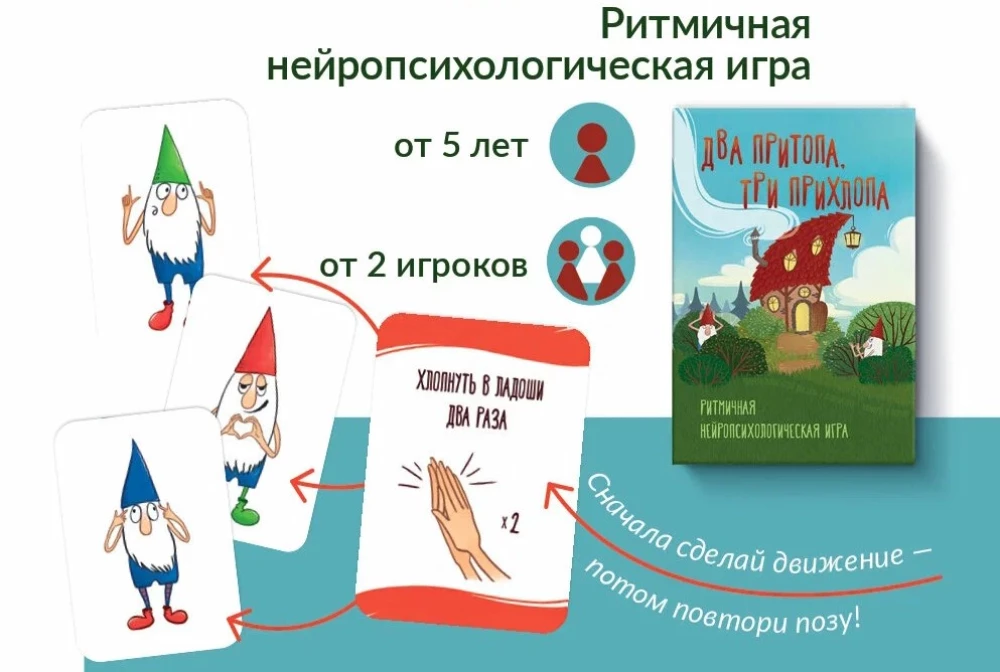
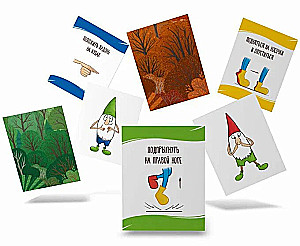
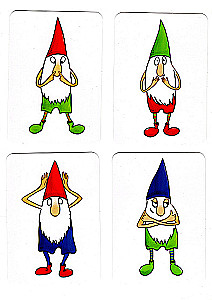
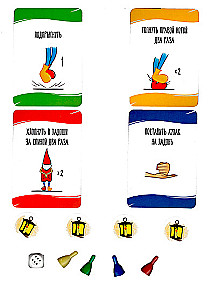
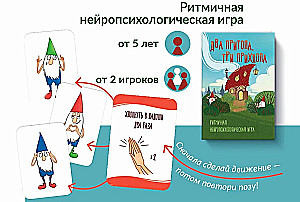
In the game, there are two types of cards:
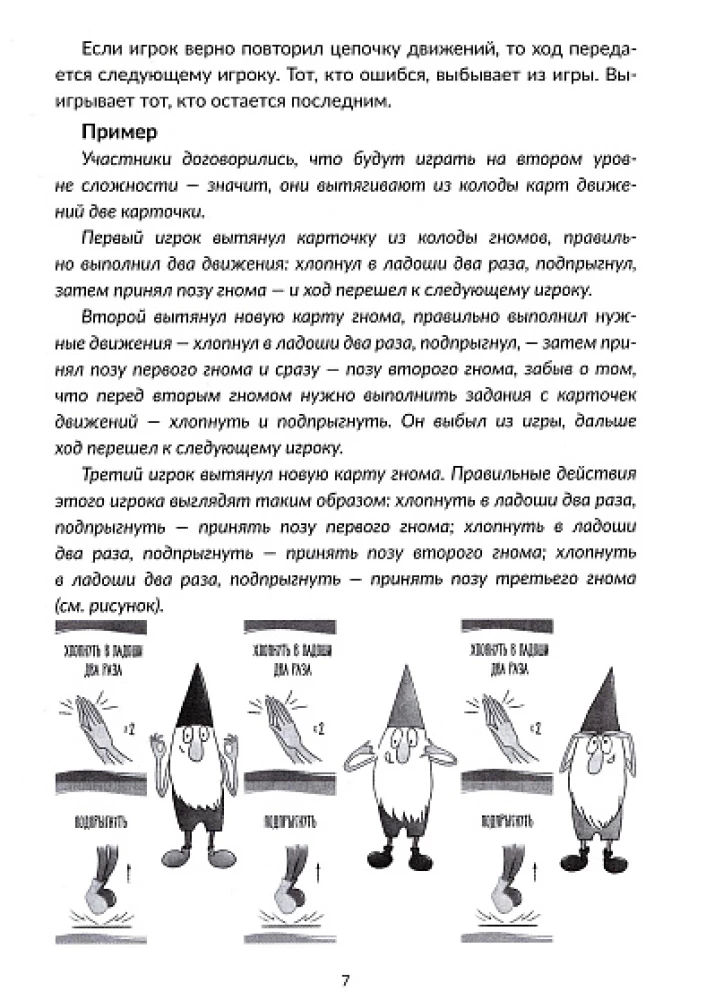
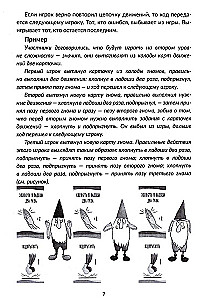
– with images of gnomes in static poses;
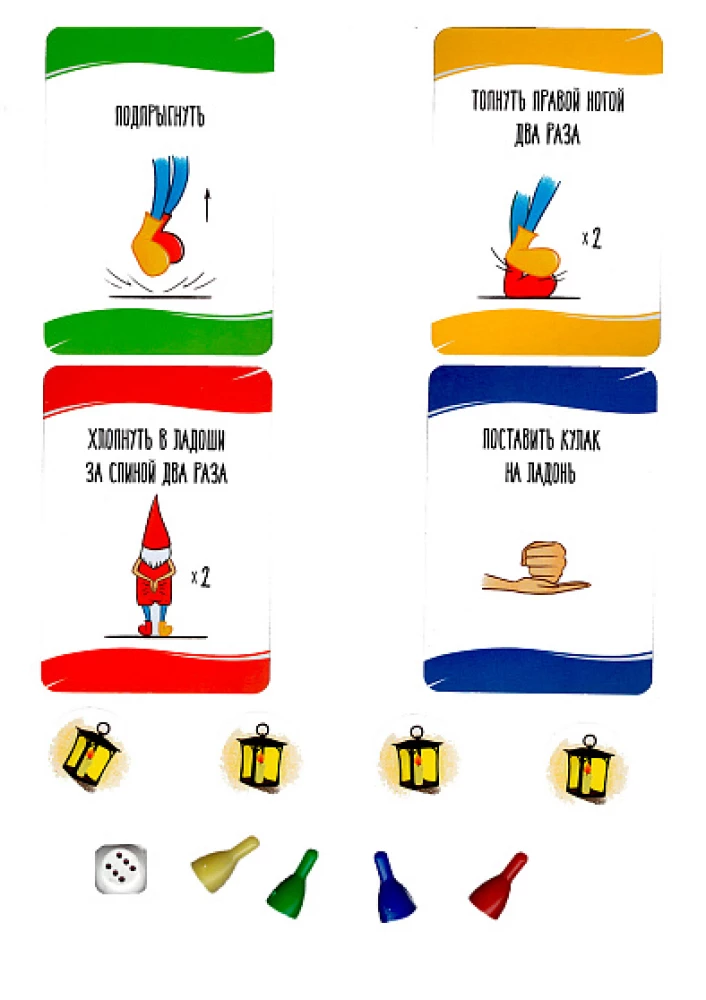
– with descriptions of simple movements (for example, «jump» or «clap twice»).
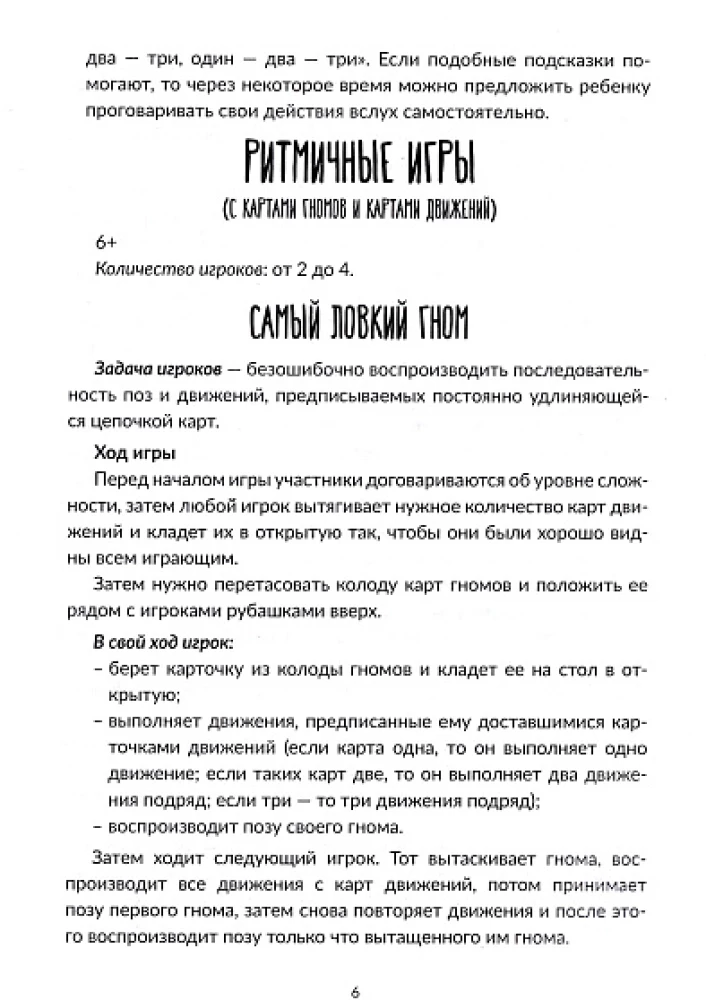
The task of the participants is to quickly and accurately reproduce the poses and movements from the cards. Participants need to first perform tasks from the movement cards, then take a static pose from the gnome cards, then perform movements again and take a pose of another gnome, and so on. This creates a constantly repeating rhythmic program of movements, which includes both repetitive actions and new ones each time, preventing the program from becoming stereotypical.
Such motor exercises develop:
– volition — one needs to concentrate and constantly maintain the action algorithm;
– the ability to switch — a motor stereotype developed after several repetitions changes due to the inclusion of new elements in the movement chain;
– fine motor skills — one needs to accurately reproduce subtle movements of the hands and fingers;
– two-handed coordination — it is necessary to monitor whether movements are performed with one or both hands and whether they are the same for both hands or different.
All of this trains agility, fluidity, and accuracy of all types of movements, including those needed for beautiful and fast writing, and for expressive, well-intonated speech. Various options of the game also contribute to the development of attention, memory, thinking, and planning skills.
Below you will find descriptions of eight game variations: three rhythmic ones — using both movement cards and gnome cards — and five additional ones — only with gnome cards.
The movement cards provide verbal descriptions of actions and their symbolic images (pictograms). The pictograms serve as a visual aid for children who are just learning to read. Moreover, they are necessary for the convenience and speed of orientation. However, these images are auxiliary — to read the descriptions of movements, reading skills are required; therefore, the approximate age of players is from six years old. Younger children can only play if adults help them read the text from the cards.
The game is suitable for groups of children, for parents with children, and will also serve as a good tool for specialists — neuropsychologists, speech therapists, defectologists, educators.
Contents:
- 32 cards with images of gnomes
- 20 cards with descriptions of movements
- 10 lantern tokens
- 4 chips and a die
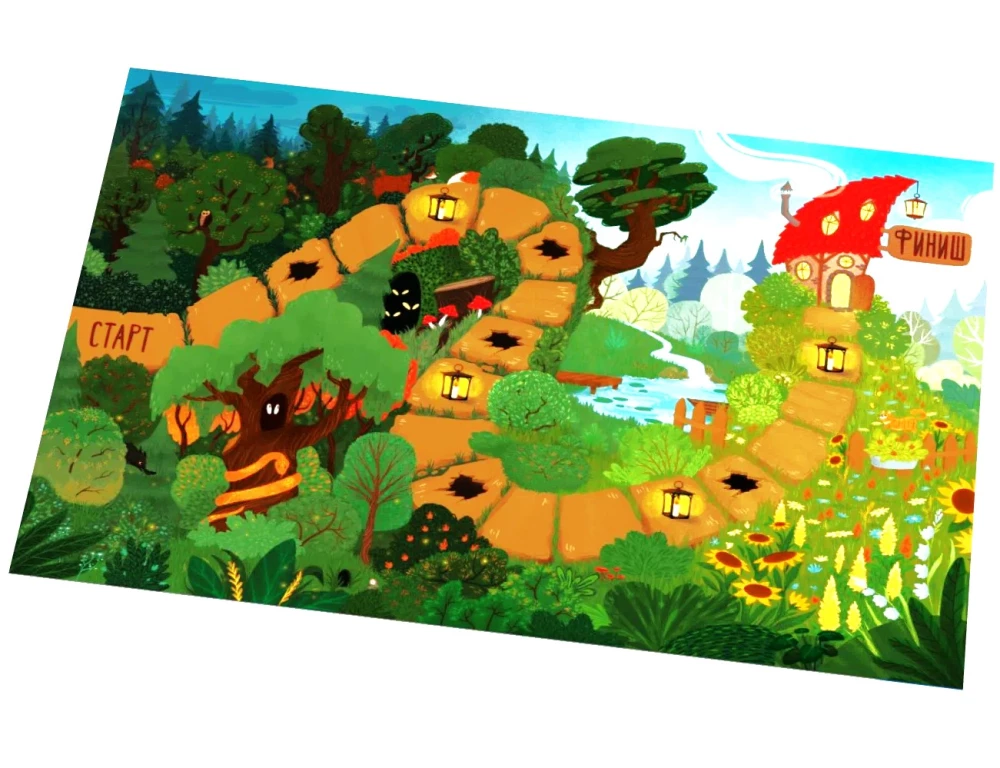
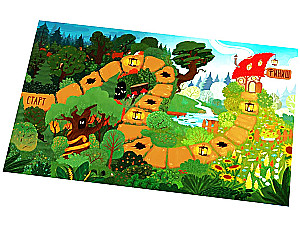
Game board.
Instructions:
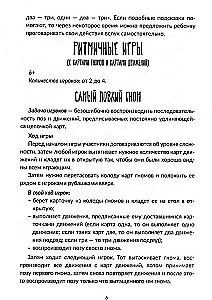
Clap, stomp, hands up, clap, stomp, hands to the nose… Repeat the movements after the gnomes, trying not to lose the rhythm in the constantly lengthening chain of actions.
In the game, there are two types of cards:
• with images of gnomes in static poses,
• with descriptions of simple actions (like «jump» or «clap twice»).
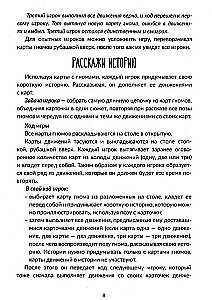
Players need to quickly and accurately reproduce the poses and movements from the cards, alternating them in a specific sequence, while the chain of cards keeps lengthening. Additionally, one can tell stories about the gnomes, travel with them through a dangerous forest, or play Danets. There are many game variations, each more interesting than the other!
Such motor exercises train agility, fluidity, and accuracy of all types of movements, including those needed for beautiful and fast writing, as well as for expressive, well-intonated speech.
The game is suitable for groups of children, for parents with children, and will also serve as a good tool for specialists — neuropsychologists, speech therapists, defectologists, educators.
Game duration: from 20 to 40 minutes
Number of players: from 2