




































Sociology. Theoretical Trends and Methodological Shifts. A Set of 4 Books
The set consists of three volumes (4 books) and represents a summary of the author's 40-year activity in the field of methodology, theory, and history of sociology.
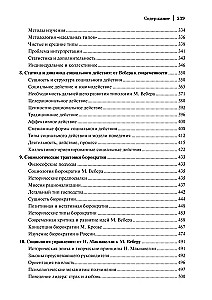
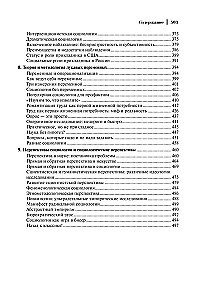
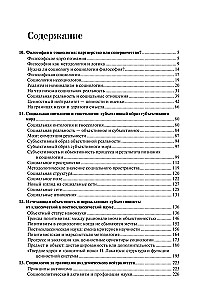
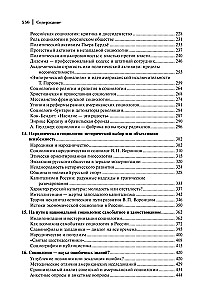
The first volume covers classical and modern theories of social tension, anomie, and degradation;... the individual in the societal and sociological context, including the individual in the history of philosophy; the theory of the "mirror self"; symbolic interactionism and the dramaturgical sociology of I. Goffman; ethnomethodology and the Stanford prison experiment by F. Zimbardo; existential sociology and stratification models of homo sapiens; the statics and dynamics of social action by Max Weber; sociological interpretations of bureaucracy; issues of loneliness and social isolation, among others.
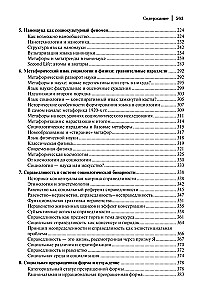
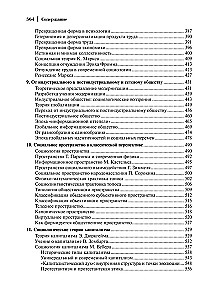
The second volume addresses the following questions: the scientific picture as an ontological scheme of social reality, the paradigmatic crisis of sociology in the light of T. Kuhn's theory, forms and types of social deformations, social bifurcationism and social entropy, social chaos and social ambivalence; new areas of social knowledge: neurosociology, nanopsychology, astrosociology, neuroeconomics and nanoeconomics, nanophilosophy; nanosociology and its implementation: nanorisk in the mirror of public opinion, transhumanism and overcoming humanity, small worlds in the network society, the language of nano-science as a cultural phenomenon, nanotechnology and nanoethics; metaphorical language of sociology and physics, metaphors at all levels of sociological research; justice in the system of sociological binarity, social transformed form and alienation, from industrial to network society, theories of social space, sociological theories of capitalism.
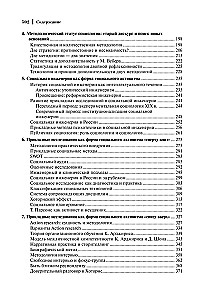
The third volume consists of two parts and includes intra-scientific questions of sociology, namely: structure and characteristics of sociological theory, verification and falsification, theory and methodology of cunning variables, qualitative and quantitative methodology, main categories of sociology, methodology of practical implementation, social roles of a practitioner, social engineering, quantophrenia and percentomania, sociological perspectives, the irreducibility of common sense in sociology, dualism of social reality and scientific theory, realism and nominalism in sociology, value neutrality, social ontology and epistemology, positivism in sociology and post-classical science, public sociology, interventionist sociology, phenomenological sociology, sociology beyond academic neutrality, applied research as a form of social activism, populist sociology, indigenization and westernization of sociology, popular sociology, palliative sociology.
For a wide and interested audience of readers engaged in independent research, as well as for those who wish to get acquainted with the foundations of the sociological science in terms of academic education.
The first volume covers classical and modern theories of social tension, anomie, and degradation;... the individual in the societal and sociological context, including the individual in the history of philosophy; the theory of the "mirror self"; symbolic interactionism and the dramaturgical sociology of I. Goffman; ethnomethodology and the Stanford prison experiment by F. Zimbardo; existential sociology and stratification models of homo sapiens; the statics and dynamics of social action by Max Weber; sociological interpretations of bureaucracy; issues of loneliness and social isolation, among others.
The second volume addresses the following questions: the scientific picture as an ontological scheme of social reality, the paradigmatic crisis of sociology in the light of T. Kuhn's theory, forms and types of social deformations, social bifurcationism and social entropy, social chaos and social ambivalence; new areas of social knowledge: neurosociology, nanopsychology, astrosociology, neuroeconomics and nanoeconomics, nanophilosophy; nanosociology and its implementation: nanorisk in the mirror of public opinion, transhumanism and overcoming humanity, small worlds in the network society, the language of nano-science as a cultural phenomenon, nanotechnology and nanoethics; metaphorical language of sociology and physics, metaphors at all levels of sociological research; justice in the system of sociological binarity, social transformed form and alienation, from industrial to network society, theories of social space, sociological theories of capitalism.
The third volume consists of two parts and includes intra-scientific questions of sociology, namely: structure and characteristics of sociological theory, verification and falsification, theory and methodology of cunning variables, qualitative and quantitative methodology, main categories of sociology, methodology of practical implementation, social roles of a practitioner, social engineering, quantophrenia and percentomania, sociological perspectives, the irreducibility of common sense in sociology, dualism of social reality and scientific theory, realism and nominalism in sociology, value neutrality, social ontology and epistemology, positivism in sociology and post-classical science, public sociology, interventionist sociology, phenomenological sociology, sociology beyond academic neutrality, applied research as a form of social activism, populist sociology, indigenization and westernization of sociology, popular sociology, palliative sociology.
For a wide and interested audience of readers engaged in independent research, as well as for those who wish to get acquainted with the foundations of the sociological science in terms of academic education.
Author: Альберт Кравченко
Printhouse: Akademicheskii proekt
Series: Gaudeamus
Age restrictions: 16+
Year of publication: 2024
ISBN: 9785829143145
Number of pages: 2164
Size: 215х150х110 mm
Cover type: hard
Weight: 2664 g
ID: 1698632
In stock
€ 57.29
Will be delivered to United States on 7 July (Tu):
By courier
from € 38.94
Bestsellers











€ 5.19
In stock

€ 9.29
In stock
Choice. On the Freedom and Inner Strength of a Person
Эдит Ева Эгер, Эсме Швалль-Вейганд