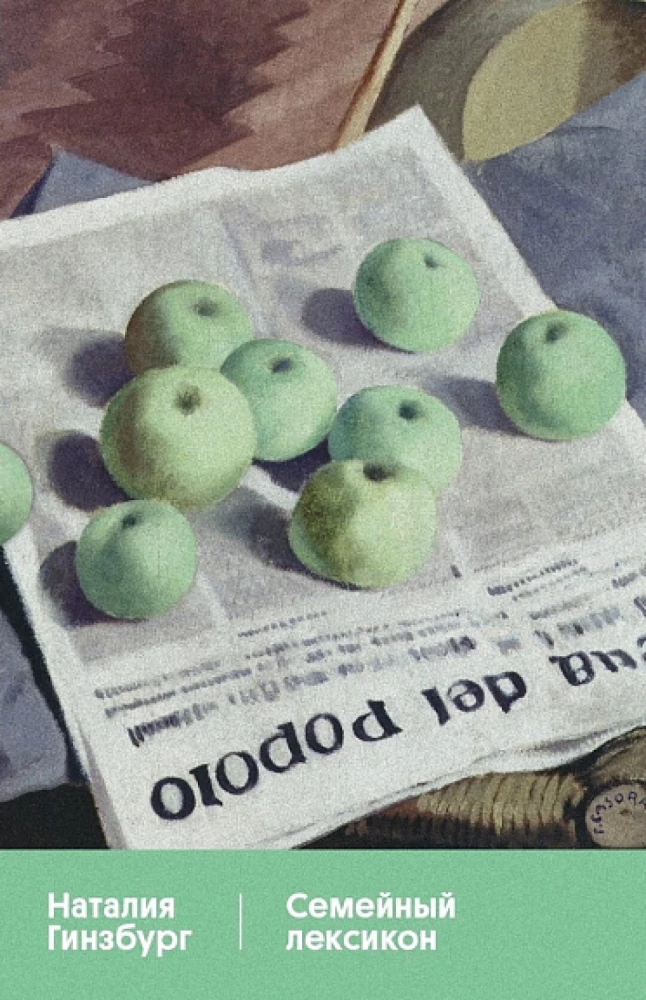
Meet the whimsical Levi family, with their quirks and daily rituals, the memory of which is preserved in beloved words, dialect expressions, and phrases understood only by them — those that always arise in the circle of close people. Giuseppe...
Levi is an energetic scholar, a physician, a passionate athlete, and an unyielding debater. His wife Lydia, a measured and good-natured art lover, prefers ice baths and carpandù apples. They have five very different children growing up in a house where the voices of guests — intellectuals, politicians, and artists — never cease. They all live in Turin in the first half of the 20th century, under Mussolini's rule, and those who disagree with his policies face persecution and arrest. The freedom-loving Levies — Jews and staunch anti-fascists — even in the darkest times do not lose their sense of humor and light-hearted approach to life; they fight for their beliefs and their loved ones, seeking and finding salvation in each other.
“Family Lexicon” (1963) is an innovative autobiographical novel by Natalia Ginzburg about the power of language and the nature of memories; it is the story of her family, told truthfully — as truthfully as possible, for “memory is a flexible thing and books taken from life are often just faint reflections, fragments of what we have seen or heard.”
Meet the whimsical Levi family, with their quirks and daily rituals, the memory of which is preserved in beloved words, dialect expressions, and phrases understood only by them — those that always arise in the circle of close people. Giuseppe Levi is an energetic scholar, a physician, a passionate athlete, and an unyielding debater. His wife Lydia, a measured and good-natured art lover, prefers ice baths and carpandù apples. They have five very different children growing up in a house where the voices of guests — intellectuals, politicians, and artists — never cease. They all live in Turin in the first half of the 20th century, under Mussolini's rule, and those who disagree with his policies face persecution and arrest. The freedom-loving Levies — Jews and staunch anti-fascists — even in the darkest times do not lose their sense of humor and light-hearted approach to life; they fight for their beliefs and their loved ones, seeking and finding salvation in each other.
“Family Lexicon” (1963) is an innovative autobiographical novel by Natalia Ginzburg about the power of language and the nature of memories; it is the story of her family, told truthfully — as truthfully as possible, for “memory is a flexible thing and books taken from life are often just faint reflections, fragments of what we have seen or heard.”
Be the first to know about our current discounts, offers and new products!
Check icon
You have added to your basket
Check icon
You have added to favourites
Sold out
The item is currently out of stock.
In stock
Available in warehouse. You will receive the exact delivery date from the operator after the order confirmation.
To order
The product is delivered directly from the publisher. The order processing time is up to 14 days, you will receive the exact delivery date from the operator after the order confirmation.