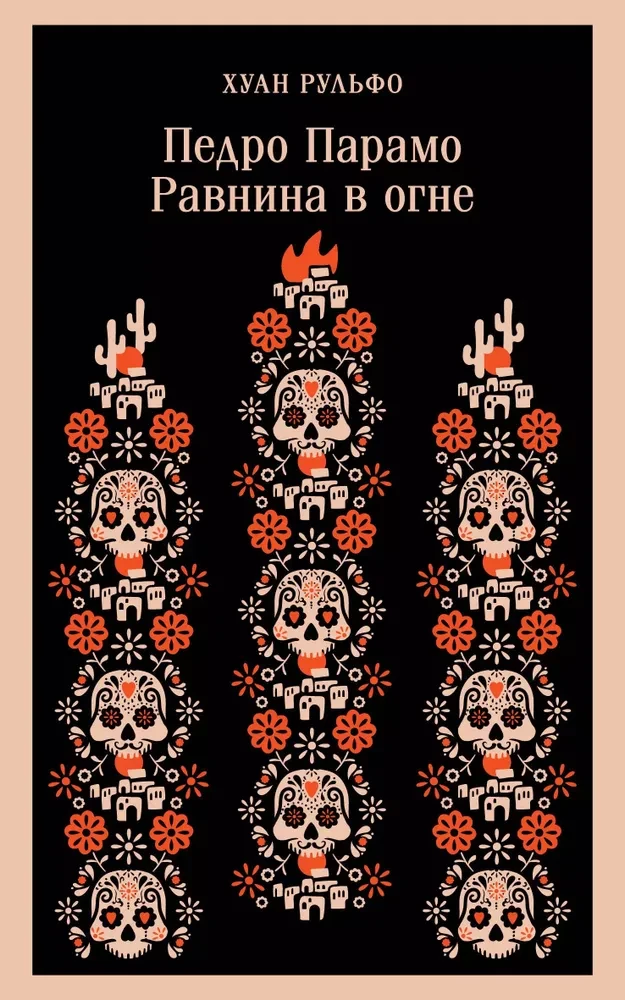
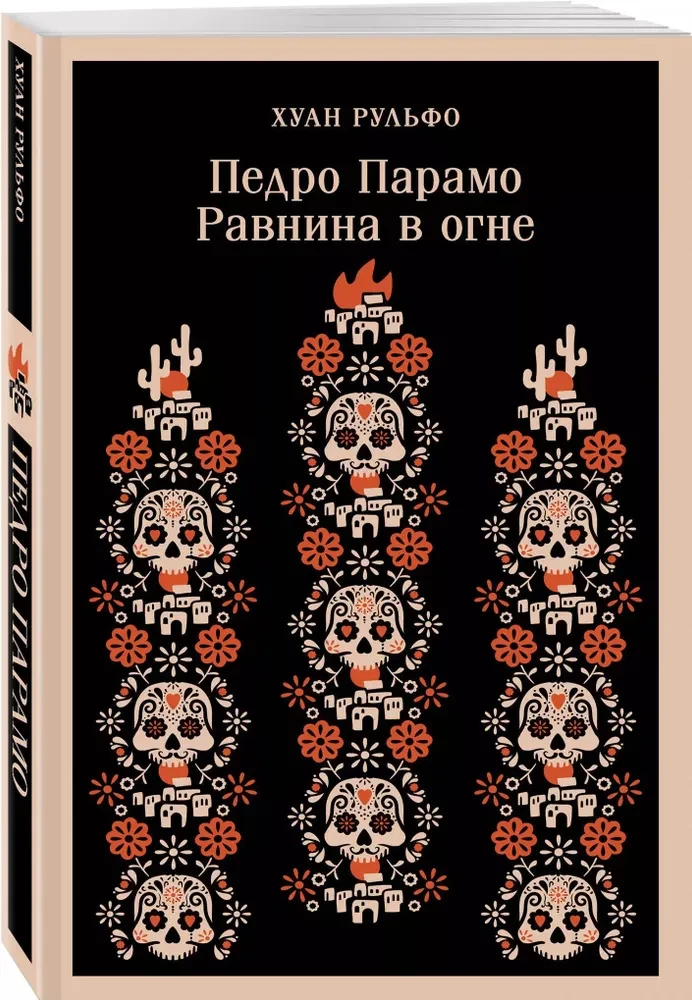
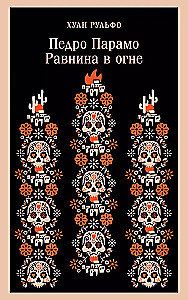
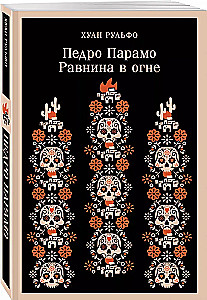
Pedro Paramo. The Plain in Fire
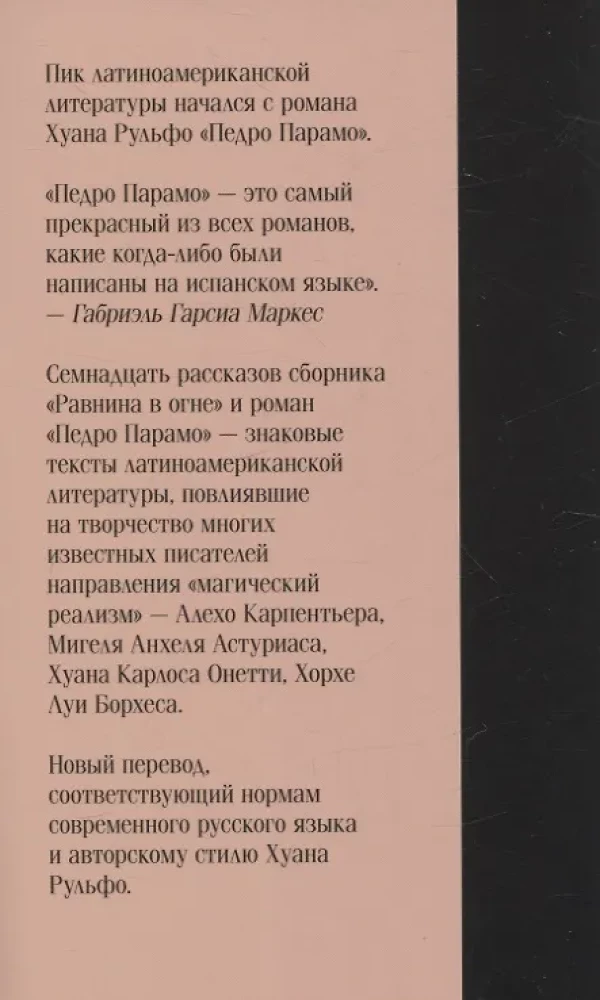
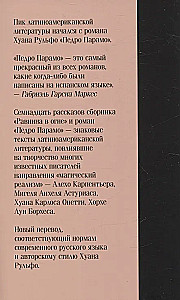
Juan Rulfo Pedro Paramo. The Plain in Fire "If I had written Pedro Paramo, I would no longer care about anything and would not publish anything else in my life" – Gabriel García Márquez The stories included in the collection...
"The Plain in Fire" were written from 1945 to 1955, and although they are dedicated to the problems of the Mexican hinterland, many of which are still relevant today.
At the same time, the discussion is not only about banditry or abuse of power at the local level ("The Slope of Comadres", "The Plain in Fire"), but also about such Mexican phenomena as "coyoteing" – the illegal smuggling of immigrants into the USA, which became one of the themes of the story "To the North". The heroes of the stories painfully search for a way out of the vicious circle of poverty and violence. In some cases, deliberate murder is, for a number of characters, accidental and commonplace. Rulfo explores the nature of man on a scale comparable to the works of Cervantes, Shakespeare, or Dostoevsky.
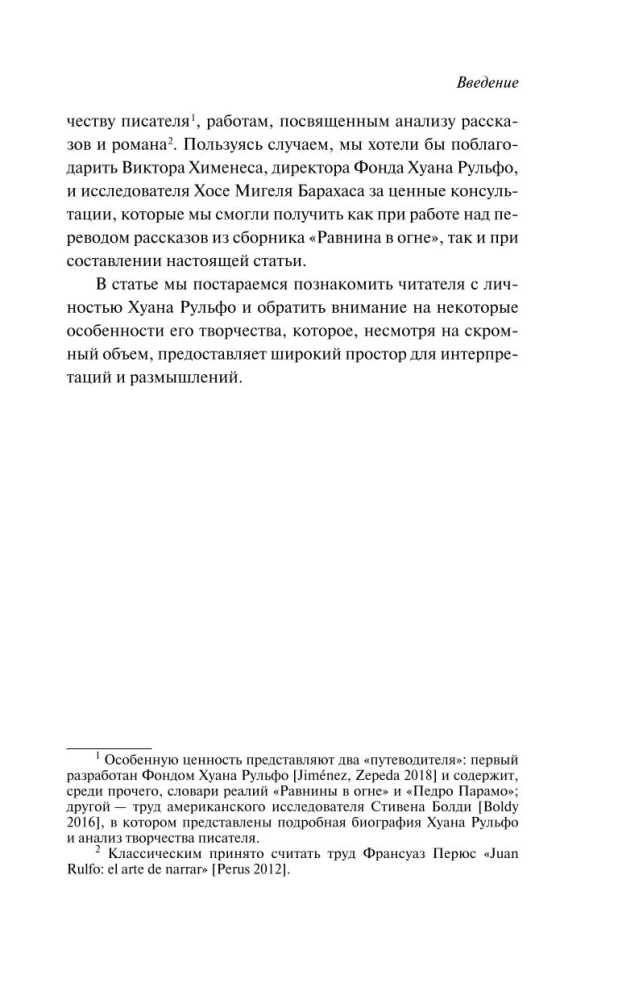
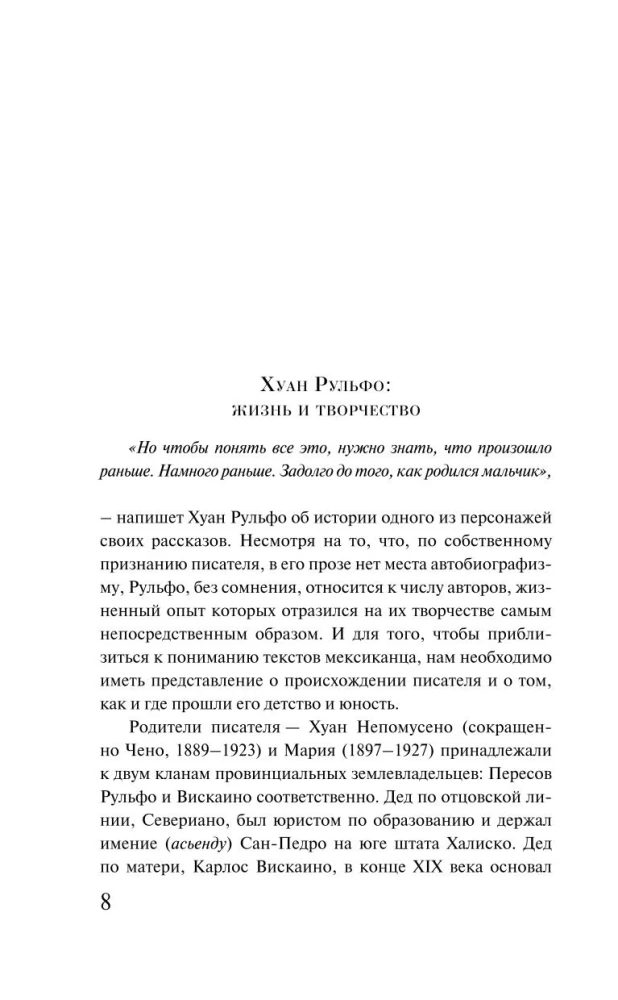
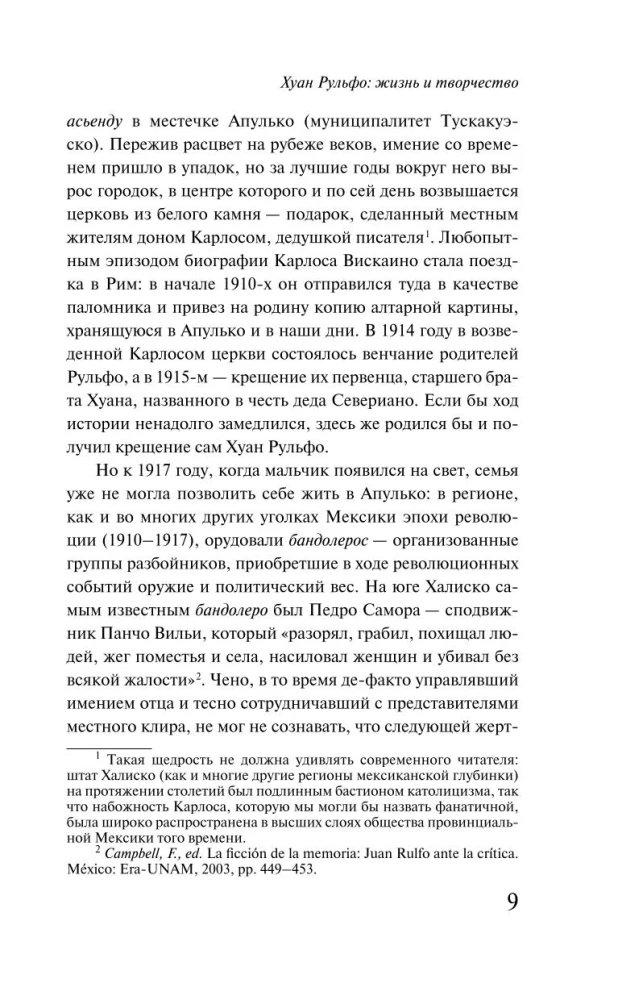
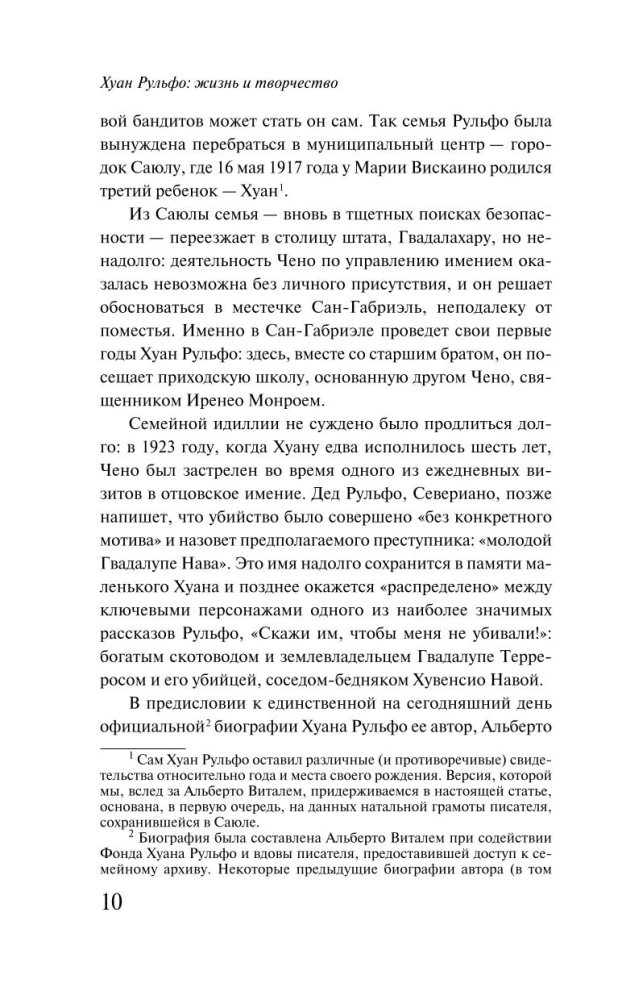
"Pedro Paramo" – the opus magnum of the Mexican writer. Juan Preciado, at the behest of his deceased mother, goes in search of his father Pedro Paramo in the village of Comala. He does not immediately understand where he has ended up – Comala is populated only by the ghosts of its former residents, although the realm of the "dead" retains all the realities of ordinary earthly life.
The line of Juan Preciado intertwines with the line of Pedro Paramo, a man connected to the stories of all the inhabitants of Comala. He has long been dead, but thanks to the fact that memories of his real life are woven into the fabric of the narrative, he alone seems alive. However, everything Paramo touches turns to dust... The new translation, compliant with the norms of modern Russian language and style, also takes into account the extensive research work conducted over the last half-century in the field of the writer's creativity. The process of creating the novel has intrigued critics and readers for decades: could a writer, previously known only for a handful of stories, create such a powerful modernist work? And such that would merge innovative composition, universal themes, and original poetics into one?
The multifaceted introductory article by Peter Kogan will introduce the reader to the personality of the writer, reveal the peculiarities of his work, and allow them to immerse themselves in the Mexican color and the history of the Great Plain in southern Jalisco, where Juan Rulfo was born and spent his childhood.
At the same time, the discussion is not only about banditry or abuse of power at the local level ("The Slope of Comadres", "The Plain in Fire"), but also about such Mexican phenomena as "coyoteing" – the illegal smuggling of immigrants into the USA, which became one of the themes of the story "To the North". The heroes of the stories painfully search for a way out of the vicious circle of poverty and violence. In some cases, deliberate murder is, for a number of characters, accidental and commonplace. Rulfo explores the nature of man on a scale comparable to the works of Cervantes, Shakespeare, or Dostoevsky.
"Pedro Paramo" – the opus magnum of the Mexican writer. Juan Preciado, at the behest of his deceased mother, goes in search of his father Pedro Paramo in the village of Comala. He does not immediately understand where he has ended up – Comala is populated only by the ghosts of its former residents, although the realm of the "dead" retains all the realities of ordinary earthly life.
The line of Juan Preciado intertwines with the line of Pedro Paramo, a man connected to the stories of all the inhabitants of Comala. He has long been dead, but thanks to the fact that memories of his real life are woven into the fabric of the narrative, he alone seems alive. However, everything Paramo touches turns to dust... The new translation, compliant with the norms of modern Russian language and style, also takes into account the extensive research work conducted over the last half-century in the field of the writer's creativity. The process of creating the novel has intrigued critics and readers for decades: could a writer, previously known only for a handful of stories, create such a powerful modernist work? And such that would merge innovative composition, universal themes, and original poetics into one?
The multifaceted introductory article by Peter Kogan will introduce the reader to the personality of the writer, reveal the peculiarities of his work, and allow them to immerse themselves in the Mexican color and the history of the Great Plain in southern Jalisco, where Juan Rulfo was born and spent his childhood.
Author: Хуан Рульфо
Printhouse: Eksmo
Series: Main Line. The Main Trend
Age restrictions: 16+
Year of publication: 2024
ISBN: 9785041952327
Number of pages: 352
Size: 202x127x21 mm
Cover type: мягкая
Weight: 328 g
ID: 1685314
Sold out
€ 9.19
Sold out
€ 9.19
Bestsellers
Bestseller
€ 12.19
In stock
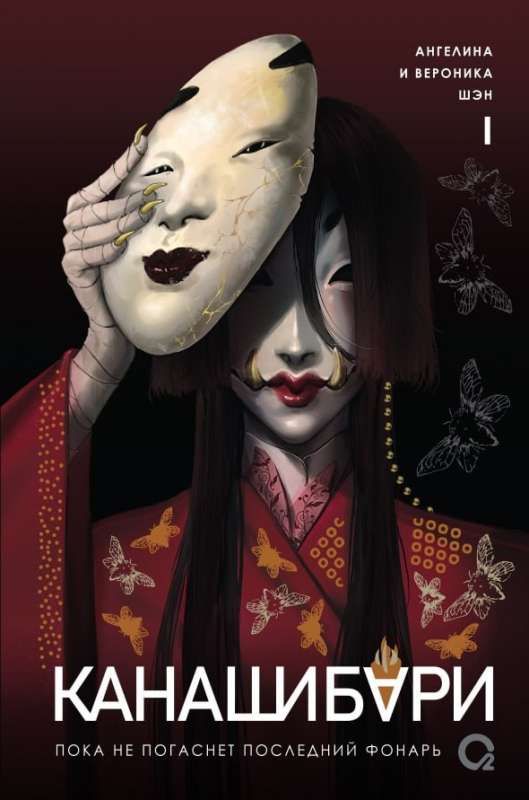
Kanashibari. Until the Last Lantern Goes Out. Volume 1
Ангелина Шэн, Вероника Шэн



€ 9.99
In stock
Publishers "Eksmo" recommends
Bestseller
€ 14.99
In stock
FNAF Silver Eyes. Graphic Novel
Кира Брид-Райсли, Скотт Коутон, Карл Шрёдер