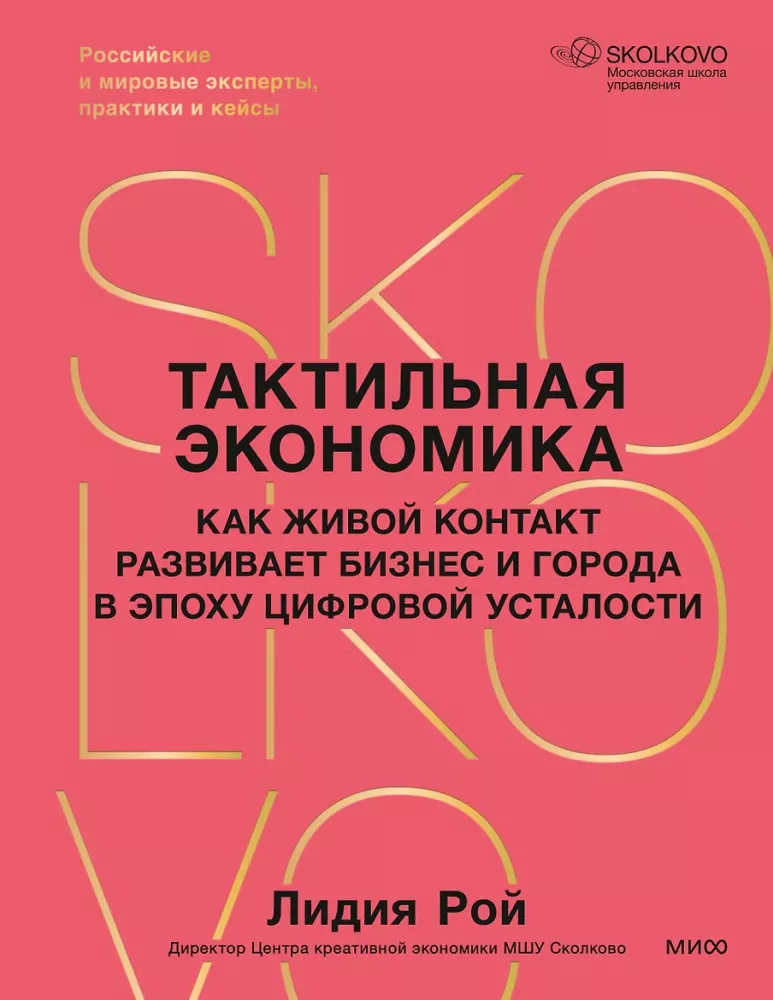
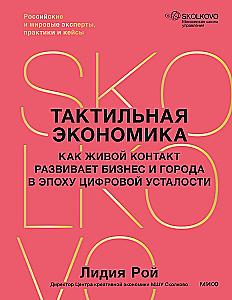

Tactile Economy. How Live Contact Develops Business and Cities in the Era of Digital Fatigue
Author: Лидия Рой
Printhouse: Mann, Ivanov i Ferber
Series: Skolkovo Business Review
Age restrictions: 16+
Year of publication: 2026
ISBN: 9785002813483
Number of pages: 256
Size: 217х166х17 mm
Cover type: hard
Weight: 455 g
ID: 1750371
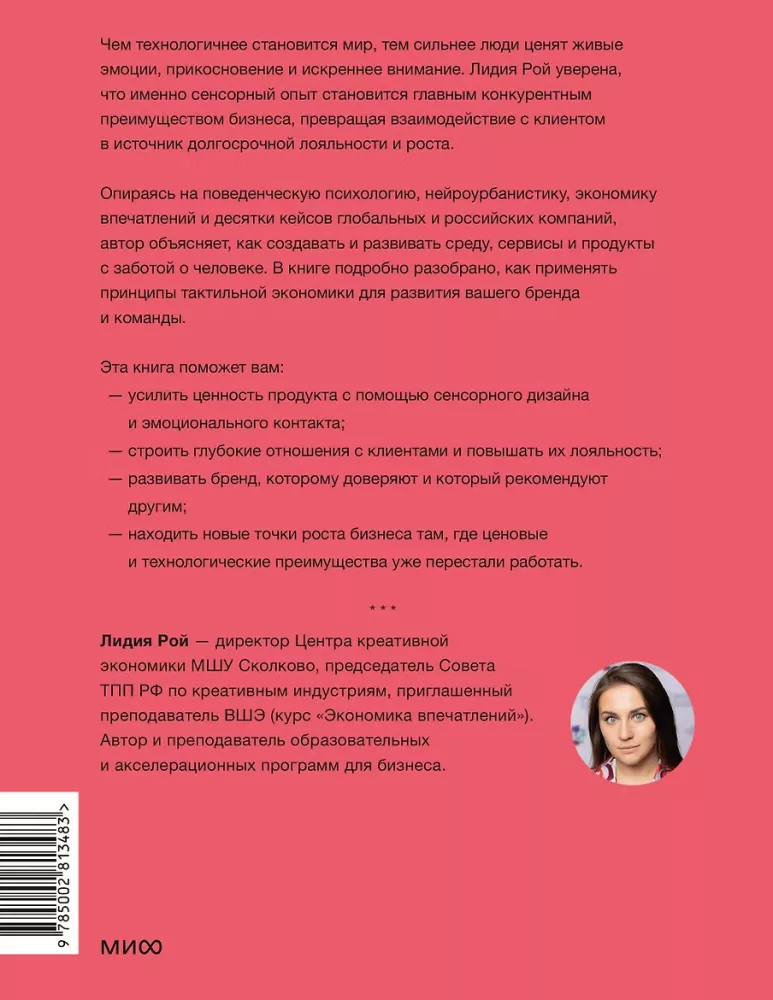
A systematic, scientifically grounded guide from a top Skolkovo expert on how to create transformative physical experiences for clients, build trust, long-term loyalty, and new business value in the era of artificial intelligence. Principles of tactile economy for brand and team development. A step-by-step plan to strengthen the connection with the brand through real sensations, physical experiences, and emotional engagement.
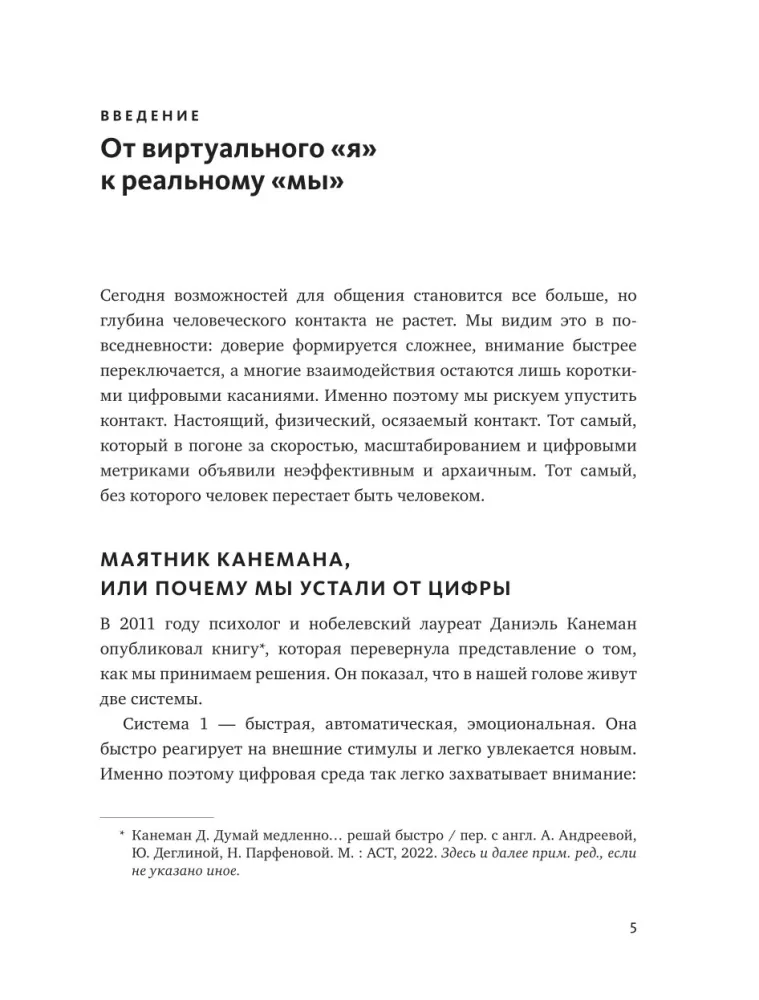
In the world, there are more and more opportunities for communication, but the depth of contact is not increasing: trust is harder to build, attention shifts faster, and many interactions have turned into brief digital touches. The deficit is evident, so it is no longer enough for businesses to simply make an impression. It is important to create an experience that people want to return to and that forms a sustainable connection with the brand, space, or place.
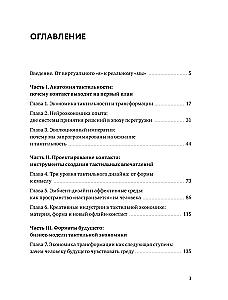
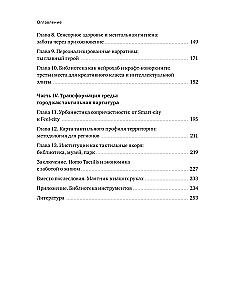
This book offers a systematic response to this demand through the concept of tactile economy, according to which physical and sensory experiences become an independent source of value. Lydia Roy, director of the Creative Economy Center at the Skolkovo School of Management, explains how to apply these principles in practice and adapt them to your projects and business processes in the Russian context.
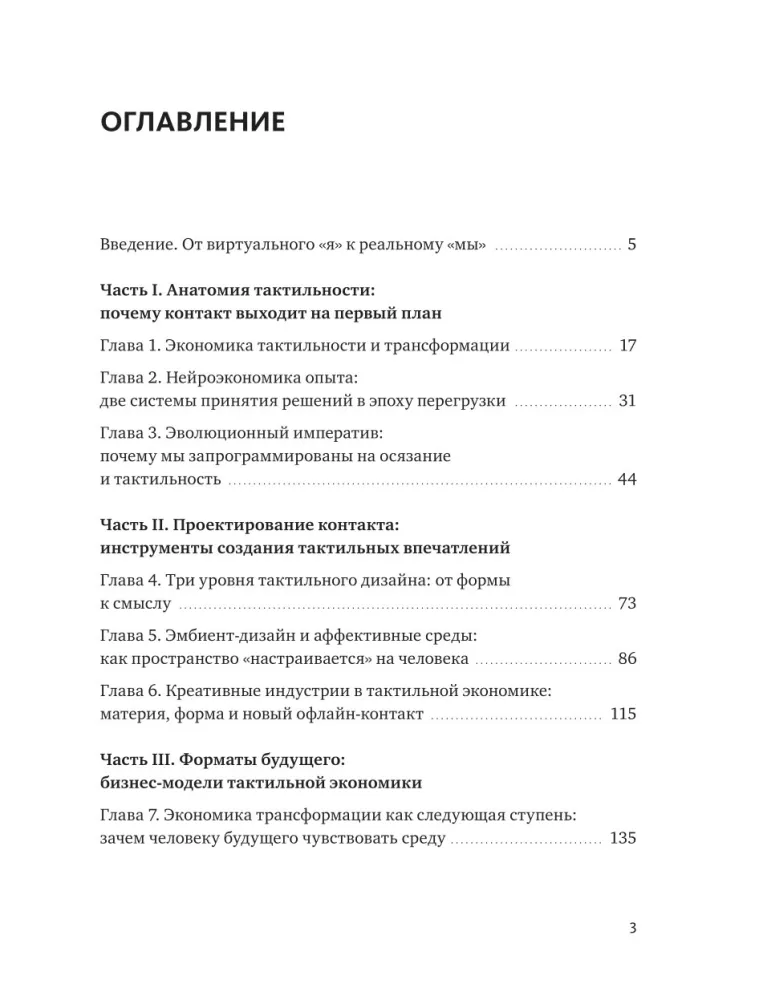
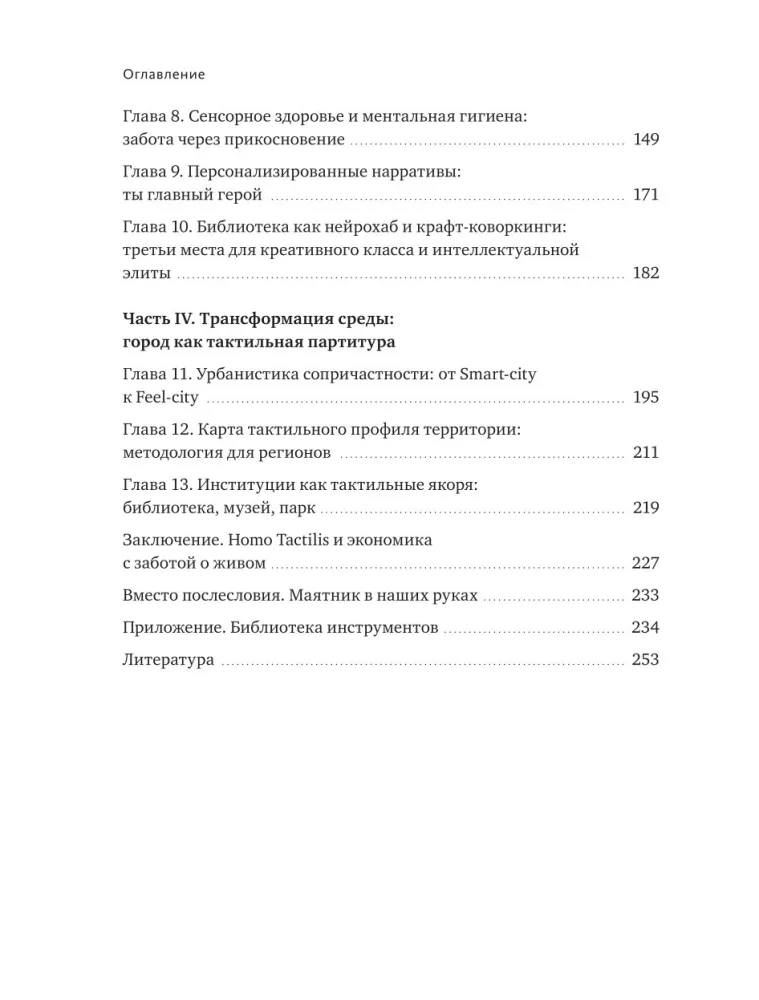
The author thoroughly examines why touch, materials, space, light, sound, and other sensory signals influence our decisions, trust, and attitudes towards brands. Theory transitions into practice — with a detailed analysis of methodologies, maps, checklists, and other tools that will help assess the sensory environment, identify weaknesses in the customer experience, and create spaces and products that affect human emotions and sensations.
A customer who has once felt that the environment respects them and responds to their needs will return. Therefore, tactility becomes one of the most important intangible assets of the brand: technologies can be copied, products can be replicated, but authenticity and sincerity of human reaction can only be created.