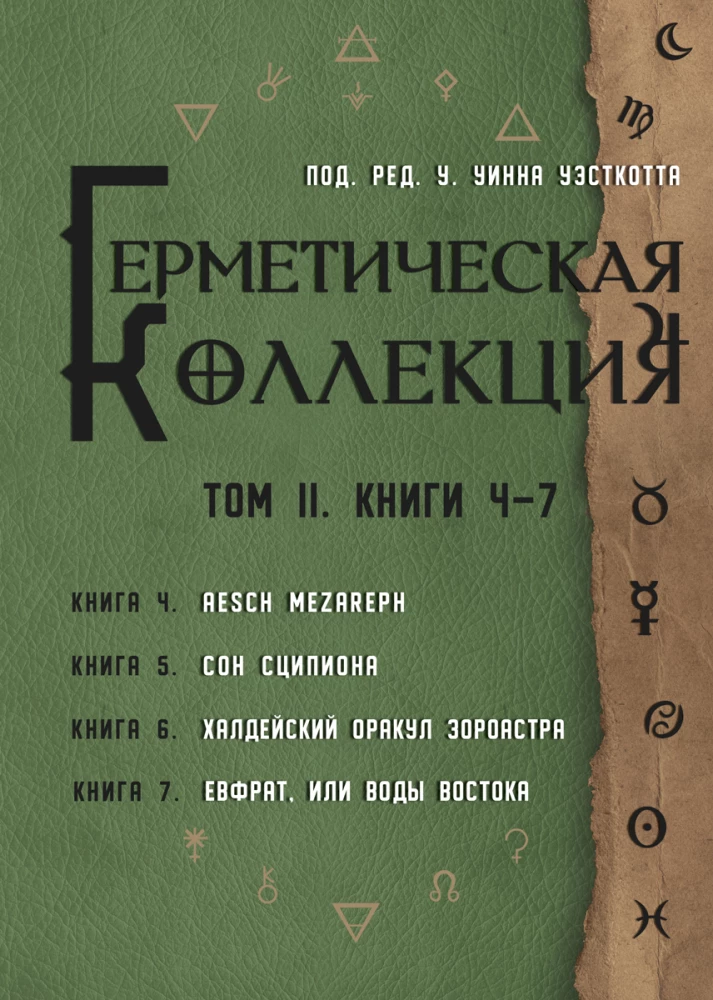
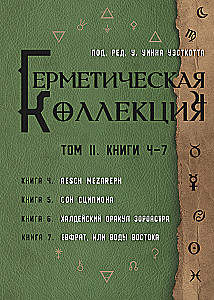
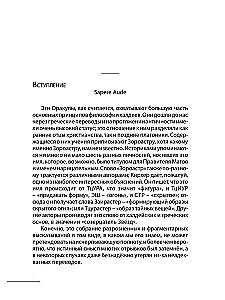
The Hermetic Collection. Volume II. Books 4-7
Continuation of the famous series! The "Hermetic Collection", or Collectanea Hermetica, was compiled in the 20th century by William Wynn Westcott in order to provide the adepts of the Order of the Golden Dawn with a comprehensive volume of knowledge...
about hermeticism, Kabbalah, and alchemy from treatises that Westcott deemed suitable for this purpose.
The second volume of the "Hermetic Collection" consists of four books.
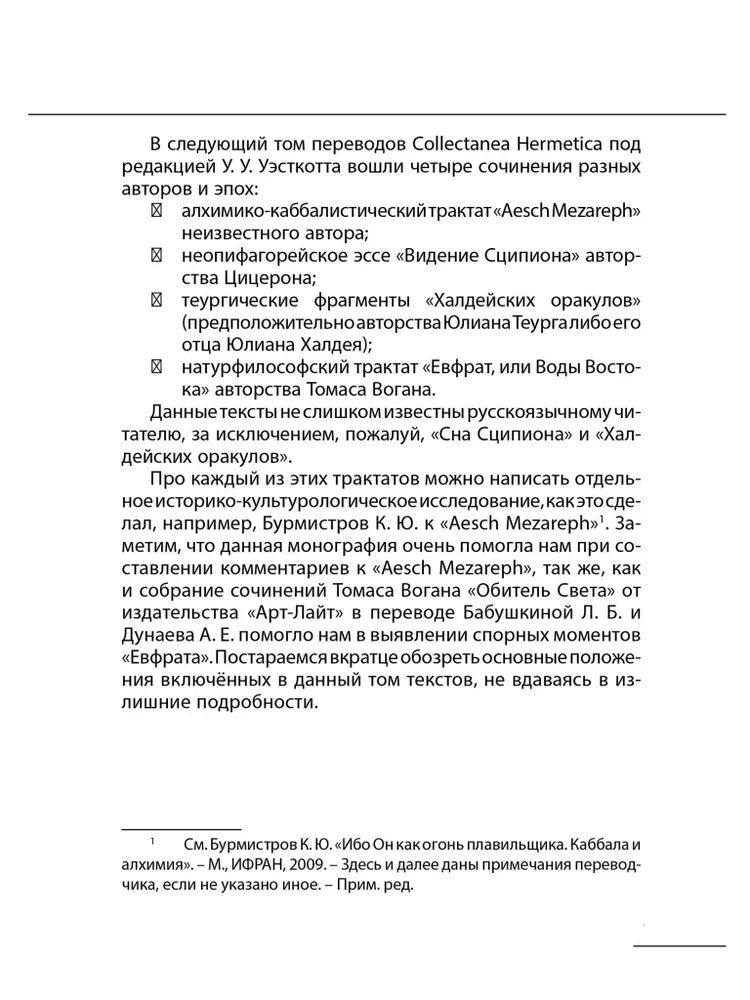
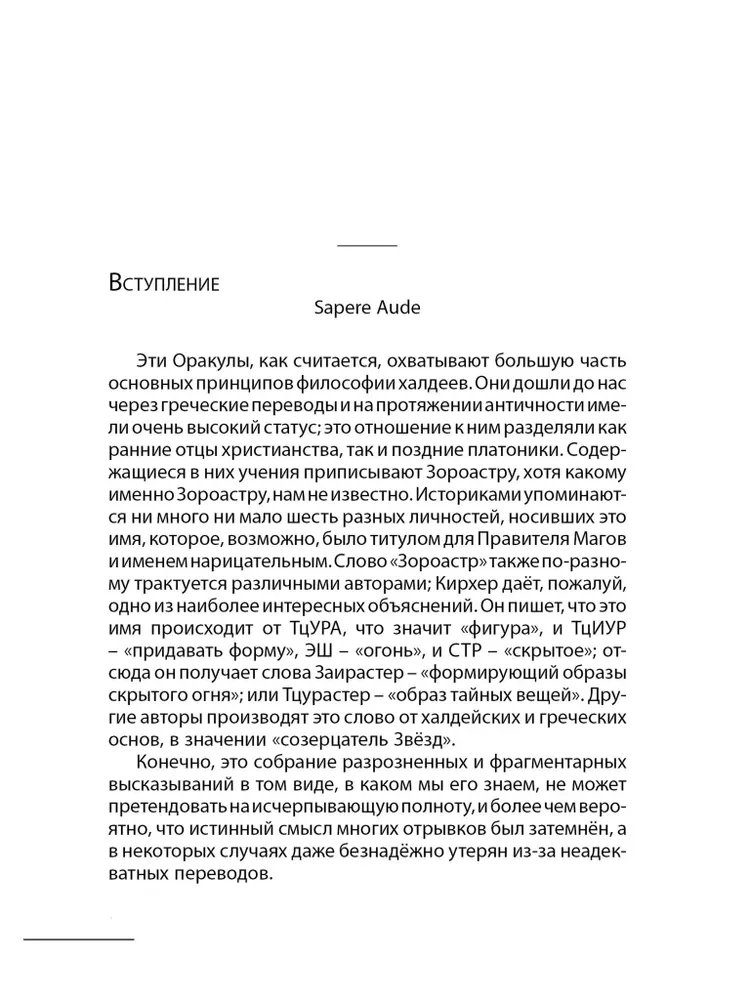
Book 4. - Aesch Mezareph, or The Purifying Fire: an alchemico-kabbalistic treatise extracted from Kabbala Denudata by Knorr von Rosenroth (1684). London: Theosophical Publishing Society, 1894. Translation by Philalethes, 1714. Preface, notes, and explanations: Sapere Aude (Westcott). «Aesh-Metsaraf» is a unique work by an anonymous Italian author of the 16th-17th centuries, written in Hebrew, which connects the categories of Kabbalah and alchemy (Sefirot, Planets, and Metals). The treatise presents numerical squares of the seven planets, as well as discusses how the action of one substance on another depends on the inner nature of each, more precisely, on the quality we now refer to as “frequency of vibration”. This text was included in the famous compendium «The Revealed Kabbalah» by the German Hebraist, philosopher, mystic, poet, and alchemist Christian Knorr von Rosenroth (1636-1689).
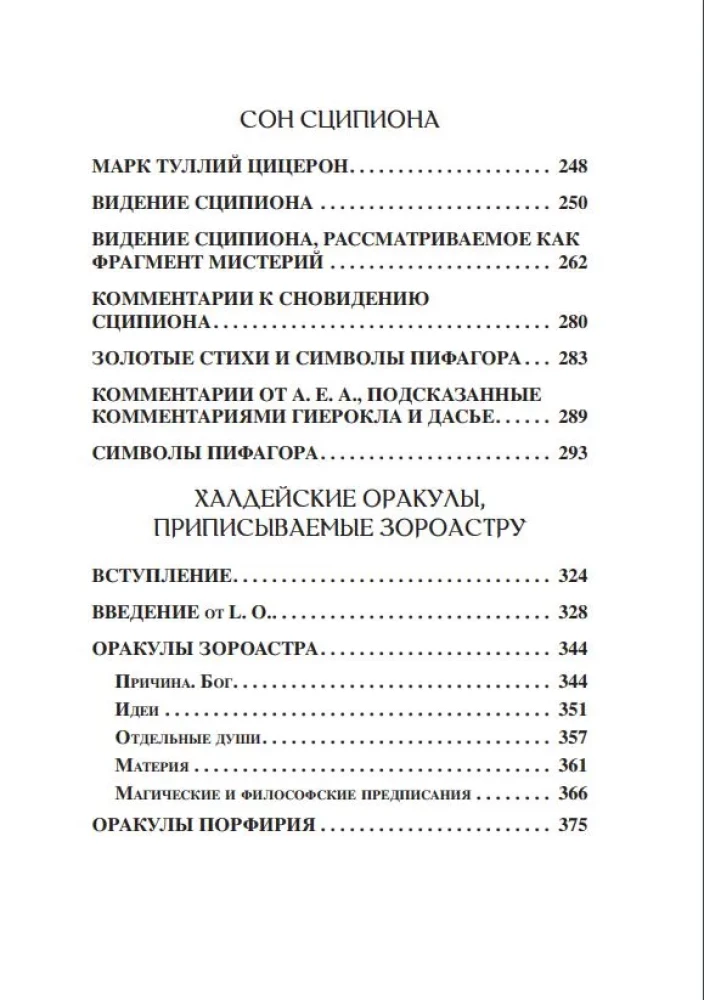
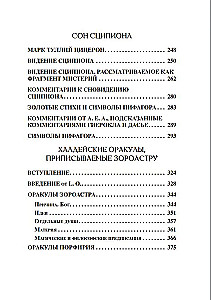
Book 5. - Somnium Scipionis. London, New York: Theosophical Publishing Society, 1894. “The Dream of Scipio” by Marcus Tullius Cicero. English translation, with an essay “The Dream of Scipio Considered as a Fragment of Mysteries” by L.O. (Percy Bullock), “Golden Verses of Pythagoras” by A.E.A. (Coleman), and "Symbols of Pythagoras" by S.A. (Westcott). «The Dream of Scipio» (Latin: Somnium Scipionis) is the sixth and final book of the work «On the Commonwealth» by Cicero. It represents a fictional dream of the Roman general Scipio Aemilianus, which occurred two years before the destruction of Carthage in 146 BC under his command.
After the direct description of Scipio's dream, where he sees himself in Africa and converses with his deceased adoptive grandfather Scipio Africanus, who predicts his future, follows a traditional exposition of the Pythagorean doctrine - the harmony of spheres, wherein cosmic music is projected onto human activity.
Book 6. - Chaldean Oracles of Zoroaster. London: Theosophical Publishing Society, 1895. Based on the translation by Thomas Taylor. Edited and revised by Sapere Aude (Westcott), with an introduction by L.O. (Percy Bullock). The «Chaldean Oracles» (Greek: Τα των Χαλδαίων λόγια) is a reconstructed text from the last quarter of the 2nd century AD, sanctifying Platonism in its Middle Platonic tradition. It is a collection of hexameters (approximately 350 lines according to modern editions, divided into 190 fragments). The history of the creation of the «Chaldean Oracles» based on the testimonies of Michael Psellus, who relied on Proclus, is described as a communication between Julian the Theurge and the soul of Plato himself, whose responses were interpreted and annotated by the father-mediator Julian Chaldeus. The style of the oracles is difficult to categorize as philosophical; it has been influenced by popular magical practices and traditional Persian beliefs. Starting from Iamblichus, the «Chaldean Oracles» become one of the sacred texts in the schools of Platonists. The Chaldean Oracles have been commented upon and interpreted by Iamblichus, Theodorus of Asine, Syrianus, Damascius, and others. The oracles greatly influenced the writings of Proclus. He, according to Swiva, also wrote a work on the agreement of several important religious systems for Neoplatonists - «On the Agreement of Orpheus, Pythagoras, and Plato with the Chaldean Oracles».
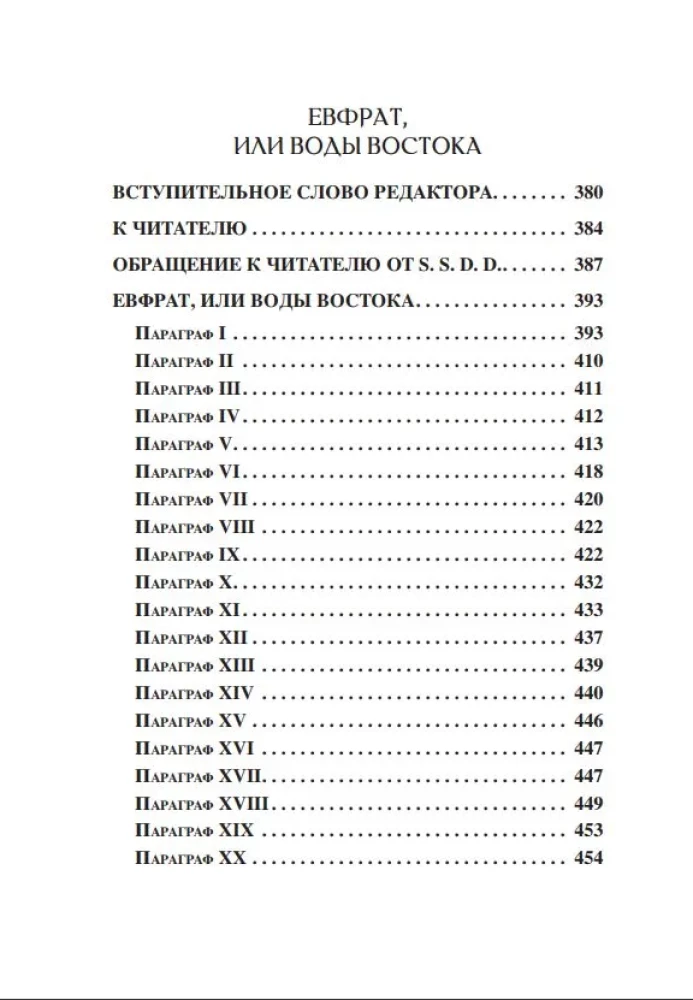
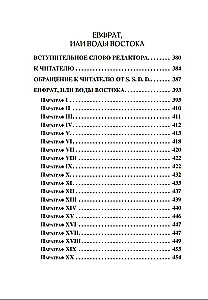
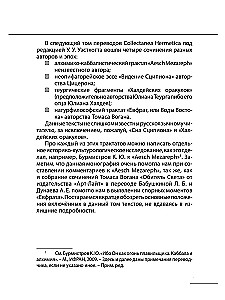
Book 7. - Euphrates, or Waters of the East: 1655. London; Benares: Theosophical Publishing Society; Madras, India: Theosoph Publishing, 1896. With commentary by S.S.D.D. (Florence Farr). Originally published under the pseudonym of Thomas Vaughan “Eugene Philalethes”, in 1655. The work “Evphrates, or the Waters of the East: Being a short Discourse of that Secret Fountain, whose Water flows from Fire, and carries in it the Beams of the Sun and Moon” presents itself as the last book written by the occultist and alchemist of the seventeenth century Thomas Vaughan (1621–1666). Originally published under the pseudonym of Eugene Philalethes in 1655, this work found a new audience in Rosicrucian circles of the nineteenth century when William Wynn Westcott, the Supreme Magus of the Golden Dawn, republished this text in 1896 with a commentary by sister S.S.D.D. "I have read many alchemical treatises," she writes in the commentary, "however, I have never come across one less useful to the practical alchemist than this." ("I have read many Alchemical Treatises, its annotator comments, but never one of less use to the practical Alchemist than this."). The meaning opened up when I myself began to read this treatise (it has already been translated in the collection "Abode of Light" by the Art-Light publishing house), and indeed, it has a very vague meaning. However, for later readers, the value of the text lay more in understanding the history of hermetic thought rather than in alchemical advice. An important work on occult philosophy both in the context of the seventeenth and nineteenth centuries, “Waters of the East” aims to reveal nothing less than the origin of all life.
The second volume of the "Hermetic Collection" consists of four books.
Book 4. - Aesch Mezareph, or The Purifying Fire: an alchemico-kabbalistic treatise extracted from Kabbala Denudata by Knorr von Rosenroth (1684). London: Theosophical Publishing Society, 1894. Translation by Philalethes, 1714. Preface, notes, and explanations: Sapere Aude (Westcott). «Aesh-Metsaraf» is a unique work by an anonymous Italian author of the 16th-17th centuries, written in Hebrew, which connects the categories of Kabbalah and alchemy (Sefirot, Planets, and Metals). The treatise presents numerical squares of the seven planets, as well as discusses how the action of one substance on another depends on the inner nature of each, more precisely, on the quality we now refer to as “frequency of vibration”. This text was included in the famous compendium «The Revealed Kabbalah» by the German Hebraist, philosopher, mystic, poet, and alchemist Christian Knorr von Rosenroth (1636-1689).
Book 5. - Somnium Scipionis. London, New York: Theosophical Publishing Society, 1894. “The Dream of Scipio” by Marcus Tullius Cicero. English translation, with an essay “The Dream of Scipio Considered as a Fragment of Mysteries” by L.O. (Percy Bullock), “Golden Verses of Pythagoras” by A.E.A. (Coleman), and "Symbols of Pythagoras" by S.A. (Westcott). «The Dream of Scipio» (Latin: Somnium Scipionis) is the sixth and final book of the work «On the Commonwealth» by Cicero. It represents a fictional dream of the Roman general Scipio Aemilianus, which occurred two years before the destruction of Carthage in 146 BC under his command.
After the direct description of Scipio's dream, where he sees himself in Africa and converses with his deceased adoptive grandfather Scipio Africanus, who predicts his future, follows a traditional exposition of the Pythagorean doctrine - the harmony of spheres, wherein cosmic music is projected onto human activity.
Book 6. - Chaldean Oracles of Zoroaster. London: Theosophical Publishing Society, 1895. Based on the translation by Thomas Taylor. Edited and revised by Sapere Aude (Westcott), with an introduction by L.O. (Percy Bullock). The «Chaldean Oracles» (Greek: Τα των Χαλδαίων λόγια) is a reconstructed text from the last quarter of the 2nd century AD, sanctifying Platonism in its Middle Platonic tradition. It is a collection of hexameters (approximately 350 lines according to modern editions, divided into 190 fragments). The history of the creation of the «Chaldean Oracles» based on the testimonies of Michael Psellus, who relied on Proclus, is described as a communication between Julian the Theurge and the soul of Plato himself, whose responses were interpreted and annotated by the father-mediator Julian Chaldeus. The style of the oracles is difficult to categorize as philosophical; it has been influenced by popular magical practices and traditional Persian beliefs. Starting from Iamblichus, the «Chaldean Oracles» become one of the sacred texts in the schools of Platonists. The Chaldean Oracles have been commented upon and interpreted by Iamblichus, Theodorus of Asine, Syrianus, Damascius, and others. The oracles greatly influenced the writings of Proclus. He, according to Swiva, also wrote a work on the agreement of several important religious systems for Neoplatonists - «On the Agreement of Orpheus, Pythagoras, and Plato with the Chaldean Oracles».
Book 7. - Euphrates, or Waters of the East: 1655. London; Benares: Theosophical Publishing Society; Madras, India: Theosoph Publishing, 1896. With commentary by S.S.D.D. (Florence Farr). Originally published under the pseudonym of Thomas Vaughan “Eugene Philalethes”, in 1655. The work “Evphrates, or the Waters of the East: Being a short Discourse of that Secret Fountain, whose Water flows from Fire, and carries in it the Beams of the Sun and Moon” presents itself as the last book written by the occultist and alchemist of the seventeenth century Thomas Vaughan (1621–1666). Originally published under the pseudonym of Eugene Philalethes in 1655, this work found a new audience in Rosicrucian circles of the nineteenth century when William Wynn Westcott, the Supreme Magus of the Golden Dawn, republished this text in 1896 with a commentary by sister S.S.D.D. "I have read many alchemical treatises," she writes in the commentary, "however, I have never come across one less useful to the practical alchemist than this." ("I have read many Alchemical Treatises, its annotator comments, but never one of less use to the practical Alchemist than this."). The meaning opened up when I myself began to read this treatise (it has already been translated in the collection "Abode of Light" by the Art-Light publishing house), and indeed, it has a very vague meaning. However, for later readers, the value of the text lay more in understanding the history of hermetic thought rather than in alchemical advice. An important work on occult philosophy both in the context of the seventeenth and nineteenth centuries, “Waters of the East” aims to reveal nothing less than the origin of all life.
Author: Уильям Уинн Уэсткотт
Printhouse: Magic-Kniga
Series: The Hermetic Collection
Age restrictions: 16+
Year of publication: 2020
ISBN: 9785604458983
Number of pages: 506
Size: 217х153х25 mm
Cover type: hard
Weight: 620 g
ID: 1729359
Sold out
€ 33.49
Sold out
€ 33.49
Bestsellers
€ 36.99
In stock



€ 17.89
In stock
Happy Pocket, Full of Money: The Formation of Abundance Consciousness
Джиканди Дэвид Кэмерон

€ 5.29
In stock
Love Your Illness. How to Become Healthy by Knowing the Joy of Life
Валерий Синельников