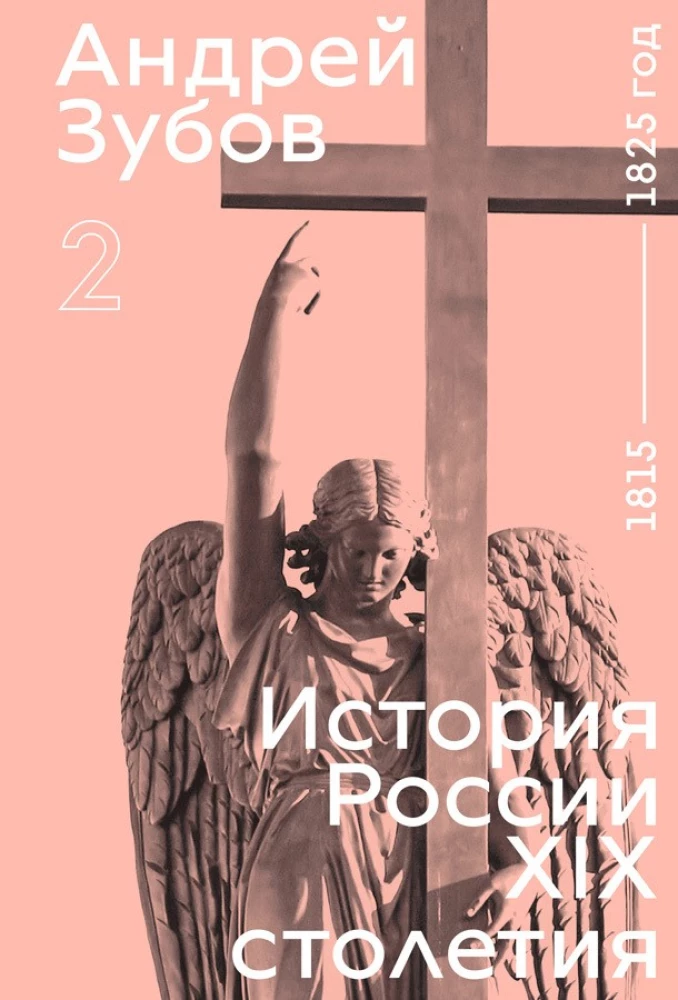
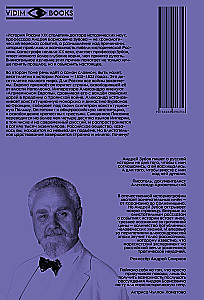
History of Russia in the 19th Century. Volume 2
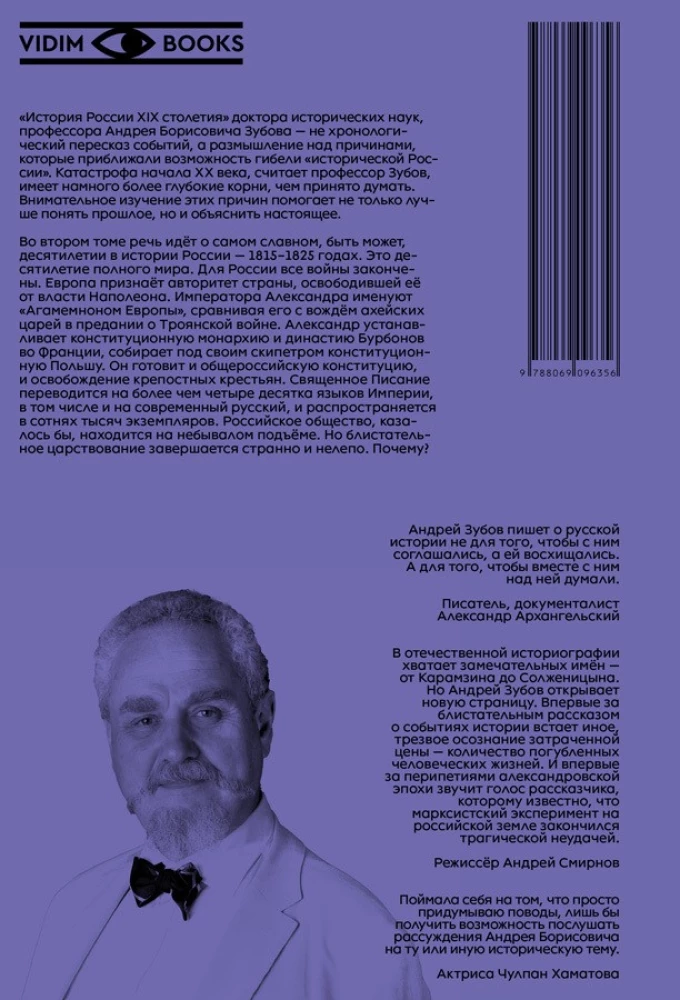
“The History of Russia in the 19th Century” by Doctor of Historical Sciences, Professor Andrey Borisovich Zubov is not a chronological retelling of events, but a reflection on the causes that brought about the possibility of the demise of “historical...
Russia.” The catastrophe of the early 20th century, Professor Zubov believes, has much deeper roots than is commonly thought. A careful study of these causes helps not only to better understand the past but also to explain the present.
In the second volume, the discussion focuses on perhaps the most glorious decade in Russian history – the years 1815-1825. This decade is one of complete peace. All wars are over for Russia. Europe recognizes the authority of the country that liberated it from Napoleon's rule. Emperor Alexander is referred to as the “Agamemnon of Europe,” comparing him to the leader of the Achaean kings in the legend of the Trojan War. Alexander establishes a constitutional monarchy and the Bourbon dynasty in France, gathers constitutional Poland under his scepter. He prepares both a national constitution and the emancipation of serfs. The Holy Scriptures are translated into more than forty languages of the Empire, including modern Russian, and distributed in hundreds of thousands of copies. Russian society seems to be experiencing an unprecedented upsurge. Yet the brilliant reign ends strangely and absurdly. Why?
In the second volume, the discussion focuses on perhaps the most glorious decade in Russian history – the years 1815-1825. This decade is one of complete peace. All wars are over for Russia. Europe recognizes the authority of the country that liberated it from Napoleon's rule. Emperor Alexander is referred to as the “Agamemnon of Europe,” comparing him to the leader of the Achaean kings in the legend of the Trojan War. Alexander establishes a constitutional monarchy and the Bourbon dynasty in France, gathers constitutional Poland under his scepter. He prepares both a national constitution and the emancipation of serfs. The Holy Scriptures are translated into more than forty languages of the Empire, including modern Russian, and distributed in hundreds of thousands of copies. Russian society seems to be experiencing an unprecedented upsurge. Yet the brilliant reign ends strangely and absurdly. Why?
Author: Андрей Зубов
Printhouse: Vidim Books
Series: History of Russia
Age restrictions: 16+
Year of publication: 2025
ISBN: 9788069096356
Number of pages: 496
Size: 238х163х37 mm
Cover type: hard
Weight: 1063 g
ID: 1719983
In stock
€ 35.95
Will be delivered to United States on 5 October (Mo):
By courier
from € 38.94
Bestsellers

€ 13.29
In stock
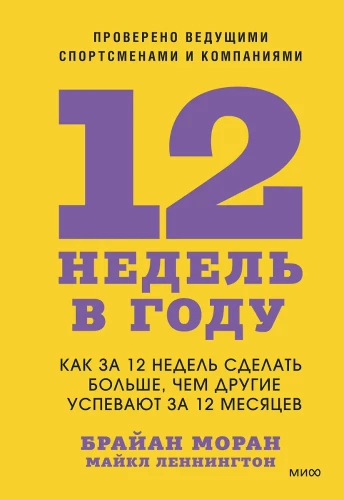
12 Weeks in a Year. How to Achieve More in 12 Weeks Than Others Do in 12 Months
Майкл Леннингтон, Брайан Моран
€ 7.89
In stock
Choice. On the Freedom and Inner Strength of a Person
Эдит Ева Эгер, Эсме Швалль-Вейганд

€ 6.99
In stock