

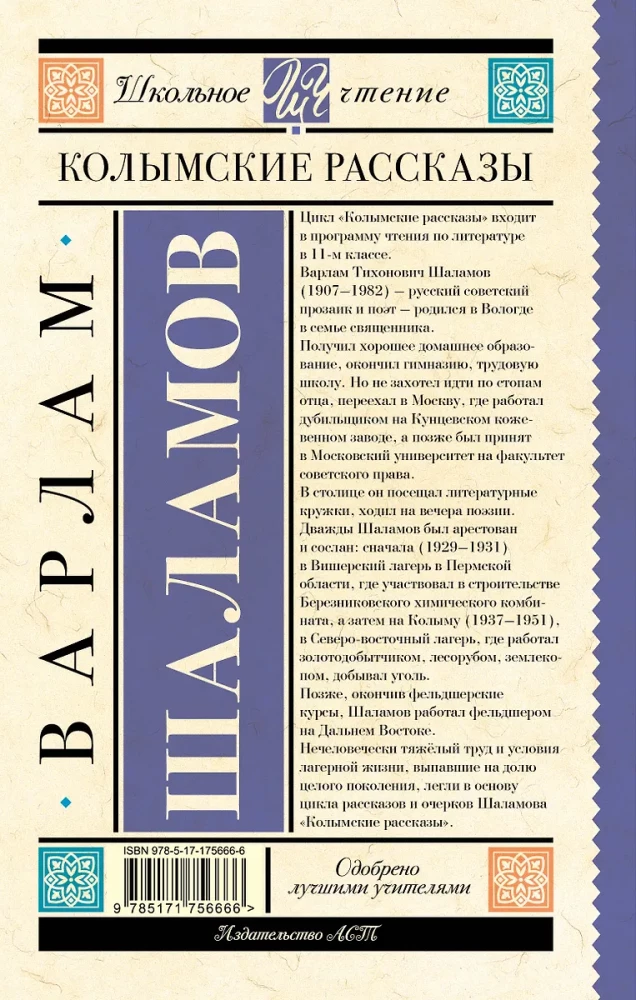
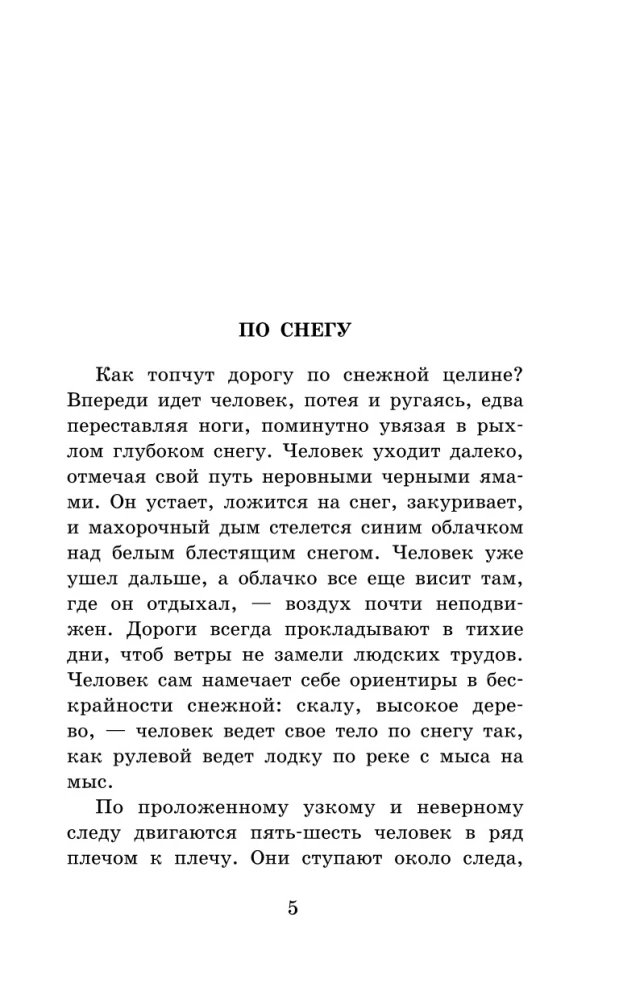
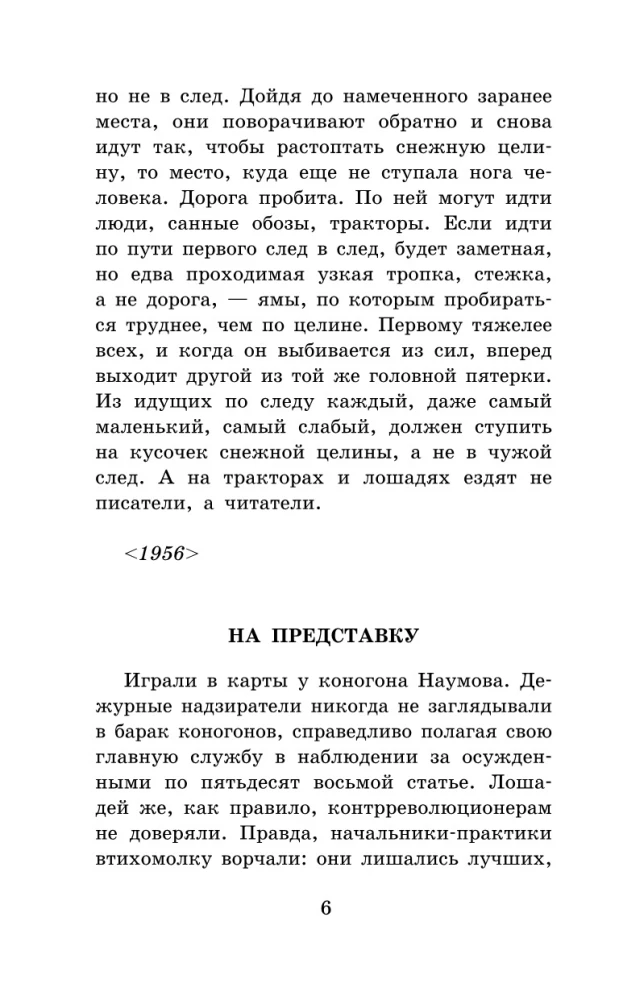
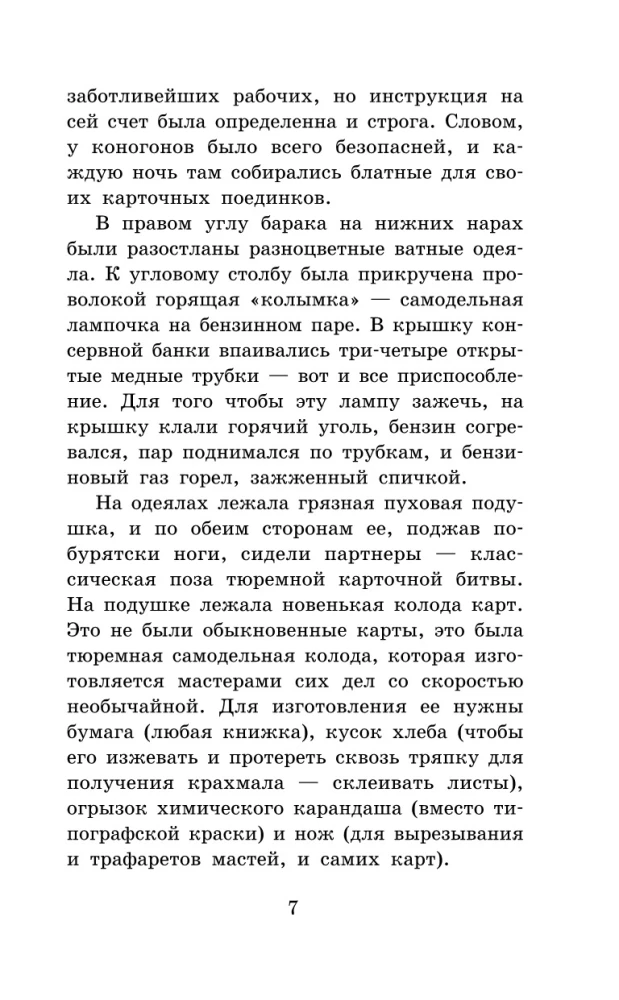
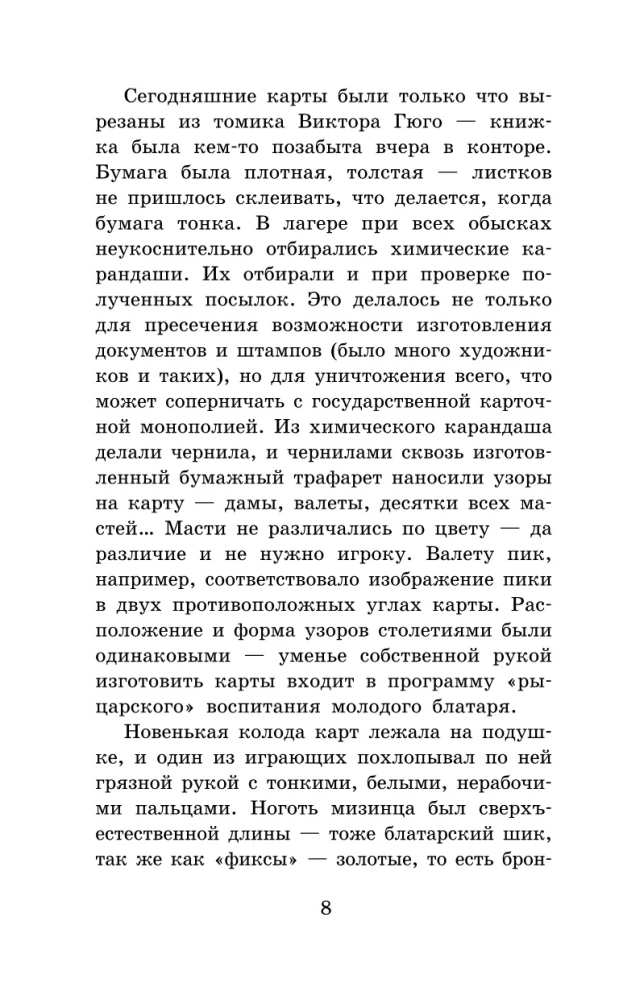
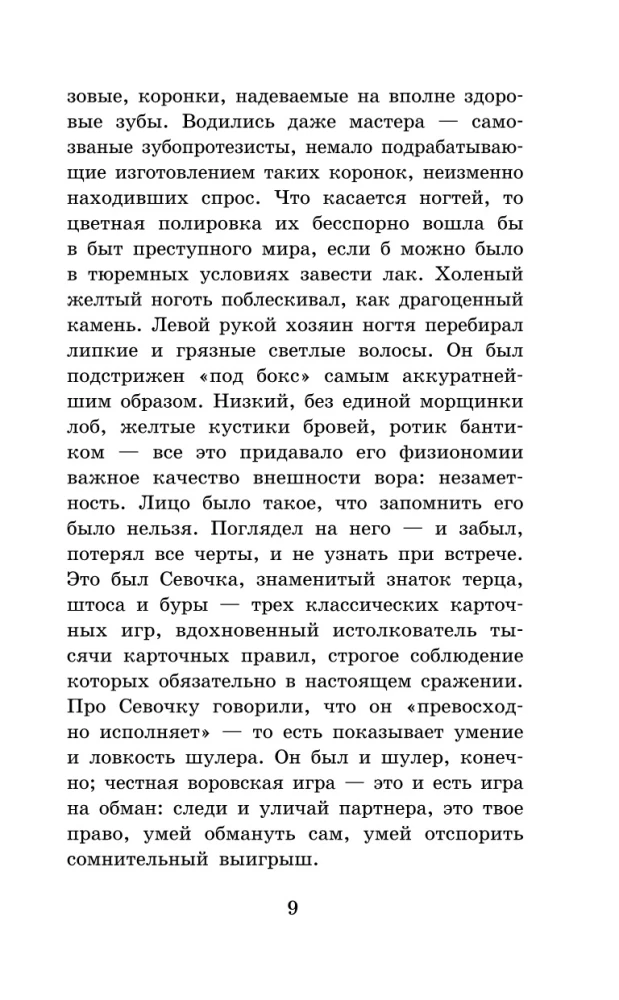
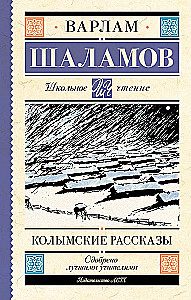

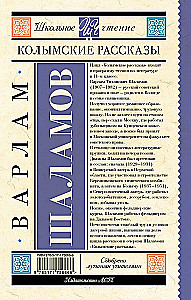
Kolyma Tales
Varlam Tikhonovich Shalamov (1907–1982) was a Russian Soviet prose writer and poet born in Vologda in the family of a priest. He received a good home education, finished gymnasium, and a labor school. However, he did not want to follow...
in his father's footsteps, moved to Moscow, where he worked as a tanner at the Kuncevo leather factory, and later was accepted into Moscow University at the Faculty of Soviet Law. In the capital, he attended literary circles and went to poetry evenings. Shalamov was arrested twice and exiled first (1929–1931) to the Vysher camp in the Perm region, where he built the Berezniki chemical plant, and then to Kolyma (1937–1951) to the northeastern camp, where he worked as a gold miner, lumberjack, and digger, extracting coal. Later, after completing paramedic courses, Shalamov worked as a paramedic in the Far East. The inhumanly hard labor and camp life conditions that fell to the lot of an entire generation formed the basis for Shalamov's cycle of stories and essays called "Kolyma Tales," which narrates the life of prisoners in Soviet correctional labor camps in the 1930s to 1950s. "Kolyma Tales," which V. Shalamov began working on immediately after returning from the Stalinist camps and worked on for almost twenty years, from 1954 to 1973, is a stunning artistic-documentary testament to one of the most terrible tragedies of the 20th century.
Author: Варлам Шаламов
Printhouse: AST
Series: School Reading
Age restrictions: 16+
Year of publication: 2025
ISBN: 9785171756666
Number of pages: 320
Size: 210x135x29 mm
Cover type: hard
Weight: 316 g
ID: 1710052
Available from suppliers
Expected delivery time – up to 2 weeks
€ 5.99
Available from suppliers
Expected delivery time – up to 2 weeks
€ 5.99
Bestsellers





Bestseller
€ 12.19
In stock
Kanashibari. Until the Last Lantern Goes Out. Volume 1
Ангелина Шэн, Вероника Шэн










Publishers "AST" recommends







Bestseller
€ 18.79
In stock
The Big Book of the Divine Woman. Purpose, Love, Marriage, Children, Money, Work. 2nd Edition
САТЬЯ ДАС