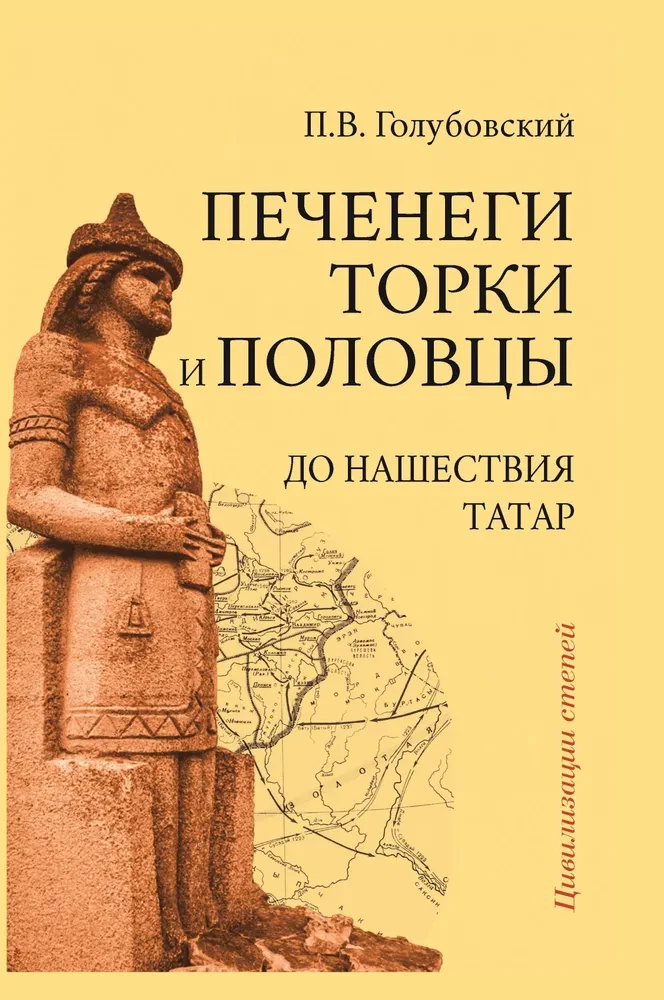
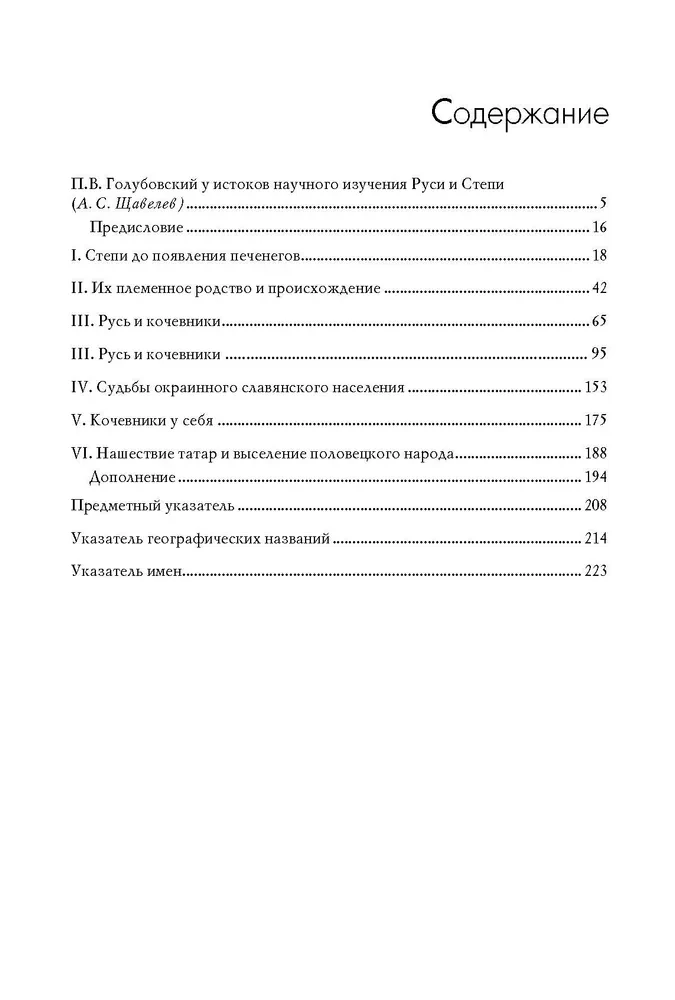
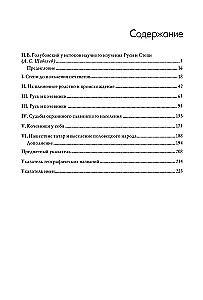
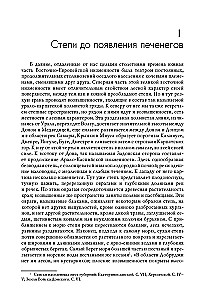
Pechenegs, Turks, and Polovtsians Before the Mongol Invasion. History of the Southern Russian Steppes IX-XIII
The book by P.V. Golubovsky (1857–1907) "Pechenegs, Turks, and Polovtsians Before the Mongol Invasion. History of the Southern Russian Steppes IX–XIII centuries" became one of the first studies on the history of nomads at the borders of the Ancient Russian...
state.
All the listed ethnic groups have remained in popular memory as warlike neighbors of Kievan Rus. Golubovsky was the first in domestic science to express the idea that the centuries-long confrontation with the steppe peoples contributed to the slow bleeding of southern Russian lands and, as a result, the rise of the principalities of the North and Northeast. The Pecheneg hordes managed to create a whole nomadic empire, comparable in scale to Byzantium, and only the latter was able to conquer them. The tribes of the Turks were destined to endure hostility with Rus and, already under the name of "black cloaks," become faithful guardians of its borders. The close relationships of the Polovtsian khans with Russian princes, oscillating from blood feud to blood kinship, inevitably led to the gradual assimilation of the Polovtsians by their northern neighbor, and this process could only be halted by the Mongol invasion.
The proposed work has timeless historiographical value and will be useful for students of historical, linguistic, and anthropological specialties, as well as for all readers interested in the civilizations of the steppes.
All the listed ethnic groups have remained in popular memory as warlike neighbors of Kievan Rus. Golubovsky was the first in domestic science to express the idea that the centuries-long confrontation with the steppe peoples contributed to the slow bleeding of southern Russian lands and, as a result, the rise of the principalities of the North and Northeast. The Pecheneg hordes managed to create a whole nomadic empire, comparable in scale to Byzantium, and only the latter was able to conquer them. The tribes of the Turks were destined to endure hostility with Rus and, already under the name of "black cloaks," become faithful guardians of its borders. The close relationships of the Polovtsian khans with Russian princes, oscillating from blood feud to blood kinship, inevitably led to the gradual assimilation of the Polovtsians by their northern neighbor, and this process could only be halted by the Mongol invasion.
The proposed work has timeless historiographical value and will be useful for students of historical, linguistic, and anthropological specialties, as well as for all readers interested in the civilizations of the steppes.
Author: Петр Голубовский
Printhouse: Akademicheskii proekt
Series: Civilizations of the Steppes
Age restrictions: 14+
Year of publication: 2023
ISBN: 9785829139988
Number of pages: 236
Size: 220х150х15 mm
Cover type: hard
Weight: 360 g
ID: 1692104
Sold out
€ 11.09
Sold out
€ 11.09
Bestsellers





€ 5.19
In stock

€ 9.29
In stock
Choice. On the Freedom and Inner Strength of a Person
Эдит Ева Эгер, Эсме Швалль-Вейганд