







The Silent Patient
Author: Алекс Михаэлидес
Printhouse: Inspiria
Series: Tok. Patient. Psychological thriller
Age restrictions: 18+
Year of publication: 2026
ISBN: 9785042386411
Number of pages: 352
Size: 207x131x25 mm
Cover type: твердая
Weight: 390 g
ID: 1735488
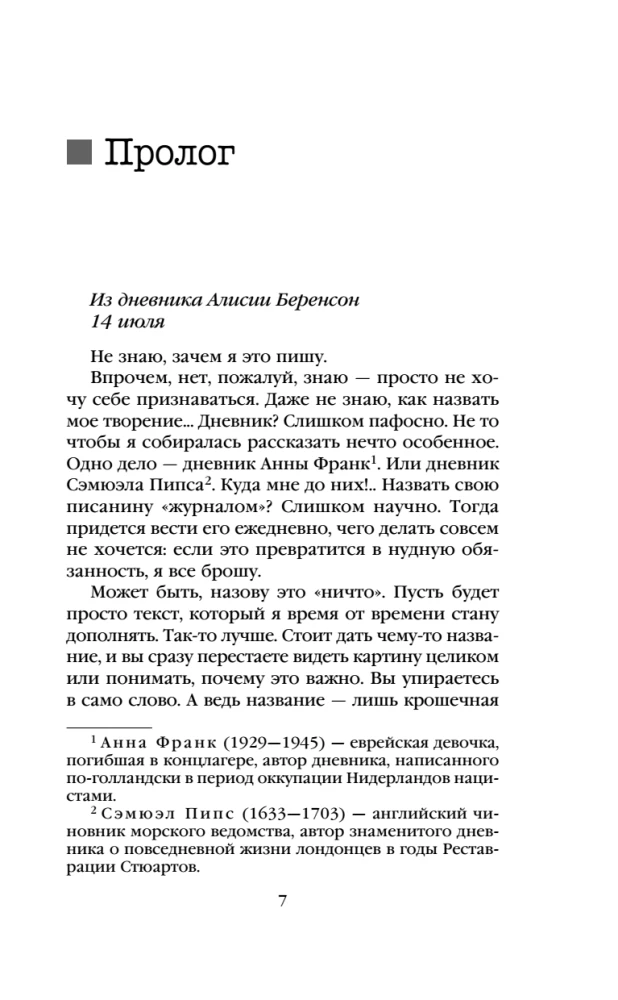
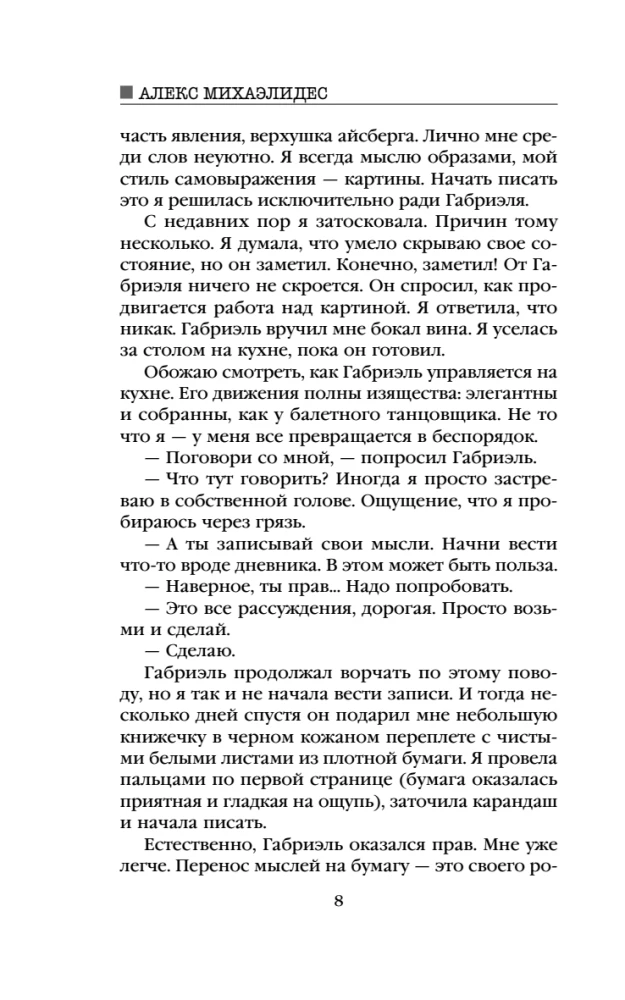
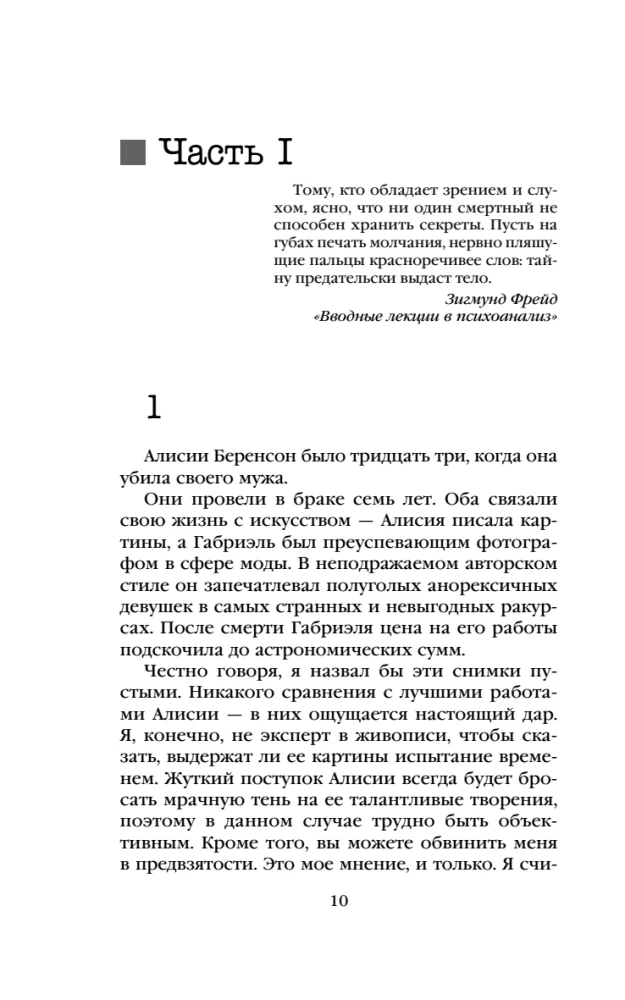
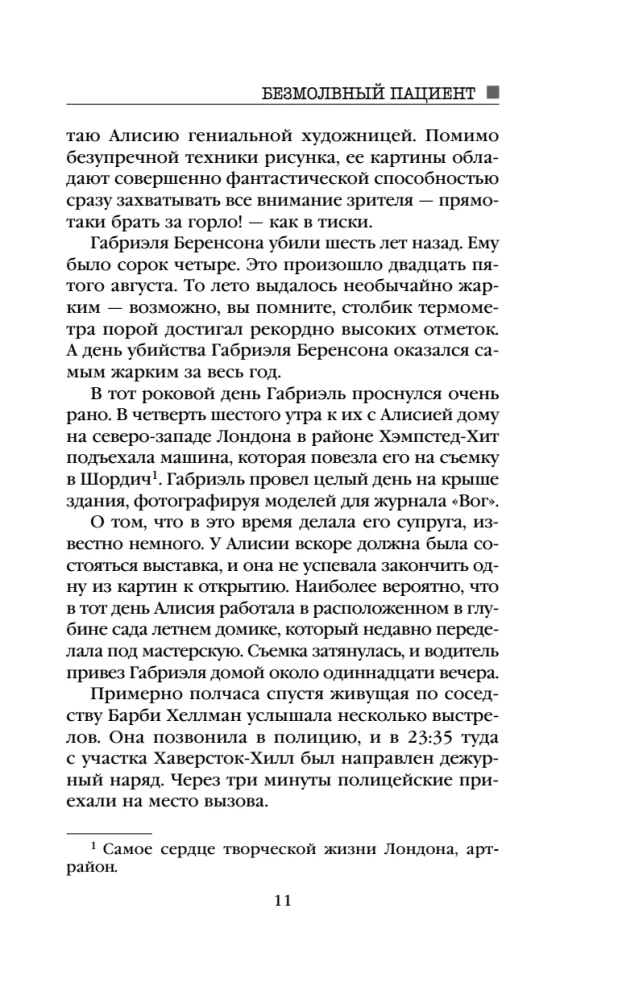
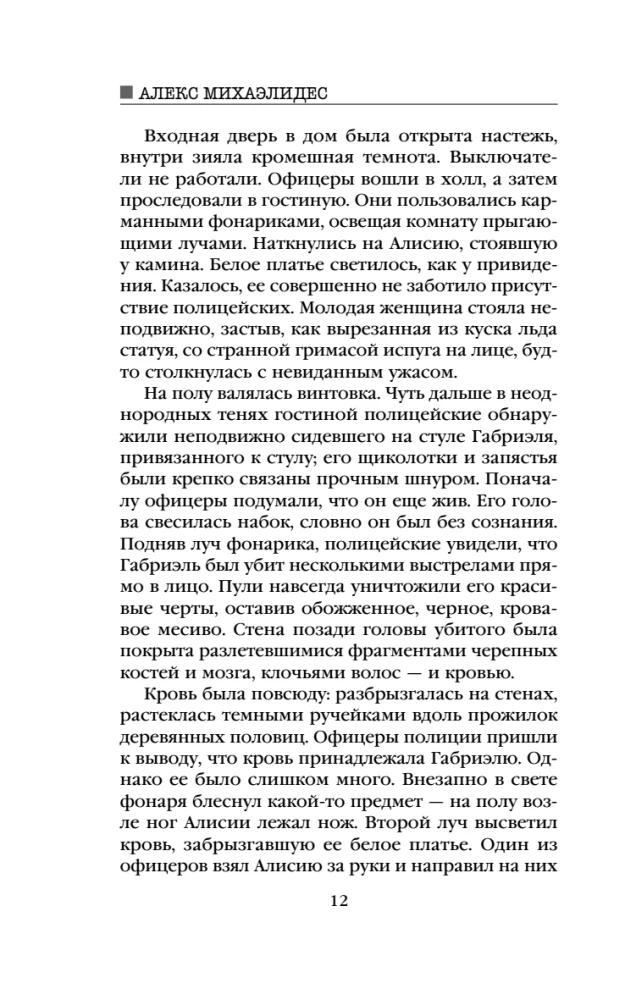
Alicia Berenson is a famous artist whose life seems perfect: a successful career, a loving husband, a beautiful home. But one day everything collapses — Alicia shoots her husband five times at point-blank range. After that, she doesn’t say a word.
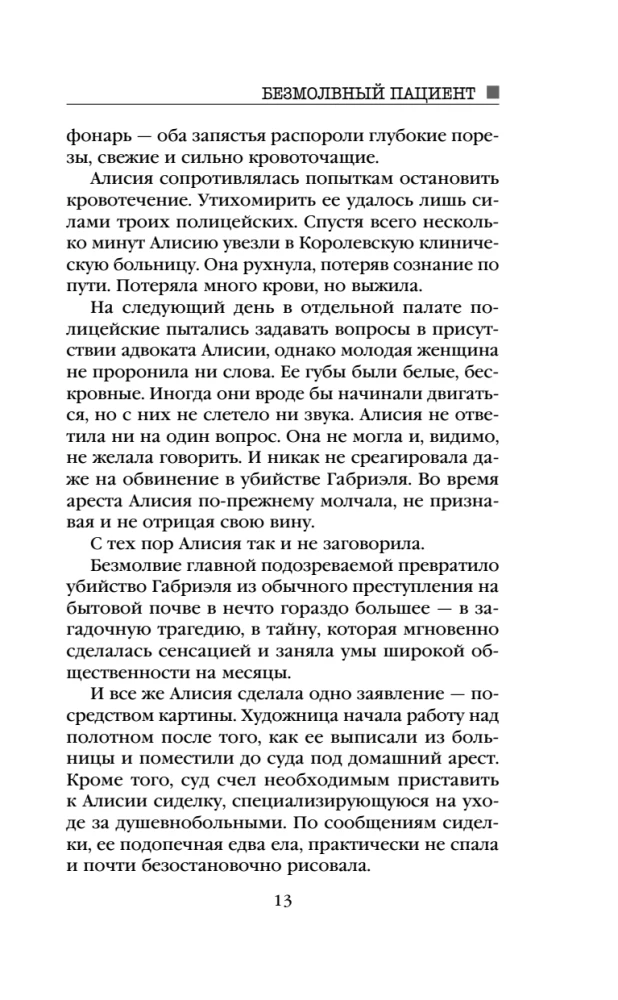
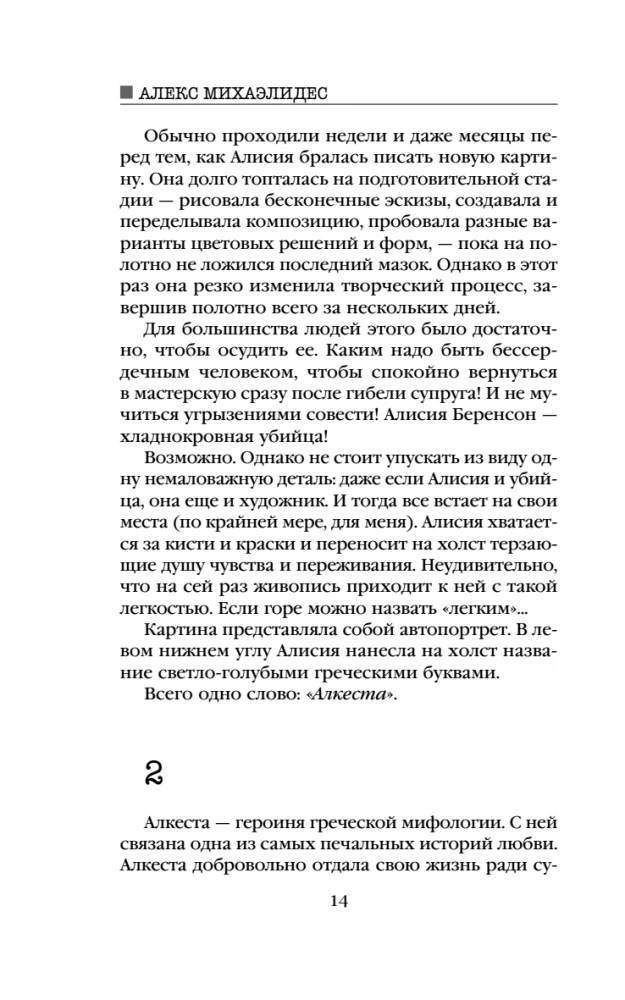
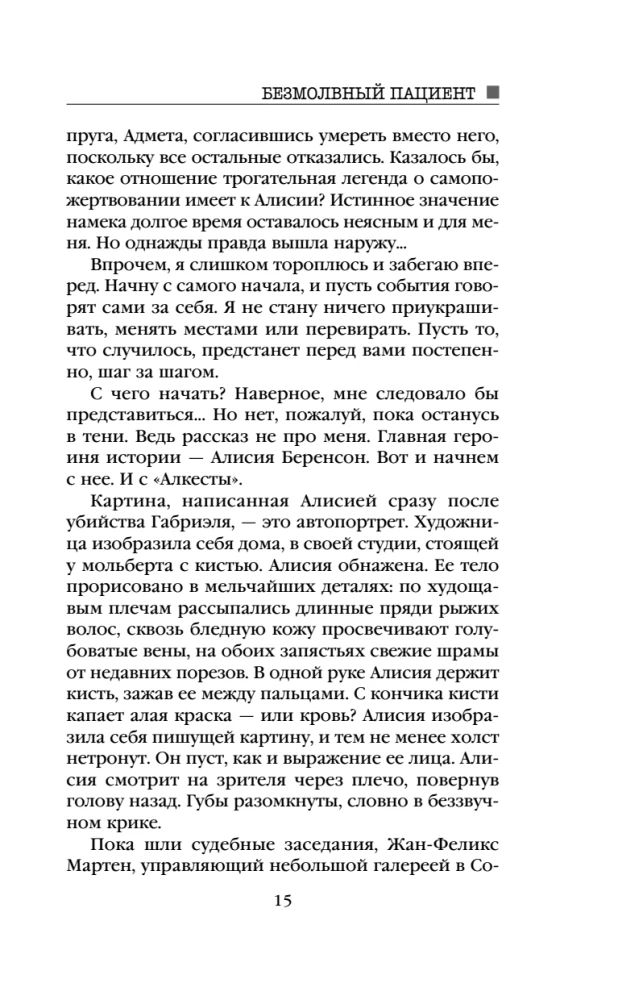
Her silence turns the crime into a mystery. Why did she do it? What happened that evening? Alicia is declared insane and placed in a secure psychiatric ward, where she remains isolated from the outside world. The only clue is her last painting — a self-portrait titled "Alcestis," referencing the ancient Greek myth of sacrifice and silence.
Years later, psychotherapist Theo Faber takes on her case. He is obsessed with the idea of getting Alicia to speak and uncovering the truth. As he delves into her past, he gradually unravels a tangle of hidden traumas, relationships, and psychological contradictions. However, the deeper he goes, the more he realizes that this story is more complicated than it seems at first glance.
The novel is structured as a psychological thriller with elements of a detective story, where the tension lies in trying to decipher the motives behind the crime and the mystery of the protagonist's silence. Gradually, the narrative leads to an unexpected twist that forces a reconsideration of everything that seemed obvious.
The book explores themes:
- psychological trauma
- perception of reality
- the boundaries between truth and self-deception
- the destructive power of hidden emotions
"The Silent Patient" is a story about how the past can influence the present and how far a person can go in trying to hide the truth — from others and from themselves.