
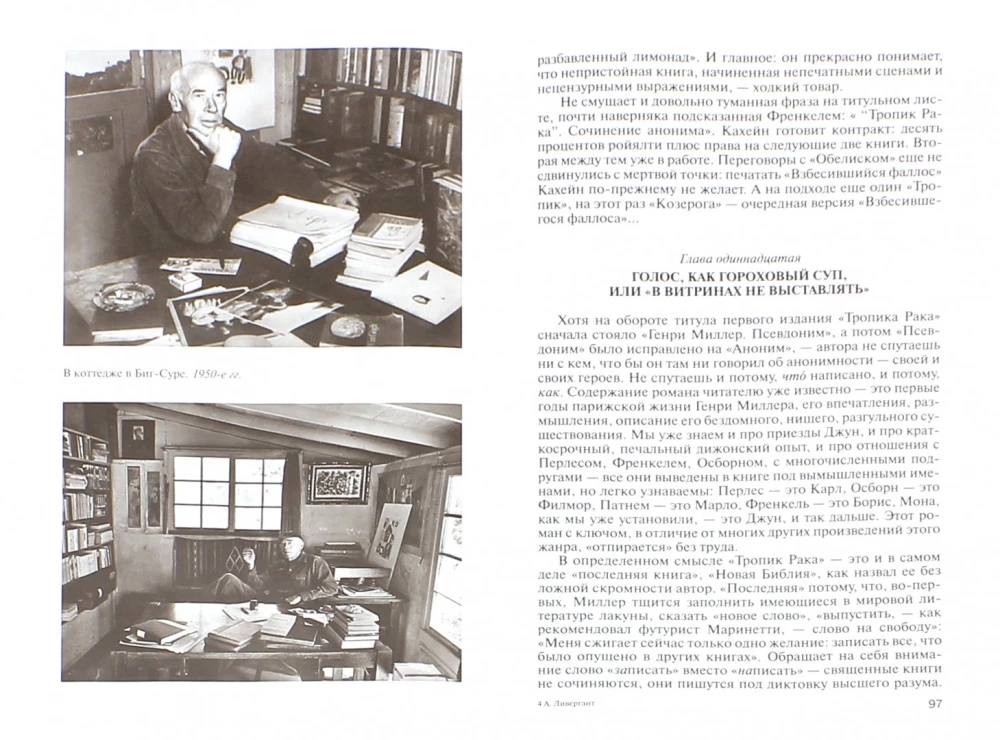
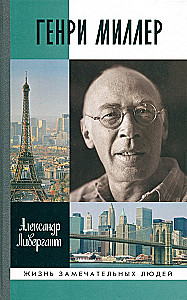
Henry Miller
The life of the American writer Henry Miller (1891—1980) served as the basis for his novels "Tropic of Cancer," "Tropic of Capricorn," "Black Spring," and the trilogy "The Rosy Crucifixion," which had a shocking impact on readers at the time....
In addition to a stream of memories, remarks, thoughts, and various scenes, he details the intimate lives of both himself and his characters. Miller's books were banned for decades and were not published, while their creator wandered endlessly and lived off others. Miller was not only a prose writer but also a gifted graphic artist, a decent pianist, and had a keen understanding of literature, theater, and cinema. Before becoming a writer, he changed many professions—from a courier, librarian, and musician in a movie theater to a personnel manager at the multinational company "Western Union." Friends said he was "the best conversationalist in the world" and an unparalleled storyteller, from whom "some sort of life-giving force emanated" and "under any circumstances, he managed to give something to people."... The writer, translator, and critic Alexander Yakovlevich Livergant traces in his book how closely the asocial hero of "Tropic of Cancer," the unscrupulous drifter and marginal, relates to the free-thinking intellectual Henry Miller, who easily managed to "live in society and be free from society." .
Author: Александр Ливергант
Printhouse: Molodaia gvardiia
Series: The Lives of Remarkable People
Age restrictions: 18+
Year of publication: 2016
ISBN: 9785235038684
Number of pages: 295
Size: 206х133х17 mm
Cover type: hard
Weight: 349 g
ID: 1735191
Sold out
€ 7.49
Sold out
€ 7.49
Bestsellers






€ 13.29
In stock
12 Weeks in a Year. How to Achieve More in 12 Weeks Than Others Do in 12 Months
Майкл Леннингтон, Брайан Моран



€ 7.89
In stock
Choice. On the Freedom and Inner Strength of a Person
Эдит Ева Эгер, Эсме Швалль-Вейганд




€ 6.99
In stock