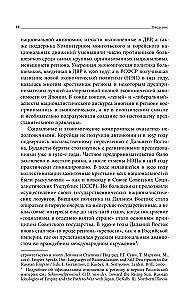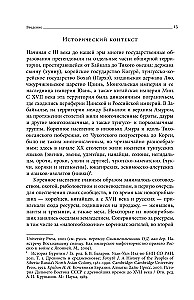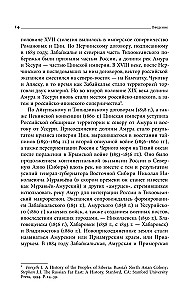
In April 1920, a new state known as the Far Eastern Republic (FER) emerged on the territory of the Russian Far East. Formally independent and seemingly embodying the ideas of Siberian regionalism, it was under the control of the Bolsheviks....
But was the FER merely a conduit for their policies? Ivan Sablin's research covers the history of the Far East from the 1900s to the 1920s and focuses on the coexistence and competition of various visions for the region's future during this period. Nationalist scenarios linked this future to the interests of one of the local population groups: Russians, Buryat-Mongols, Koreans, Ukrainians, and others. Within the framework of imperialist projects, attempts were made to integrate the region into the political and economic spheres of influence of Japan and the USA. The Bolsheviks viewed the Far East as a springboard for exporting revolution to Mongolia, Korea, China, and Japan. Proponents of regionalist (oblastnichestvo) ideas aimed for independence or broad regional autonomy for Siberia and the Far East. The FER appeared at the intersection of these scenarios and existed for only two years. The author analyzes the multifaceted political activity in the region and explains the factors that led to the victory of the Bolshevik version of state-centered imperial nationalism. Ivan Sablin is the head of the research group at the Department of History at Heidelberg University (Germany).
In April 1920, a new state known as the Far Eastern Republic (FER) emerged on the territory of the Russian Far East. Formally independent and seemingly embodying the ideas of Siberian regionalism, it was under the control of the Bolsheviks. But was the FER merely a conduit for their policies? Ivan Sablin's research covers the history of the Far East from the 1900s to the 1920s and focuses on the coexistence and competition of various visions for the region's future during this period. Nationalist scenarios linked this future to the interests of one of the local population groups: Russians, Buryat-Mongols, Koreans, Ukrainians, and others. Within the framework of imperialist projects, attempts were made to integrate the region into the political and economic spheres of influence of Japan and the USA. The Bolsheviks viewed the Far East as a springboard for exporting revolution to Mongolia, Korea, China, and Japan. Proponents of regionalist (oblastnichestvo) ideas aimed for independence or broad regional autonomy for Siberia and the Far East. The FER appeared at the intersection of these scenarios and existed for only two years. The author analyzes the multifaceted political activity in the region and explains the factors that led to the victory of the Bolshevik version of state-centered imperial nationalism. Ivan Sablin is the head of the research group at the Department of History at Heidelberg University (Germany).
Be the first to know about our current discounts, offers and new products!
Check icon
You have added to your basket
Check icon
You have added to favourites
Sold out
The item is currently out of stock.
In stock
Available in warehouse. You will receive the exact delivery date from the operator after the order confirmation.
To order
The product is delivered directly from the publisher. The order processing time is up to 14 days, you will receive the exact delivery date from the operator after the order confirmation.