
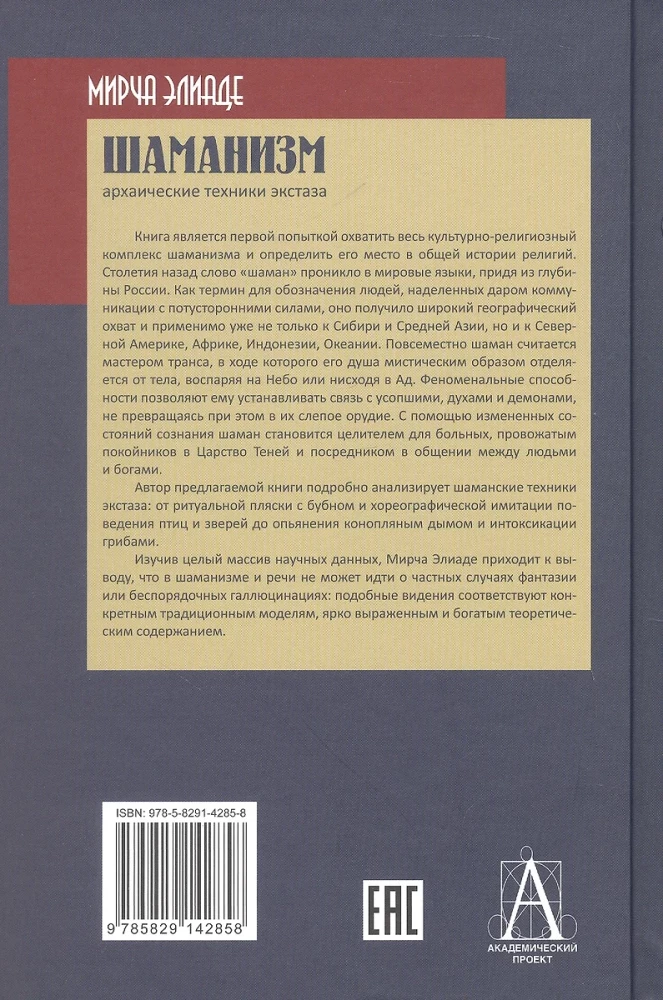
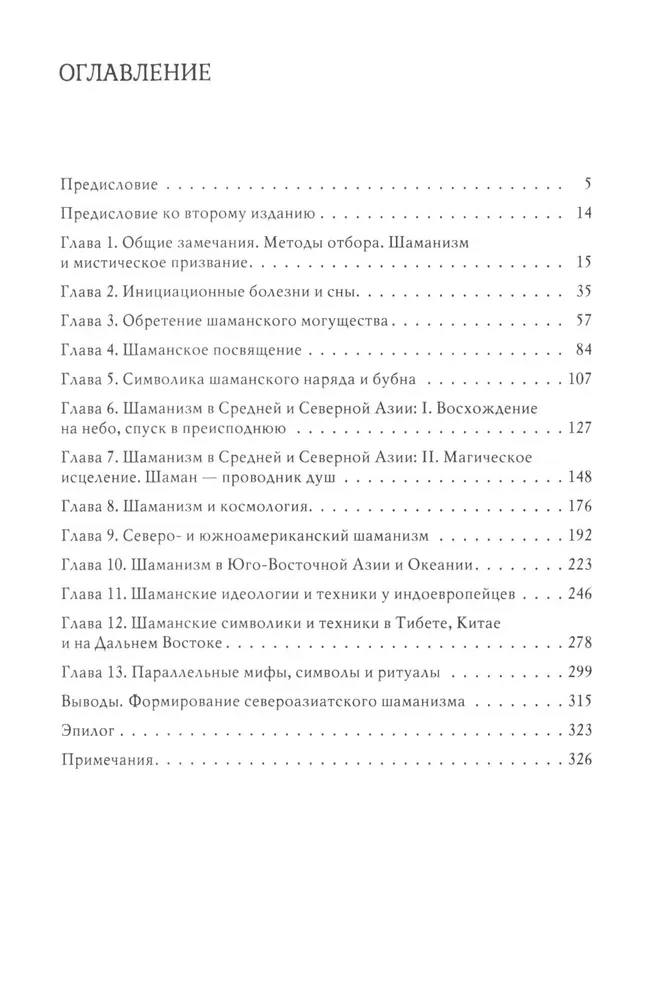


Shamanism. Archaic Techniques of Ecstasy
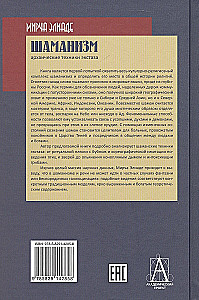
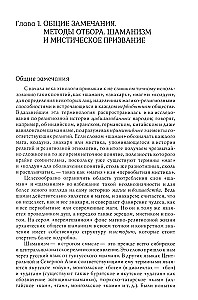
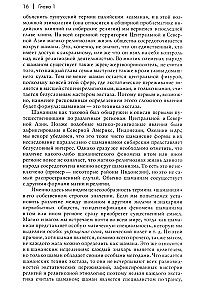
The book is the first attempt to encompass the entire cultural and religious complex of shamanism and to define its place in the overall history of religions. Centuries ago, the word 'shaman' penetrated world languages, coming from the depths of...
Russia. As a term for referring to people endowed with the gift of communication with otherworldly forces, it received a wide geographical scope and is now applicable not only to Siberia and Central Asia but also to North America, Africa, Indonesia, and Oceania. Everywhere, the shaman is considered a master of trance, during which their soul mystically separates from the body, soaring to Heaven or descending to Hell. Their phenomenal abilities allow them to establish contact with the deceased, spirits, and demons without becoming their blind instrument. Through altered states of consciousness, the shaman becomes a healer for the sick, a guide for the dead into the Realm of Shadows, and a mediator in communication between humans and gods.
The author of the proposed book analyzes shamanic techniques of ecstasy in detail: from ritual dancing with a drum and choreographic imitation of the behaviors of birds and beasts to intoxication from cannabis smoke and mushroom intoxication. Having studied a vast array of scientific data, Mircea Eliade concludes that in shamanism, there can be no question of individual cases of fantasy or chaotic hallucinations: such visions correspond to specific traditional models, distinctly defined and rich in theoretical content.
The publication is aimed at students and teachers of the humanities in higher education institutions, as well as readers interested in anthropological and religious studies.
The author of the proposed book analyzes shamanic techniques of ecstasy in detail: from ritual dancing with a drum and choreographic imitation of the behaviors of birds and beasts to intoxication from cannabis smoke and mushroom intoxication. Having studied a vast array of scientific data, Mircea Eliade concludes that in shamanism, there can be no question of individual cases of fantasy or chaotic hallucinations: such visions correspond to specific traditional models, distinctly defined and rich in theoretical content.
The publication is aimed at students and teachers of the humanities in higher education institutions, as well as readers interested in anthropological and religious studies.
Author: Мирча Элиаде
Printhouse: Akademicheskii proekt
Series: Philosophical Technologies
Age restrictions: 16+
Year of publication: 2024
ISBN: 9785829142858
Number of pages: 431
Size: 220х150х23 mm
Cover type: hard
Weight: 700 g
ID: 1698588
In stock
€ 20.09
Will be delivered to United States on 7 July (Tu):
By courier
from € 38.94
Bestsellers

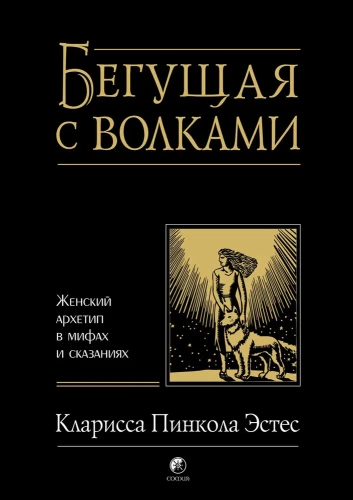
€ 38.19
In stock


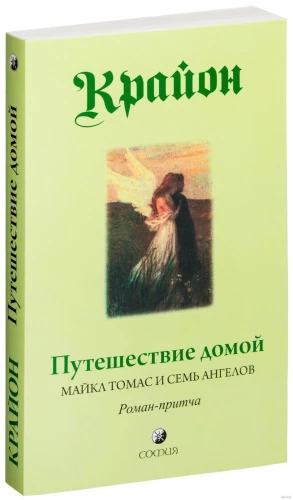


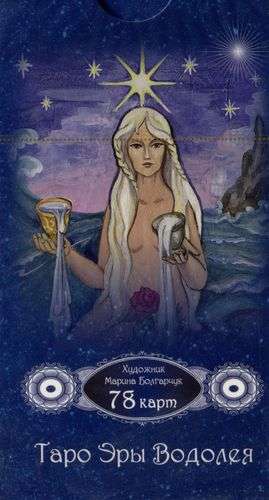
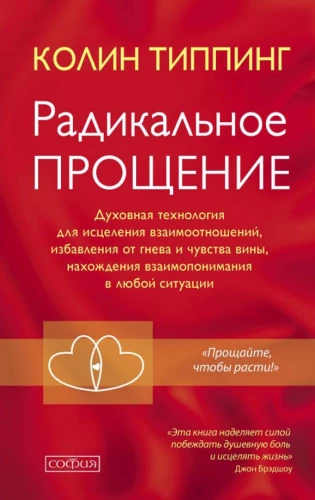

€ 18.39
In stock