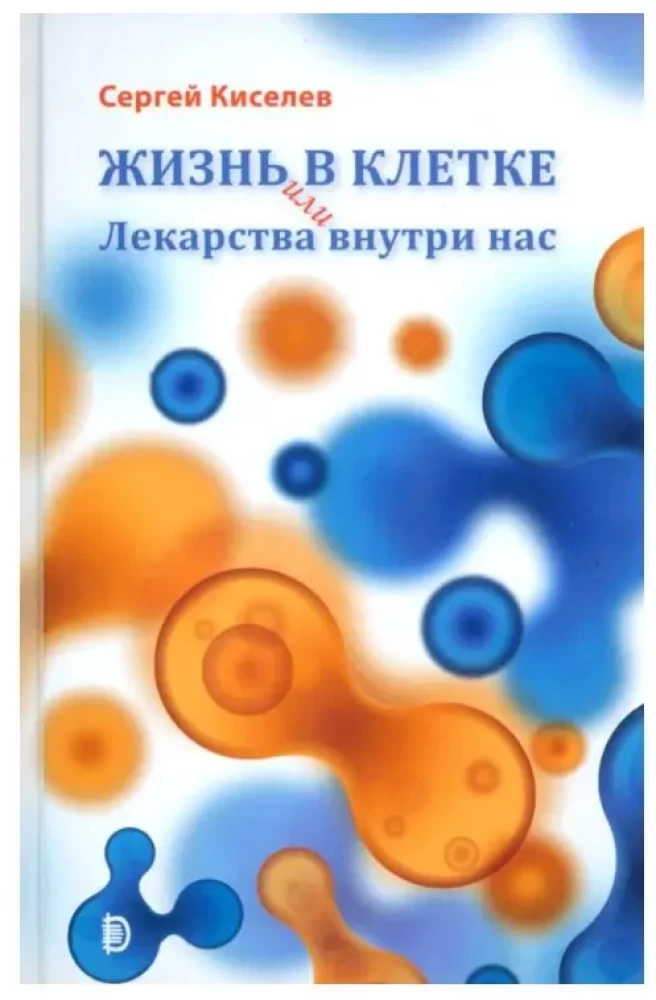
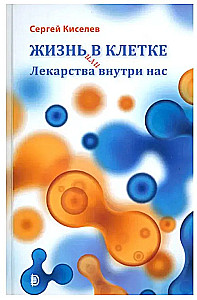
Life - in a cage, or Drugs inside us
Scientists predict that in the next decade the use of cellular technologies will increase at least threefold. What awaits us ahead, and when can we fully utilize the potential of the elementary unit of life - the cell?
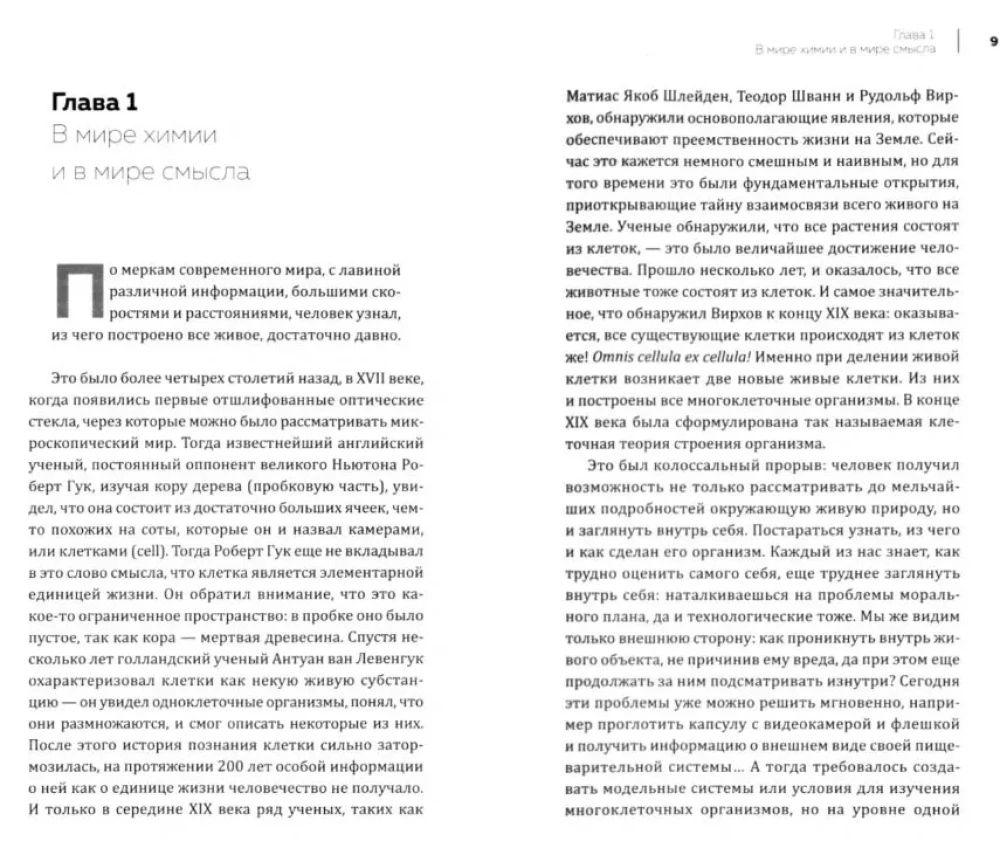
In this book,... Sergey Kiselev, a geneticist and Doctor of Biological Sciences, reflects on the history of cell research, reveals modern achievements in understanding how life is organized and how much control humans can exert over it. He also demonstrates possible areas where the advancements in molecular and cellular biology in recent years can be applied in practice. A lot of attention is given to gene therapy, treatment of oncological and other diseases, cloning, and stem cell research.
Sergey Lvovich Kiselev - Doctor of Biological Sciences, Professor, Head of the Epigenetics Laboratory at the N.I. Vavilov Institute of General Genetics of the Russian Academy of Sciences.
One of the creators of the first Russian and the third in the world gene therapy drug for treating ischemic conditions.
He has developed in vitro disease models for studying the mechanisms of pathology and searching for drugs.
A recipient of the Russian Government Award for the development of new methods of biotherapy for cancer. In the early 2000s, Sergey Kiselev and his colleagues were the first in Russia to obtain lines of human embryonic stem cells and subsequently successfully published a series of significant works based on this research. His research interests include early embryonic development, reprogramming, epigenetic reprogramming, creating models of socially significant and rare diseases, methods of treatment and drug screening, gene and cell therapy, and stem cell research.
In this book,... Sergey Kiselev, a geneticist and Doctor of Biological Sciences, reflects on the history of cell research, reveals modern achievements in understanding how life is organized and how much control humans can exert over it. He also demonstrates possible areas where the advancements in molecular and cellular biology in recent years can be applied in practice. A lot of attention is given to gene therapy, treatment of oncological and other diseases, cloning, and stem cell research.
Sergey Lvovich Kiselev - Doctor of Biological Sciences, Professor, Head of the Epigenetics Laboratory at the N.I. Vavilov Institute of General Genetics of the Russian Academy of Sciences.
One of the creators of the first Russian and the third in the world gene therapy drug for treating ischemic conditions.
He has developed in vitro disease models for studying the mechanisms of pathology and searching for drugs.
A recipient of the Russian Government Award for the development of new methods of biotherapy for cancer. In the early 2000s, Sergey Kiselev and his colleagues were the first in Russia to obtain lines of human embryonic stem cells and subsequently successfully published a series of significant works based on this research. His research interests include early embryonic development, reprogramming, epigenetic reprogramming, creating models of socially significant and rare diseases, methods of treatment and drug screening, gene and cell therapy, and stem cell research.
Author: Сергей Киселев
Printhouse: Diskurs
Series: Simply Science
Age restrictions: 12+
Year of publication: 2022
ISBN: 9785907418134
Number of pages: 224
Size: 204х135х15 mm
Cover type: hard
Weight: 304 g
ID: 1321576
Sold out
€ 13.59
Sold out
€ 13.59