
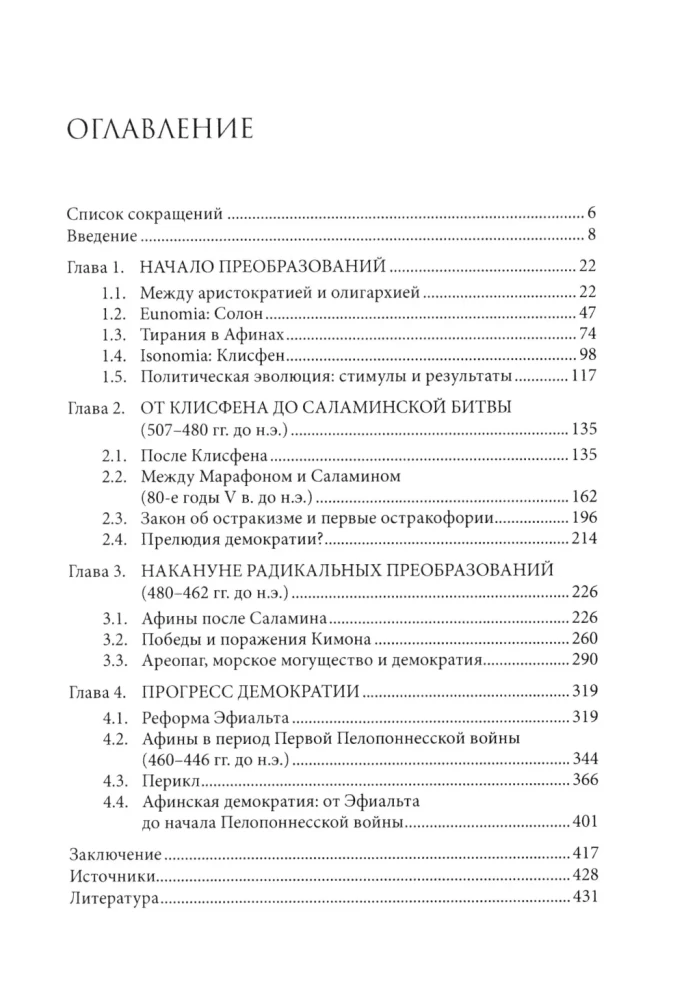
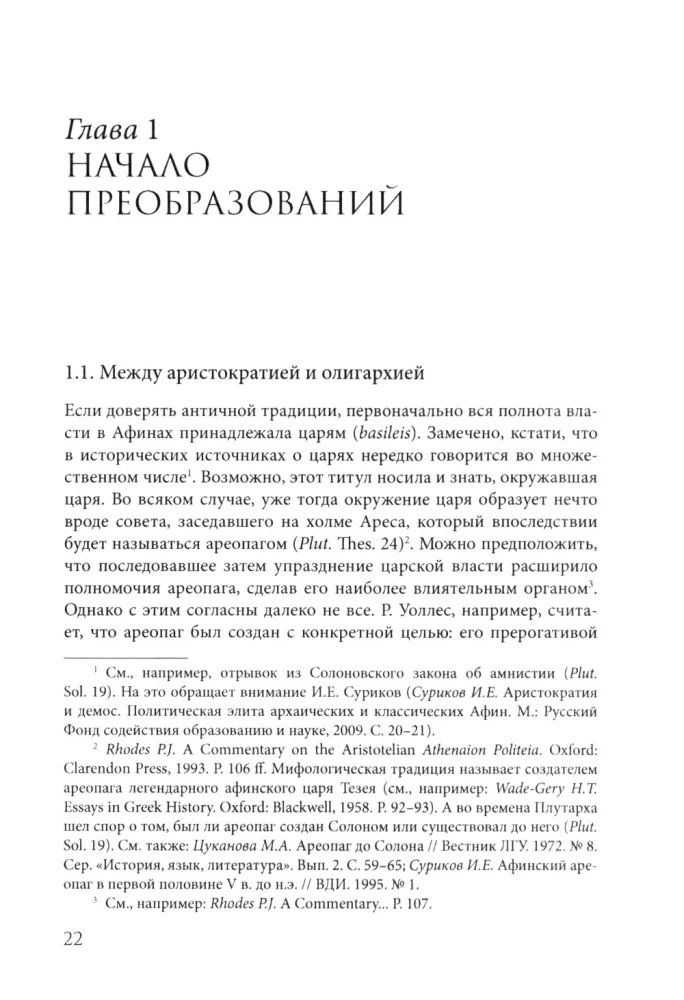
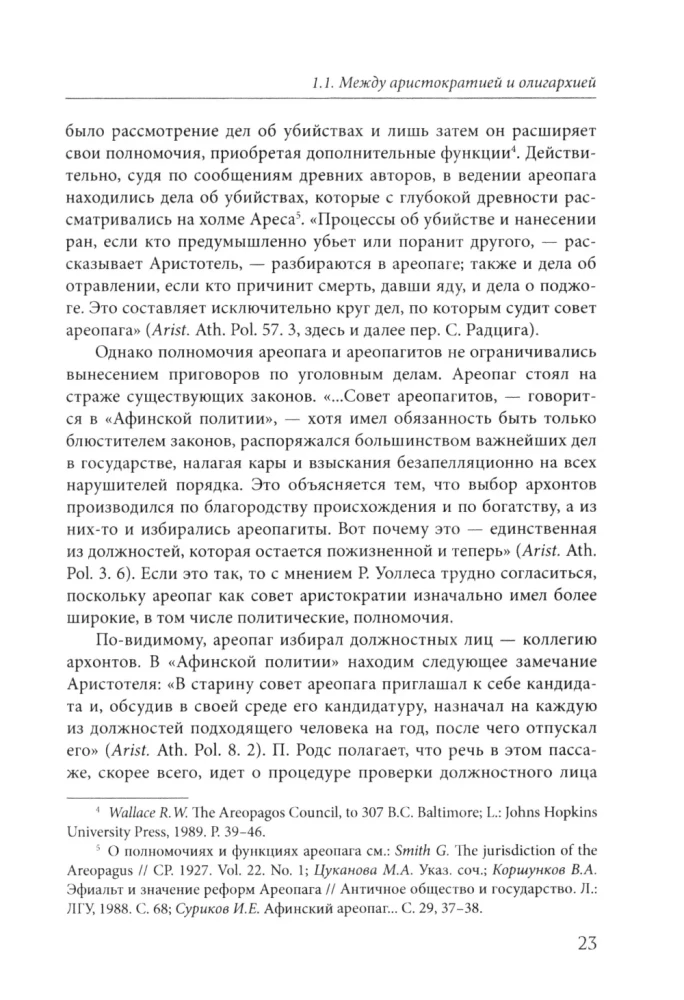
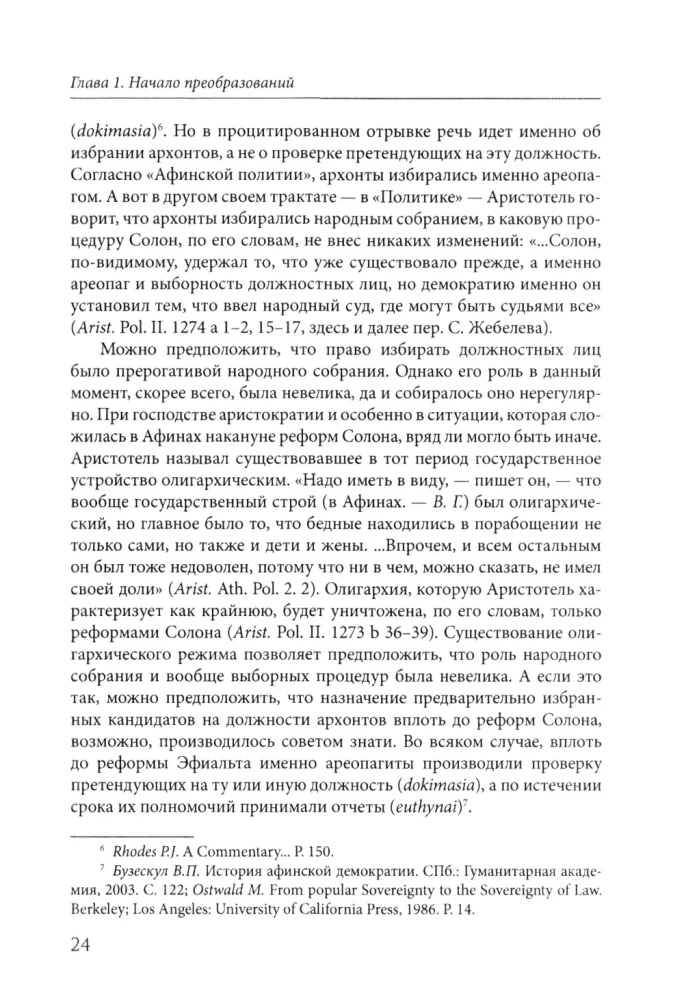
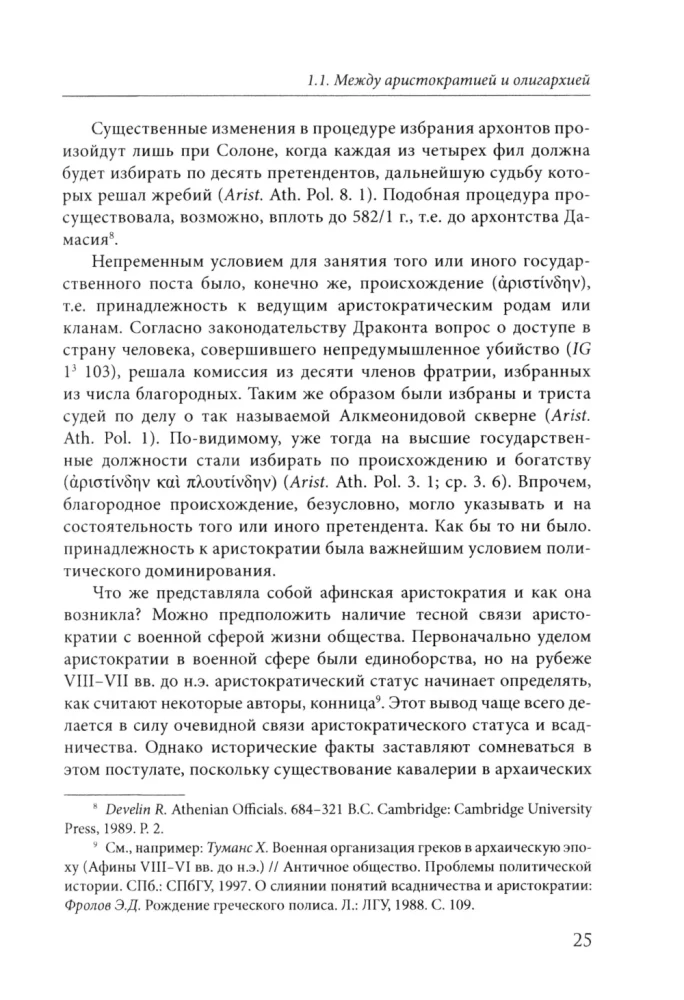

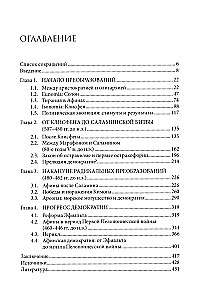
Афины на пути к демократии: VIII–V века до н.э.
This monograph explores the process of the establishment of Athenian democracy during the archaic and classical periods (8th to mid-5th centuries BC). The questions of what Athenian democracy is, when it arose, and what role various social strata played in...
its emergence have remained contentious for a long time. The book demonstrates that one of the significant stimuli for the emergence of democracy was the struggle for power and influence within the aristocracy, which often involved the Athenian demos as well. In the course of this struggle, on the one hand, equal conditions were created for the 'best' (eunomia, isonomia), and on the other hand, the political rights of the common people were expanded. The result of these processes was a state structure in which collegial political institutions played a significant role, primarily the Assembly that elected officials and the Heliaia (people's court) that exercised control over the annually elected magistrates. Nevertheless, Athenian democracy cannot be considered a people's rule or 'power of the people.' The Athenians themselves characterized it as collective rule or the power of the 'majority' of those who possessed political rights.
Autor: Валерий Гущин
Väljaandja: VYSShAIa ShKOLA EKONOMIKI
Seeria: HSE Monographs: Humanities
Vanusepiirangud: 16+
avaldamise aasta: 2025
ISBN: 9785759841739
lehekülgede arv: 456
Suurus: 210x140x26 mm
Kaanetüüp: Hard
Kaal: 642 g
ID: 1740844
Välja müüdud
€ 14.49
Välja müüdud
€ 14.49
Bestsellers





Bestseller
€ 14.99
Laos
Enesele õrnalt. Raamat sellest, kuidas end väärtustada ja hoida
Ольга Примаченко

€ 13.29
Laos
12 nädalat aastas. Kuidas 12 nädalaga saavutada rohkem, kui teised jõuavad 12 kuuga
Майкл Леннингтон, Брайан Моран









€ 6.99
Laos
Kuidas rääkida, et lapsed kuulaksid, ja kuidas kuulata, et lapsed räägiksid
Элейн Мазлиш, Адель Фабер