Board Game - Scythe
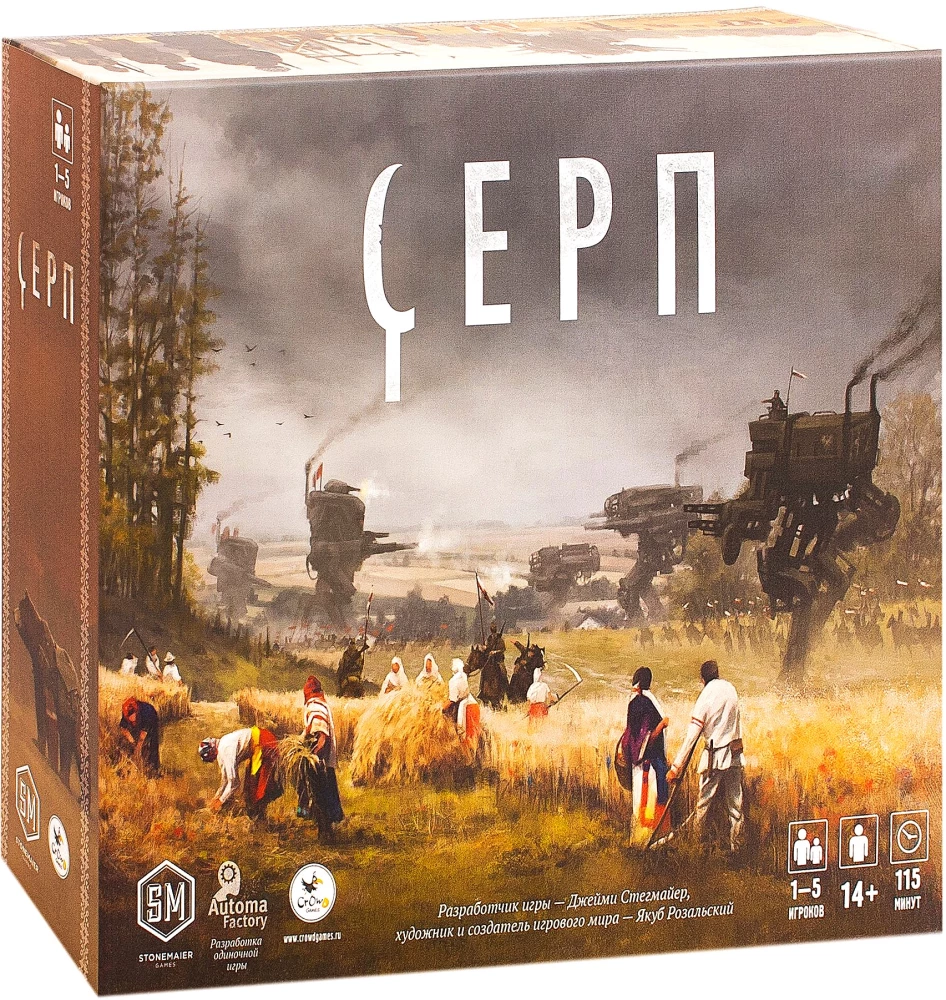
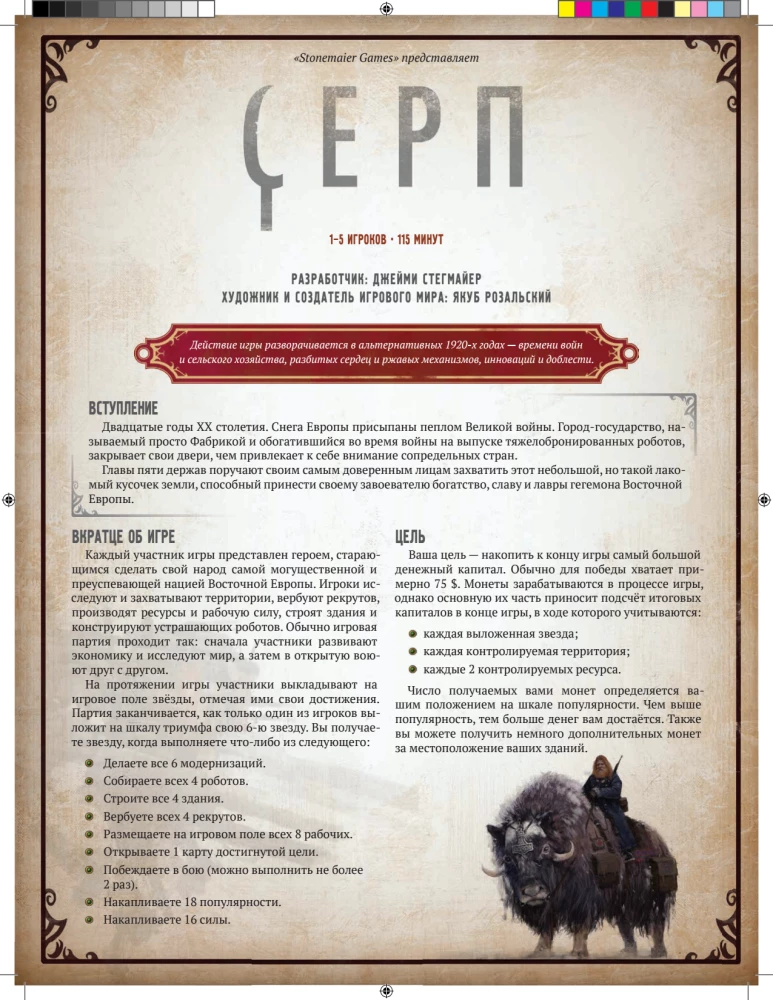
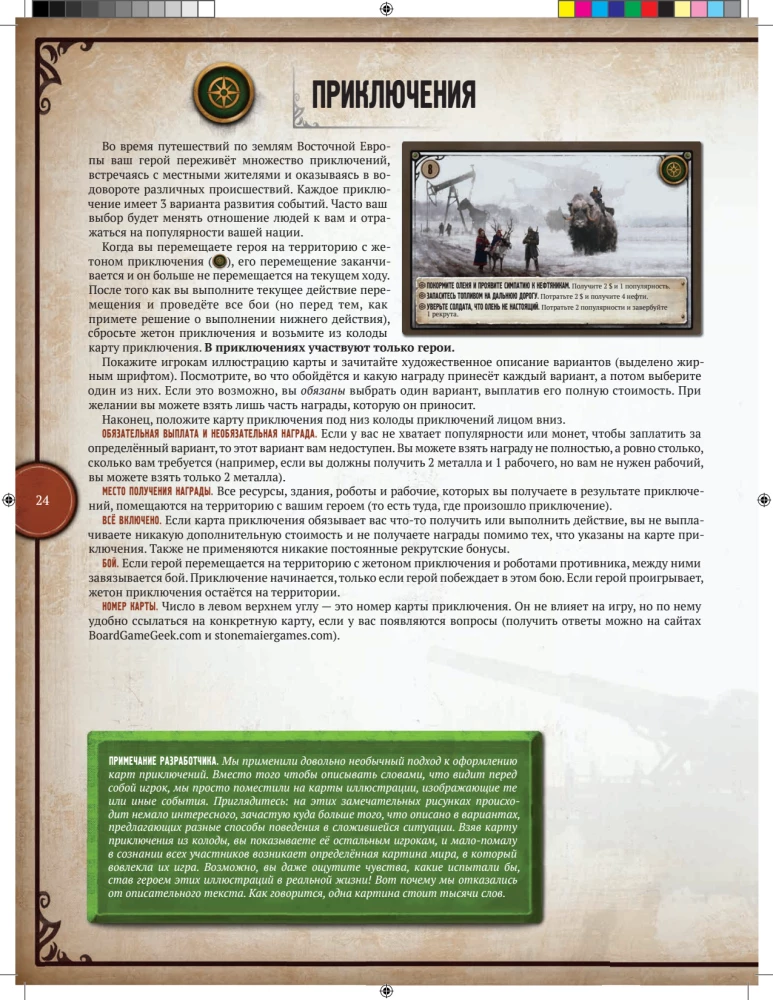
After World War I, several new states formed in Eastern Europe that continue to feud with one another. The prolonged war has inspired scientific thought, allowing for the creation of unprecedented weapons resembling gigantic robots. With the support of their...
citizens, five leaders are ready to begin a new phase of war and achieve victory.
Five factions battling for new territories
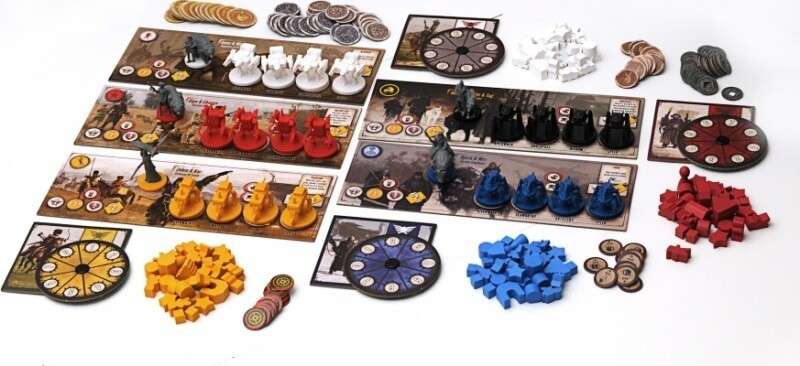
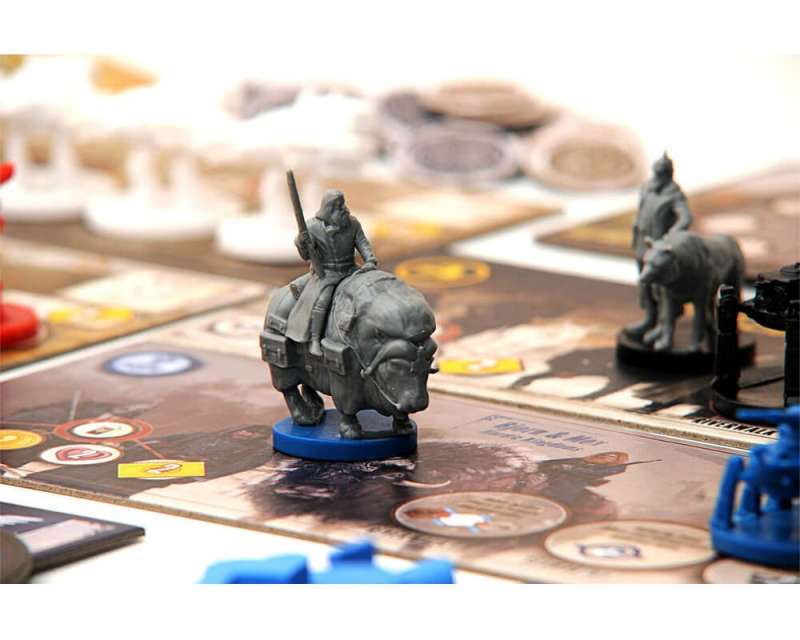
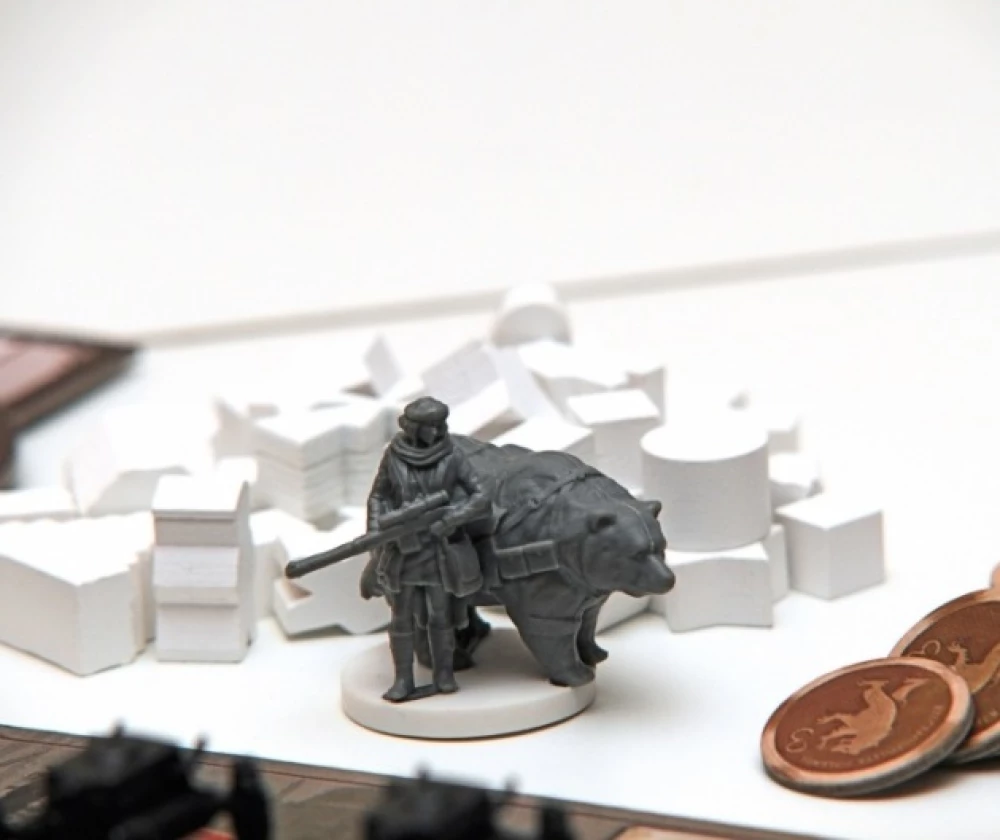
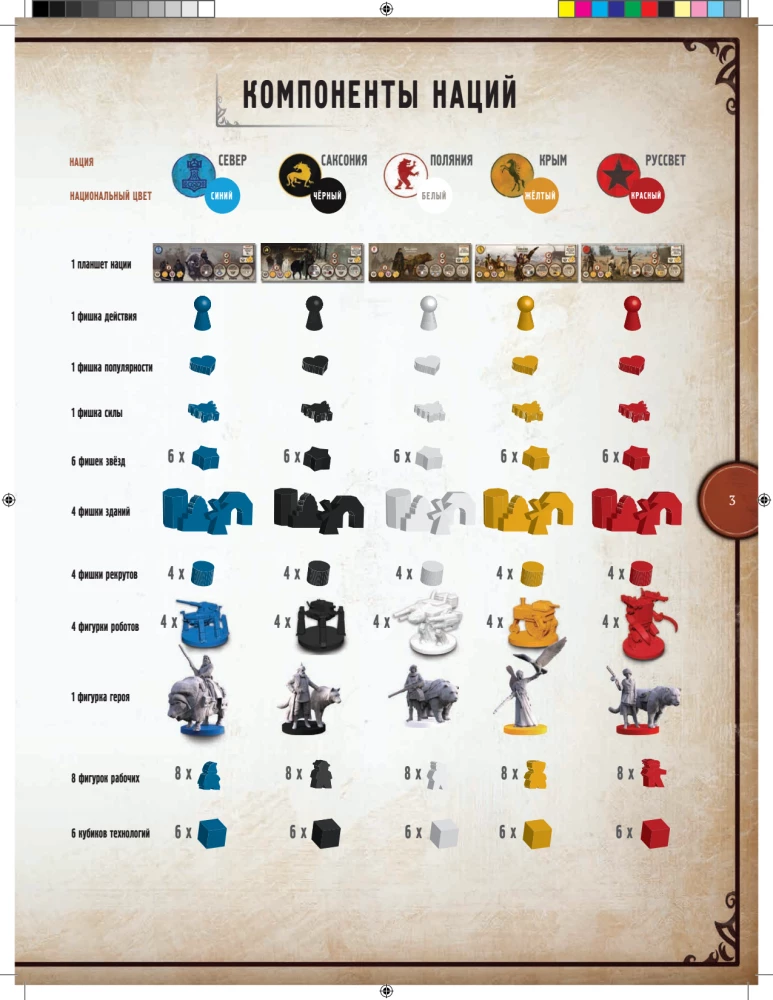
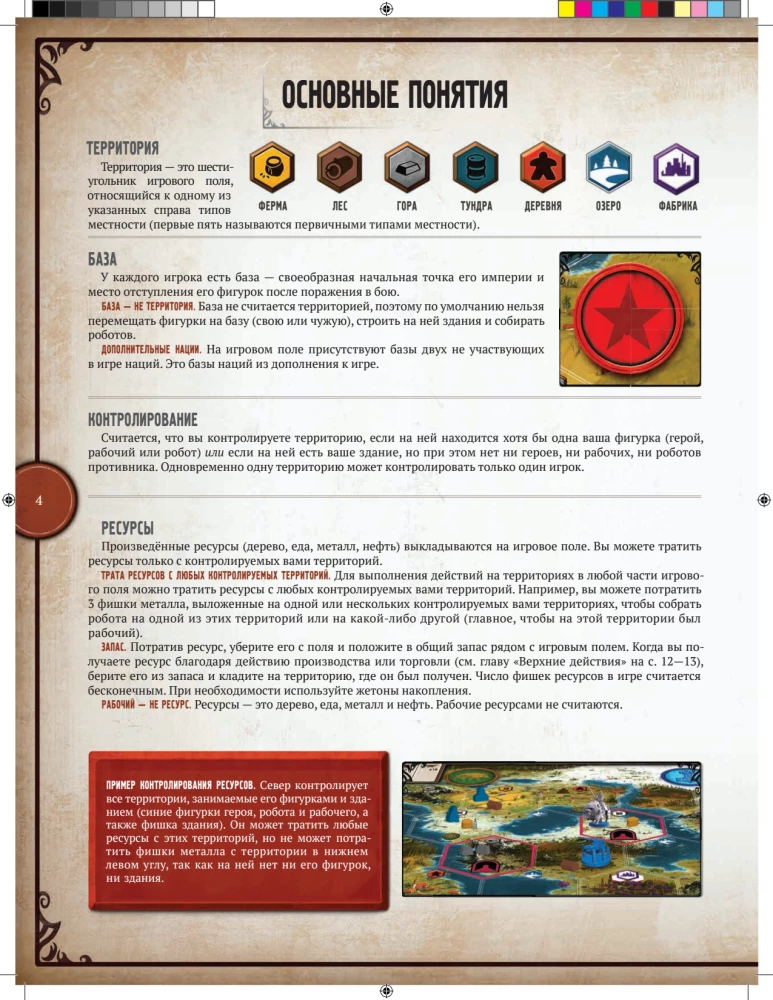
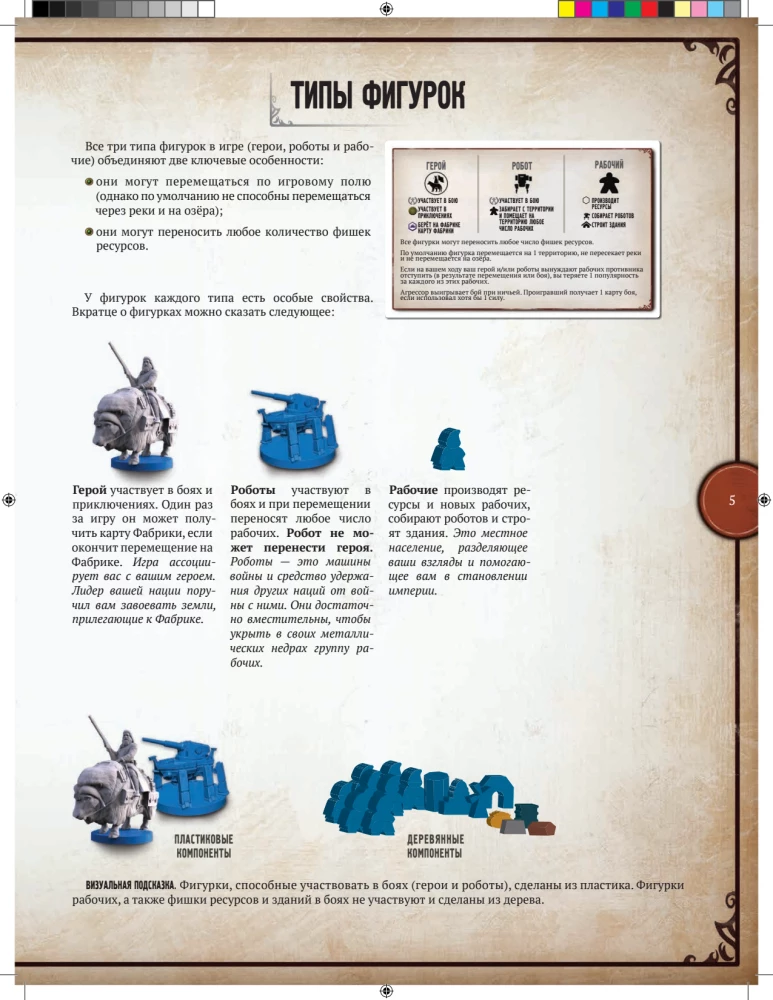
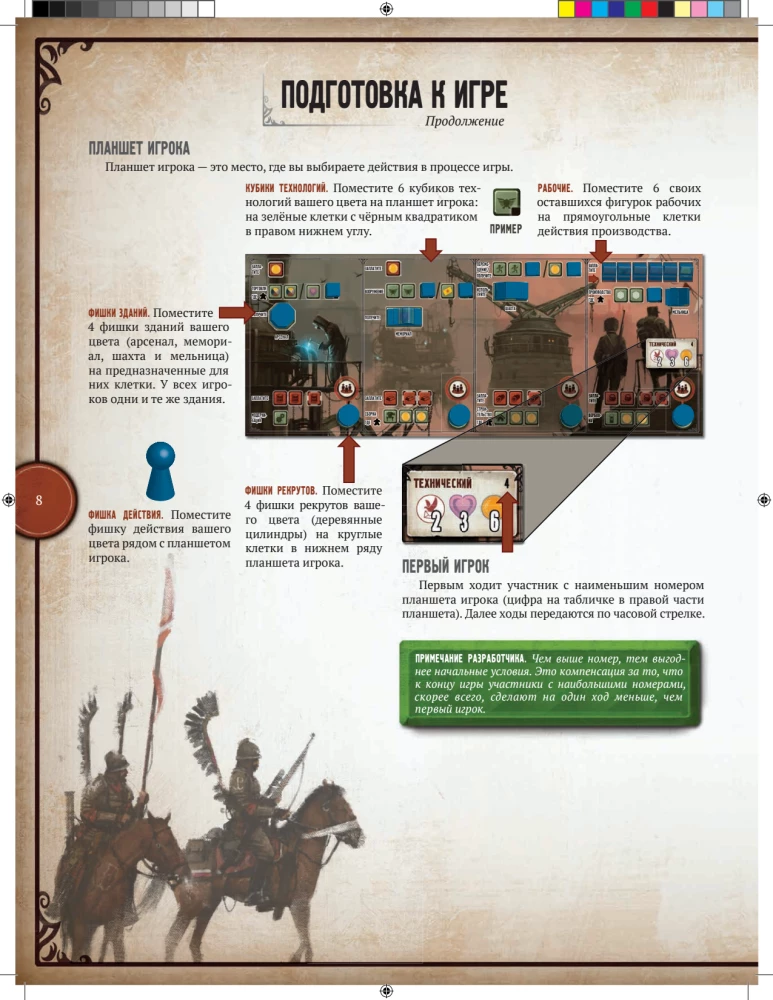
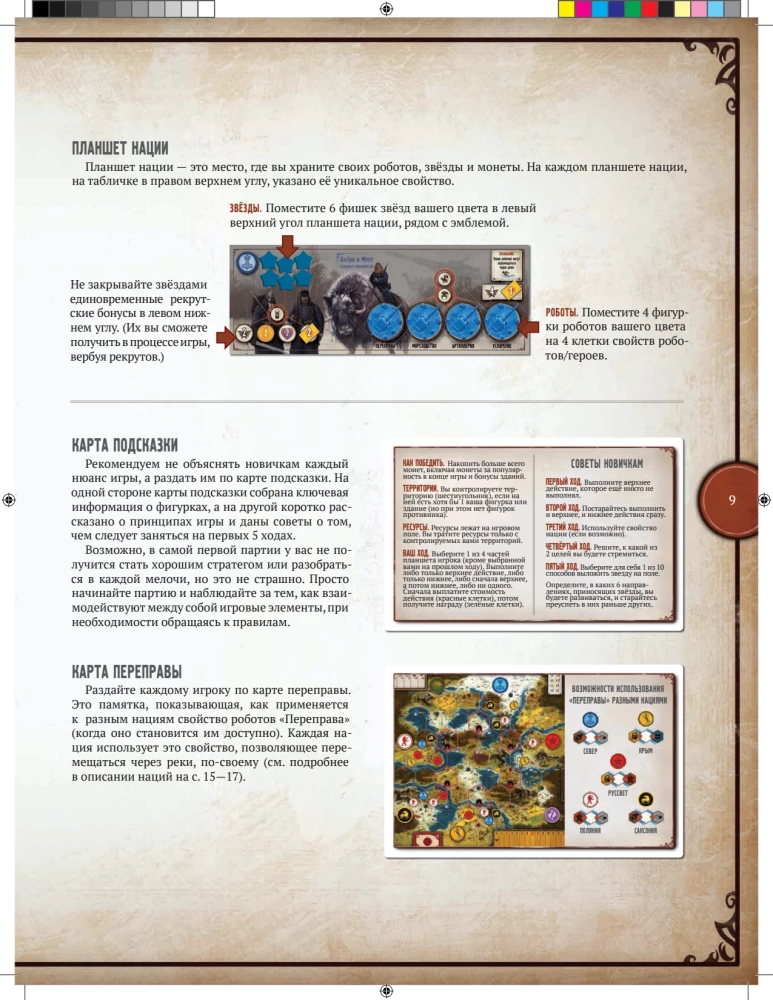
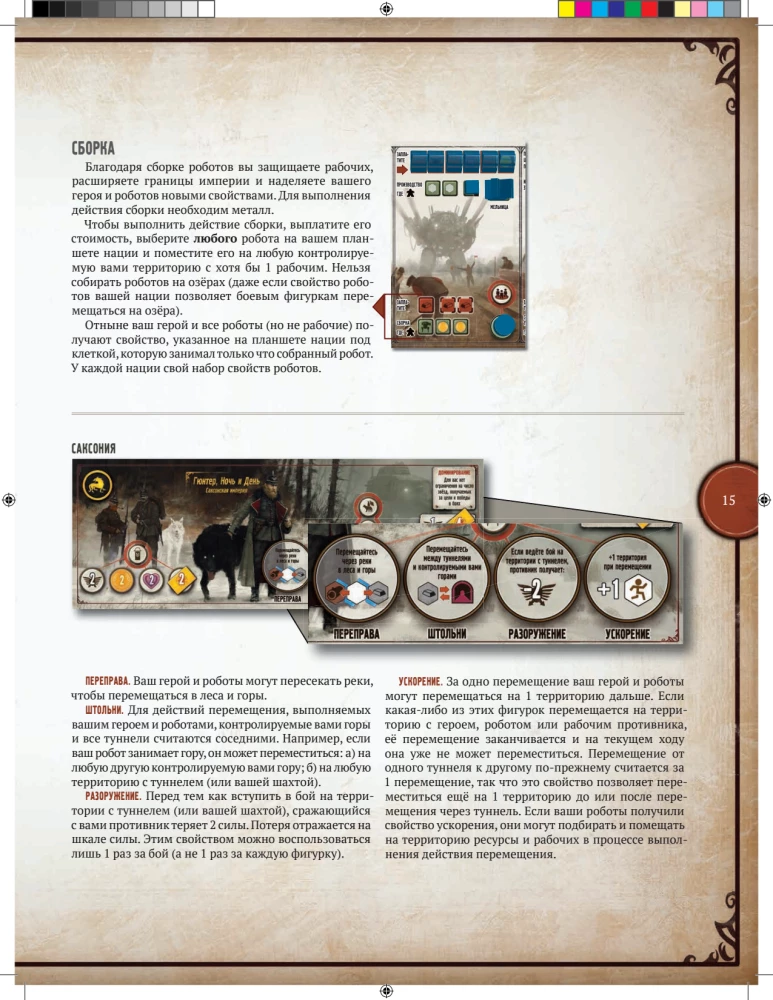
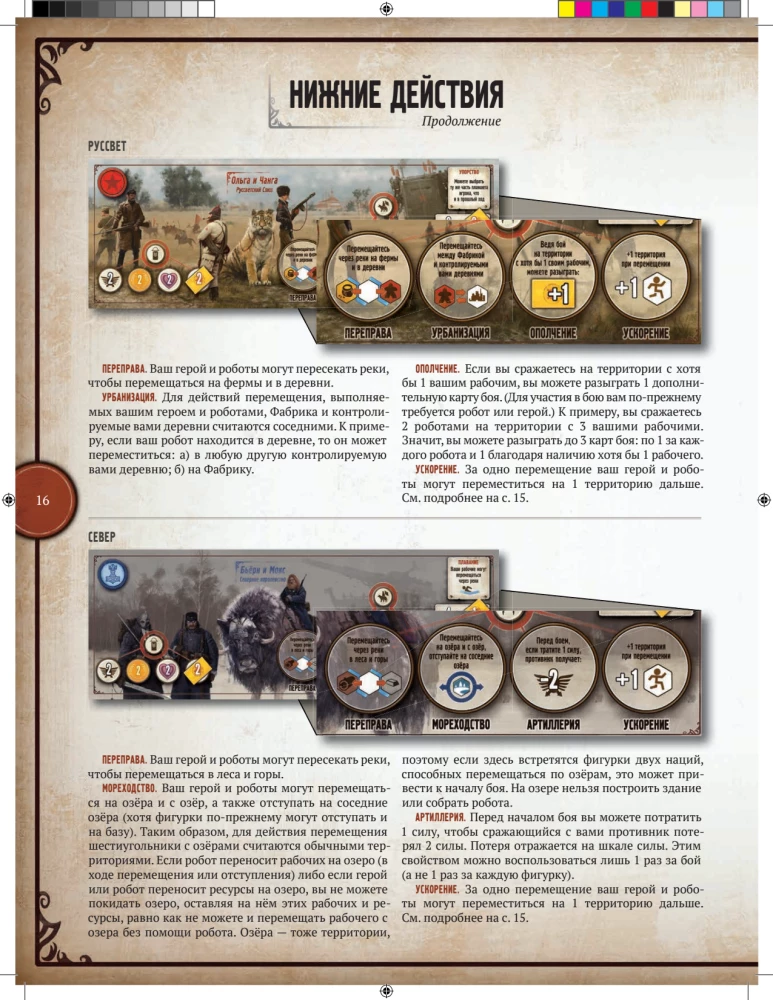
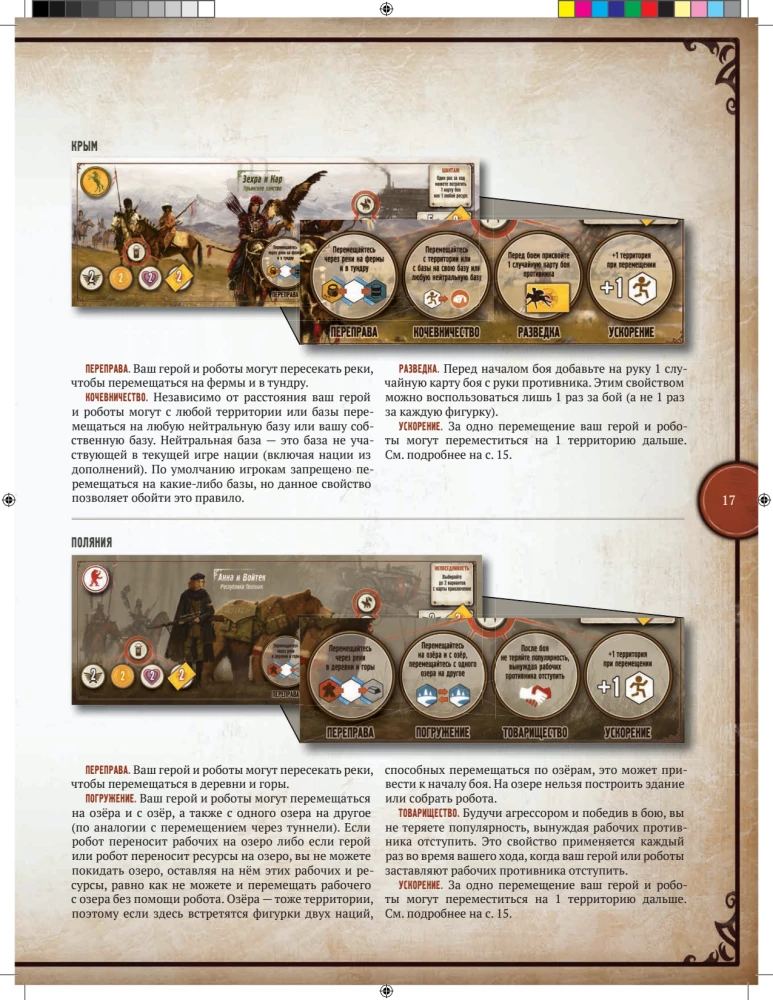
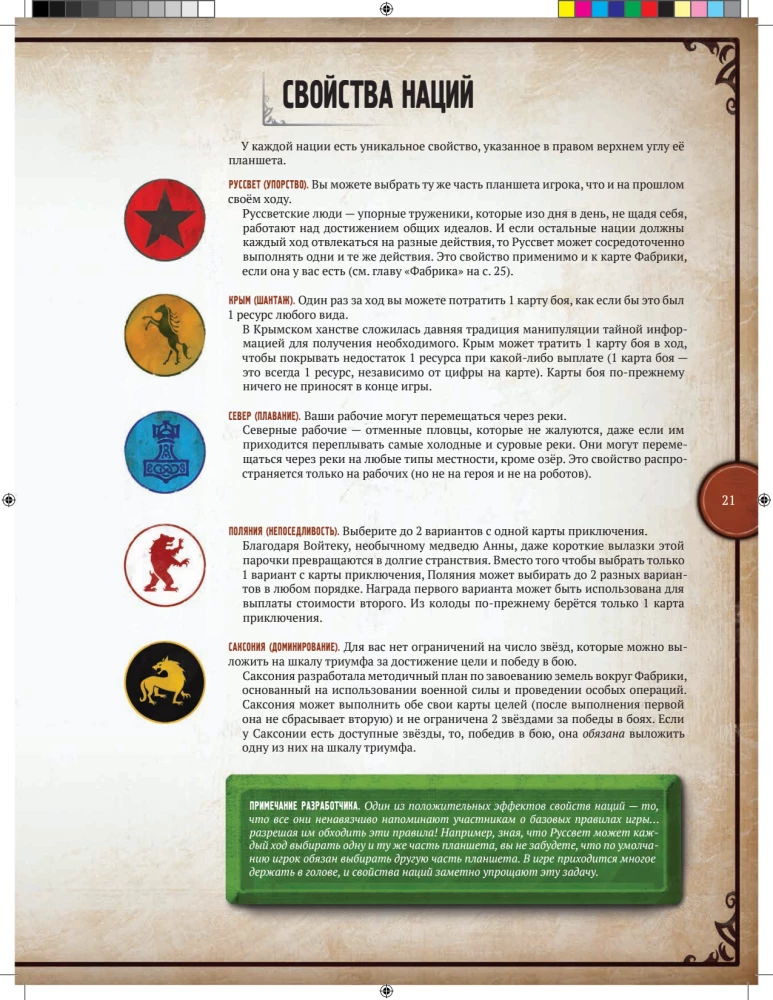
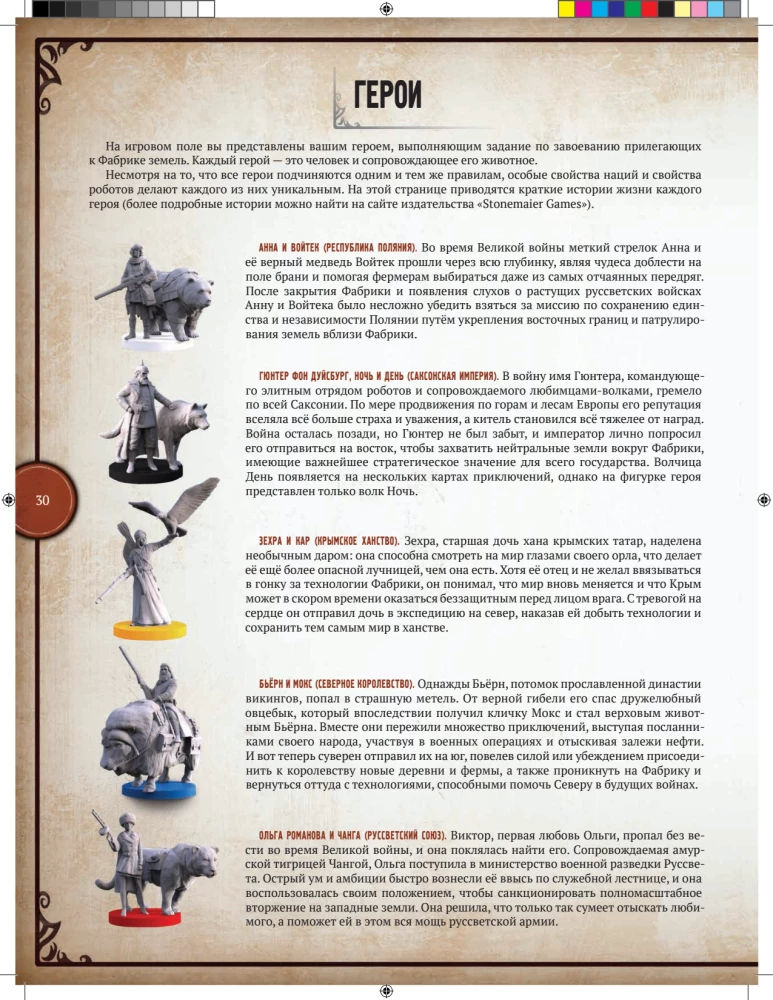
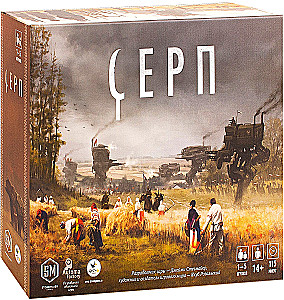
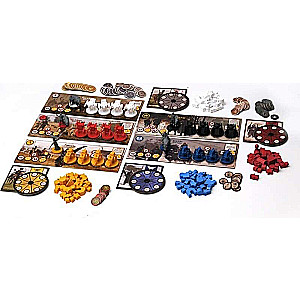
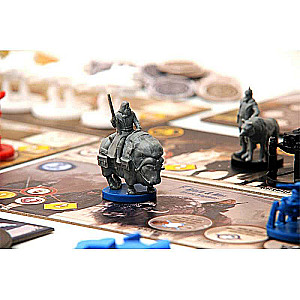
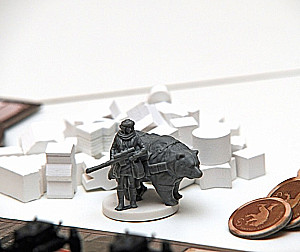
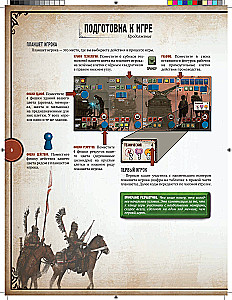
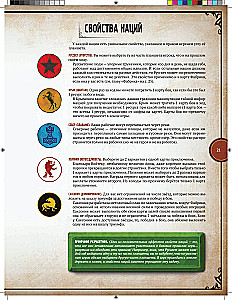
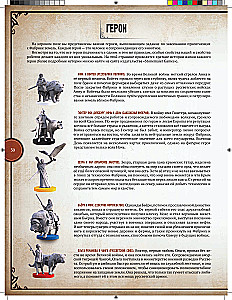
The game Scythe stands out, first and foremost, with its superb design. The lush and intricately detailed illustrations on the boards and cards look like real paintings, made in the spirit of socialist realism. Although this realism is somewhat specific - alongside peasants in the fields or lumberjacks on the edge of the forest are gigantic robots that seem to have migrated from the tabletop game Battletech. The miniatures of the faction characters and robots are also made to a high standard. For combat glory and new territories, five factions will battle in Scythe: Northern Kingdom, Saxon Empire, Polania Republic, Crimean Khanate, and Rusvet Union. By choosing one of the factions, players receive all corresponding components. The faction leader is placed on the board in the starting position. Each faction and its leader possess unique abilities and starting resources.
Gameplay
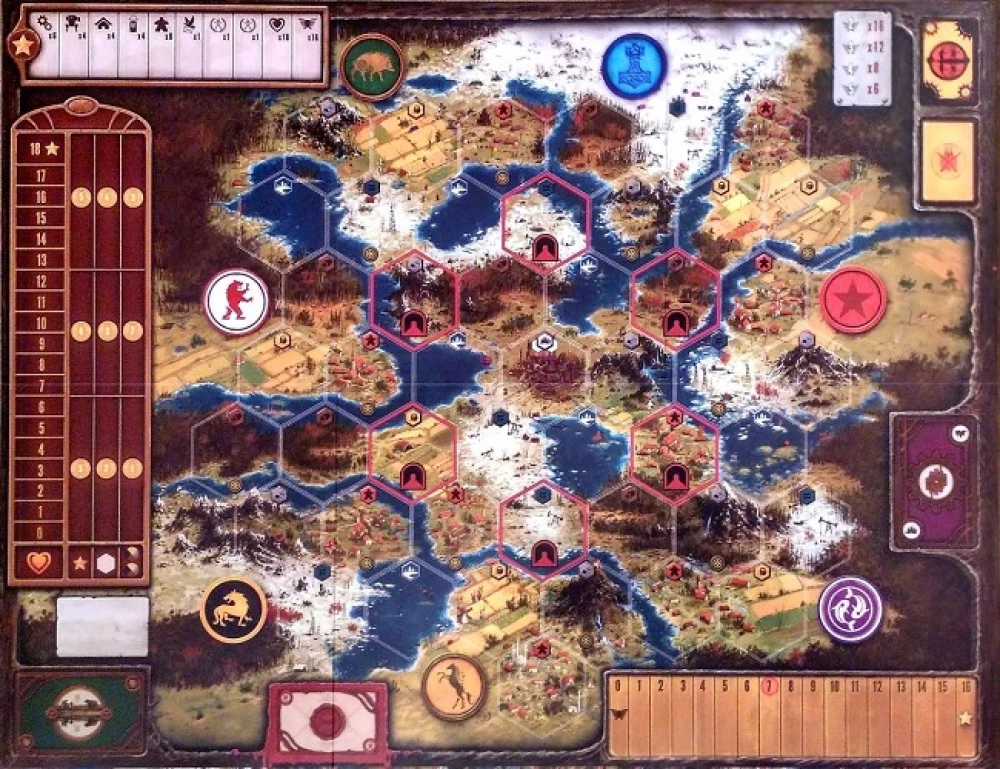
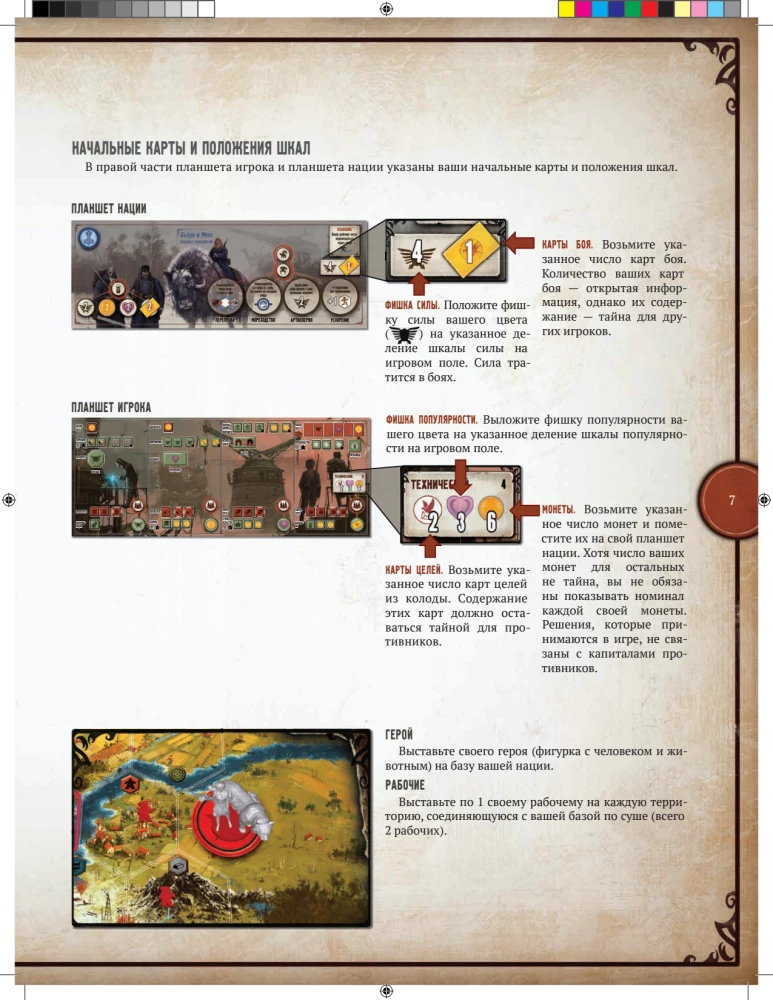
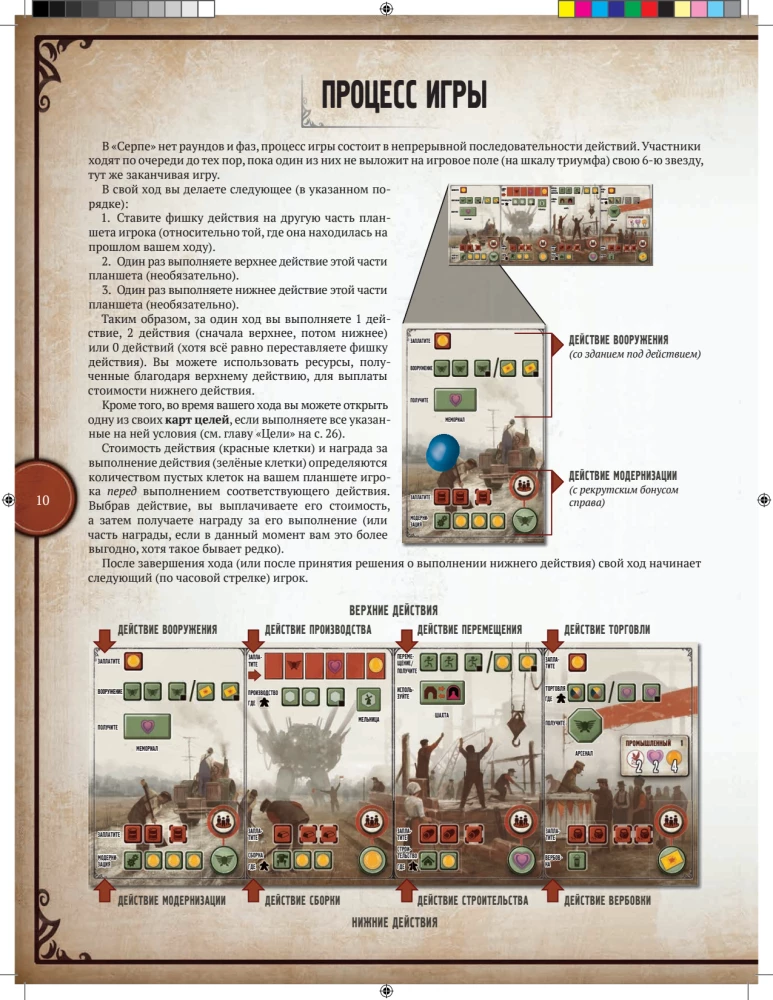
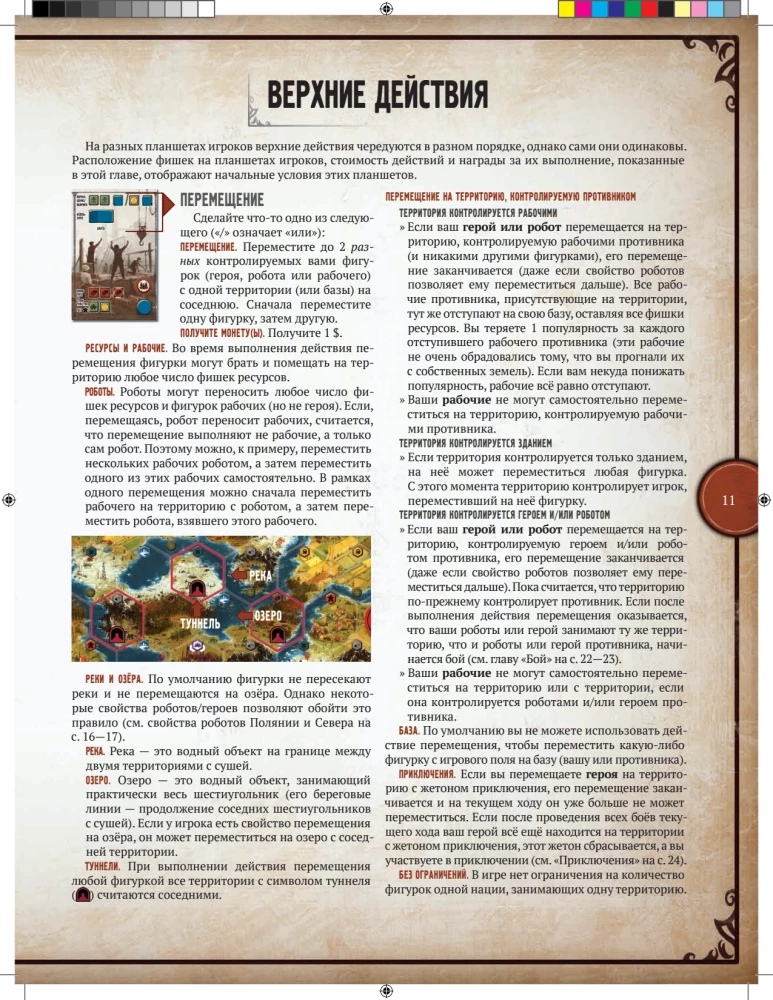
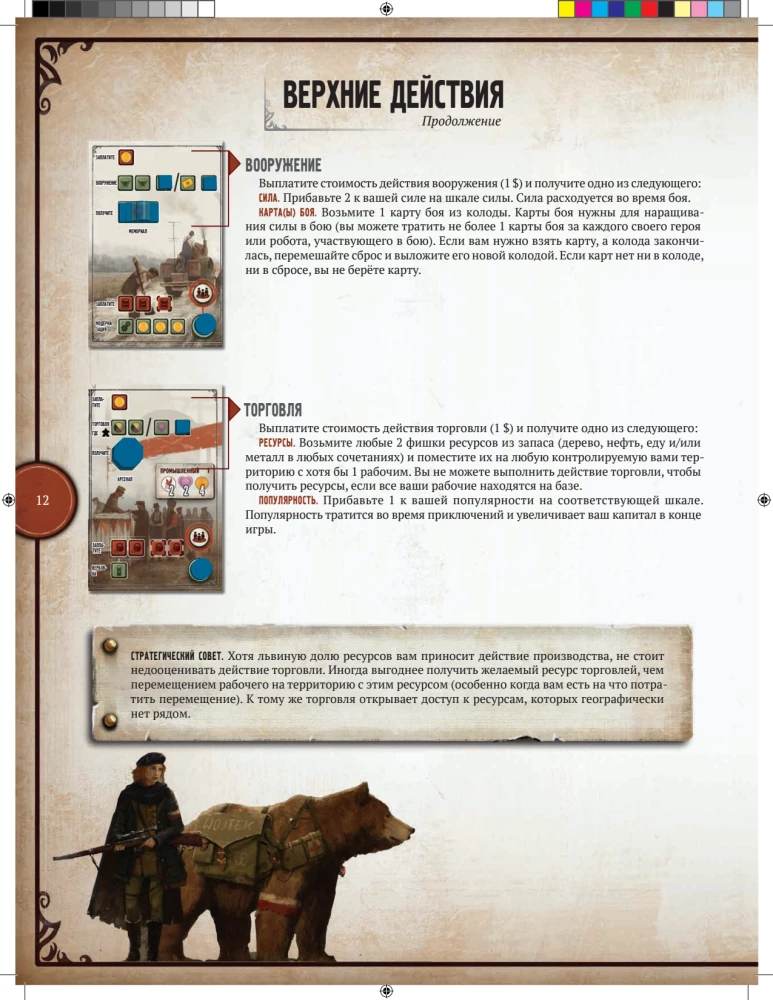
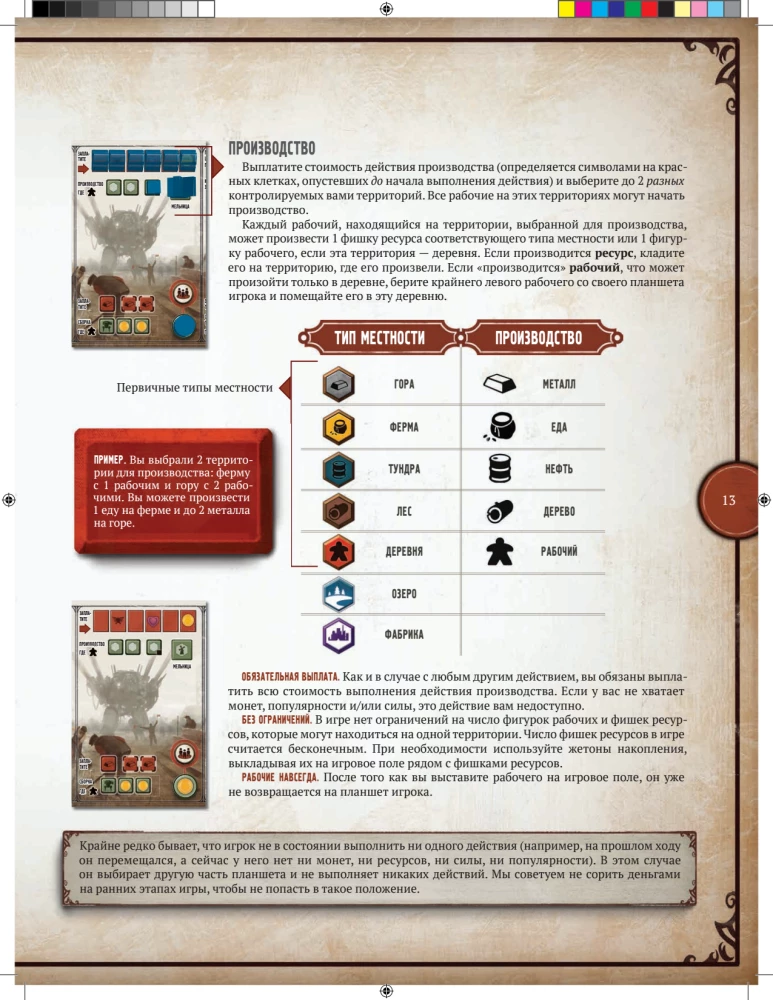
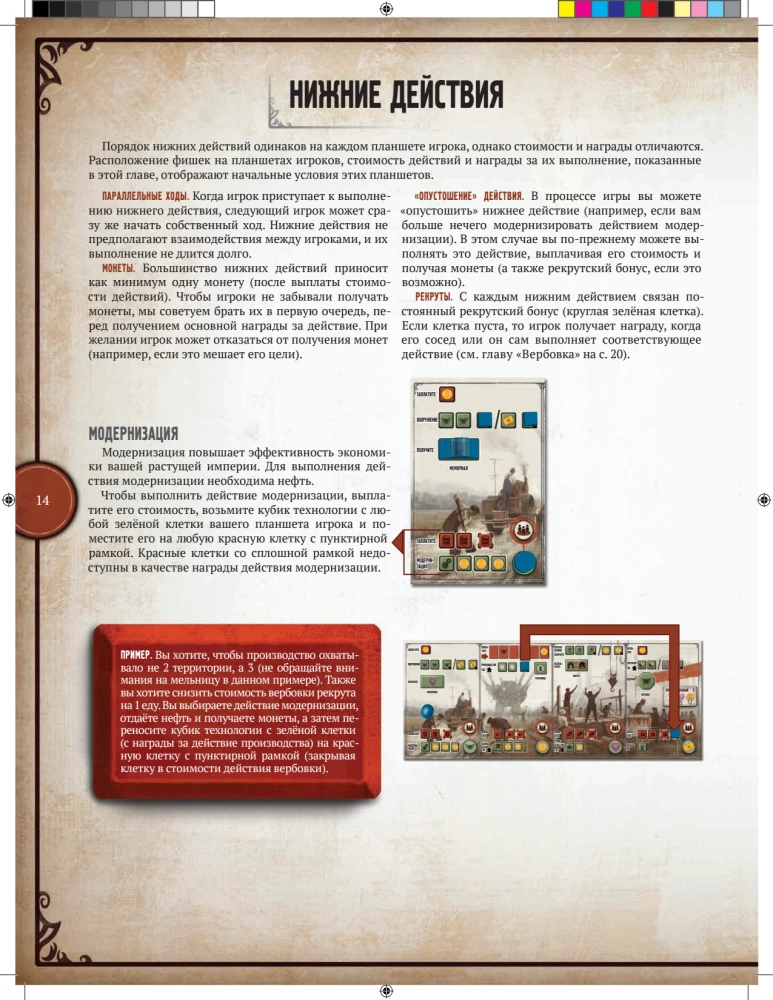
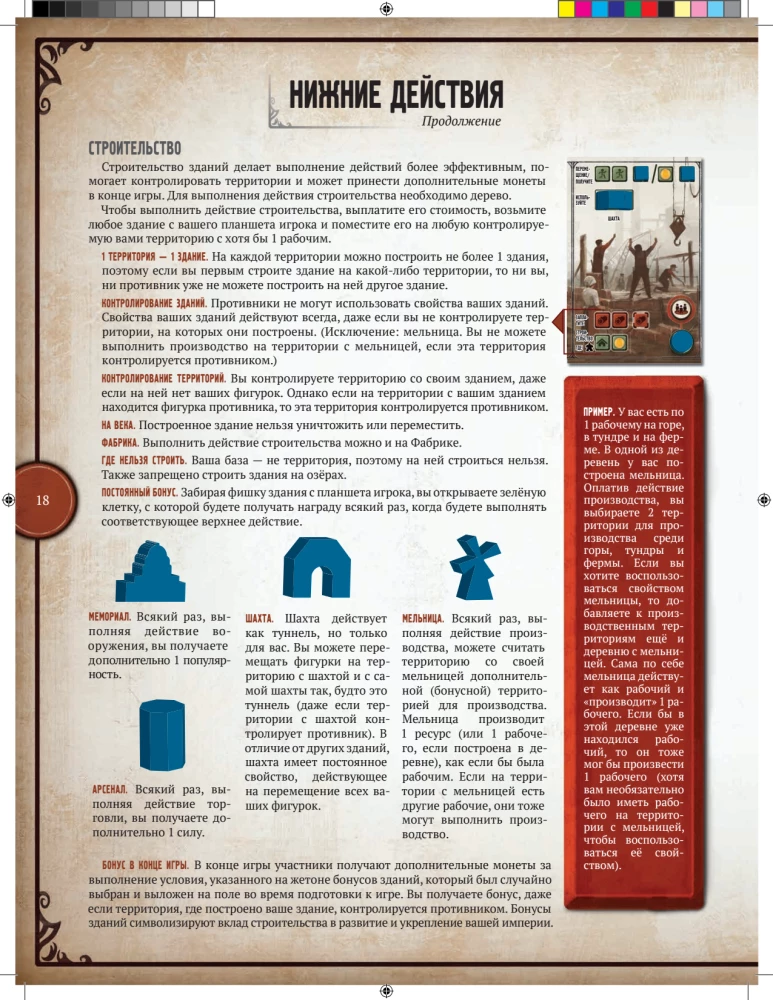
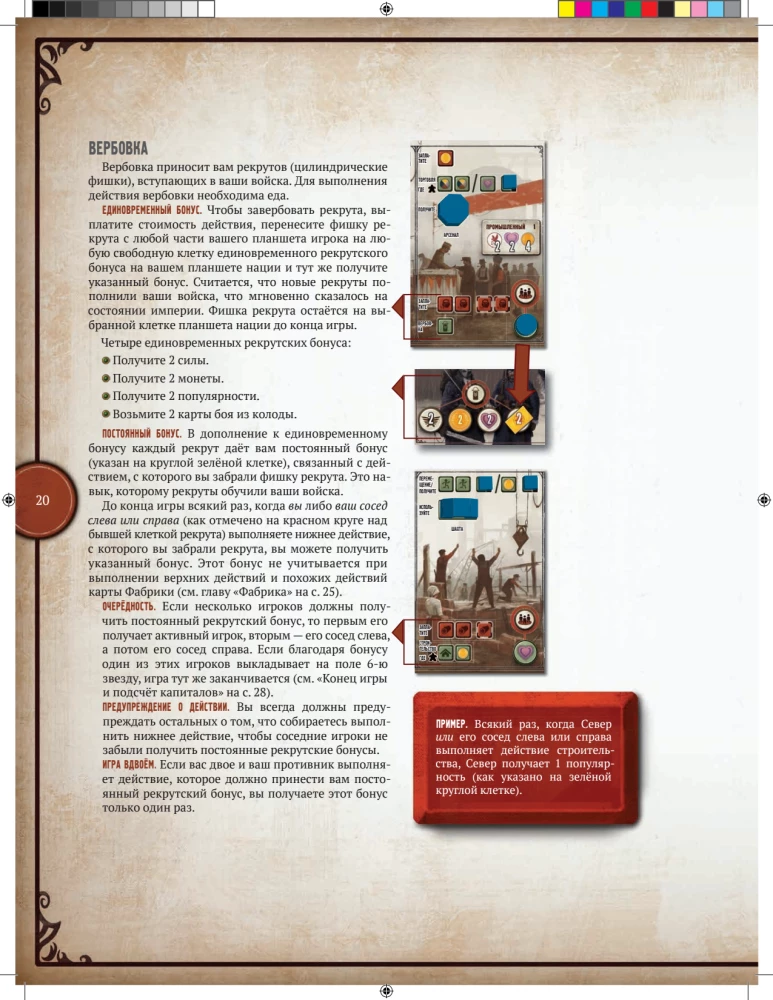
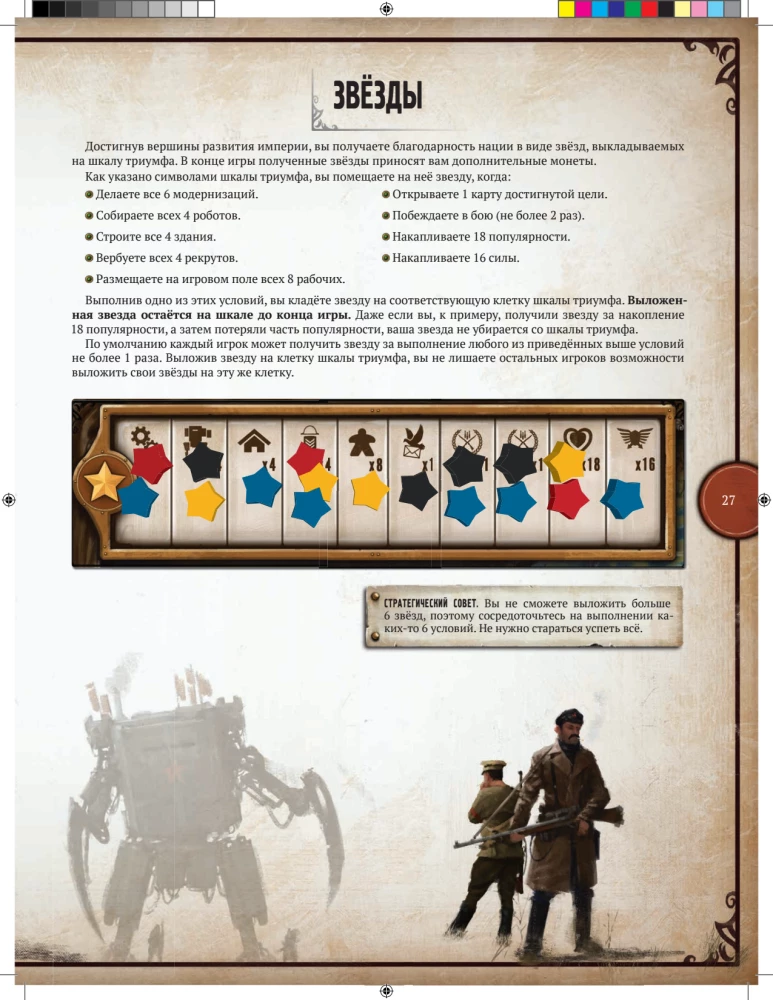
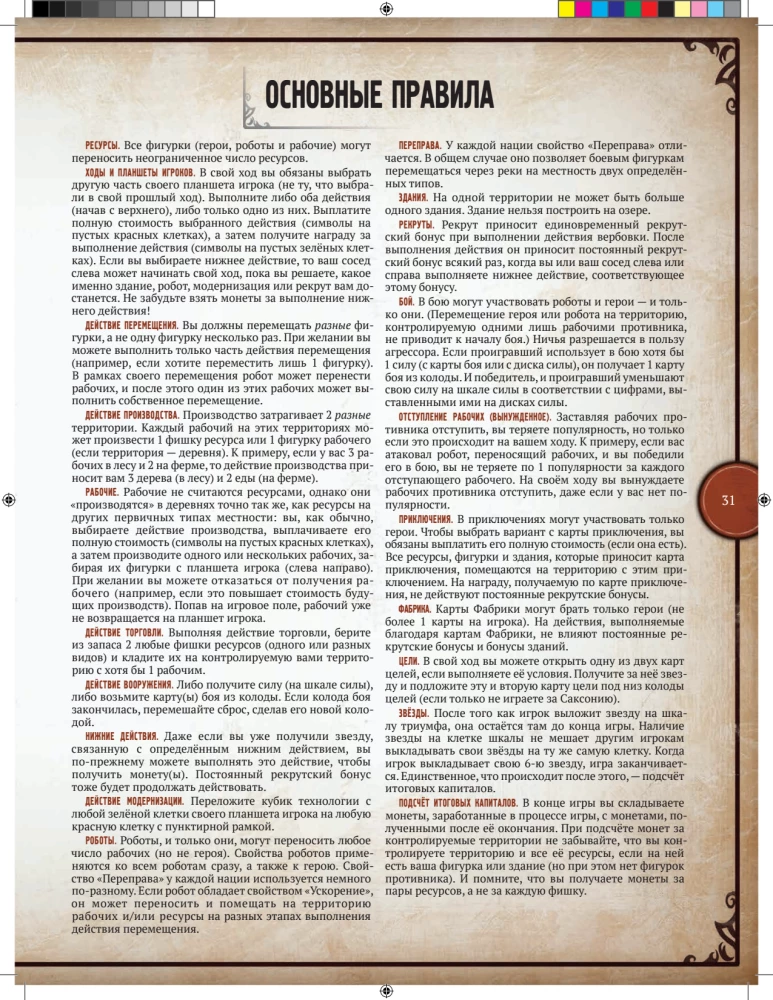
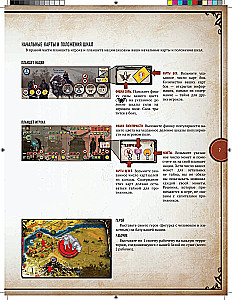
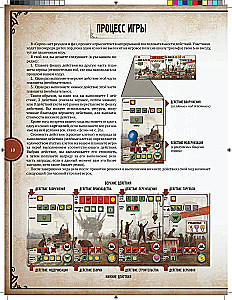
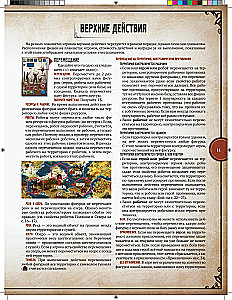
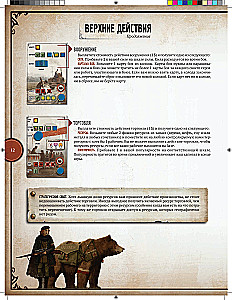
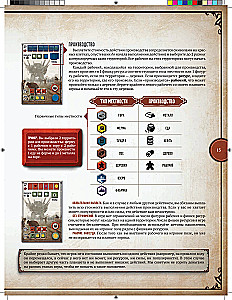
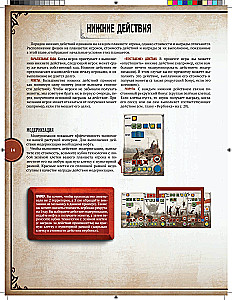
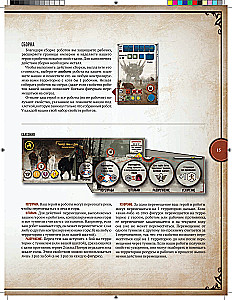
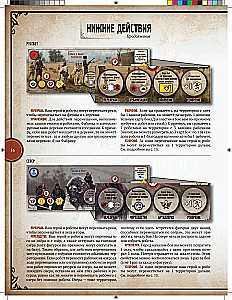
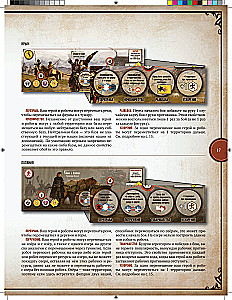
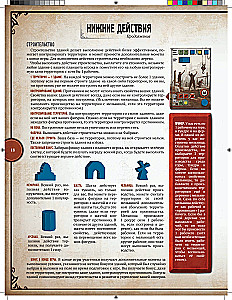
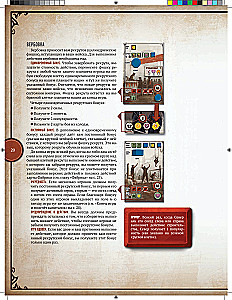
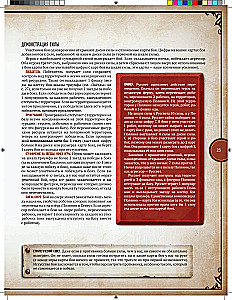
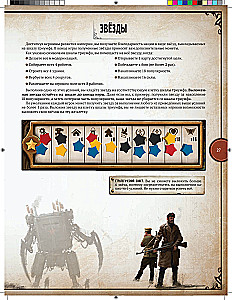
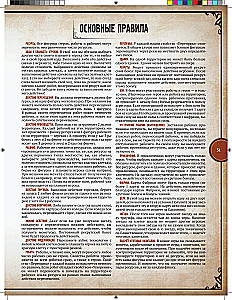
In Scythe, there is no division into rounds or phases: players simply take turns, and each turn, a player performs one or two actions indicated on their personal board. The key mechanic of Scythe is focused on the players' boards. Each player’s board is divided into 4 sections, each containing a top action and a bottom action. First, the player chooses the desired section of the board, then announces which action they will perform - the top, the bottom, or both. By paying the required cost (coins, resources) to the bank, a player can: move a character or robot around the board, accumulate military strength (recorded on the corresponding track), buy resources (food, wood, metal, oil), produce a resource or a new worker, increase popularity among the population (marked on the corresponding track), build a robot or a building, and more. If after moving a robot or character, they land on enemy territory, a battle occurs.
Features
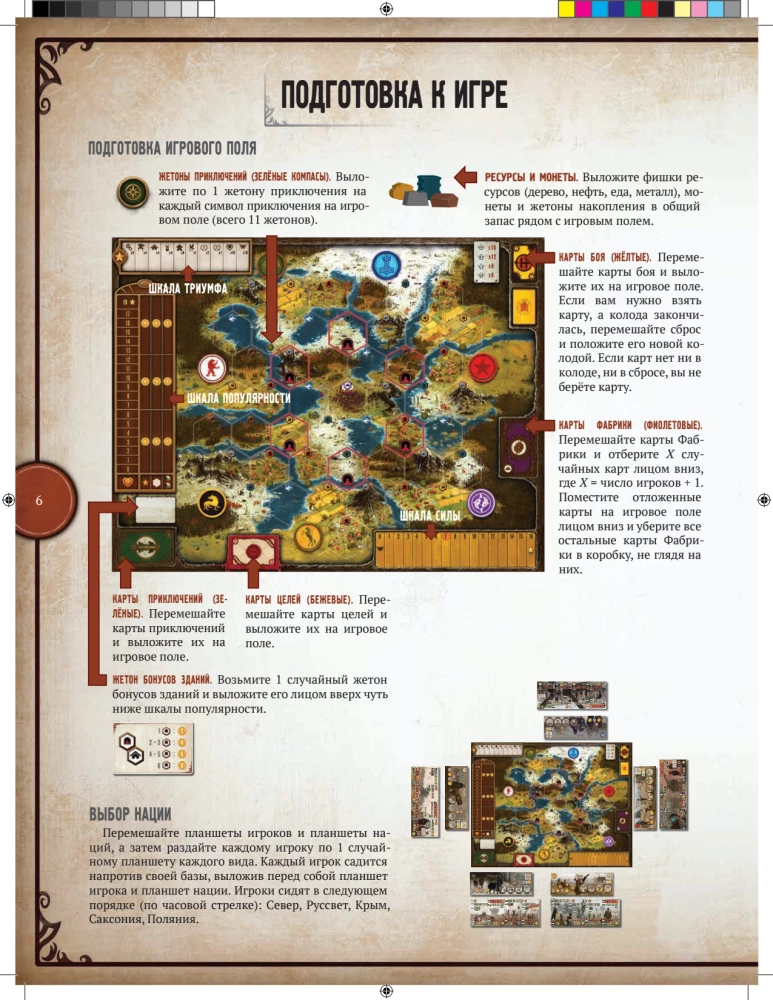
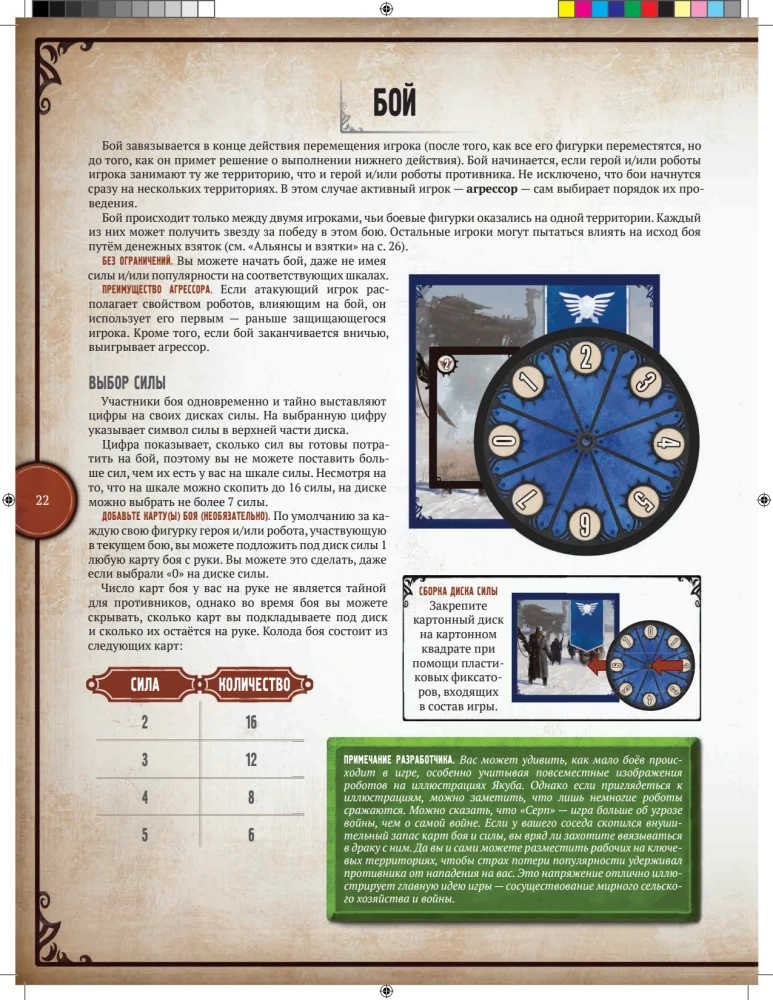
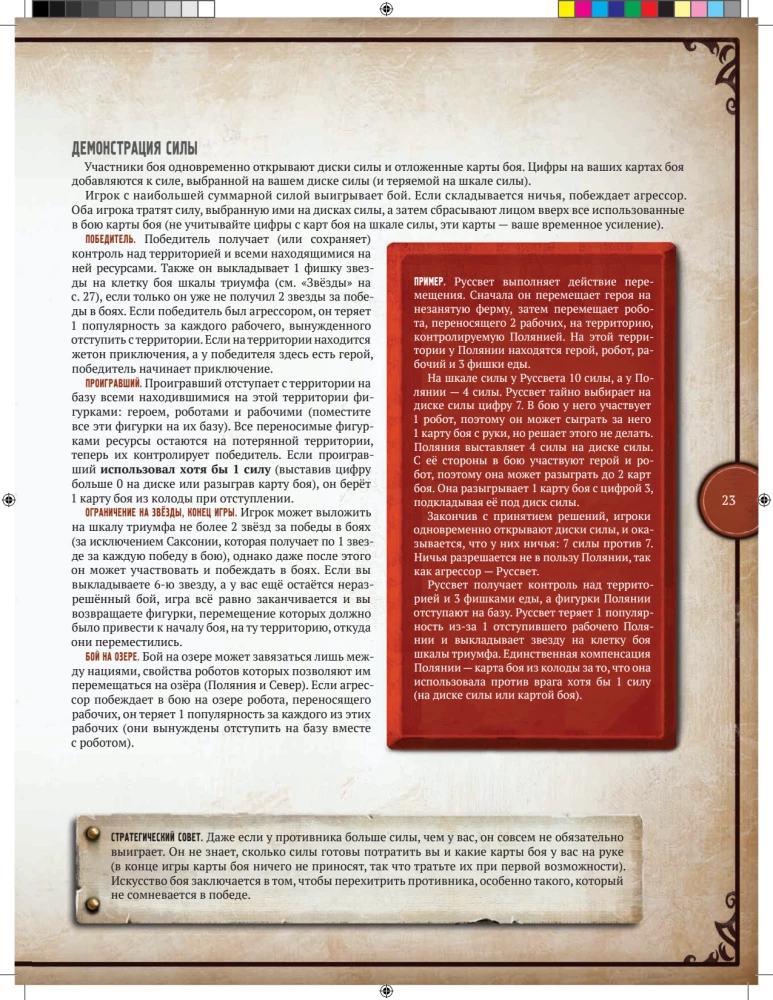
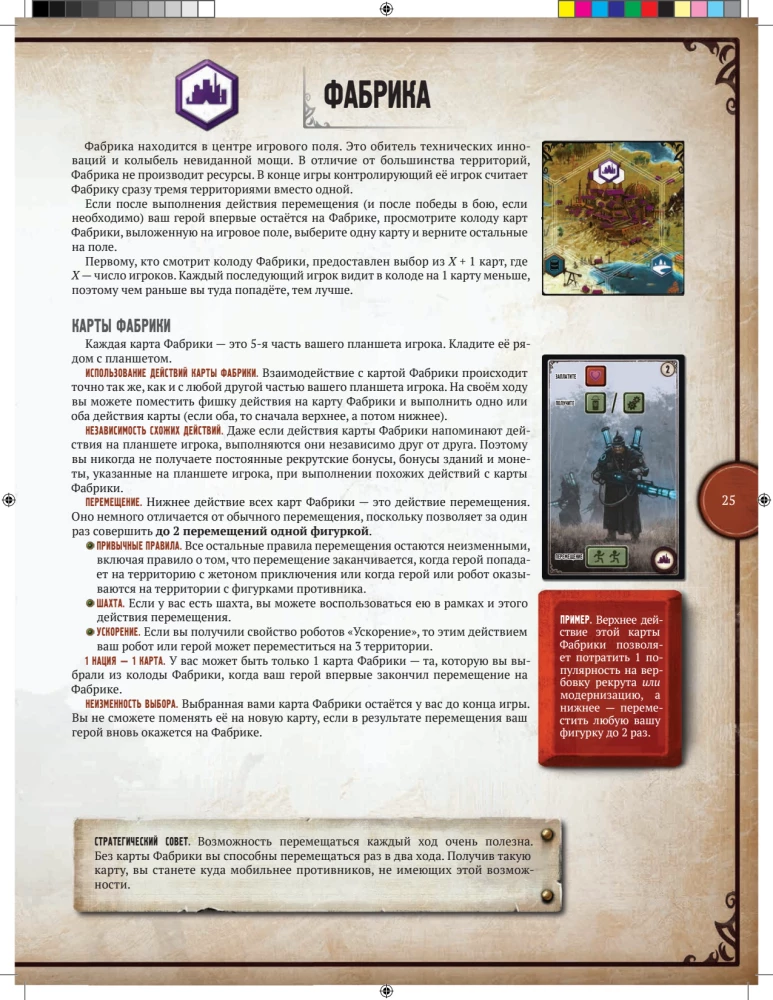
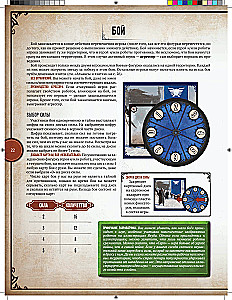
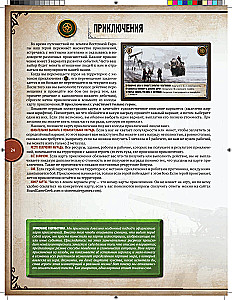
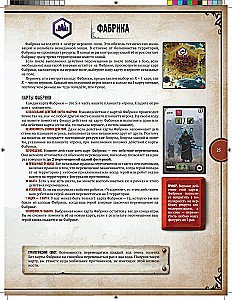
It should be noted that battles in Scythe play a very small role. Players secretly spend accumulated power points (marked on a special dial) and can optionally add battle cards with additional power points. By comparing values, players determine the winner. If a character ends up on the same space as an encounter token, they draw an encounter card and choose one of the game effects. When a character reaches the central space on the "Factory" board, they can obtain the corresponding card that provides a new unique action in addition to those indicated on the player's board.
Objective of the Game
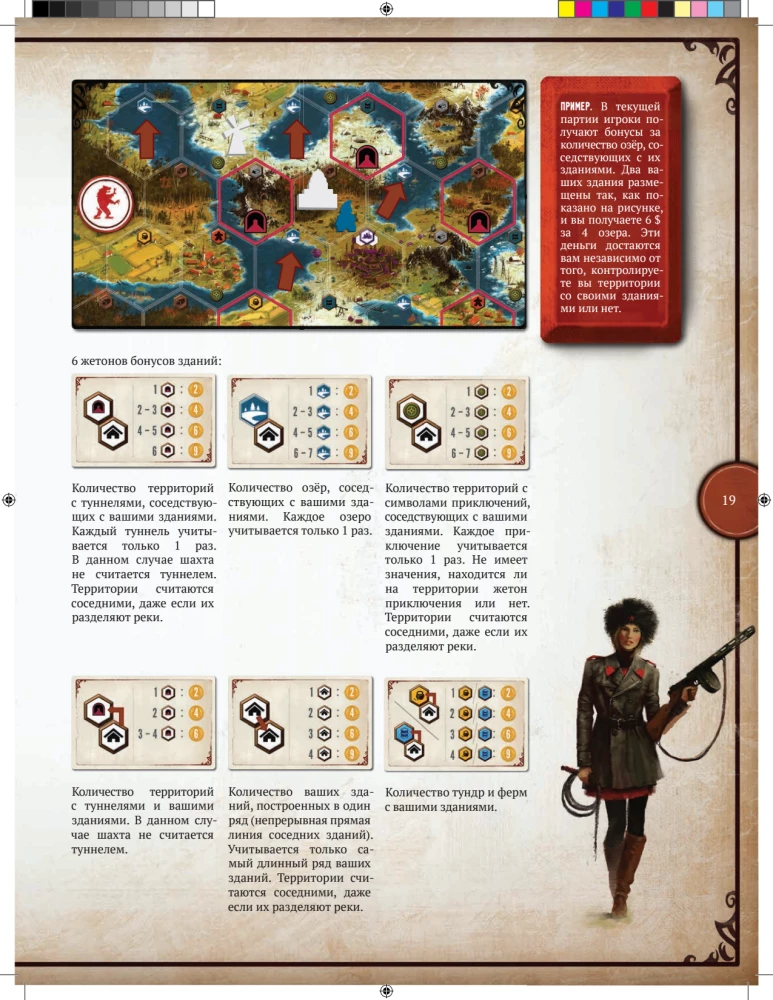
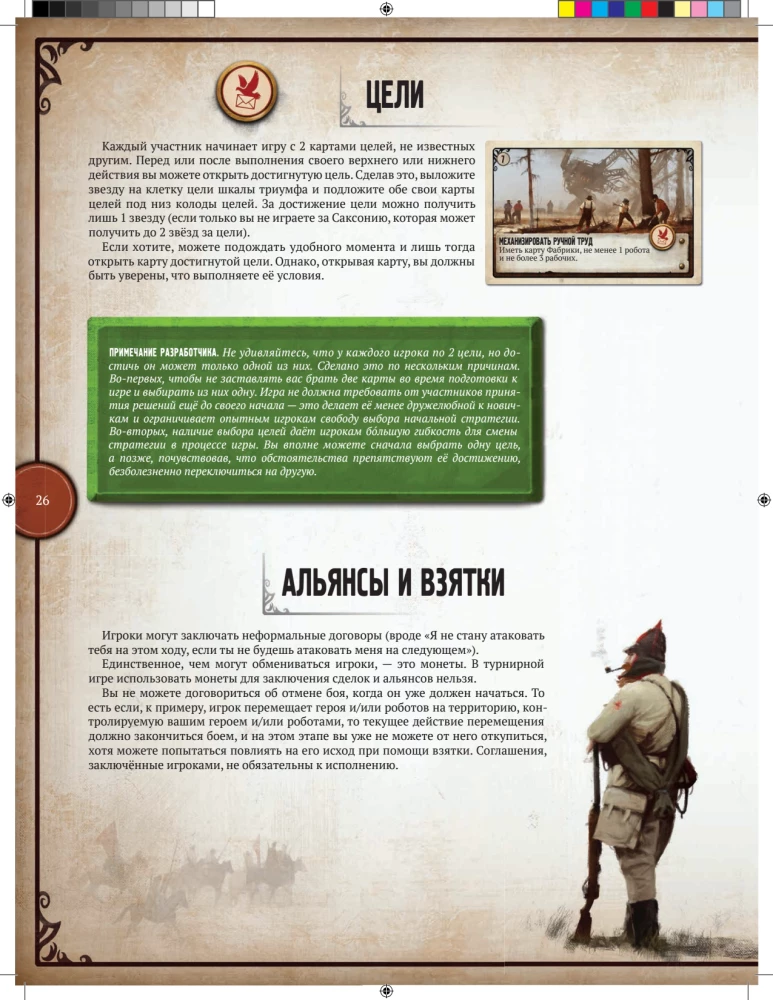
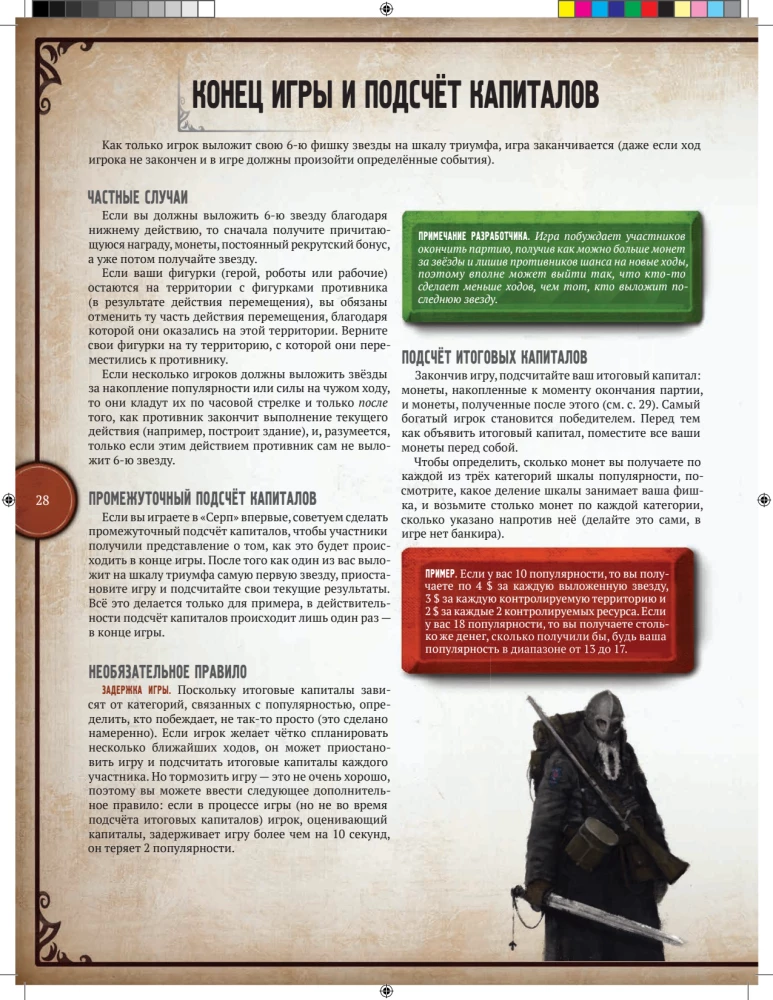
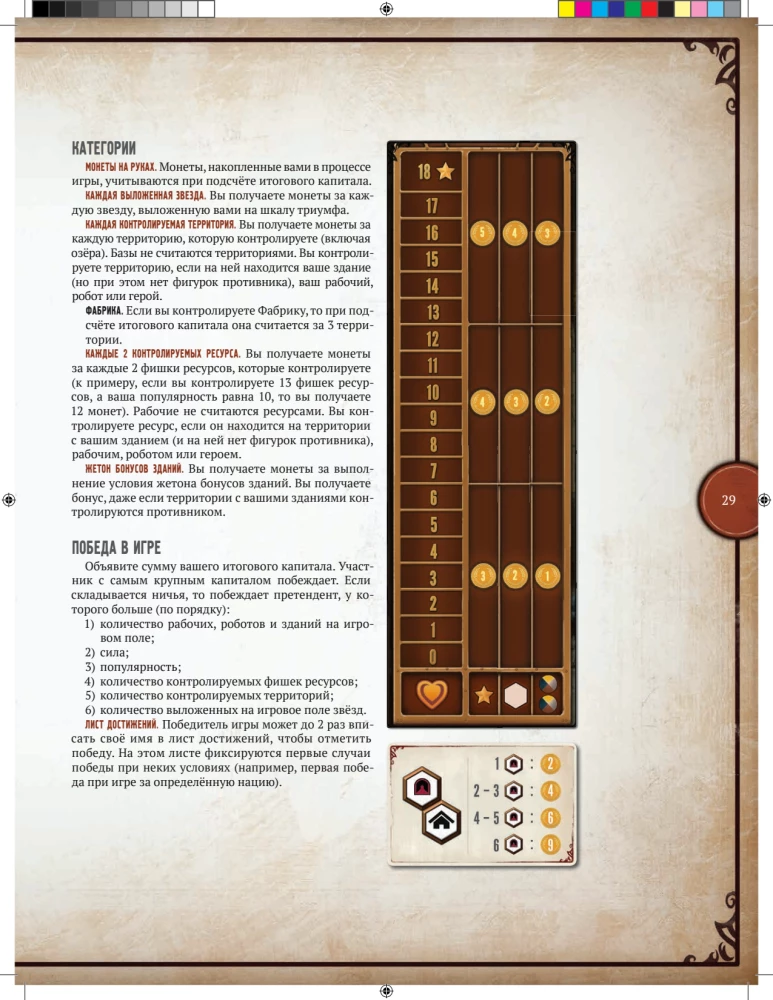
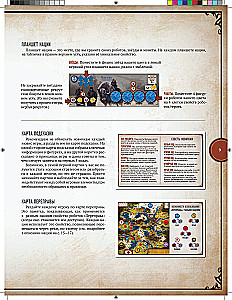
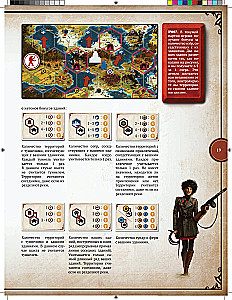
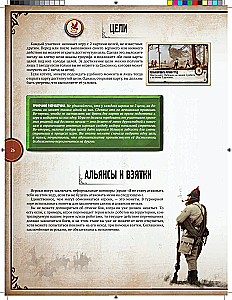
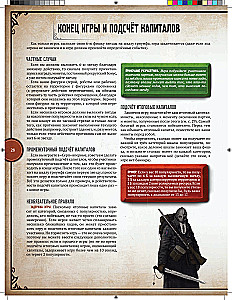
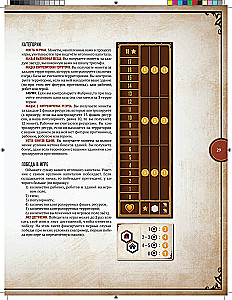
To collect as many coins as possible. In addition to earning coins during the game, they are also awarded for accumulated resources, controlled spaces on the board, and star tokens, which players earn for achieving various results during the game, such as building all four robots, gaining 16 power points, fulfilling conditions on the objective card, winning a battle, and so on. Importantly, both stars, resources, and controlled territories will yield more coins the higher the popularity level of the faction. After the final tally of points, the winner is determined.
Contents
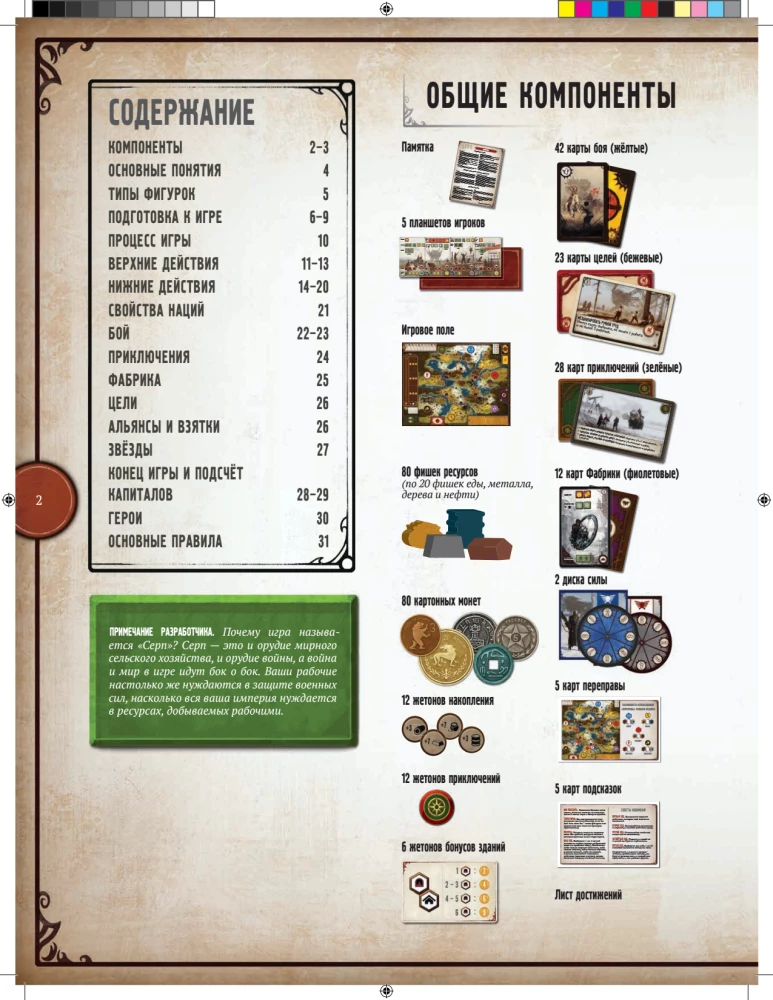
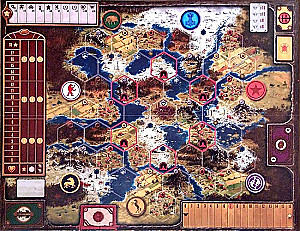
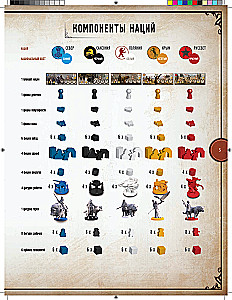
• game board • 42 battle cards • 23 objective cards • 28 encounter cards
• 12 factory cards • 5 player boards • 80 resource tokens • 3 power tracks
• 12 multiplication tokens • 80 coins • 12 encounter tokens • 6 bonus cards
• 5 reference cards • 5 faction boards • 5 faction pieces • 5 popularity tokens
• 5 power tokens • 30 star tokens • 20 building tokens • 20 recruit tokens
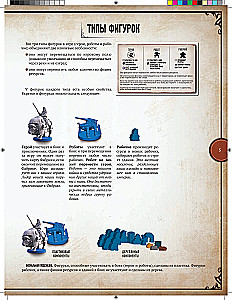
• 20 robot miniatures • 5 leader miniatures • 40 worker tokens • 30 technology tokens • game rules.
Game duration: up to 115 minutes
Number of players: 1 to 5
Five factions battling for new territories
The game Scythe stands out, first and foremost, with its superb design. The lush and intricately detailed illustrations on the boards and cards look like real paintings, made in the spirit of socialist realism. Although this realism is somewhat specific - alongside peasants in the fields or lumberjacks on the edge of the forest are gigantic robots that seem to have migrated from the tabletop game Battletech. The miniatures of the faction characters and robots are also made to a high standard. For combat glory and new territories, five factions will battle in Scythe: Northern Kingdom, Saxon Empire, Polania Republic, Crimean Khanate, and Rusvet Union. By choosing one of the factions, players receive all corresponding components. The faction leader is placed on the board in the starting position. Each faction and its leader possess unique abilities and starting resources.
Gameplay
In Scythe, there is no division into rounds or phases: players simply take turns, and each turn, a player performs one or two actions indicated on their personal board. The key mechanic of Scythe is focused on the players' boards. Each player’s board is divided into 4 sections, each containing a top action and a bottom action. First, the player chooses the desired section of the board, then announces which action they will perform - the top, the bottom, or both. By paying the required cost (coins, resources) to the bank, a player can: move a character or robot around the board, accumulate military strength (recorded on the corresponding track), buy resources (food, wood, metal, oil), produce a resource or a new worker, increase popularity among the population (marked on the corresponding track), build a robot or a building, and more. If after moving a robot or character, they land on enemy territory, a battle occurs.
Features
It should be noted that battles in Scythe play a very small role. Players secretly spend accumulated power points (marked on a special dial) and can optionally add battle cards with additional power points. By comparing values, players determine the winner. If a character ends up on the same space as an encounter token, they draw an encounter card and choose one of the game effects. When a character reaches the central space on the "Factory" board, they can obtain the corresponding card that provides a new unique action in addition to those indicated on the player's board.
Objective of the Game
To collect as many coins as possible. In addition to earning coins during the game, they are also awarded for accumulated resources, controlled spaces on the board, and star tokens, which players earn for achieving various results during the game, such as building all four robots, gaining 16 power points, fulfilling conditions on the objective card, winning a battle, and so on. Importantly, both stars, resources, and controlled territories will yield more coins the higher the popularity level of the faction. After the final tally of points, the winner is determined.
Contents
• game board • 42 battle cards • 23 objective cards • 28 encounter cards
• 12 factory cards • 5 player boards • 80 resource tokens • 3 power tracks
• 12 multiplication tokens • 80 coins • 12 encounter tokens • 6 bonus cards
• 5 reference cards • 5 faction boards • 5 faction pieces • 5 popularity tokens
• 5 power tokens • 30 star tokens • 20 building tokens • 20 recruit tokens
• 20 robot miniatures • 5 leader miniatures • 40 worker tokens • 30 technology tokens • game rules.
Game duration: up to 115 minutes
Number of players: 1 to 5
Brand: Crowd Games
Age restrictions: 14+
Year of publication: 2018
EAN: 4627119440105
Size: 365х300x90 mm
Weight: 3374 g
ID: 468155
Sold out
€ 139.99
Sold out
€ 139.99