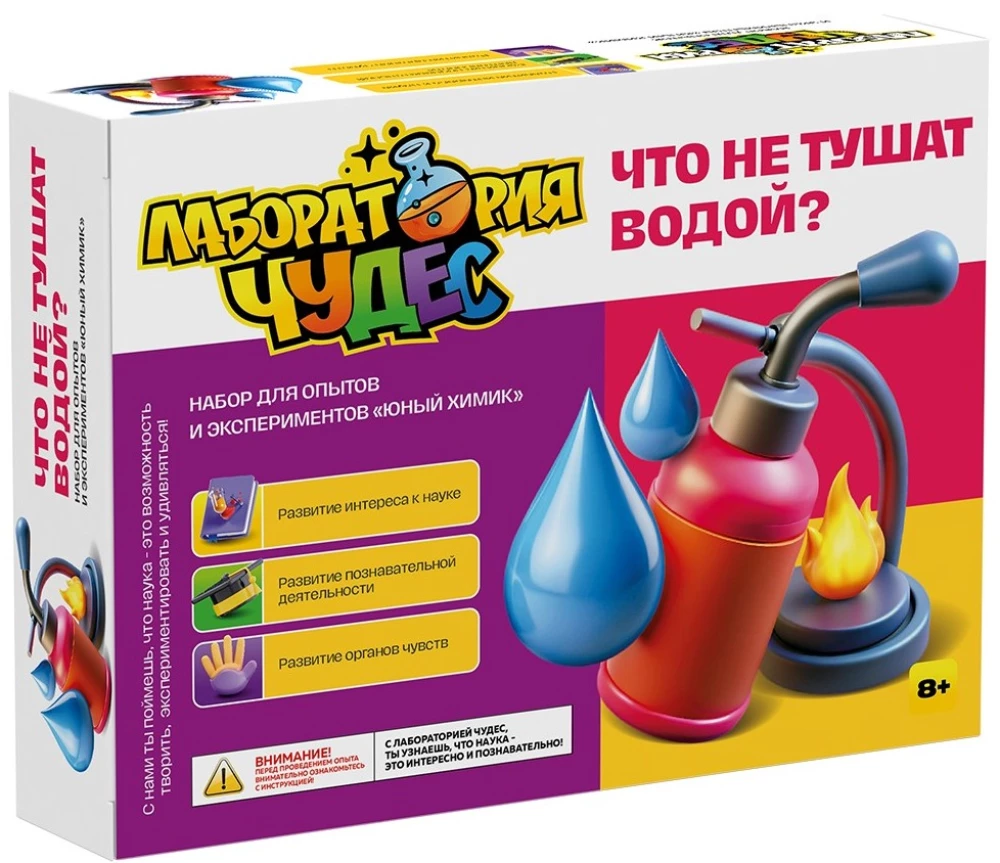
Experiment and Experiment Set - Laboratory of Wonders. What Is Not Extinguished by Water
Understanding fire means learning how to handle it. The experiment set "Young Chemist: What Is Not Extinguished by Water" is a chemical experiment with reagents that visually demonstrates why water is not suitable for every type of fire. The format...
of one study helps focus on the essence of the reaction and see the cause-and-effect relationship without distractions.
— Visual chemical experiment: the child observes how, under certain conditions, water enhances combustion. The theory of fire safety ceases to be abstract and turns into an understandable practical conclusion.
— Understanding the properties of substances: the experiment reveals how different materials interact with water and air. This approach forms a basic understanding of chemical reactions and types of combustion.
— Connection to real life: knowledge from the experiment can easily be transferred to everyday situations. The child begins to realize why there are different ways to extinguish a fire and how the classes of fires differ.
— Conscious interest in science: the format of a home laboratory develops observation, logic, and the ability to draw conclusions. One experiment is a deep dive into the process without information overload.
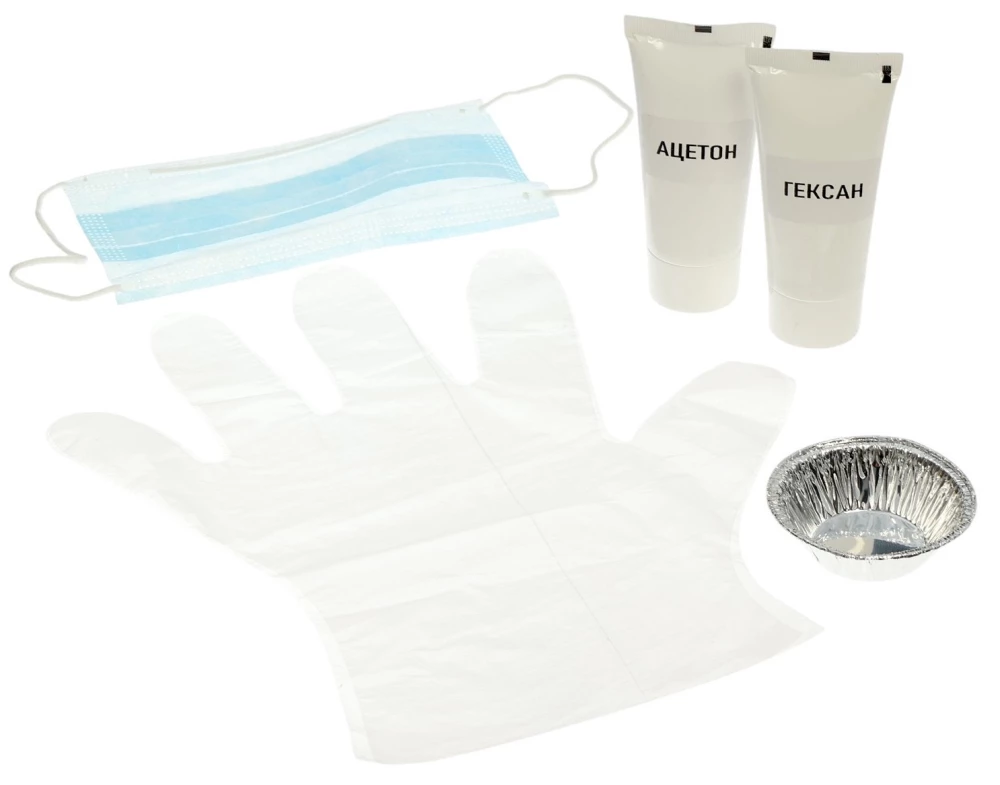
Included:
— Acetone;
— Hexane;
— Evaporation dish;
— Cellophane gloves;
— Protective mask.
— Visual chemical experiment: the child observes how, under certain conditions, water enhances combustion. The theory of fire safety ceases to be abstract and turns into an understandable practical conclusion.
— Understanding the properties of substances: the experiment reveals how different materials interact with water and air. This approach forms a basic understanding of chemical reactions and types of combustion.
— Connection to real life: knowledge from the experiment can easily be transferred to everyday situations. The child begins to realize why there are different ways to extinguish a fire and how the classes of fires differ.
— Conscious interest in science: the format of a home laboratory develops observation, logic, and the ability to draw conclusions. One experiment is a deep dive into the process without information overload.
Included:
— Acetone;
— Hexane;
— Evaporation dish;
— Cellophane gloves;
— Protective mask.
Brand: Visma
Series: Young Chemist
Age restrictions: 8+
EAN: 4627098965835
Size: 190х140х46 mm
Weight: 136 g
ID: 1737347
In stock
€ 6.30
Will be delivered to United States on 1 October (Th):
By courier
from € 38.94