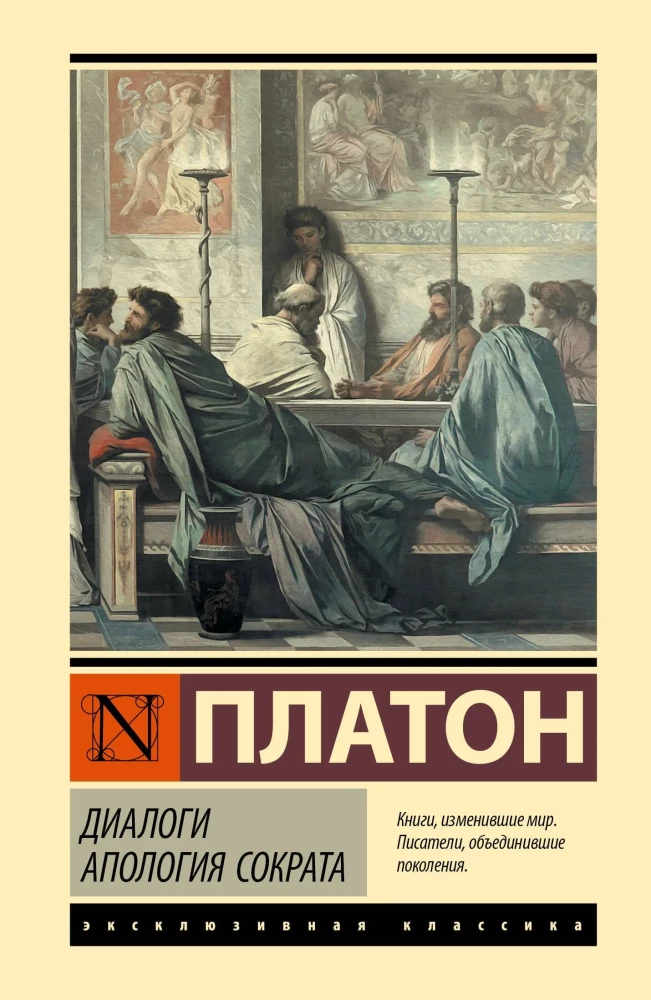

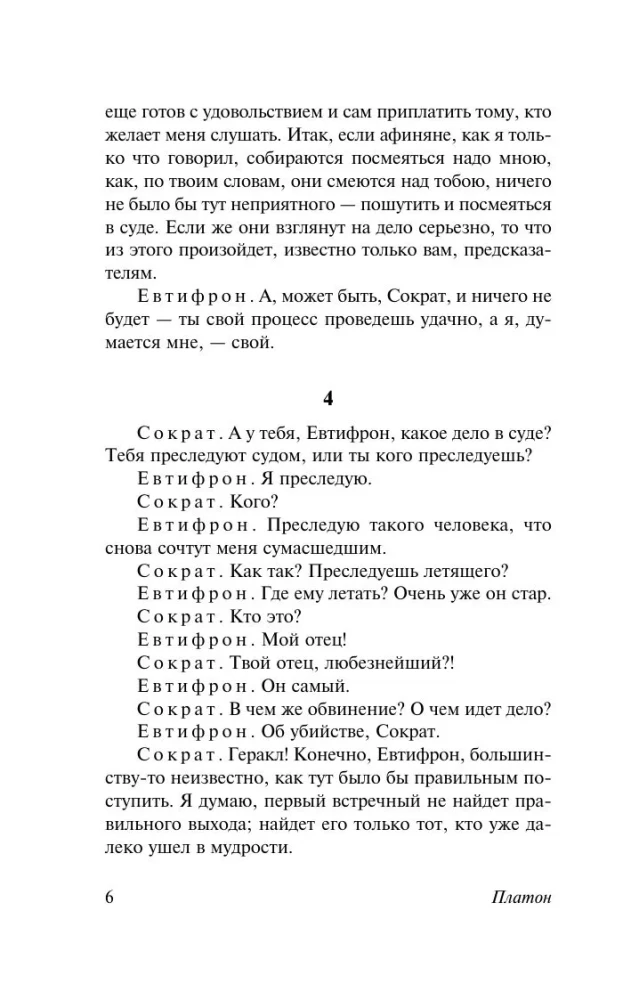
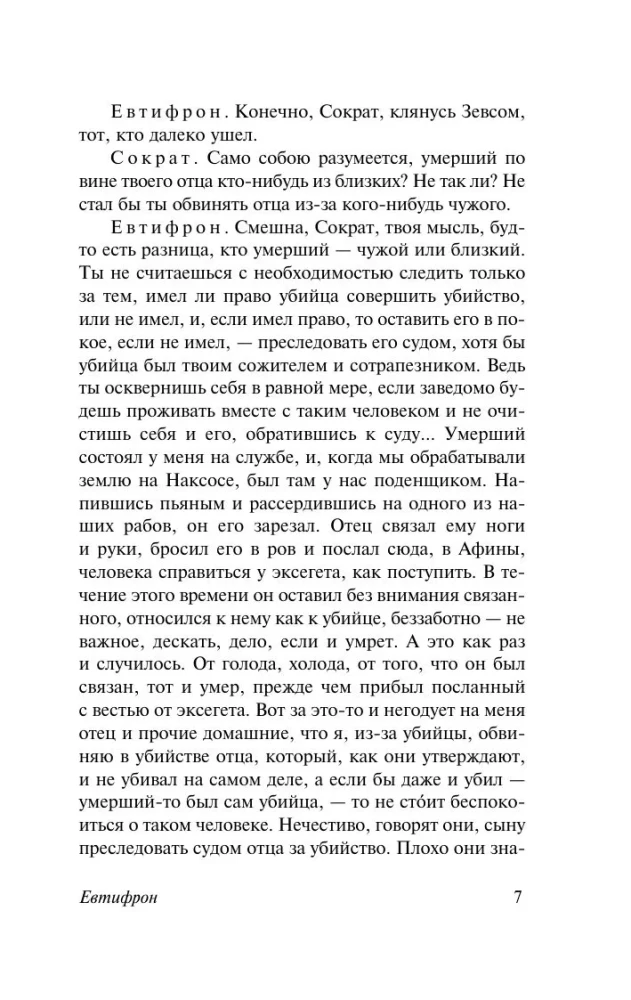
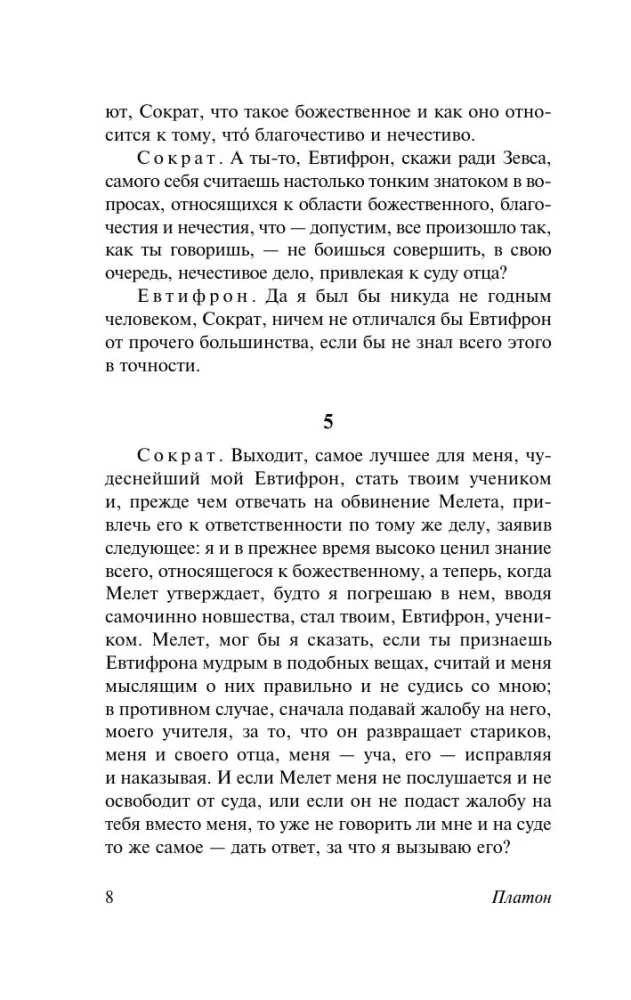
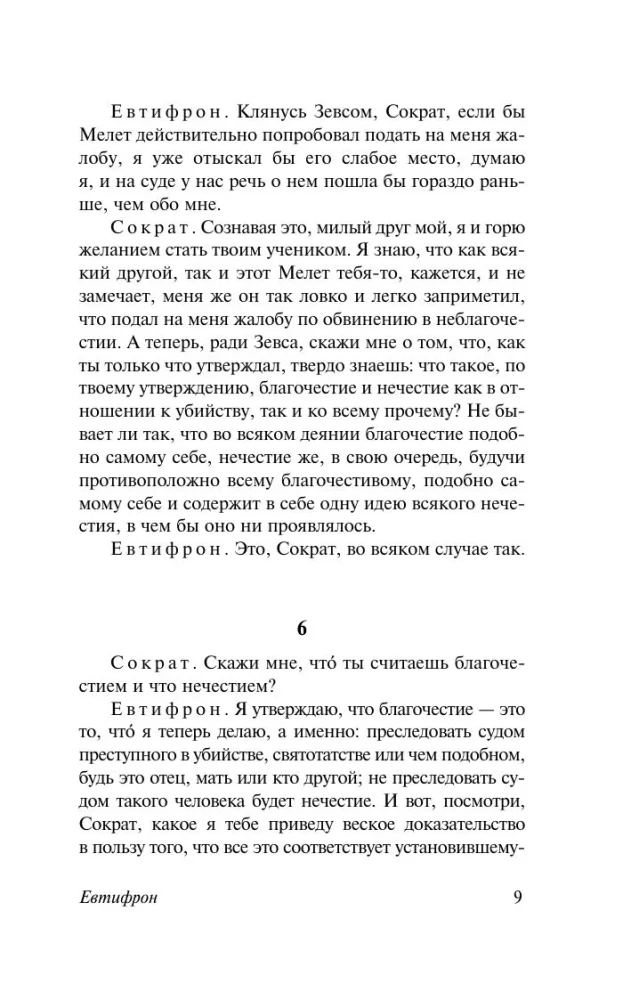
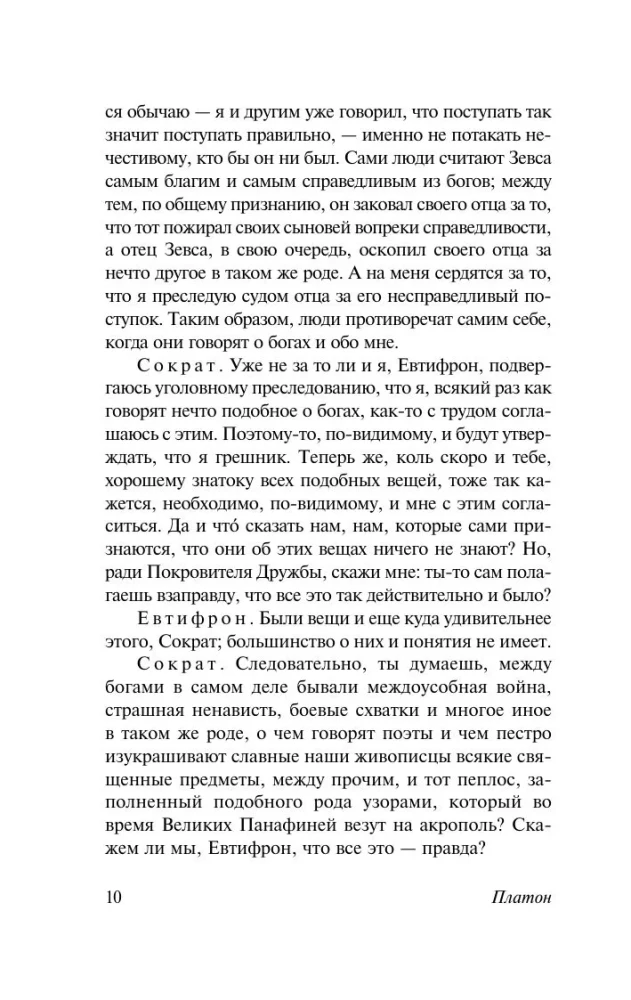
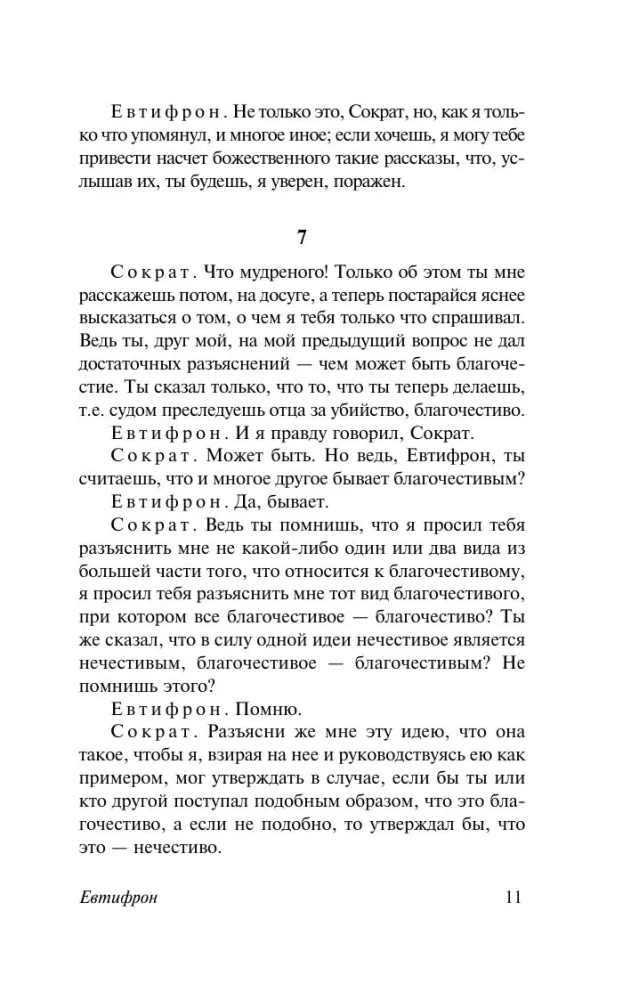
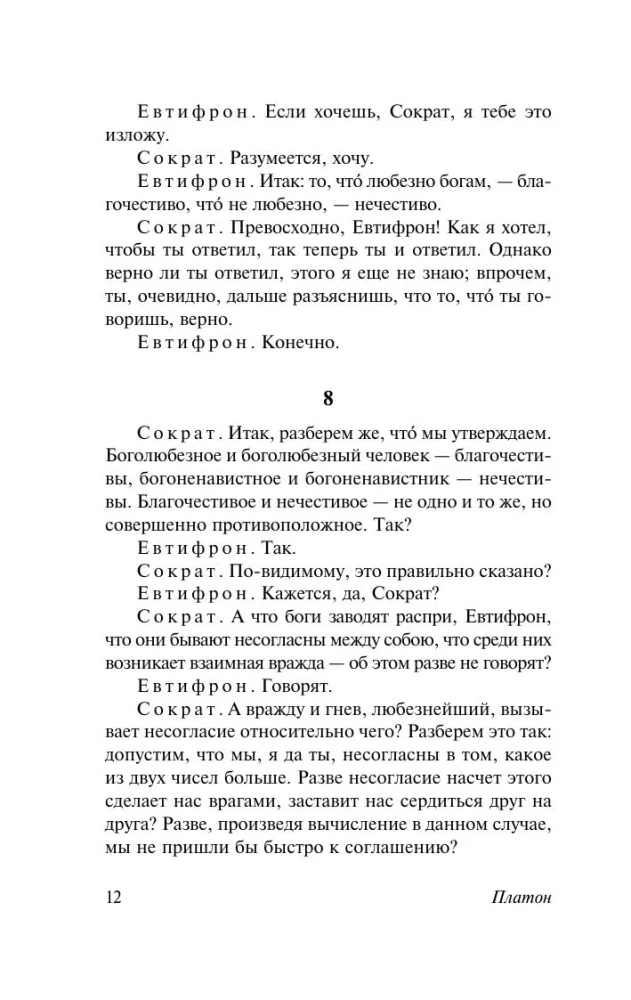
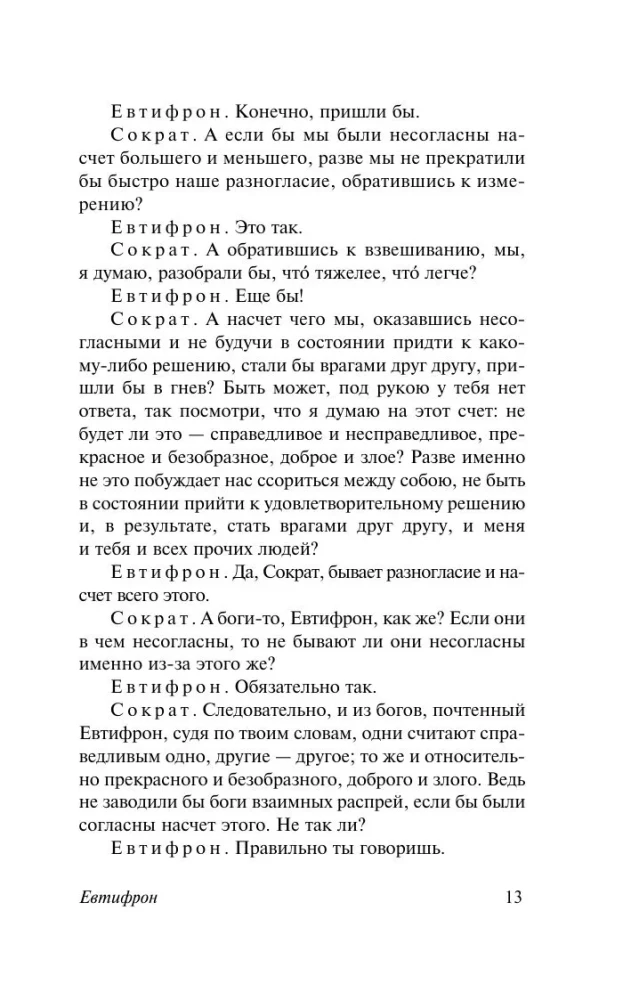
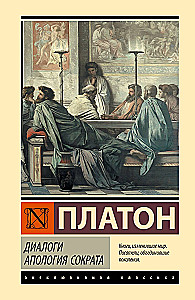
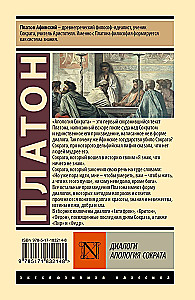

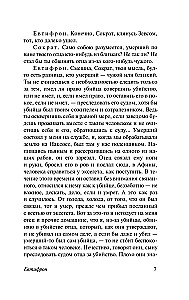
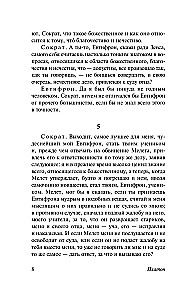
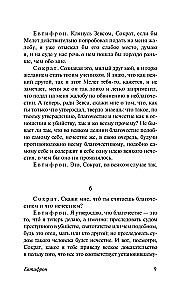
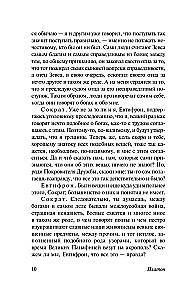
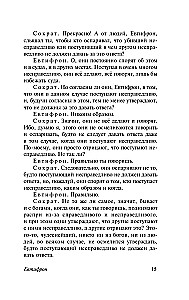
Dialogues. Apology of Socrates
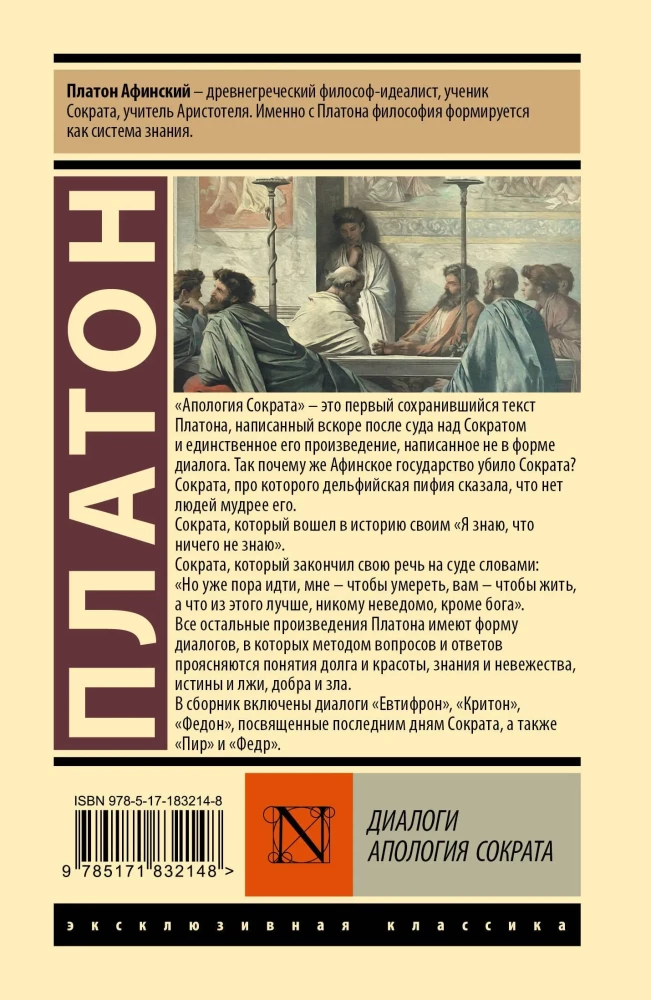
Plato of Athens — an ancient Greek idealist philosopher, student of Socrates, teacher of Aristotle. It is with Plato that philosophy is formed as a system of knowledge.
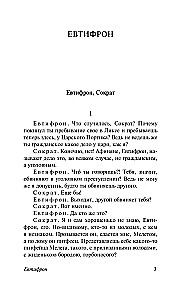
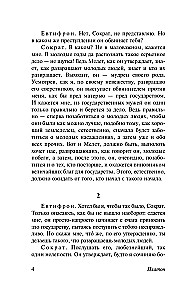
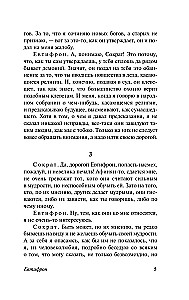
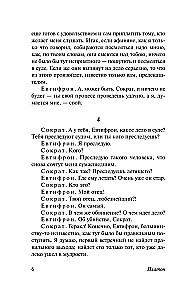
"Apology of Socrates" is the first surviving text of Plato, written soon after... the trial of Socrates and the only one of his works that is not in dialogue form. So why did the Athenian state kill Socrates?
Socrates, whom the Delphic oracle said was the wisest of men.
Socrates, who is remembered in history for his "I know that I know nothing".
Socrates, who ended his speech at the trial with the words: "But it is time to go, for me - to die, for you - to live, and which is better, no one knows, except God".
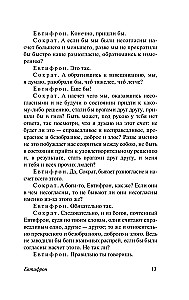
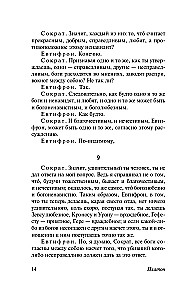
All other works of Plato take the form of dialogues, in which through the method of questions and answers, the concepts of duty and beauty, knowledge and ignorance, truth and falsehood, good and evil are clarified.
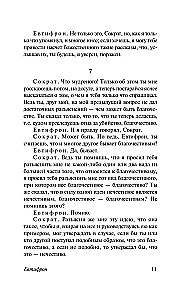
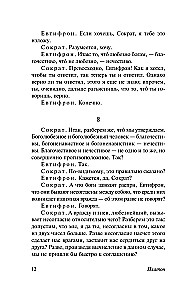
The collection includes the dialogues "Euthyphro", "Crito", "Phaedo", dedicated to the last days of Socrates, as well as "Symposium" and "Phaedrus".
1. The primary source of ancient thought: "Apology of Socrates" and Plato's dialogues are vivid testimonies of the birth of philosophical thought, allowing us to see how fundamental concepts of science are formed through discussion.
2. The lively method of dialogue and the opportunity to see Socrates not as a strict teacher, but as a conversational partner, leading to deep reflection and understanding.
3. The problems raised in the dialogues remain eternal. What is wisdom? How to live with dignity? What awaits a person after death?
"Apology of Socrates" is the first surviving text of Plato, written soon after... the trial of Socrates and the only one of his works that is not in dialogue form. So why did the Athenian state kill Socrates?
Socrates, whom the Delphic oracle said was the wisest of men.
Socrates, who is remembered in history for his "I know that I know nothing".
Socrates, who ended his speech at the trial with the words: "But it is time to go, for me - to die, for you - to live, and which is better, no one knows, except God".
All other works of Plato take the form of dialogues, in which through the method of questions and answers, the concepts of duty and beauty, knowledge and ignorance, truth and falsehood, good and evil are clarified.
The collection includes the dialogues "Euthyphro", "Crito", "Phaedo", dedicated to the last days of Socrates, as well as "Symposium" and "Phaedrus".
1. The primary source of ancient thought: "Apology of Socrates" and Plato's dialogues are vivid testimonies of the birth of philosophical thought, allowing us to see how fundamental concepts of science are formed through discussion.
2. The lively method of dialogue and the opportunity to see Socrates not as a strict teacher, but as a conversational partner, leading to deep reflection and understanding.
3. The problems raised in the dialogues remain eternal. What is wisdom? How to live with dignity? What awaits a person after death?
Author: Платон
Printhouse: AST
Series: Exclusive Classics
Age restrictions: 16+
Year of publication: 2026
ISBN: 9785171832148
Number of pages: 352
Size: 187х125х19 mm
Cover type: hard
Weight: 319 g
ID: 1732051
Sold out
€ 11.39
Sold out
€ 11.39
Bestsellers




€ 13.29
In stock
12 Weeks in a Year. How to Achieve More in 12 Weeks Than Others Do in 12 Months
Майкл Леннингтон, Брайан Моран


€ 7.89
In stock
Choice. On the Freedom and Inner Strength of a Person
Эдит Ева Эгер, Эсме Швалль-Вейганд


€ 5.29
In stock
€ 14.99
In stock
The Body Remembers Everything: The Role of Psychological Trauma in a Person's Life and Techniques to Overcome It
Бессел ван дер Колк


€ 6.99
In stock