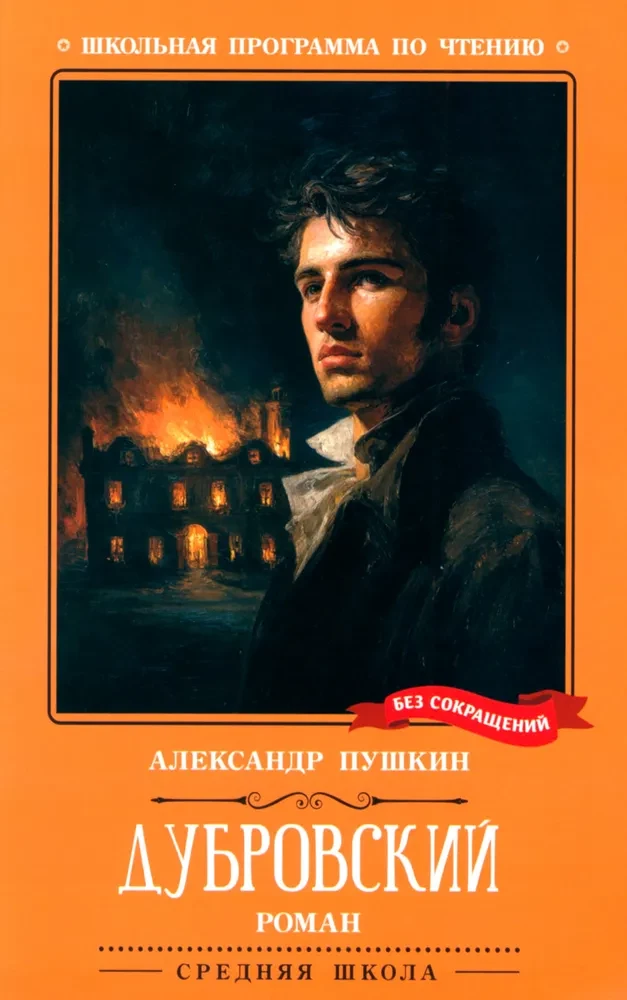
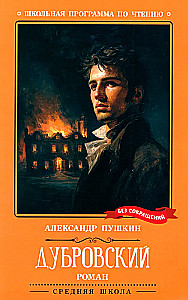
Dubrovsky
Alexander Sergeyevich Pushkin (1799–1837) — the greatest Russian poet and prose writer. In Russian literature, Pushkin stands apart: "the sun of our poetry," in the words of the writer V. Odoevsky, was the first to lay the foundations of realism...
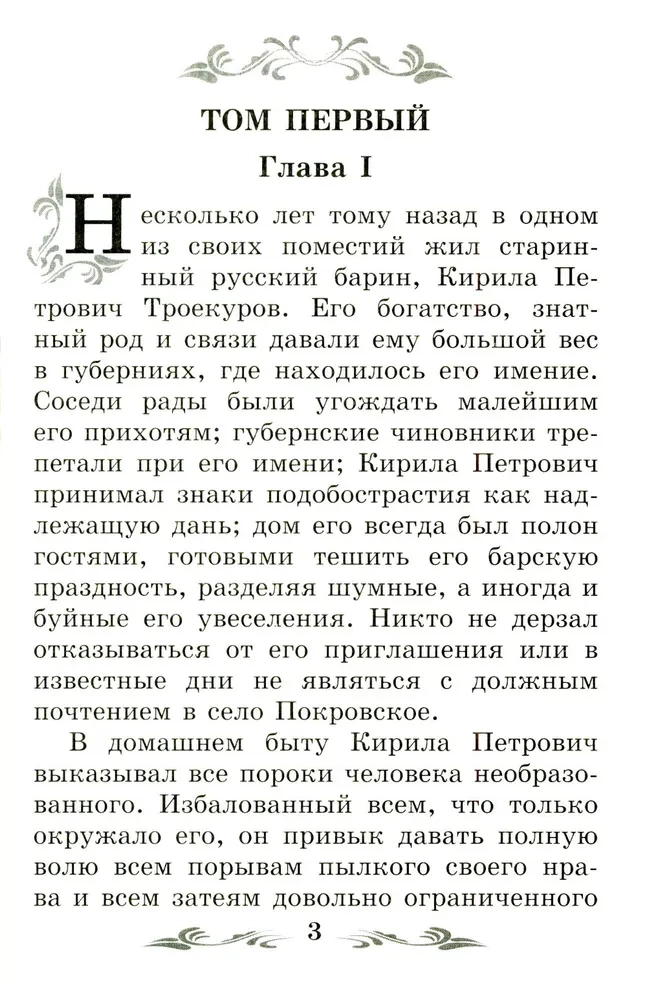
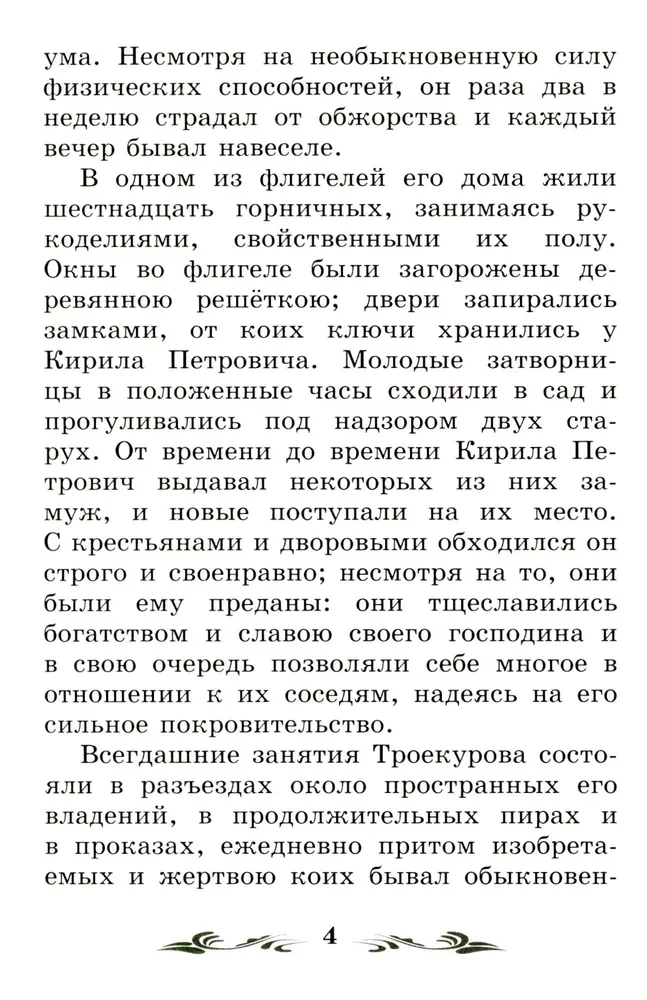
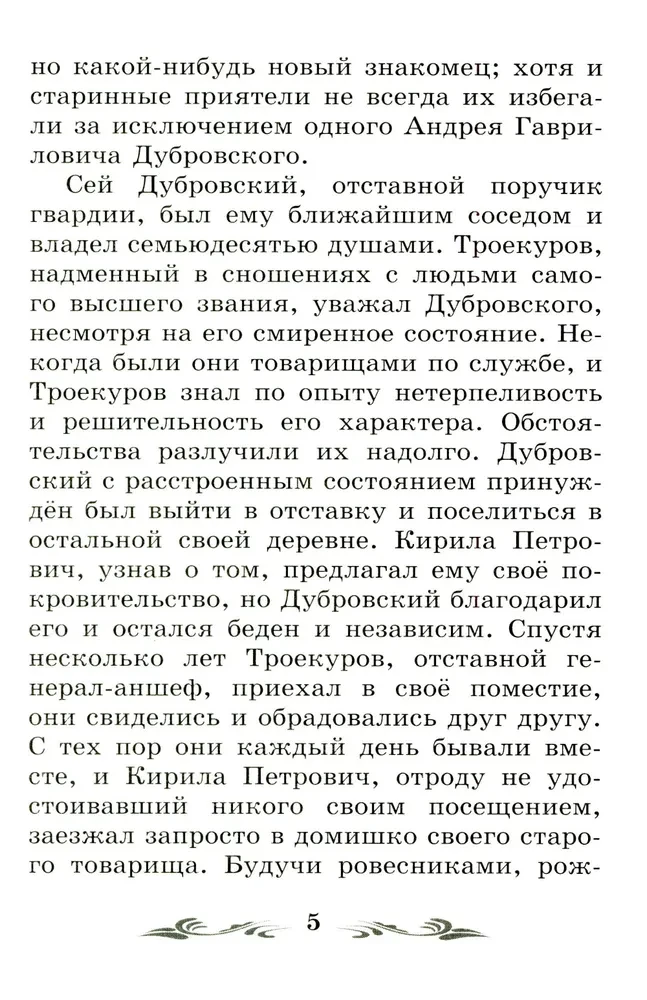
in Russian literature and transformed the language so much that the works of the 19th century are read as modern. Alexander Sergeyevich was born in Moscow, in the family of a military advisor, an amateur poet, and a fashionable young lady, the granddaughter of Hannibal (the African Abram Hannibal was a servant and pupil of Peter I, and then a general); from an ancient noble but humble lineage. He began writing poetry while still at the Lyceum — a prestigious noble educational institution, and at the age of 15, at an open exam, he caused a sensation by reading his "Recollections in Tsarskoye Selo" and earned the enthusiastic approval of the living classic — Gavrila Derzhavin. Pushkin was not deprived of fame during his lifetime: in the press he was called a genius and "the first Russian poet," he was favored by Emperor Nicholas I, each of his creations became an event for the reading public, but the work of a bureaucrat (Pushkin served as a titular advisor) and censorship restrictions constrained his talent. However, the concentration of works created in 37 years of life is astonishing: these include piercing poems, a great novel in verse, charming tales, brilliant prose, and, of course, beautiful poems. A remarkable feature of Pushkin's creativity is the vivid poetic power and precision of images along with brevity. "Dubrovsky" (1833) was conceived as a bandit novel in the Russian language. The plot was suggested to Pushkin by a friend's story about a "not wealthy nobleman, by the surname of Ostrovsky, who was evicted from his estate and, left with only peasants, began to rob." The impossible love of the children of enemies, a "sad tale," complemented the canvas. Near the village of Kistenyovka, the ancestral estate of the Dubrovskys, there is also an original: the village of Kistenyovo, a paternal gift in honor of the poet's future marriage, and Yegorovna is modeled after the serf of the Pushkins, nanny Arina Rodionovna. Pushkin did not finish "Dubrovsky," possibly anticipating censorship difficulties, or deciding to focus on documentary prose — "The History of Pugachev." The story was published four years after his death.
Author: Александр Пушкин
Printhouse: Feniks
Age restrictions: 0+
Year of publication: 2026
ISBN: 9785222465882
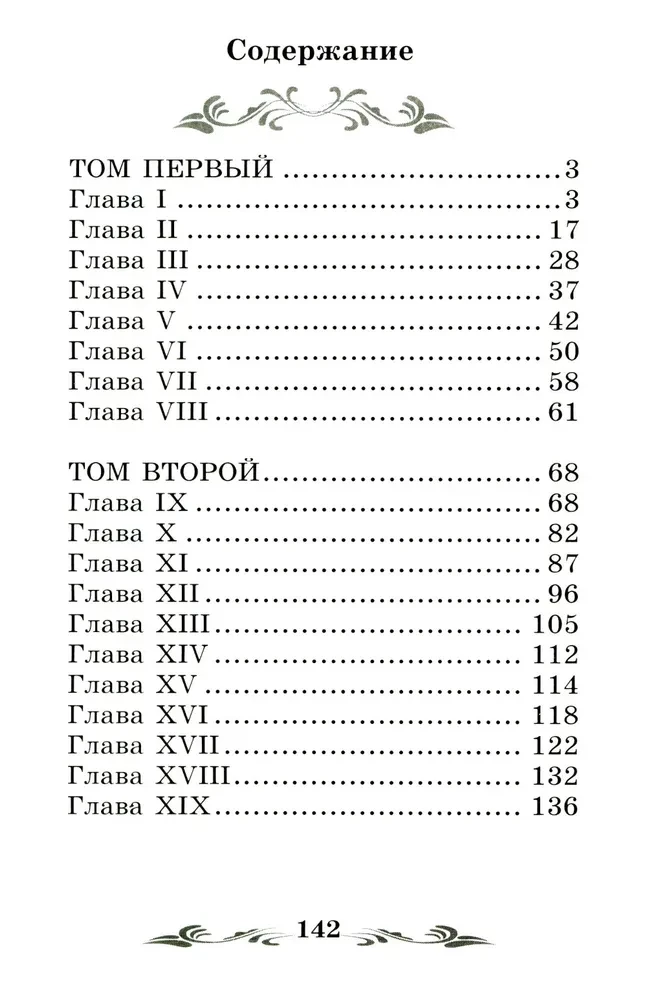
Number of pages: 142
Size: 220х140х10 mm
Cover type: soft
Weight: 148 g
ID: 1731393
Sold out
€ 4.99
Sold out
€ 4.99
Bestsellers




Bestseller
€ 12.19
In stock
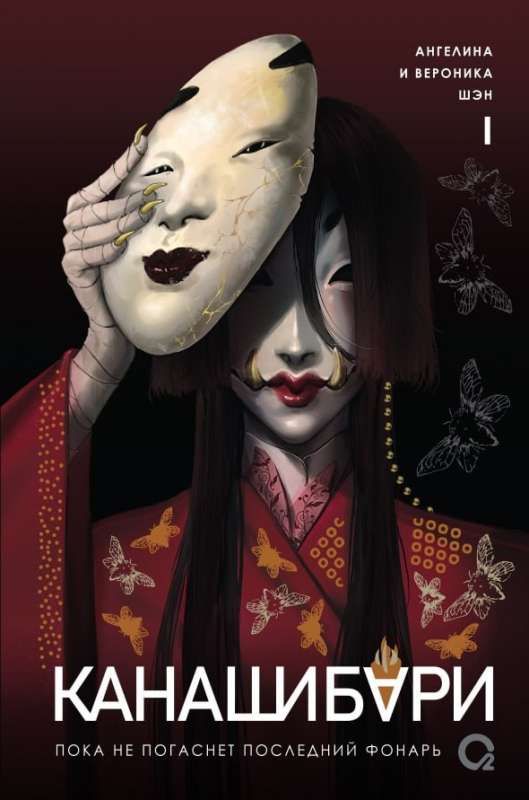
Kanashibari. Until the Last Lantern Goes Out. Volume 1
Ангелина Шэн, Вероника Шэн