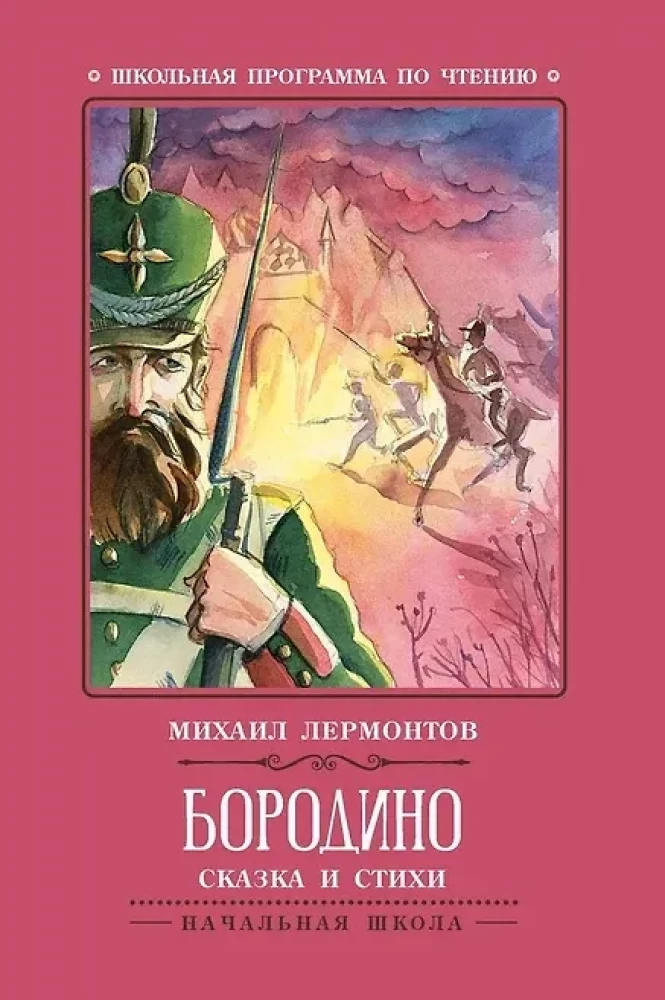
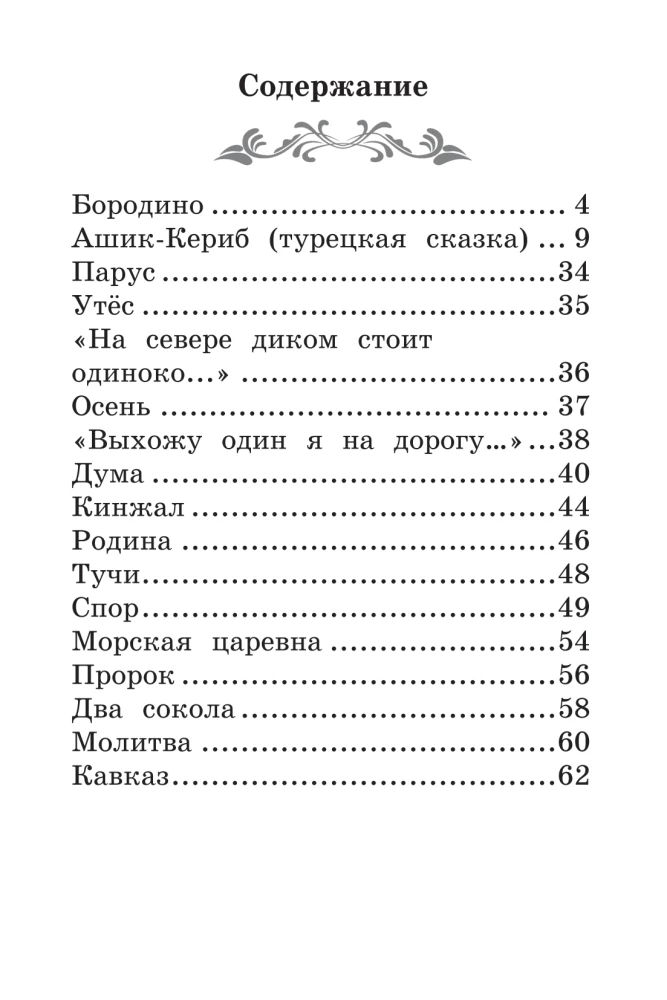
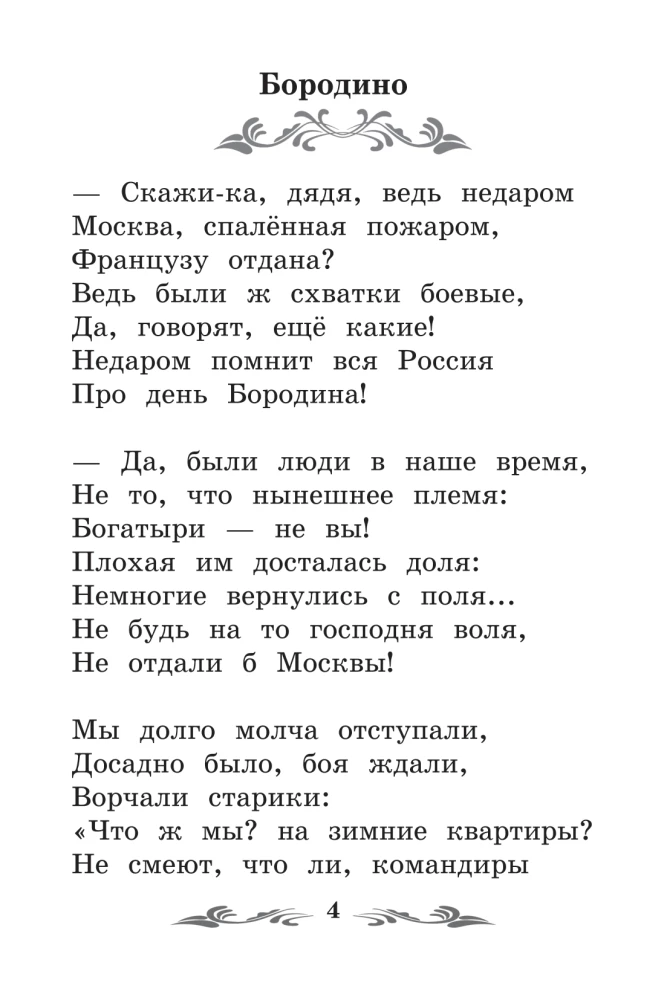
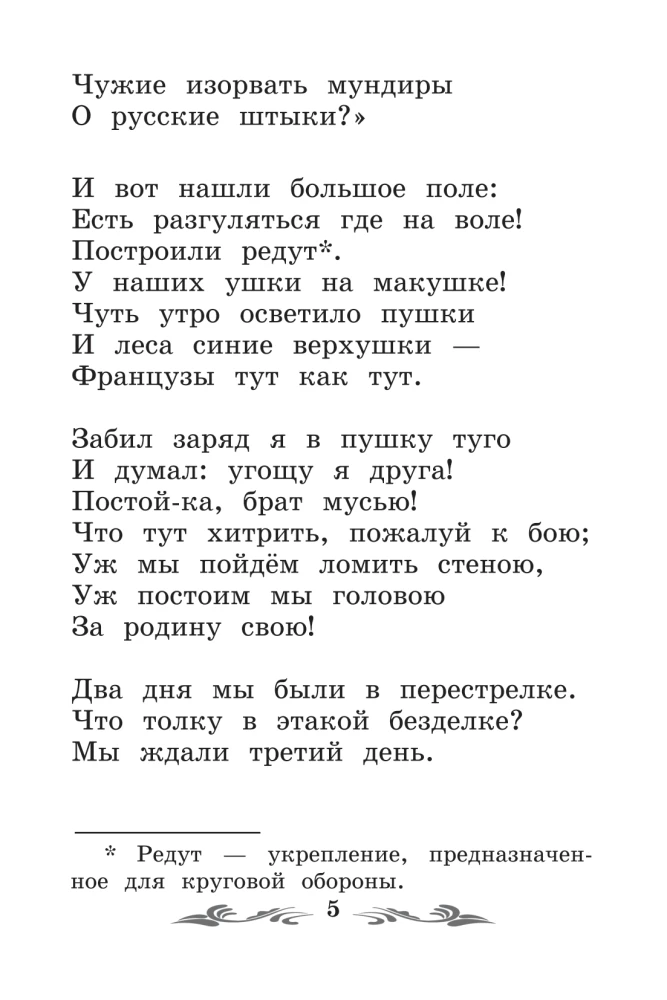
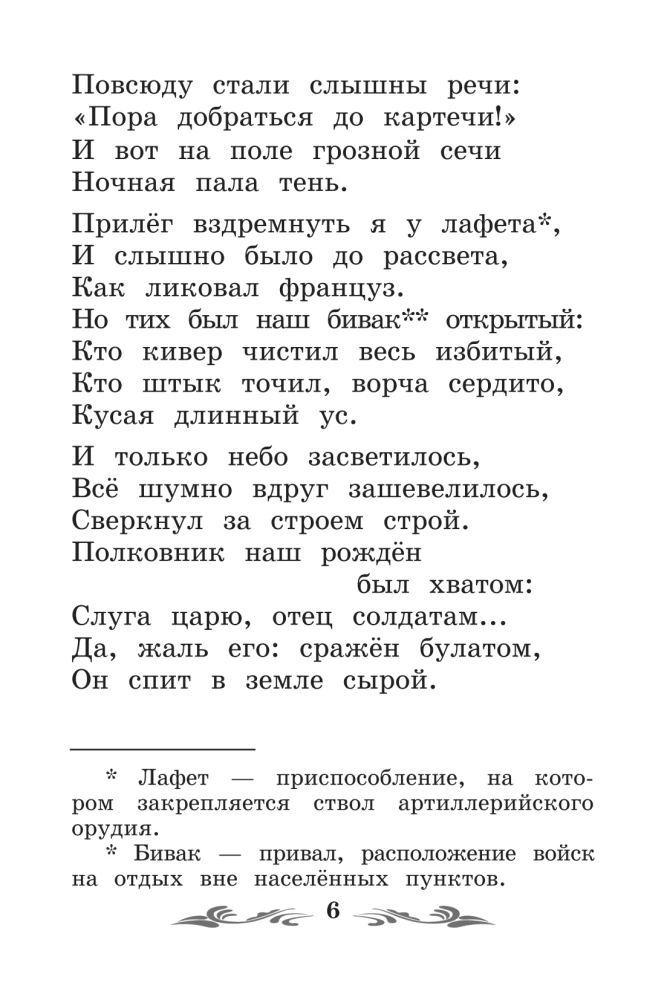
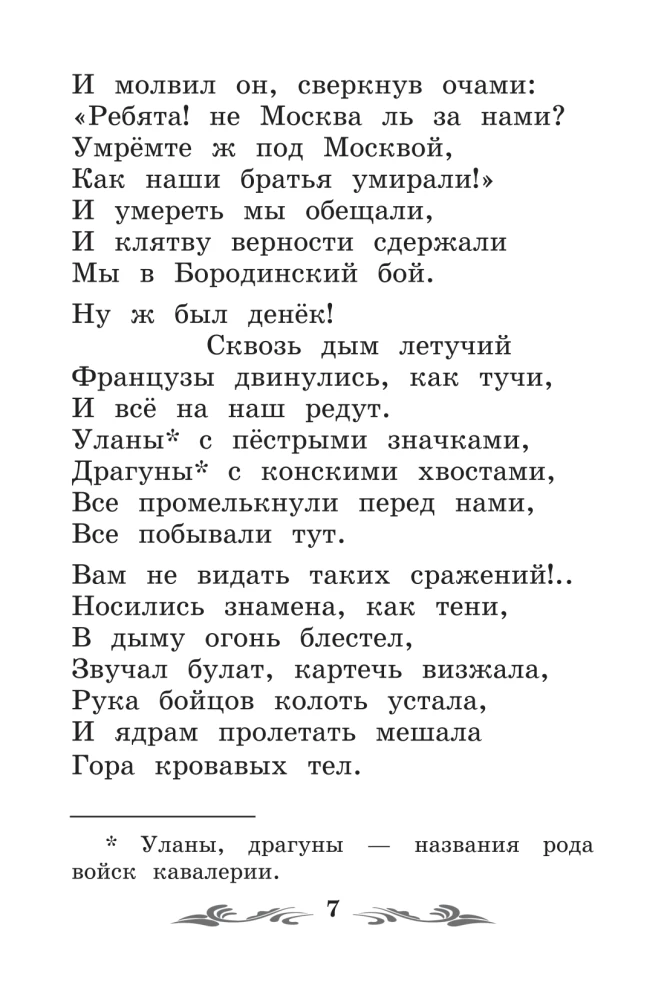
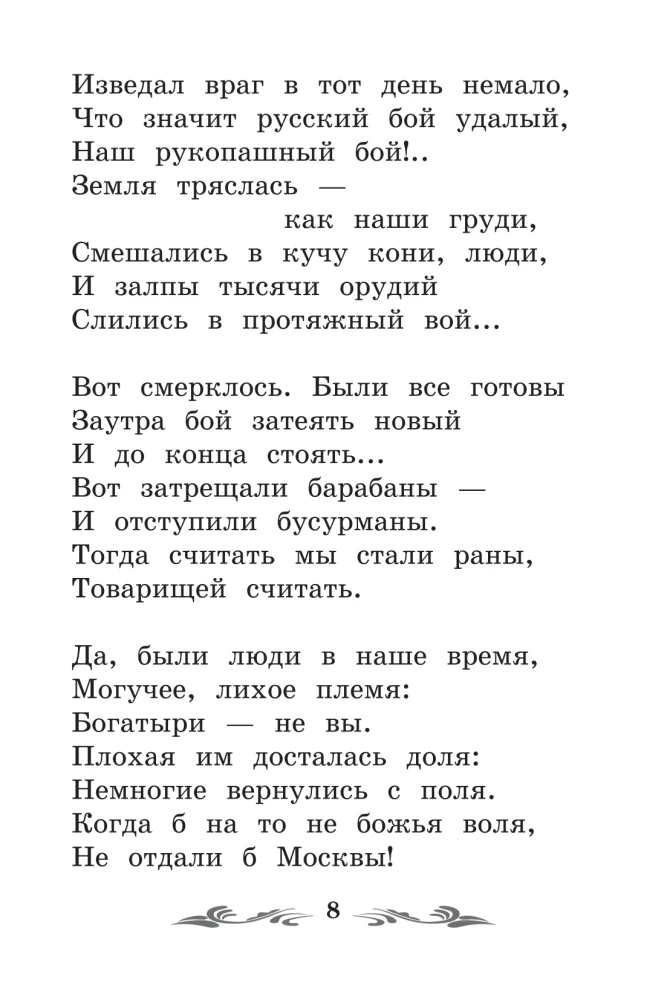
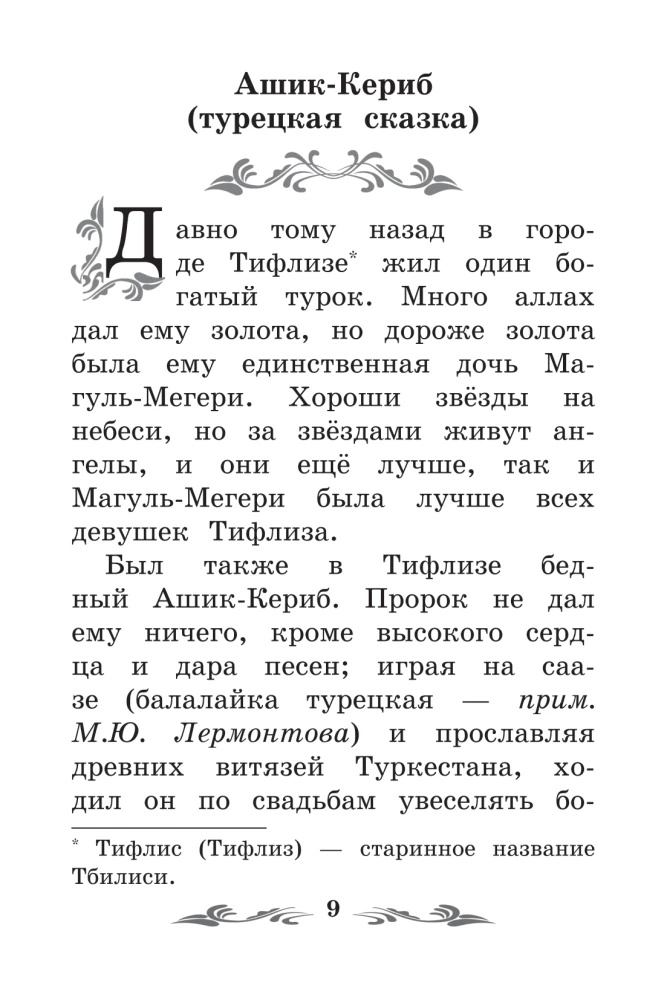
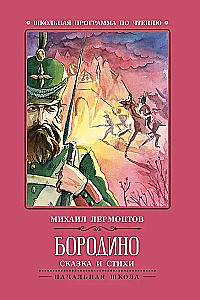
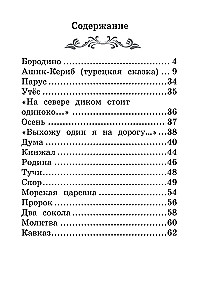
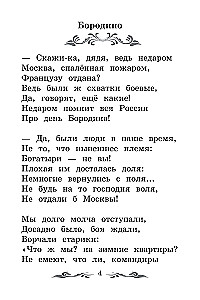
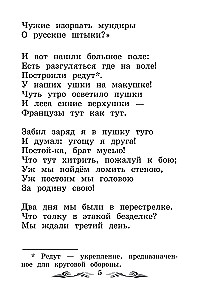
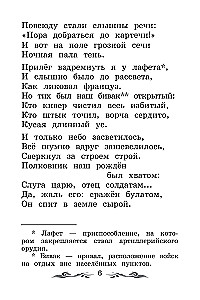
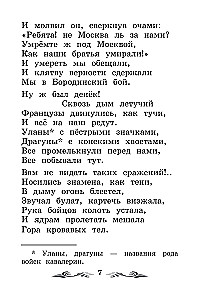
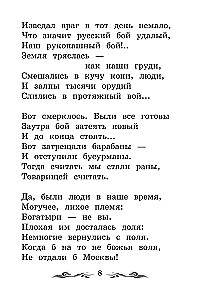
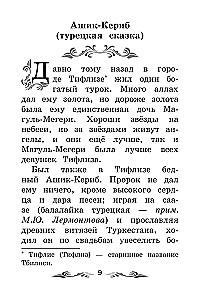
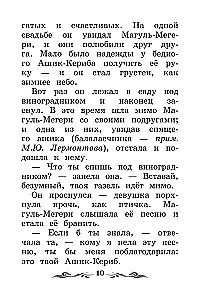
Borodino: A Tale and Poems
Mikhail Yurievich Lermontov (1814–1841) — Russian poet, prose writer, playwright, and a bright representative of the Golden Age of Russian literature. He was born in Moscow to an officer's family. His mother, Maria Mikhailovna, died when the boy was only...
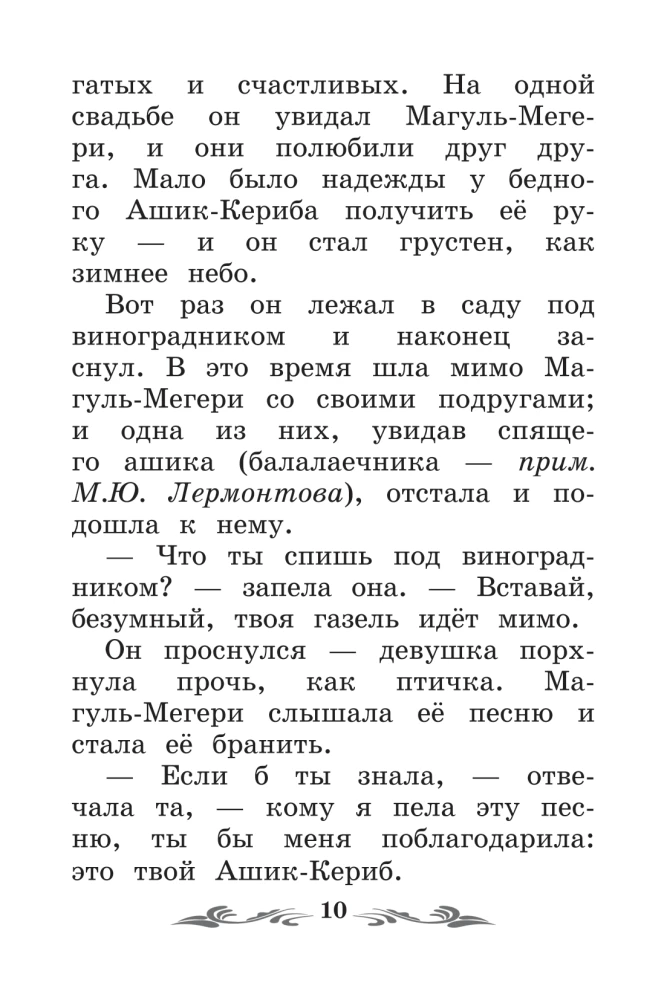
3 years old. The future poet was raised by his maternal grandmother, Elizabeth Alexeyevna Arsenyeva, and he spent his childhood at her estate in Tarkhany (Penza province). Initially, the future poet received home education. From 1828 to 1830, he studied at a boarding school affiliated with Moscow University, where he created his first poems. In 1830–1832, M. Yu. Lermontov studied at Moscow University, but not completing the course, he submitted a request for expulsion. In 1832, he entered the School of the Guard Subofficers and Cavalry Cadets, and upon graduation, he was assigned to a hussar regiment. During those years, M. Yu. Lermontov's poetic talent was not known to the general public; he only presented his works in officer and high society circles. His first publication occurred without M. Yu. Lermontov's knowledge — in 1835, the manuscript of the poem “Hadji Abrek” was secretly passed to the journal “Library for Reading” by his distant relative N. D. Yuriev. Despite the successful debut, M. Yu. Lermontov did not want to publish his poems. His true fame came from the poem “Death of the Poet” (1837) — a response to the last duel of A. S. Pushkin. And although this poem was not published and circulated “in lists,” it nevertheless caused extreme displeasure from the emperor, resulting in the poet's exile to the Caucasus in the active army. Here, M. Yu. Lermontov wrote many poetic works, and he also began to engage in painting. In 1840, M. Yu. Lermontov was exiled to the Caucasus again, and once more it was a time of extraordinary creative rise. “The Caucasian mountains are sacred to me,” — thus wrote M. Yu. Lermontov about his attitude towards the Caucasus. In May 1841, Lermontov had a duel with his former classmate N. S. Martynov, and the opponent's bullet proved fatal for the poet. M. Yu. Lermontov authored many literary works that became masterpieces of Russian literature (“Borodino,” “Mtsyri,” “Demon,” “Hero of Our Time,” “Masquerade,” etc.)
Author: Михаил Лермонтов
Printhouse: Feniks
Series: School Reading Program
Age restrictions: 0+
Year of publication: 2026
ISBN: 9785222422076, 9785222438763, 9785222476840
Number of pages: 63
Size: 210х138х3 mm
Cover type: soft
Weight: 70 g
ID: 1731367
Sold out
€ 2.99
Sold out
€ 2.99
Bestsellers

Bestseller
€ 12.19
In stock
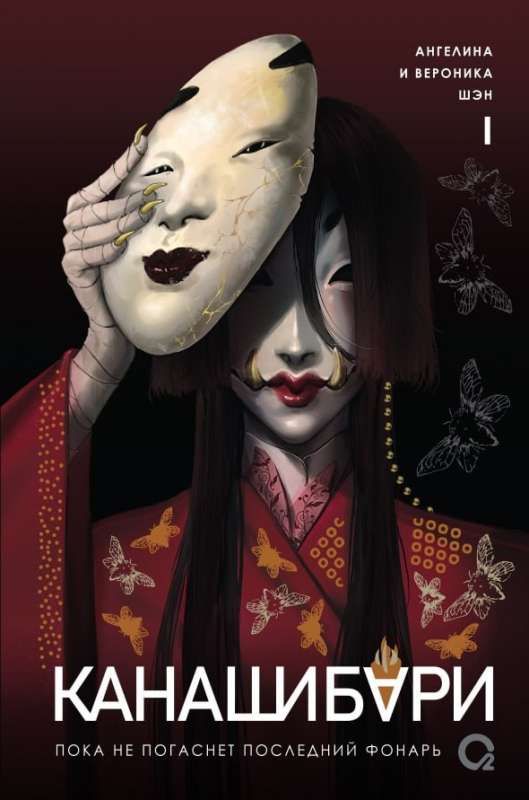
Kanashibari. Until the Last Lantern Goes Out. Volume 1
Ангелина Шэн, Вероника Шэн