









Journey into the Surrounding Worlds of Animals and Humans. Theory of Meaning
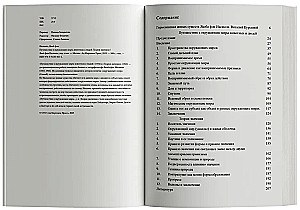
"Journey into the Surrounding Worlds of Animals and Humans" (1934) and "Theory of Meaning" (1940) — two revolutionary works by the German biologist and natural philosopher Jakob von Uexküll (1864–1944). Their main theses and the concept of "surrounding world" (Umwelt)...
introduced by the author laid the foundation for biosemiotics.
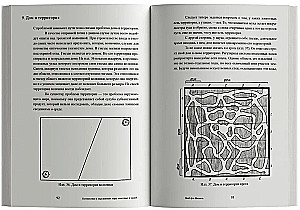
According to Uexküll, all living beings inhabit not a single world, but are subjects around which their own "surrounding worlds" are formed. The author curiously studies the peculiarities of the structure, habitat, and behavior of the tick, the mollusk, and the dog, each of which perceives reality in its own way. Uexküll acknowledges the limitations of human ability to see the world through the eyes of animals, but urges to show attentiveness and insight to open the door to the astonishing worlds of our lesser brothers.
"Journey into the Surrounding Worlds…" and "Theory of Meaning" have become essential texts for posthumanist thought, influencing the ideas of Heidegger, Merleau-Ponty, Deleuze, and Guattari, and remain relevant to this day.
According to Uexküll, all living beings inhabit not a single world, but are subjects around which their own "surrounding worlds" are formed. The author curiously studies the peculiarities of the structure, habitat, and behavior of the tick, the mollusk, and the dog, each of which perceives reality in its own way. Uexküll acknowledges the limitations of human ability to see the world through the eyes of animals, but urges to show attentiveness and insight to open the door to the astonishing worlds of our lesser brothers.
"Journey into the Surrounding Worlds…" and "Theory of Meaning" have become essential texts for posthumanist thought, influencing the ideas of Heidegger, Merleau-Ponty, Deleuze, and Guattari, and remain relevant to this day.
Author: Якоб фон Икскюль
Printhouse: Ad Marginem
Age restrictions: 16+
Year of publication: 2025
ISBN: 9785911038311
Number of pages: 208
Size: 185х135х18 mm
Cover type: soft
Weight: 158 g
ID: 1704847
In stock
€ 9.99
Will be delivered to United States on 6 October (Tu):
By courier
from € 38.94
Bestsellers









€ 7.89
In stock
Choice. On the Freedom and Inner Strength of a Person
Эдит Ева Эгер, Эсме Швалль-Вейганд




€ 6.99
In stock