





















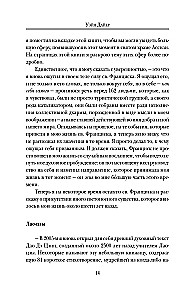
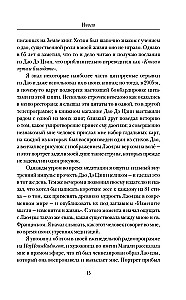
Wishes Come True. The Art of Bringing Dreams to Life
«Wishes Come True. The Art of Bringing Dreams to Life» — this is a book about manifestation, imagination, and inner alignment to desired changes. The focus here is not on external success, but on the way of thinking about oneself,...
one's possibilities, and goals. Wayne Walter Dyer writes about self-development in a spiritual and motivational context: he suggests seeing desires not as a coincidence, but as a direction of attention, feelings, and personal choice. The book is suitable for those interested in practices of mindfulness, visualization, and the fulfillment of desires through self-perception changes.
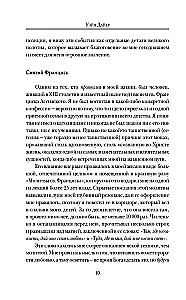
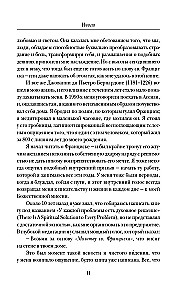
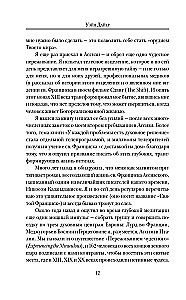
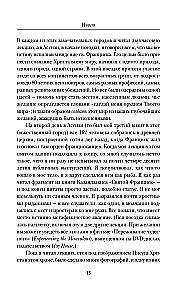
At the center — the idea that change begins with imagination and a new representation of oneself. The author links the fulfillment of desires with the rejection of a habitual ego-oriented position and movement towards a more integral perception of life. He speaks of an inner source, a higher «I», attention and feelings as important supports on the way to the desired. The book also includes the well-known thought for this direction: everything that appears in life must first be imagined and internally experienced.
One of the central ideas is to live as if an important goal has already become a part of reality. Such an approach is connected with changing the representation of oneself: not waiting for external confirmation, but gradually building a different internal state. The author relies on a metaphysical view of self-development and refers to the ideas of the power of imagination, formulas «I am», concentration, and emotional response. A separate place is given to five foundations of desire fulfillment, which discuss the connection between thoughts, feelings, images, and subconscious settings.
The book is built not only on reasoning. It describes a specific action program for independent work. Inside — techniques related to imagination, self-observation, tuning before sleep, and maintaining attention on the desired state. These practices are presented as a way to deeper engage the subconscious in the process of personal changes. The author also refers to examples from his own life to show how his approach is applied in everyday experience.
At the center — the idea that change begins with imagination and a new representation of oneself. The author links the fulfillment of desires with the rejection of a habitual ego-oriented position and movement towards a more integral perception of life. He speaks of an inner source, a higher «I», attention and feelings as important supports on the way to the desired. The book also includes the well-known thought for this direction: everything that appears in life must first be imagined and internally experienced.
One of the central ideas is to live as if an important goal has already become a part of reality. Such an approach is connected with changing the representation of oneself: not waiting for external confirmation, but gradually building a different internal state. The author relies on a metaphysical view of self-development and refers to the ideas of the power of imagination, formulas «I am», concentration, and emotional response. A separate place is given to five foundations of desire fulfillment, which discuss the connection between thoughts, feelings, images, and subconscious settings.
The book is built not only on reasoning. It describes a specific action program for independent work. Inside — techniques related to imagination, self-observation, tuning before sleep, and maintaining attention on the desired state. These practices are presented as a way to deeper engage the subconscious in the process of personal changes. The author also refers to examples from his own life to show how his approach is applied in everyday experience.
Author: Уэйн Дайер
Printhouse: Eksmo
Series: Psychology. Key Books of Life
Age restrictions: 16+
Year of publication: 2026
ISBN: 9785042446917
Number of pages: 256
Size: 210x135x24 mm
Cover type: твердая
Weight: 400 g
ID: 1744541
In stock
€ 8.39
Will be delivered to United States on 29 September (Tu):
By courier
from € 38.94
Bestsellers




€ 13.29
In stock
12 Weeks in a Year. How to Achieve More in 12 Weeks Than Others Do in 12 Months
Майкл Леннингтон, Брайан Моран


€ 7.89
In stock
Choice. On the Freedom and Inner Strength of a Person
Эдит Ева Эгер, Эсме Швалль-Вейганд



€ 6.99
In stock



€ 5.29
In stock




€ 11.59
In stock
We Are Right for Each Other: How Attachment Theory Can Help Create Harmonious Relationships
Амир Левин, Рэйчел Хеллер
Publishers "Eksmo" recommends

Bestseller
€ 34.69
In stock
Все породы собак. Большая иллюстрированная энциклопедия
СУЛА Г.Ю., ЯВОРСКАЯ-МИЛЕШКИНА