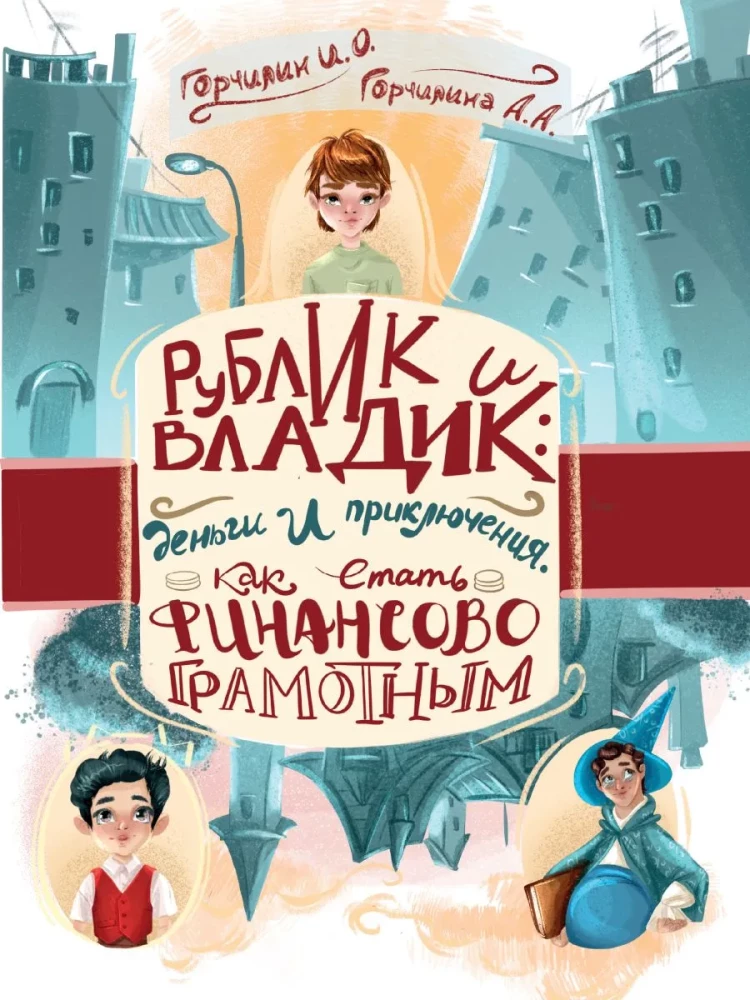
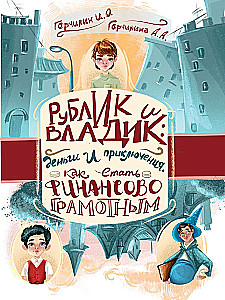
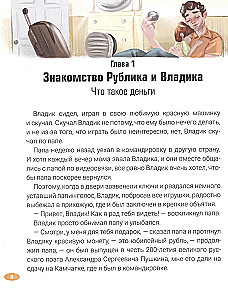
Rublik and Vladik: Money and Adventures. How to Become Financially Literate
Do you want your child to manage money wisely from a young age and know how to recognize a financial scammer?
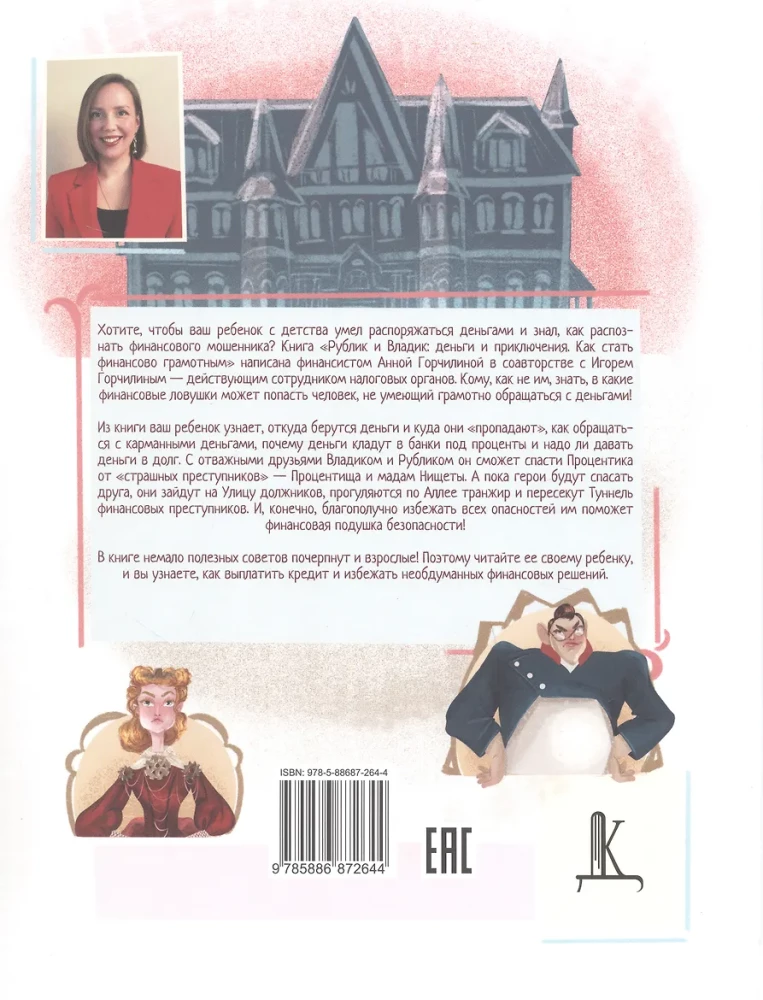
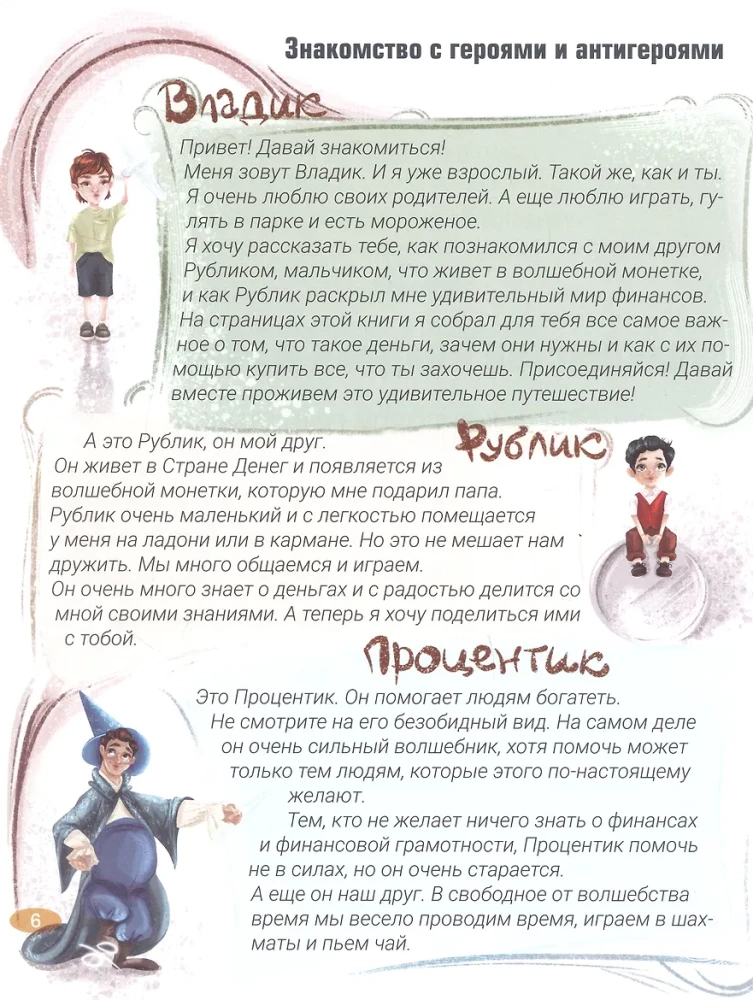
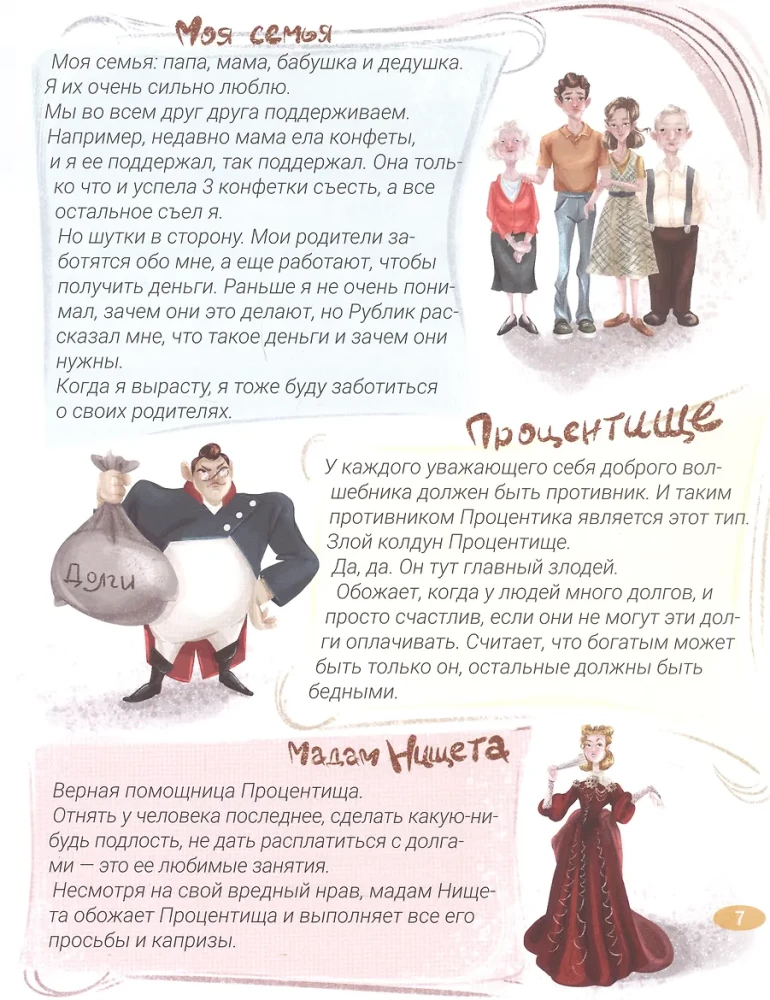
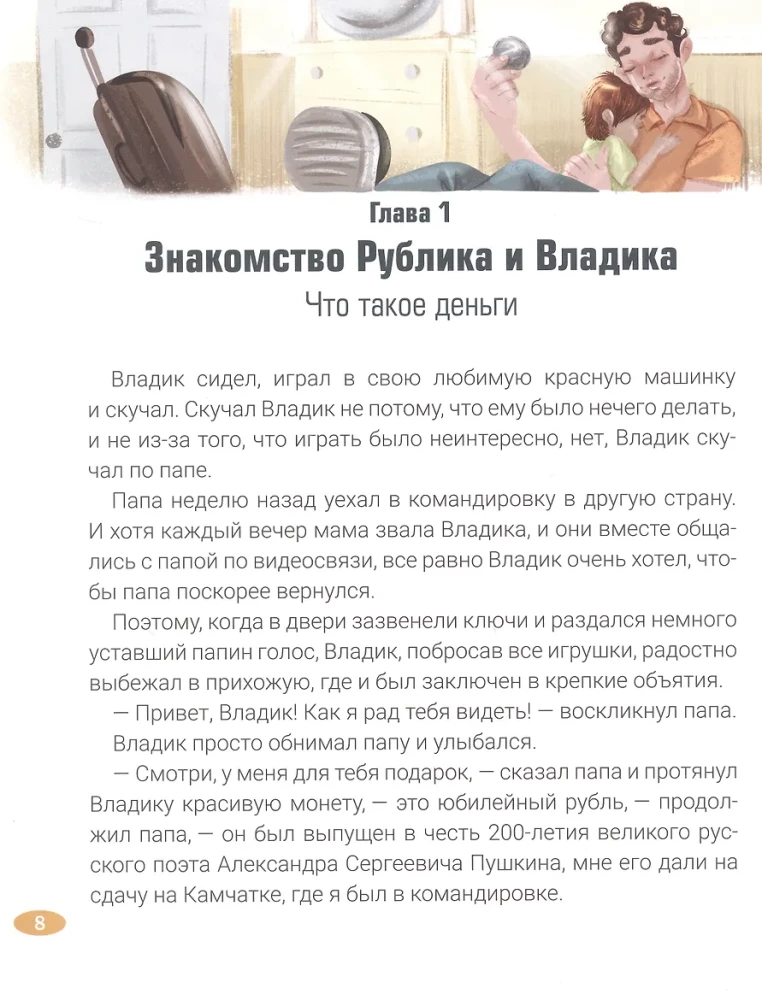
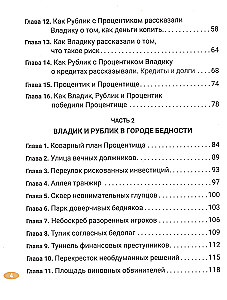
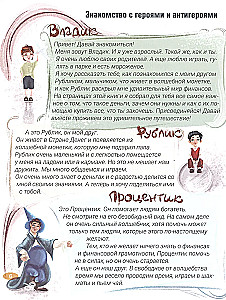
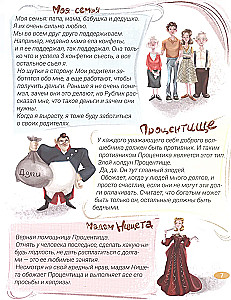
This is where the new children's book from the publishing house "Delovaya Kniga" will help you – "Rublik and Vladik:... Money and Adventures. How to Become Financially Literate." Your child will learn where money comes from and where it "disappears," how to handle pocket money, why money is deposited in banks for interest, and whether it is necessary to lend money. With brave friends Vladik and Rublik, he will save Protsentik from the "evil criminals" – Protsentishcha and Madame Poverty. While the heroes are saving their friend, they will visit Debt Street, stroll down Spendthrifts Alley, and cross the Financial Criminals Tunnel. And, of course, they will be helped to safely avoid all dangers by the Financial Security Pillow! The book also contains plenty of useful advice for adults. So read it to your child, and you will learn how to pay off a loan and avoid thoughtless financial decisions.
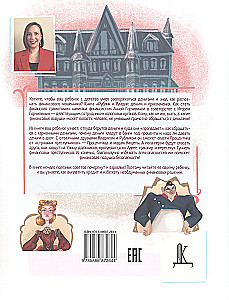
The book is written by financial expert Anna Gorchilina in collaboration with her husband Igor Gorchilin. Anna Gorchilina is a financial expert and neurotrainer. A neurotrainer is a specialist who helps improve cognitive abilities of the brain. Therefore, the book is written in such a way that preschoolers, and it is designed for children from 6 years old, can expand their vocabulary, master new concepts, while simultaneously gaining useful skills in handling money. The co-author of the book is Igor Gorchilin, an active employee of the tax service and a specialist in tax legislation. The book is unique in the Russian book market, as it is written not just by children’s authors, but by experts in financial planning. Every piece of advice given by the authors has been tested in practice, and can be useful not only for children but for any adult!
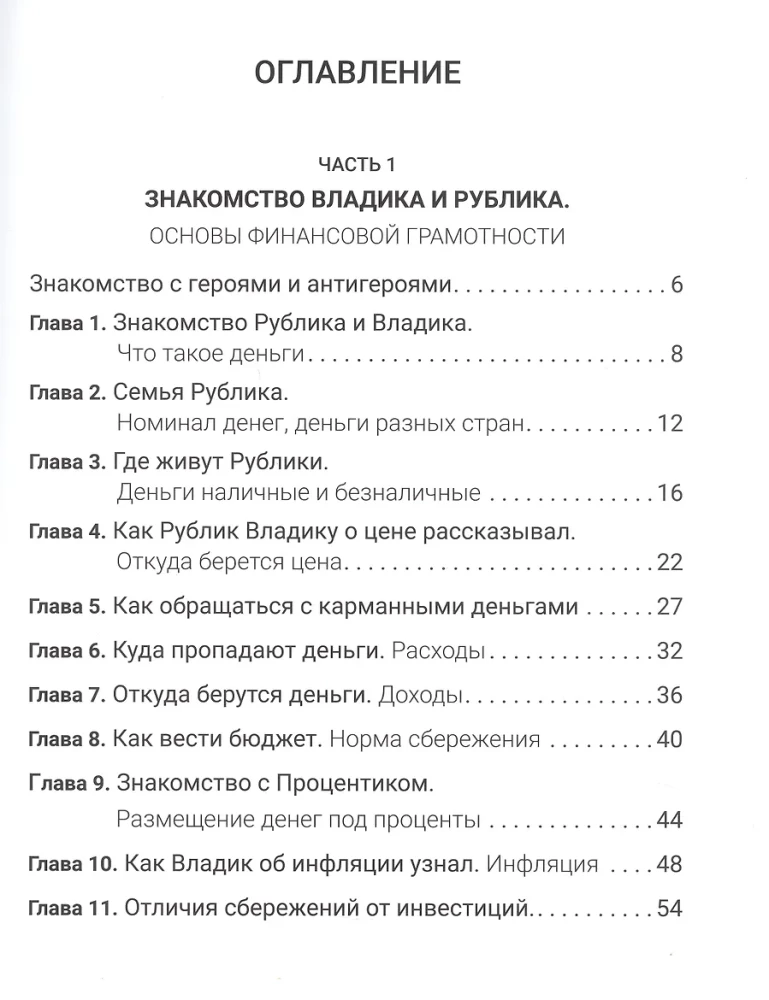
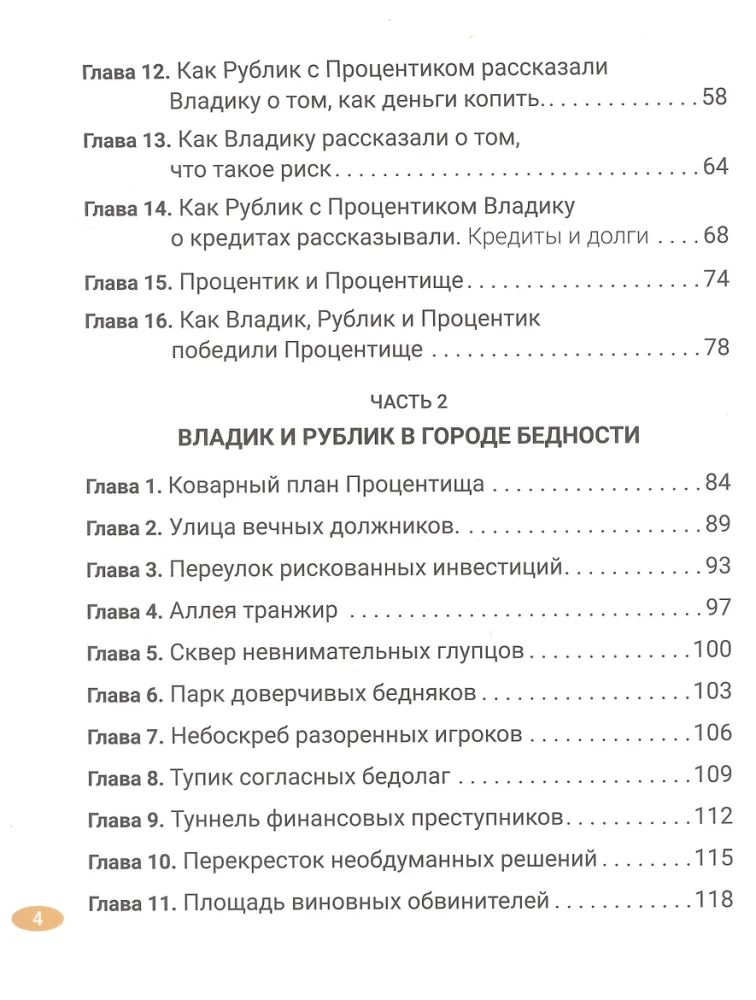
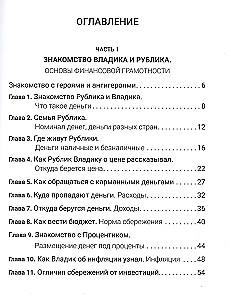
The first part of the book details the basic concepts of financial literacy. The child will learn what money is, inflation, price and value, loans and interest, whether it is permissible to lend money, and what financial risks are. In the second part, the characters will find themselves in a magical city, where they will see "anti-examples" of financial behavior. Each chapter ends with a conclusion that the child can remember and repeat if necessary.
This is where the new children's book from the publishing house "Delovaya Kniga" will help you – "Rublik and Vladik:... Money and Adventures. How to Become Financially Literate." Your child will learn where money comes from and where it "disappears," how to handle pocket money, why money is deposited in banks for interest, and whether it is necessary to lend money. With brave friends Vladik and Rublik, he will save Protsentik from the "evil criminals" – Protsentishcha and Madame Poverty. While the heroes are saving their friend, they will visit Debt Street, stroll down Spendthrifts Alley, and cross the Financial Criminals Tunnel. And, of course, they will be helped to safely avoid all dangers by the Financial Security Pillow! The book also contains plenty of useful advice for adults. So read it to your child, and you will learn how to pay off a loan and avoid thoughtless financial decisions.
The book is written by financial expert Anna Gorchilina in collaboration with her husband Igor Gorchilin. Anna Gorchilina is a financial expert and neurotrainer. A neurotrainer is a specialist who helps improve cognitive abilities of the brain. Therefore, the book is written in such a way that preschoolers, and it is designed for children from 6 years old, can expand their vocabulary, master new concepts, while simultaneously gaining useful skills in handling money. The co-author of the book is Igor Gorchilin, an active employee of the tax service and a specialist in tax legislation. The book is unique in the Russian book market, as it is written not just by children’s authors, but by experts in financial planning. Every piece of advice given by the authors has been tested in practice, and can be useful not only for children but for any adult!
The first part of the book details the basic concepts of financial literacy. The child will learn what money is, inflation, price and value, loans and interest, whether it is permissible to lend money, and what financial risks are. In the second part, the characters will find themselves in a magical city, where they will see "anti-examples" of financial behavior. Each chapter ends with a conclusion that the child can remember and repeat if necessary.
Author: Анна Горчилина, Игорь Горчилин
Printhouse: DELOVAIa KNIGA
Age restrictions: 6+
Year of publication: 2024
ISBN: 9785886872644
Number of pages: 124
Size: 267х210х12 mm
Cover type: hard
Weight: 632 g
ID: 1743813
Sold out
€ 17.29
Sold out
€ 17.29
Bestsellers
€ 9.89
In stock